
BuddhistCatholicContemplativeEvangelicalGeneral ChristianHinduJewishLatter-day SaintMuslimNew VisionsProgressive Christian
Beliefs
- Buddhist
- Catholic
- Contemplative
- Evangelical
- General Christian
- Hindu
- Jewish
- Latter-day Saint
- More Voices
- Muslim
- New Visions
- Pagan
- Progressive Christian
Topics
- Religion News
- Food and Religion
- Sports and Religion
- Religious Art
- Religious Music and Entertainment
- Religious Events
- History and Religion
- Style and Religion
- Politics and Religion
- Women in Religion
- Recreation Outdoors and Religion
- Business Finance and Religion
- Careers Workplace and Religion
- Education and Religion
- Family Parenting and Religion
- Health Fitness and Religion
- Home and Religion
- Relationships and Religion
- Technology and Religion
- Travel and Religion
Columnists
- Buddhist Columnists
- Business Finance and Religion Columnists
- Careers Workplace and Religion Columnists
- Catholic Columnists
- Contemplative Columnists
- Education and Religion Columnists
- Evangelists Columnists
- Family Parenting and Religion Columnists
- General Christian Columnists
- Health Fitness and Religion Columnists
- Hindu Columnists
- History and Religion Columnists
- Home and Religion Columnists
- Jewish Columnists
- More Voices Columnists
- Latter Day Columnists
- Muslim Columnists
- New Visions Columnists
- Nonreligious Columnists
- Pagan Columnists
- Politics and Religion Columnists
- Progressive Columnists
- Recreation Outdoors and Religion Columnists
- Relationships and Religion Columnists
- Religion News Columnists
- Religious Art Columnists
- Religious Events Columnists
- Religious Music and Entertainment Columnists
- Sports and Religion Columnists
- Style and Religion Columnists
- Technology and Religion Columnists
- Travel and Religion Columnists
- Women in Religion Columnists
Resource Library
- 2026 Calendar
- Library of World Religions
- The 100 Most Holy Places on Earth
- Patheos Answers
- Podcasts
- Videos
- Faith Leaders Database
- Anglican Episcopalian
- Bahai
- Baptist
- Buddhism
- Christianity
- Confucianism
- Eastern Orthodoxy
- Hinduism
- Holiness and Pentecostal
- ISKCON
- Islam
- Judaism
- Lutheran
- Methodist
- The Church of Jesus Christ of Latter-day Saints
- New Age
- Paganism
- Presbytarian and Reformed
- Protestantism
- Religion Behind the Scenes
- Roman Catholic
- Scientology
- Shia Islam
- Sikhism
- Sufism
- Sunni Islam
- Taoism
- Zen
- See all religions
Research Tools
 Ad-Free & Subscriber Log-In Subscription Support
Follow Patheos 

- Trending:
- Advent
- |
- Forgiveness
- |
- Thanksgiving
- |
- Election
- |
- Seasonal Holidays
- |
- Marriage

- Home
- Evangelical
- The Struggle to Understand Isaiah as Christian Scripture— Part Twenty Nine
The Struggle to Understand Isaiah as Christian Scripture— Part Twenty Nine
Last updated on: March 16, 2016 at 1:44 am by Ben Witherington
The Struggle to Understand Isaiah as Christian Scripture— Part Twenty Nine 2016-02-15T10:48:10-05:00 Ben Witherington
Patheos Explore the world's faith through different perspectives on religion and spirituality! Patheos has the views of the prevalent religions and spiritualities of the world.
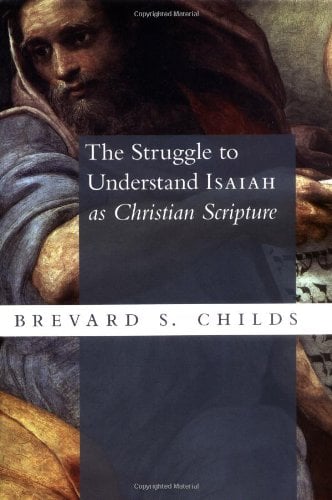
The final chapter of Child’s review attends to the phenomenon known as post-modern interpretation of the Bible. He focuses on providing a critique of W. Brueggemann, sometimes a very strong critique— “to confuse the divine Spirit with human imaginative creativity is to introduce a serious distortion into the entire theological discipline”.
There are so many problems with Brueggemann’s whole approach to the Bible, that we can only list a few here that Childs mentions or alludes to:1) there is an enormously faulty theory of meaning, coupled with an equally faulty theory of how we know what we know. It couples bad epistemology with equally bad theories of meaning. Contra these theories, there are meanings in texts which can be known with some measure of objectivity. Human capacity to know and understand reality outside one’s own psyche at least to a significant degree is the foundation of all knowledge of any sort, and particularly of all the modern sciences. Meaning is not merely in the mind of the beholder, and studying the Bible is not like staring at an inkblot and projecting into it images that come to mind. Even if one doesn’t believe in a theory of divine revelation in regard to the Bible, there is still the matter of having respect for the literary products of other people, and allowing them to have their say. I do not get to tell Isaiah what his text means, and if I read my own meanings into the text that are at variance with the claims the text is making, that is not good interpretation, it’s a distortion of the meaning of the text. 2) it is not true that ‘all we have is texts’. When it comes to the Bible we also have artifacts, architecture, art in the form of drawings, mosaic etc. and I could go on. 3) the defective theory of language assumed by post-modernists is especially problematic. Language more often than not does speak of extra-textual realities, and often, though not always, it speaks truthfully about those realities. When it comes to the Bible, those realities even include God. 4) the assumption of radical subjectivity and that all construals of history are just ideological fiction constructed on the basis of present interests is even more problematic. Obviously, people have points of views, and one must take one’s own point of view into account when evaluating one’s own or another person’s work. One must take into account one’s concerns, tendencies, social location, even biases. But critical thinking even about oneself is humanly possible, and it is simply not the case that one is necessarily construing the Biblical text on the basis of some present concern or driving interest. This is especially clear when you find a commentator wrestling with a Biblical idea that he or she finds offensive, but nonetheless agrees that that is what the Biblical text is saying and meaning. 5) In the case of Brueggemann, and his Isaiah commentary, as Childs points out, we have the classic example of a person who is trying too hard to avoid Christian readings of the book, even to the extreme of suggesting that the NT writers were all wrong in saying that the book predicts Christ and his ministry. In his view it doesn’t even anticipate Christ, and as Childs says, he is even nervous when talking about messianism in the text of Isaiah or an over-arching Heilsgeschichte or Biblical story; 6) while one can agree that no interpreter can claim he has exhausted the meaning of the text and has given a once for all final interpretation of its meaning, it does not follow from this fact that one cannot get at a definite and stable meaning of the text that is at least part of the truth about what it claims, a meaning which a wide range of interpreters can agree is part of the text. 7) The constant failure of the post-modern approach to reckon with the possibility that God can break through our cloud of unknowing and actually reveal some truths to us, a truth that makes a definitive claim on us, and conveys some truth content to us is frankly dismaying. 8) the Bible is not an endless stock of imagery constantly waiting for us to make a creative use of it. It makes all sorts of claims on us, not the least of which is that we need to change our ideas, our beliefs and our behaviors to conform to God’s will as revealed in the Bible. 8) At the end of the day post-modernism undermines the very concept of an inspired Bible and of Biblical theology based on the ideas in both testaments, and the very idea that the NT writers were right in seeing Christ as the fulfillment of all sorts of things promised and predicted in the OT. Jewish-Christian dialogue is not furthered by these sorts of denials and negations, nor is the Jewish interpretation of their own Hebrew Bible in any way threatened by the Christian study of the book. Indeed, we often help each other to better understand what God and the Jewish authors were actually saying.
Next Post

March 17, 2016 The Struggle to Understand Isaiah as Christian Scripture--Part Thirty
Browse Our Archives
Select a Category Uncategorized
Select a Month November 2026 October 2026 September 2026 August 2026 July 2026 June 2026 May 2026 April 2026 March 2026 February 2026 January 2026 December 2025 November 2025 October 2025 September 2025 August 2025 July 2025 June 2025 May 2025 April 2025 March 2025 February 2025 January 2025 December 2024 November 2024 October 2024 September 2024 August 2024 July 2024 June 2024 May 2024 April 2024 March 2024 February 2024 January 2024 December 2023 November 2023 October 2023 September 2023 August 2023 July 2023 June 2023 May 2023 April 2023 March 2023 February 2023 January 2023 December 2022 November 2022 October 2022 September 2022 August 2022 July 2022 June 2022 May 2022 April 2022 March 2022 February 2022 January 2022 December 2021 November 2021 October 2021 September 2021 August 2021 July 2021 June 2021 May 2021 April 2021 March 2021 February 2021 January 2021 December 2020 November 2020 October 2020 September 2020 August 2020 July 2020 June 2020 May 2020 April 2020 March 2020 February 2020 January 2020 December 2019 November 2019 October 2019 September 2019 August 2019 July 2019 June 2019 May 2019 April 2019 March 2019 February 2019 January 2019 December 2018 November 2018 October 2018 September 2018 August 2018 July 2018 June 2018 May 2018 April 2018 March 2018 February 2018 January 2018 December 2017 November 2017 October 2017 September 2017 August 2017 July 2017 June 2017 May 2017 April 2017 March 2017 February 2017 January 2017 December 2016 November 2016 October 2016 September 2016 August 2016 July 2016 June 2016 May 2016 April 2016 March 2016 February 2016 January 2016 December 2015 November 2015 October 2015 September 2015 August 2015 July 2015 June 2015 May 2015 April 2015 March 2015 February 2015 January 2015 December 2014 November 2014 October 2014 September 2014 August 2014 July 2014 June 2014 May 2014 April 2014 March 2014 February 2014 January 2014 December 2013 November 2013 October 2013 September 2013 August 2013 July 2013 June 2013 May 2013 April 2013 March 2013 February 2013 January 2013 December 2012 November 2012 October 2012 September 2012 August 2012 July 2012 June 2012 May 2012 April 2012 March 2012 February 2012 January 2012 December 2011 November 2011 October 2011 September 2011 August 2011 July 2011 June 2011 May 2011 April 2011 March 2011 February 2011 January 2011
Follow Us!
TAKE THE
Religious Wisdom Quiz
Which New Testament city was known for worshipping Artemis?
Select your answer to see how you score.
Rome Corinth Ephesus Athens
Books by This Author Books by Ben Witherington
Related posts from The Bible and Culture

Salisbury Cathedral (outside)-- Part Four
Salisbury Cathedral (the windows)-- Part Three

Salisbury Cathedral-- Part Two

Salisbury: Magna Carta and Magna Steeple---Part One
TRENDING AT PATHEOS Evangelical

How to Have Financial Transparency in Marriage
Despite the fact that financial issues and money problems are the number...
The Healing Power of Forgiveness in Marriage
Learning how to give and accept apologies are essential ingredients of a...

The West's Christian Moral Inheritance: A Legacy Denied
Whether we like it or not, our environment matters, shaping us both...

How Does Tôḏâ Connect Florida & Thanksgiving?
The big news this weekend has been about the continued flooding on...
Were Early Christians Drinking Psychedelic Wine?
The Secret Sacrament the Church Took Away The early Christian church was...

As we in the United States approach the national Thanksgiving holiday...
view all Evangelical blogs
Ad-Free & Subscriber Log-In Subscription Support
- About Us
- 2026 Calendar
- Videos
- Podcasts
- Library of World Religions
- Faith In Media Tracker
- Advertise With Us
- Write for Us
- Privacy Policy
- Terms of Service
- Do Not Sell My Data
- Contact Us
- Radiant Digital
- Manage Newsletter Subscriptions
- Unsubscribe From Notifications
- Sitemap
Copyright 2008-2026, Patheos. All rights reserved.
Subscription Support Ad-Free & Subscriber Log-In
Follow Patheos