
BuddhistCatholicContemplativeEvangelicalGeneral ChristianHinduJewishLatter-day SaintMuslimNew VisionsProgressive Christian
Beliefs
- Buddhist
- Catholic
- Contemplative
- Evangelical
- General Christian
- Hindu
- Jewish
- Latter-day Saint
- More Voices
- Muslim
- New Visions
- Pagan
- Progressive Christian
Topics
- Religion News
- Food and Religion
- Sports and Religion
- Religious Art
- Religious Music and Entertainment
- Religious Events
- History and Religion
- Style and Religion
- Politics and Religion
- Women in Religion
- Recreation Outdoors and Religion
- Business Finance and Religion
- Careers Workplace and Religion
- Education and Religion
- Family Parenting and Religion
- Health Fitness and Religion
- Home and Religion
- Relationships and Religion
- Technology and Religion
- Travel and Religion
Columnists
- Buddhist Columnists
- Business Finance and Religion Columnists
- Careers Workplace and Religion Columnists
- Catholic Columnists
- Contemplative Columnists
- Education and Religion Columnists
- Evangelists Columnists
- Family Parenting and Religion Columnists
- General Christian Columnists
- Health Fitness and Religion Columnists
- Hindu Columnists
- History and Religion Columnists
- Home and Religion Columnists
- Jewish Columnists
- More Voices Columnists
- Latter Day Columnists
- Muslim Columnists
- New Visions Columnists
- Nonreligious Columnists
- Pagan Columnists
- Politics and Religion Columnists
- Progressive Columnists
- Recreation Outdoors and Religion Columnists
- Relationships and Religion Columnists
- Religion News Columnists
- Religious Art Columnists
- Religious Events Columnists
- Religious Music and Entertainment Columnists
- Sports and Religion Columnists
- Style and Religion Columnists
- Technology and Religion Columnists
- Travel and Religion Columnists
- Women in Religion Columnists
Resource Library
- 2026 Calendar
- Library of World Religions
- The 100 Most Holy Places on Earth
- Patheos Answers
- Podcasts
- Videos
- Faith Leaders Database
- Anglican Episcopalian
- Bahai
- Baptist
- Buddhism
- Christianity
- Confucianism
- Eastern Orthodoxy
- Hinduism
- Holiness and Pentecostal
- ISKCON
- Islam
- Judaism
- Lutheran
- Methodist
- The Church of Jesus Christ of Latter-day Saints
- New Age
- Paganism
- Presbytarian and Reformed
- Protestantism
- Religion Behind the Scenes
- Roman Catholic
- Scientology
- Shia Islam
- Sikhism
- Sufism
- Sunni Islam
- Taoism
- Zen
- See all religions
Research Tools
 Ad-Free & Subscriber Log-In Subscription Support
Ad-Free & Subscriber Log-In Subscription Support
Follow Patheos 

- Trending:
- Forgiveness
- |
- Marriage
- |
- Consciousness
- |
- Death Penalty
- |
- Election
- |
- Halloween

- Home
- Evangelical
- Anne Rice on— ‘The Young Messiah’
Anne Rice on— ‘The Young Messiah’
Last updated on: March 11, 2016 at 4:27 pm by Ben Witherington
Anne Rice on— ‘The Young Messiah’ 2016-03-11T16:27:01-05:00 Ben Witherington
Patheos Explore the world's faith through different perspectives on religion and spirituality! Patheos has the views of the prevalent religions and spiritualities of the world.
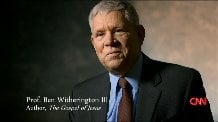
BEN: Anne you wrote ‘Out of Egypt’ some time ago. Were you surprised when someone decided the time was now to make a movie of it?
ANNE: Actually there was movie interest almost from the beginning. Cyrus Nowrasteh came along with his offer after other negotiations did not work out, and it took Cyrus several years to get the movie off the ground, due to financial difficulties. Cyrus was marvelously patient and so were other members of the team. Making a film, I’ve learned, can be an exhausting process, due to the need for backing, distribution, etc.
BEN: I noticed something in the film that seemed less prominent in the novel— namely the ongoing menacing presence of Satan. This I found plausible but a little surprising since he is missing in action in the Gospel Birth Narratives. Did you think it was important to establish that the mission of Jesus had cosmic implications from the outset? Was that why you told the story this way?
ANNE: The Satan character in the film —- an expansion of the Satan whom Jesus encounters in a dream in the novel — was the idea of Cyrus and Betsy Nowrasteh who wrote the script. But I do find it very much in keeping with active medieval beliefs — played out in Medieval religious plays — that Satan was suspicious of Jesus from the time of His birth and saw Jesus’ crucifixion as a triumph. I was influenced by the medieval theological beliefs when I presented Satan in Jesus’ dream as unable to figure out who or what Jesus is, and unable to see the future.
BEN: I recently saw the film ‘Risen’ in which a centurion was the central character in the film, and in your film as well the centurion is one of the central characters. In both cases we are talking about tales of pursuit of Jesus and then of transformation. I wonder if you saw ‘Risen’ and if so, what you think of the parallels?
ANNE: I have not seen “Risen,” and of course our film, “The Young Messiah” was finished before “Risen” was ever released. I’m certain it could not have had any conceivable influence on Cyrus and Betsy Nowrastah in creating their fictive Centurion hunting for young Jesus. With regard to the plot of “Risen” as it has been described in the press, i see influence from “The Robe,” the famous biblical epic based on Lloyd C. Douglas’ novel of the same name about a Centurion (Richard Burton) who is haunted by the crucifixion. The Centurion in “The Young Messiah” was not in the novel, and I think Cyrus and Betsy did a very skillful job of adding this “suspense element” to the movie without in any way changing or undercutting the underlying story from the novel.
BEN: Where was this movie filmed? A lot of the scenes had impressive settings, but I could not recognize the locales? I did notice in one scene the pointed windows which suggested an Islam country like Morocco or Tunisia, where a lot of Gospel films have been made.
Anne: The film was done largely in Italy. But there may have been other locales.
BEN: In regard to the portrayal of Jesus, it was done with great care and reverence, and I appreciated that. I know about the apocryphal tales about Jesus the boy wonder worker from the late second century, and I especially appreciated the closing scene between Jesus and Mary where she gives her advice to him about when to use his power. One thing that did occur to me was that in the canonical Gospels, Jesus does no miracles before the Spirit falls on him at baptism, and then afterwards, especially in Matthew and Luke the point is made that he does the miracles not by his divine nature but by the power of the Spirit. I wonder if you had thought about that when you were writing this?
ANNE: Allow me to make two interesting points regarding the child Jesus performing miracles. It has been pointed out that when Mary urges her Son to help at the marriage feast of Cana, she seems to know that He CAN do something miraculous. Some have speculated that this must mean Jesus manifested His power earlier — perhaps in childhood Another thing I’d like to point out: in the Gospel of Mark, we know that when Jesus encountered the hemorrhaging woman, “He felt the power go out of Him” and He did not know who touched Him. This suggested to me that the child Jesus might have had occasion to experience the same thing….the power going out of Him without a lot of conscious control. —- Of course your point about the Spirit entering into Jesus when He was Baptized is an excellent one. On the other hand, Jesus was God from the moment of conception, the pre-existent Word, so perhaps He always possessed the power to work miracles.
BEN: There seemed to be a large emphasis in this film on Jesus not only being precocious but also lacking understanding of just who he was and what his mission was. There is a rather fine balance to follow in that sort of portrayal. Were you guided by reflecting on Lk. 2.52— ‘and he grew in wisdom and in stature….’?
ANNE: Yes, I was guided by that sentence in Luke, and also guided by how many times in the Gospel of Mark Jesus manifested anger, surprise, and some confusion over matters. Clearly, Jesus had put aside His omniscience to live with us, work with us, suffer the human condition with us. Mark makes that clear. in Hebrews, Jesus is described as offering up “fervant cries and tears” to the Father. Again, indication He had set aside His omniscience. So I assume as a child Jesus had to learn how to do carpentry, learn Torah, learn all the things a human child had to learn. If He was human in all ways except that He did not sin, this must have been the case. Also in the gospels, Jesus shows the capacity to change His mind as He did with the Canaanite woman whom He refused to heed at first in her pleas for her daughter, but then granted a miracle.
BEN: I liked the portrayal of Jesus’ parents in this film, and would see it as similar to the portrayal in the movie The Nativity, which I thought was well done. Was that film in some ways an influence for some of the decisions about portrayal in this one? For instance, the portrayal of Herod Antipas in both films is very similar.
ANNE: No, I had completed my novel and it was published long before “The Nativity” was released. With regard to any of the Herods — Herod the Great (“The Nativity Story”) or his son (in “The young Messiah”) — just about any film maker is going to portray them as villains. We know from Josephus that Herod Archelaus (son of Herod the Great) was so unpopular with the Jews that they petitioned Caesar to get rid of him, successfully. —– I lamented in “The Nativity Story” that the Holy Family was portrayed as so alone, when in fact families of that era were huge clans, with cousins, and uncles, lots of children, often traveling together. I chose to present such a large family in “Christ the Lord, Out of Egypt” and the film makers went with it. The fictional character of Mary’s brother, Cleopas, was a fine note in the film. And I had a lot of fun with that character in the novel. We know historically that Jesus’ family included a Cleopas. I figured there would be an adult Cleopas, and a “little Cleopas” in the novel.
BEN: Kudos to the film makers, the cinematography is good throughout this film. Were you particularly concerned, when it came to casting, that they portray Jesus as a striking or beautiful child?
ANNE: My main concern was that they cast fine actors, compelling and convincing actors, actors who could hold the attention of the audience —- believable actors. I learned of the casting of Adam early on, and mightily approved because of the depth of emotion that the boy showed in his audition. And when there were delays in making the film, I was overjoyed that Adam stuck with film and did not jump ship. He was only seven when first auditioned, and aged nine when the film was finally made but he looked seven still and did an incredible job. I think the entire cast was superb and that is what I most wanted.
Previous Post

March 11, 2016
Anne Rice's 'The Young Messiah'
Next Post
March 12, 2016 The Struggle to Understand Isaiah as Christian Scripture--Part Twenty Six
Browse Our Archives
Select a Category Uncategorized
Select a Month October 2026 September 2026 August 2026 July 2026 June 2026 May 2026 April 2026 March 2026 February 2026 January 2026 December 2025 November 2025 October 2025 September 2025 August 2025 July 2025 June 2025 May 2025 April 2025 March 2025 February 2025 January 2025 December 2024 November 2024 October 2024 September 2024 August 2024 July 2024 June 2024 May 2024 April 2024 March 2024 February 2024 January 2024 December 2023 November 2023 October 2023 September 2023 August 2023 July 2023 June 2023 May 2023 April 2023 March 2023 February 2023 January 2023 December 2022 November 2022 October 2022 September 2022 August 2022 July 2022 June 2022 May 2022 April 2022 March 2022 February 2022 January 2022 December 2021 November 2021 October 2021 September 2021 August 2021 July 2021 June 2021 May 2021 April 2021 March 2021 February 2021 January 2021 December 2020 November 2020 October 2020 September 2020 August 2020 July 2020 June 2020 May 2020 April 2020 March 2020 February 2020 January 2020 December 2019 November 2019 October 2019 September 2019 August 2019 July 2019 June 2019 May 2019 April 2019 March 2019 February 2019 January 2019 December 2018 November 2018 October 2018 September 2018 August 2018 July 2018 June 2018 May 2018 April 2018 March 2018 February 2018 January 2018 December 2017 November 2017 October 2017 September 2017 August 2017 July 2017 June 2017 May 2017 April 2017 March 2017 February 2017 January 2017 December 2016 November 2016 October 2016 September 2016 August 2016 July 2016 June 2016 May 2016 April 2016 March 2016 February 2016 January 2016 December 2015 November 2015 October 2015 September 2015 August 2015 July 2015 June 2015 May 2015 April 2015 March 2015 February 2015 January 2015 December 2014 November 2014 October 2014 September 2014 August 2014 July 2014 June 2014 May 2014 April 2014 March 2014 February 2014 January 2014 December 2013 November 2013 October 2013 September 2013 August 2013 July 2013 June 2013 May 2013 April 2013 March 2013 February 2013 January 2013 December 2012 November 2012 October 2012 September 2012 August 2012 July 2012 June 2012 May 2012 April 2012 March 2012 February 2012 January 2012 December 2011 November 2011 October 2011 September 2011 August 2011 July 2011 June 2011 May 2011 April 2011 March 2011 February 2011 January 2011
Follow Us!
TAKE THE
Religious Wisdom Quiz
Who led the Israelites in battle at Jericho?
Select your answer to see how you score.
Gideon Joshua David Samson
Books by This Author Books by Ben Witherington
Related posts from The Bible and Culture


Methodist Central Hall and Westminster Abbey


TRENDING AT PATHEOS Evangelical

The Problem with False Prophets
Miller’s Station UMC| 10/18/26| Anchor Verse: Jeremiah 23: 1, 9-23 I...

Emotion in Early Christianity by Andrew Crislip
Andrew Crislip’s Emotion in Early Christianity examines an often overlooked dimension of...

16 Spiritual Touchstones for a More Grounded Life
After decades of spiritual study, here are 16 principles I try...

Catholic Evangelization: Sharing Your Faith Every Day
Welcome back to the Graceful Awakening mini-series called, “From Faith to Mission.” ...

The Pillar of the Boatmen: the Ancient Monument...
The Pillar of the Boatmen is a Romano-Gaulish sculpture that dates from...

In one sense walking into Westminster Abbey is like walking down the...
view all Evangelical blogs
Ad-Free & Subscriber Log-In Subscription Support
- About Us
- 2026 Calendar
- Videos
- Podcasts
- Library of World Religions
- Faith In Media Tracker
- Advertise With Us
- Write for Us
- Privacy Policy
- Terms of Service
- Do Not Sell My Data
- Contact Us
- Radiant Digital
- Manage Newsletter Subscriptions
- Unsubscribe From Notifications
- Sitemap
Copyright 2008-2026, Patheos. All rights reserved.
Subscription Support Ad-Free & Subscriber Log-In
Follow Patheos