
BuddhistCatholicContemplativeEvangelicalGeneral ChristianHinduJewishLatter-day SaintMuslimNew VisionsProgressive Christian
Beliefs
- Buddhist
- Catholic
- Contemplative
- Evangelical
- General Christian
- Hindu
- Jewish
- Latter-day Saint
- More Voices
- Muslim
- New Visions
- Pagan
- Progressive Christian
Topics
- Religion News
- Food and Religion
- Sports and Religion
- Religious Art
- Religious Music and Entertainment
- Religious Events
- History and Religion
- Style and Religion
- Politics and Religion
- Women in Religion
- Recreation Outdoors and Religion
- Business Finance and Religion
- Careers Workplace and Religion
- Education and Religion
- Family Parenting and Religion
- Health Fitness and Religion
- Home and Religion
- Relationships and Religion
- Technology and Religion
- Travel and Religion
Columnists
- Buddhist Columnists
- Business Finance and Religion Columnists
- Careers Workplace and Religion Columnists
- Catholic Columnists
- Contemplative Columnists
- Education and Religion Columnists
- Evangelists Columnists
- Family Parenting and Religion Columnists
- General Christian Columnists
- Health Fitness and Religion Columnists
- Hindu Columnists
- History and Religion Columnists
- Home and Religion Columnists
- Jewish Columnists
- More Voices Columnists
- Latter Day Columnists
- Muslim Columnists
- New Visions Columnists
- Nonreligious Columnists
- Pagan Columnists
- Politics and Religion Columnists
- Progressive Columnists
- Recreation Outdoors and Religion Columnists
- Relationships and Religion Columnists
- Religion News Columnists
- Religious Art Columnists
- Religious Events Columnists
- Religious Music and Entertainment Columnists
- Sports and Religion Columnists
- Style and Religion Columnists
- Technology and Religion Columnists
- Travel and Religion Columnists
- Women in Religion Columnists
Resource Library
- 2026 Calendar
- Library of World Religions
- The 100 Most Holy Places on Earth
- Patheos Answers
- Podcasts
- Videos
- Faith Leaders Database
- Anglican Episcopalian
- Bahai
- Baptist
- Buddhism
- Christianity
- Confucianism
- Eastern Orthodoxy
- Hinduism
- Holiness and Pentecostal
- ISKCON
- Islam
- Judaism
- Lutheran
- Methodist
- The Church of Jesus Christ of Latter-day Saints
- New Age
- Paganism
- Presbytarian and Reformed
- Protestantism
- Religion Behind the Scenes
- Roman Catholic
- Scientology
- Shia Islam
- Sikhism
- Sufism
- Sunni Islam
- Taoism
- Zen
- See all religions
Research Tools
 Ad-Free & Subscriber Log-In Subscription Support
Ad-Free & Subscriber Log-In Subscription Support
Follow Patheos 

- Trending:
- Forgiveness
- |
- Marriage
- |
- Consciousness
- |
- Death Penalty
- |
- Election
- |
- Halloween

- Home
- Evangelical
- Jesus is Lord, Caesar is Not— Part Four
Jesus is Lord, Caesar is Not— Part Four
Last updated on: March 13, 2015 at 10:51 pm by Ben Witherington
Jesus is Lord, Caesar is Not— Part Four 2015-03-13T22:51:13-04:00 Ben Witherington
Patheos Explore the world's faith through different perspectives on religion and spirituality! Patheos has the views of the prevalent religions and spiritualities of the world.
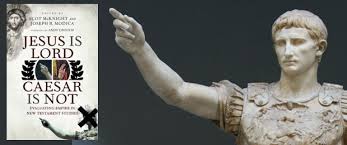
One of the obvious growth areas in the study of the Gospels is the study of Matthew as a possible vehicle of anti-imperial rhetoric, largely due to the voluminous output on the subject by Warren Carter (20 articles and more). In the chapter by Joel Willits on Matthew he interacts with various of the major points Carter and others have been making about Matthew. On the surface of things, Matthew seems an unlikely candidate for anti-imperial rhetoric, being not only the Gospel that gives us ‘render unto Caesar’ but also the Gospel that seems to like Pilate better than the Herods. It is also in some ways the most obviously Jewish of the four Gospels, which may or may not favor Empire critique, depending on when Matthew was actually written. Willits reviews the history of this approach to Matthew, and interestingly it only goes back to 1995 or so, unlike Empire studies in relationship to Paul or Revelation for instance. The focus of Willits review is on the article of Carter’s which appears in the collected essays volume entitled Empire and the NT. Willits is prepared to agree with Carter that Matthew is anti-Rome, but his political vision is not reducible to that. Willits says that Carter is of course right that politics and religion were interwoven in antiquity, and he prefers a reading of Matthew that reflects such a reality to an overly spiritualized reading of Matthew.
One of Carter’s fundamental assumptions, undergirding his reading of Mathew, is that Jesus himself was crucified for being anti-Rome. Of course Matthew’s Gospel does not actually directly say anything like that, so Carter’s fall back position is to talk about hidden scripts in the text of Matthew. Are there then hidden scripts of resistance to Rome in Matthew? (p. 87).
Part of the problem with Carter’s analysis is it is based on a Schweitzerian reading of Matthew’s and behind that Jesus’ eschatology. So for example Carter (quoted by Willits) says: “Jesus exemplified the politics of disguise and anonymity, notably through his proclamation and demonstration of the rumor that God’s imminent removal of Rome’s world and the establishment of God’s empire.” (p. 87 is where the quote is). The problem is that Mathew’s Gospel, following Mk. 13.32, and behind that Jesus himself, flatly denies any sort of necessary imminence of the return of Christ, or of the replacement of Rome. Instead the Kingdom of God is already breaking into the midst of God’s people in Israel without displacing Herod or Rome or anybody else. This is not because the Gospel is purely spiritual, its because Jesus is interested in forming his own social community, not displacing another one. Furthermore, since this Gospel was not a public document or a tract tacked up on a synagogue wall, but rather insider literature, it is not at all clear that there was any need for ‘hidden transcripts’ between Matthew and his audience. It may be another matter when we are talking about the public discourse of Jesus, but Carter’s focus is on Matthew and his community. And where exactly was that community that supposedly was wrestling with the Empire question which was omnipresent in their world and minds? Most scholars think this Gospel was written in Antioch, and a second possibility in Capernaum or Galilee somewhere. Were either of these places hotbeds of Empire criticism and ferment among Jews and followers of Jesus? Further, if that was true, why is the clear tension in the Gospel between followers of Jesus and other Jews, and not with the representatives of Empire. Indeed, in Matthew’s Gospel THE representative of Empire’s wife declares Jesus innocent warns her husband against violent actions, and Pilate tries to release Jesus? If this was Empire critique, we would expect a very different portrayal of Pilate and his wife. Pilate washes his hands of the coming crucifixion of Jesus, and clearly is depicted as not wanting anything to do with this sordid affair. This sounds more like apologetics than Empire criticism! Jesus wasn’t guilty and Pilate didn’t think so either. As for the Jewish authorities representing Rome and its views— in this Gospel they don’t! Pilate doesn’t want to agree with the Jewish authorities The critique of the Jewish authorities is one thing, especially when they are at variance with the portrayal of the Roman authorities. A critique of Rome is another thing. In other words, you can’t portray the Jewish authorities and antagonists of Jesus as Rome’s puppets or partners. It just doesn’t work. If Jesus’ Gospel is counter-cultural, the question is— which culture is it countering and critiquing? On the one hand one could say it is all fallen human cultures, without the Roman Empire especially called out. Mt. 4.8 which speaks of the kingdoms plural of this world which are on offer not by Rome but by Satan favors such a view. On the other hand the specific evidence suggests an inter-Jewish debate with some forms of Judaism being mainly critiqued. The main empire being opposed is the Satanic one, all pervasive evil which involves all fallen human kingdoms. As Peter Oakes says, any Gospel which says render unto Caesar what is Caesar, not only can’t be for open revolt against Rome and its taxes, it would appear unlikely that Rome is the primary target of criticism in such a Gospel and for good reason. The author believes that ultimately God will judge the world, through Jesus, and that will happen at the return of Christ, not before, and that return is not said to be definitely imminent. What is said is that no one, not even Jesus knows when it is coming!! In the meantime, the way God’s saving reign is working in the world is by changing people by means of love, mercy, forgiveness and non-violence. If Pilate had heard that these were the weapons Jesus was using against Rome, he would have just laughed, and not seen it as anti-imperial at all. Stupid maybe, utopian maybe, but not inherently anti-imperial.
It was about as anti-imperial is when Americans like me were protesting not government in general but the abuse of power that sent us to Vietnam, and we protested by putting daisies in the gun barrels of the National Guard. They did not see it as a threat, or even as a critique of the basic role they played in society. One doubts that Matthew’s community would have seen this Gospel as specifically targeting Rome for criticism either. Willitts own conclusion deserves to be quoted verbatim: “Matthew was neither critiquing ’empire’ per se nor singling out Rome uniquely. To take this view would be inappropriately to diminish Matthew’s message. Jesus is not only or primarily God’s answer to Rome. Jesus is God’s answer to Israel’s unfulfilled story. A story, as it turns out, not only about Israel. It is a story that encompasses all the kingdoms and nations of the world (Mt. 4.8;28.19-20).”(p. 97).
Amen to that assessment.
Previous Post

October 12, 2014
Jesus is Lord, Caesar is Not--- Part Three
Next Post
October 13, 2014 The Bible and Science--- Some Reflections
Browse Our Archives
Select a Category Uncategorized
Select a Month October 2026 September 2026 August 2026 July 2026 June 2026 May 2026 April 2026 March 2026 February 2026 January 2026 December 2025 November 2025 October 2025 September 2025 August 2025 July 2025 June 2025 May 2025 April 2025 March 2025 February 2025 January 2025 December 2024 November 2024 October 2024 September 2024 August 2024 July 2024 June 2024 May 2024 April 2024 March 2024 February 2024 January 2024 December 2023 November 2023 October 2023 September 2023 August 2023 July 2023 June 2023 May 2023 April 2023 March 2023 February 2023 January 2023 December 2022 November 2022 October 2022 September 2022 August 2022 July 2022 June 2022 May 2022 April 2022 March 2022 February 2022 January 2022 December 2021 November 2021 October 2021 September 2021 August 2021 July 2021 June 2021 May 2021 April 2021 March 2021 February 2021 January 2021 December 2020 November 2020 October 2020 September 2020 August 2020 July 2020 June 2020 May 2020 April 2020 March 2020 February 2020 January 2020 December 2019 November 2019 October 2019 September 2019 August 2019 July 2019 June 2019 May 2019 April 2019 March 2019 February 2019 January 2019 December 2018 November 2018 October 2018 September 2018 August 2018 July 2018 June 2018 May 2018 April 2018 March 2018 February 2018 January 2018 December 2017 November 2017 October 2017 September 2017 August 2017 July 2017 June 2017 May 2017 April 2017 March 2017 February 2017 January 2017 December 2016 November 2016 October 2016 September 2016 August 2016 July 2016 June 2016 May 2016 April 2016 March 2016 February 2016 January 2016 December 2015 November 2015 October 2015 September 2015 August 2015 July 2015 June 2015 May 2015 April 2015 March 2015 February 2015 January 2015 December 2014 November 2014 October 2014 September 2014 August 2014 July 2014 June 2014 May 2014 April 2014 March 2014 February 2014 January 2014 December 2013 November 2013 October 2013 September 2013 August 2013 July 2013 June 2013 May 2013 April 2013 March 2013 February 2013 January 2013 December 2012 November 2012 October 2012 September 2012 August 2012 July 2012 June 2012 May 2012 April 2012 March 2012 February 2012 January 2012 December 2011 November 2011 October 2011 September 2011 August 2011 July 2011 June 2011 May 2011 April 2011 March 2011 February 2011 January 2011
Follow Us!
TAKE THE
Religious Wisdom Quiz
What was a "phylactery," criticized by Jesus in Matthew 23?
Select your answer to see how you score.
A robe A small box with Scripture A fishing net A lamp
Books by This Author Books by Ben Witherington
Related posts from The Bible and Culture

Methodist Central Hall and Westminster Abbey


The British Library-- Part Two
TRENDING AT PATHEOS Evangelical

'Super Scam Me' Exposes AI Jon Bon Jovi...
Leslie Pickett believed she was in a relationship with Jon Bon Jovi....

The Brazilian Remake of Kendricks' 'Flywheel' Opens in...
“Flywheel,” the story that launched the Kendrick Brothers’ filmmaking career is getting...

The Dangers of Gradual Accommodation (Winking at Sin)
Recently, the “law of gradualness” resurfaced during the opening of a weeklong,...

The Iron Gates and the Lion of the...
Yesterday, I didn't finish my report about, well, yesterday. So I'll...

The Image: On the Horror of Capitalism and...
The Image Then went the Pharisees, and took counsel how they might...

We are approaching the date of our new American national holiday: October...
view all Evangelical blogs
Ad-Free & Subscriber Log-In Subscription Support
- About Us
- 2026 Calendar
- Videos
- Podcasts
- Library of World Religions
- Faith In Media Tracker
- Advertise With Us
- Write for Us
- Privacy Policy
- Terms of Service
- Do Not Sell My Data
- Contact Us
- Radiant Digital
- Manage Newsletter Subscriptions
- Unsubscribe From Notifications
- Sitemap
Copyright 2008-2026, Patheos. All rights reserved.
Subscription Support Ad-Free & Subscriber Log-In
Follow Patheos