
BuddhistCatholicContemplativeEvangelicalGeneral ChristianHinduJewishLatter-day SaintMuslimNew VisionsProgressive Christian
Beliefs
- Buddhist
- Catholic
- Contemplative
- Evangelical
- General Christian
- Hindu
- Jewish
- Latter-day Saint
- More Voices
- Muslim
- New Visions
- Pagan
- Progressive Christian
Topics
- Religion News
- Food and Religion
- Sports and Religion
- Religious Art
- Religious Music and Entertainment
- Religious Events
- History and Religion
- Style and Religion
- Politics and Religion
- Women in Religion
- Recreation Outdoors and Religion
- Business Finance and Religion
- Careers Workplace and Religion
- Education and Religion
- Family Parenting and Religion
- Health Fitness and Religion
- Home and Religion
- Relationships and Religion
- Technology and Religion
- Travel and Religion
Columnists
- Buddhist Columnists
- Business Finance and Religion Columnists
- Careers Workplace and Religion Columnists
- Catholic Columnists
- Contemplative Columnists
- Education and Religion Columnists
- Evangelists Columnists
- Family Parenting and Religion Columnists
- General Christian Columnists
- Health Fitness and Religion Columnists
- Hindu Columnists
- History and Religion Columnists
- Home and Religion Columnists
- Jewish Columnists
- More Voices Columnists
- Latter Day Columnists
- Muslim Columnists
- New Visions Columnists
- Nonreligious Columnists
- Pagan Columnists
- Politics and Religion Columnists
- Progressive Columnists
- Recreation Outdoors and Religion Columnists
- Relationships and Religion Columnists
- Religion News Columnists
- Religious Art Columnists
- Religious Events Columnists
- Religious Music and Entertainment Columnists
- Sports and Religion Columnists
- Style and Religion Columnists
- Technology and Religion Columnists
- Travel and Religion Columnists
- Women in Religion Columnists
Resource Library
- 2026 Calendar
- Library of World Religions
- The 100 Most Holy Places on Earth
- Patheos Answers
- Podcasts
- Videos
- Faith Leaders Database
- Anglican Episcopalian
- Bahai
- Baptist
- Buddhism
- Christianity
- Confucianism
- Eastern Orthodoxy
- Hinduism
- Holiness and Pentecostal
- ISKCON
- Islam
- Judaism
- Lutheran
- Methodist
- The Church of Jesus Christ of Latter-day Saints
- New Age
- Paganism
- Presbytarian and Reformed
- Protestantism
- Religion Behind the Scenes
- Roman Catholic
- Scientology
- Shia Islam
- Sikhism
- Sufism
- Sunni Islam
- Taoism
- Zen
- See all religions
Research Tools
 Ad-Free & Subscriber Log-In Subscription Support
Follow Patheos 

- Trending:
- Advent
- |
- Forgiveness
- |
- Thanksgiving
- |
- Election
- |
- Seasonal Holidays
- |
- Marriage

- Home
- Evangelical
- Hurtado on Christology and Wright
Hurtado on Christology and Wright
Last updated on: March 13, 2015 at 10:53 pm by Ben Witherington
Hurtado on Christology and Wright 2015-03-13T22:53:27-04:00 Ben Witherington
Patheos Explore the world's faith through different perspectives on religion and spirituality! Patheos has the views of the prevalent religions and spiritualities of the world.
Messiah and Worship
by larryhurtado
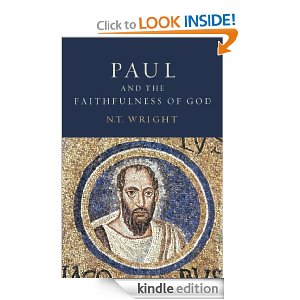
In Tom Wright’s new opus on Paul, there is a section headed “Jesus as Risen and Enthroned Son of God” (pp. 690-709), where he offers a proposal for how Jesus came to be regarded as in some sense “divine” so quickly after his execution. To cite his own words: “. . . the resurrection, demonstrating the truth of Jesus’ pre-crucifixion messianic claim, joined up with the expectation of YHWH’s return on the one hand, and the presence of the spirit of Jesus on the other to generate a fresh reading of ‘messianic’ texts [in the OT] which enabled a full christological awareness to dawn on the disciples” (692).”
In this discussion, he accuses me (and Carey Newman too) of making “far too little of the resurrection itself, collapsing it in effect into the concept of ‘glorification’, and supposing that the early Christian awareness of the latter came through visions and revelations” (693). But, he continues, “without the theme of YHWH’s return on the one hand, and the Messiahship of Jesus on the other, demonstrated by the resurrection, they would not have generated that early christology which we find already in Paul” (693).
In response, my first comment is to reiterate (from an earlier posting) the point that, in fact, it is difficult to find in Paul’s letters any explicit reference to Jesus as “the personal, embodied return of YHWH.” One can see something like this, perhaps, in Mark 1:1-3, as argued, e.g., by Joel Marcus, The Way of the Lord: Christological Exegesis of the Old Testament in the Gospel of Mark (Louisville: Westminster/John Knox Press, 1992). But Wright doesn’t actually identify Pauline texts where this idea is evident, which raises a question about just how crucial/central it was in the very earliest moments of christological reflection.
My second comment is that there is no disagreement between us over the importance of the conviction that Jesus had been raised from death, and specifically that this likely served as divine vindication of Jesus and the basis of the messianic claim of earliest believers. Wright’s project seems to be to develop a coherent representation of Paul’s theology. But my work has been directed mainly to the historical question of how it was that Jesus (even a messianic Jesus) came to be treated as “divine” and came to be included so programmatically in the devotional/worship practice of early Christian circles. “Messiah” doesn’t get us there. To put it concisely, I don’t see that the conviction that Jesus is Messiah could readily have served as a sufficient basis for the radical “mutation” in devotional practice that I’ve repeatedly pointed to (and itemized its specifics) over some 25 years now.
So, if a “return of YHWH” isn’t evident in Paul (our earliest evidence) as a central factor, and if Messiah isn’t a sufficient category, then how to account for the remarkable “dyadic” devotional practice in question? My own proposal has been that earliest believers treated the risen/exalted Jesus as they did only because they felt required to do so by God. Note that the typical way that reverence of Jesus is justified in various NT texts is to invoke God’s action of exalting him and requiring that he be reverenced: E.g., Philippians 2:9-11; 1 Cor 15:20-28; Hebrews 1:1-4; Acts 2:36; John 5:22-23, et alia).
How then would the conviction have been formed that God had done such an astonishing thing, and now required this novel development in devotional practice? Well, my own proposal is that this conviction was formed through an interaction of powerful “revelatory” experiences (e.g., visions of Jesus in heavenly glory, etc.), prophetic oracles (declaring his exaltation), and intensive and creative interpretation of certain biblical texts (e.g., Isaiah 45:22-23; Psalm 110:1) (see, e.g., my discussion of the “Forces and Factors” in Lord Jesus Christ, 27-78). But, whatever the means/process, the key point is that earliest believers seem to have come quickly to the conviction that Jesus had been exalted to a unique heavenly status, had been given to share in the divine name and glory, and must now be reverenced in obedience to God.
In short, we have to reckon with two distinguishable convictions: Jesus as Messiah and Jesus as rightful recipient of cultic devotion. Both erupted early, perhaps simultaneously. But resurrection, by itself, didn’t suffice for the latter conviction or the devotional practice in question. For that, a “glorification” of Jesus seems to me to have been necessary, a glorification understood as by God and requiring that Jesus be reverenced.
So, given that my own work was focused on trying to examine the eruption of the dyadic devotional pattern reflected already in Paul’s letters, I hope that it’s clear why I’ve underscored the “glorification” of Jesus and not simply (so to speak) his resurrection. The two were obviously linked for earliest believers, but we should avoid collapsing either into the other.
Previous Post

May 23, 2014
Critical Judgment and the Allure of the Internet
Next Post

May 25, 2014 Mercy--- Shut UP!
Browse Our Archives
Select a Category Uncategorized
Select a Month November 2026 October 2026 September 2026 August 2026 July 2026 June 2026 May 2026 April 2026 March 2026 February 2026 January 2026 December 2025 November 2025 October 2025 September 2025 August 2025 July 2025 June 2025 May 2025 April 2025 March 2025 February 2025 January 2025 December 2024 November 2024 October 2024 September 2024 August 2024 July 2024 June 2024 May 2024 April 2024 March 2024 February 2024 January 2024 December 2023 November 2023 October 2023 September 2023 August 2023 July 2023 June 2023 May 2023 April 2023 March 2023 February 2023 January 2023 December 2022 November 2022 October 2022 September 2022 August 2022 July 2022 June 2022 May 2022 April 2022 March 2022 February 2022 January 2022 December 2021 November 2021 October 2021 September 2021 August 2021 July 2021 June 2021 May 2021 April 2021 March 2021 February 2021 January 2021 December 2020 November 2020 October 2020 September 2020 August 2020 July 2020 June 2020 May 2020 April 2020 March 2020 February 2020 January 2020 December 2019 November 2019 October 2019 September 2019 August 2019 July 2019 June 2019 May 2019 April 2019 March 2019 February 2019 January 2019 December 2018 November 2018 October 2018 September 2018 August 2018 July 2018 June 2018 May 2018 April 2018 March 2018 February 2018 January 2018 December 2017 November 2017 October 2017 September 2017 August 2017 July 2017 June 2017 May 2017 April 2017 March 2017 February 2017 January 2017 December 2016 November 2016 October 2016 September 2016 August 2016 July 2016 June 2016 May 2016 April 2016 March 2016 February 2016 January 2016 December 2015 November 2015 October 2015 September 2015 August 2015 July 2015 June 2015 May 2015 April 2015 March 2015 February 2015 January 2015 December 2014 November 2014 October 2014 September 2014 August 2014 July 2014 June 2014 May 2014 April 2014 March 2014 February 2014 January 2014 December 2013 November 2013 October 2013 September 2013 August 2013 July 2013 June 2013 May 2013 April 2013 March 2013 February 2013 January 2013 December 2012 November 2012 October 2012 September 2012 August 2012 July 2012 June 2012 May 2012 April 2012 March 2012 February 2012 January 2012 December 2011 November 2011 October 2011 September 2011 August 2011 July 2011 June 2011 May 2011 April 2011 March 2011 February 2011 January 2011
Follow Us!
TAKE THE
Religious Wisdom Quiz
How beautiful on the mountains are the feet of those who bring good news and proclaim what?
Select your answer to see how you score.
Victory Salvation Peace Deliverance
Books by This Author Books by Ben Witherington
Related posts from The Bible and Culture

Rock N' Roll-- Morphing into/for a New Generation...

Salisbury Cathedral (outside)-- Part Four

Salisbury Cathedral (the windows)-- Part Three

Salisbury Cathedral-- Part Two
TRENDING AT PATHEOS Evangelical

Here are two Thanksgiving columns that I originally wrote for the...

Book III, Chapter 3: Christ "Classic" (Matt. 9:9-34)
Book III, Chapter 3: Christ "Classic" (Matt. 9:9-34) In honor of tomorrow's...

Jesus explicitly mentions the book of Jonah twice, but he retells the...

Peggy Sue Got Married: Coppola’s Always Been Like...
I enjoyed Megalopolis (2024). It’s a mess, but I enjoyed it. The...

My dissertation The Place of Mysticism in the Late Middle Ages concerns...

God and the Contingency of This World
The great Catholic philosopher Aquinas and the great Lutheran philosopher Leibniz developed...
view all Evangelical blogs
Ad-Free & Subscriber Log-In Subscription Support
- About Us
- 2026 Calendar
- Videos
- Podcasts
- Library of World Religions
- Faith In Media Tracker
- Advertise With Us
- Write for Us
- Privacy Policy
- Terms of Service
- Do Not Sell My Data
- Contact Us
- Radiant Digital
- Manage Newsletter Subscriptions
- Unsubscribe From Notifications
- Sitemap
Copyright 2008-2026, Patheos, part of the Radiant Digital network of media brands. All rights reserved.
Subscription Support Ad-Free & Subscriber Log-In
Follow Patheos