
BuddhistCatholicContemplativeEvangelicalGeneral ChristianHinduJewishLatter-day SaintMuslimNew VisionsProgressive Christian
Beliefs
- Buddhist
- Catholic
- Contemplative
- Evangelical
- General Christian
- Hindu
- Jewish
- Latter-day Saint
- More Voices
- Muslim
- New Visions
- Pagan
- Progressive Christian
Topics
- Religion News
- Food and Religion
- Sports and Religion
- Religious Art
- Religious Music and Entertainment
- Religious Events
- History and Religion
- Style and Religion
- Politics and Religion
- Women in Religion
- Recreation Outdoors and Religion
- Business Finance and Religion
- Careers Workplace and Religion
- Education and Religion
- Family Parenting and Religion
- Health Fitness and Religion
- Home and Religion
- Relationships and Religion
- Technology and Religion
- Travel and Religion
Columnists
- Buddhist Columnists
- Business Finance and Religion Columnists
- Careers Workplace and Religion Columnists
- Catholic Columnists
- Contemplative Columnists
- Education and Religion Columnists
- Evangelists Columnists
- Family Parenting and Religion Columnists
- General Christian Columnists
- Health Fitness and Religion Columnists
- Hindu Columnists
- History and Religion Columnists
- Home and Religion Columnists
- Jewish Columnists
- More Voices Columnists
- Latter Day Columnists
- Muslim Columnists
- New Visions Columnists
- Nonreligious Columnists
- Pagan Columnists
- Politics and Religion Columnists
- Progressive Columnists
- Recreation Outdoors and Religion Columnists
- Relationships and Religion Columnists
- Religion News Columnists
- Religious Art Columnists
- Religious Events Columnists
- Religious Music and Entertainment Columnists
- Sports and Religion Columnists
- Style and Religion Columnists
- Technology and Religion Columnists
- Travel and Religion Columnists
- Women in Religion Columnists
Resource Library
- 2026 Calendar
- Library of World Religions
- The 100 Most Holy Places on Earth
- Patheos Answers
- Podcasts
- Videos
- Faith Leaders Database
- Anglican Episcopalian
- Bahai
- Baptist
- Buddhism
- Christianity
- Confucianism
- Eastern Orthodoxy
- Hinduism
- Holiness and Pentecostal
- ISKCON
- Islam
- Judaism
- Lutheran
- Methodist
- The Church of Jesus Christ of Latter-day Saints
- New Age
- Paganism
- Presbytarian and Reformed
- Protestantism
- Religion Behind the Scenes
- Roman Catholic
- Scientology
- Shia Islam
- Sikhism
- Sufism
- Sunni Islam
- Taoism
- Zen
- See all religions
Research Tools
 Ad-Free & Subscriber Log-In Subscription Support
Follow Patheos 

- Trending:
- Advent
- |
- Forgiveness
- |
- Thanksgiving
- |
- Election
- |
- Seasonal Holidays
- |
- Marriage

- Home
- Evangelical
- ‘Since God is One’– The Monotheism of Judaism and Christianity
‘Since God is One’– The Monotheism of Judaism and Christianity
Last updated on: March 13, 2015 at 10:54 pm by Ben Witherington
‘Since God is One’– The Monotheism of Judaism and Christianity 2015-03-13T22:54:35-04:00 Ben Witherington
Patheos Explore the world's faith through different perspectives on religion and spirituality! Patheos has the views of the prevalent religions and spiritualities of the world.
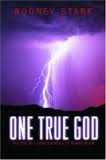
There have of course been many books written on monotheism (see e.g the book by Rodney Stark show above). Monotheism itself is a modern post-Enlightenment term, but this doesn’t much matter. The idea and belief is clearly present throughout the Bible. At the level of thought, it was the most fundamental difference between pagans on the one hand, and Jews and Christians on the other in the first century world, and it is still the most fundamental difference between those who affirm the Biblical religion, and polytheists, for example Hindus, or other believers in multiple deities.
Those who wish to argue that Christianity is not a monotheistic religion will have to come to grips with Tom Wright’s recent massive tome entitled Paul and the Faithfulness of God particularly the first major section in Part Two where he discusses early Jewish and early Christian monotheism at great length (over 150 pages worth). Here, I intend to underline a couple of key points he makes, but there are many tell tale signs along the way.
First, however let’s deal with a caricature of Jewish religion that suggests ‘the earliest Israelites were henotheists, not monotheists, simply believing their God was the most high God’. Whatever may have been affirmed by individual Israelites along the way, what the OT says was their ‘official’ position was that YHWH was ‘one’ (see the Shema). This was not a statement over against the possibility that there might be other supernatural beings (e.g. angels or demons), but that there was only one real or true deity in the whole universe– YHWH.
What both Wright, and before him Bauckham have correctly stressed is that this statement that God is one has an external reference, not an internal one. By this is meant that it is not an attempt to define the inner workings of the divine nature (for example how many ways or personal representations the only God could reveal himself in) it is an attempt to make clear that there is only one God over against the claims that there are many, in other words over against any and all forms of polytheism.
In Jewish belief there is one God who created everything in the universe, and is the one ruler over all, and furthermore, all that he created is intrinsically good. In other words, it is a strong statement against any and all forms of dualism, material or moral dualism (for example Gnostic dualism which suggests there is a good and an evil deity, or that spirit is good and matter is evil). No, there is one God, one creation that God made, and one people of God that he has focused his attention and salvific purposes through. Wright calls this creational monotheism.
Wright puts it this way: “The key thing about second-Temple monotheism was not, therefore,a particular proposal about the inner nature of the one God….The main focus of Jewish monotheism in our period, then looked not as it were inward, towards an analysis of the one God, but decidedly outward to the relation of the one God to the world” (pp. 626-27) [and to claims in the world of multiple deities].
For the early Jew, and the original Jewish and also Gentile followers of Jesus, the Creator/creature distinction was fundamental. Creation, and creatures are things that the one Creator God made. They were not part of the creator, and they had no hope of becoming God either. There was, in early Christian thought only one figure who mediated or bridged the gap between God and humankind…. the divine Son of God who took on flesh in the womb of Mary and became a human being, while remaining the divine Son of God.
The earliest Jewish Christians, including James, Peter, Paul, and others insisted this was not a breach or violation of Jewish monotheism, but a further explication of the inner nature of the one God. Tom quite rightly points to the argument in Rom. 3.29-30 where Paul says “Or does God belong only to the Jews? Doesn’t he belong to the nations as well since God is one?” The obvious answer to the first rhetorical question is no, and the second one is yes. There is only one God who is over all peoples, all of creation, and that God made it all.
I agree with Wright as well that Jesus was never seen as a second deity alongside of God the Father, or a human or an angel promoted to divine glory by means of the resurrection. He was on the Creator side of the ledger when the universe was made says John 1, and he made the universe with God the Father. At no point does Paul ever talk about ‘gods’ plural when he refers to the God he or early Christians believed in and worshipped, nor does he use expressions like ‘ekklesia of gods’, no it is always ‘the assembly/church of God’ singular in some place or in general. Of course not, since he so whole-heartedly is able to say ‘since God is One’.
Previous Post

March 17, 2014
A Response to Bishop Sano's 'Call to Biblical Obedience'-- Part One
Next Post
March 18, 2014 A Response to Bishop Sano's 'Call to Biblical Obedience'-- Part Two
Browse Our Archives
Select a Category Uncategorized
Select a Month November 2026 October 2026 September 2026 August 2026 July 2026 June 2026 May 2026 April 2026 March 2026 February 2026 January 2026 December 2025 November 2025 October 2025 September 2025 August 2025 July 2025 June 2025 May 2025 April 2025 March 2025 February 2025 January 2025 December 2024 November 2024 October 2024 September 2024 August 2024 July 2024 June 2024 May 2024 April 2024 March 2024 February 2024 January 2024 December 2023 November 2023 October 2023 September 2023 August 2023 July 2023 June 2023 May 2023 April 2023 March 2023 February 2023 January 2023 December 2022 November 2022 October 2022 September 2022 August 2022 July 2022 June 2022 May 2022 April 2022 March 2022 February 2022 January 2022 December 2021 November 2021 October 2021 September 2021 August 2021 July 2021 June 2021 May 2021 April 2021 March 2021 February 2021 January 2021 December 2020 November 2020 October 2020 September 2020 August 2020 July 2020 June 2020 May 2020 April 2020 March 2020 February 2020 January 2020 December 2019 November 2019 October 2019 September 2019 August 2019 July 2019 June 2019 May 2019 April 2019 March 2019 February 2019 January 2019 December 2018 November 2018 October 2018 September 2018 August 2018 July 2018 June 2018 May 2018 April 2018 March 2018 February 2018 January 2018 December 2017 November 2017 October 2017 September 2017 August 2017 July 2017 June 2017 May 2017 April 2017 March 2017 February 2017 January 2017 December 2016 November 2016 October 2016 September 2016 August 2016 July 2016 June 2016 May 2016 April 2016 March 2016 February 2016 January 2016 December 2015 November 2015 October 2015 September 2015 August 2015 July 2015 June 2015 May 2015 April 2015 March 2015 February 2015 January 2015 December 2014 November 2014 October 2014 September 2014 August 2014 July 2014 June 2014 May 2014 April 2014 March 2014 February 2014 January 2014 December 2013 November 2013 October 2013 September 2013 August 2013 July 2013 June 2013 May 2013 April 2013 March 2013 February 2013 January 2013 December 2012 November 2012 October 2012 September 2012 August 2012 July 2012 June 2012 May 2012 April 2012 March 2012 February 2012 January 2012 December 2011 November 2011 October 2011 September 2011 August 2011 July 2011 June 2011 May 2011 April 2011 March 2011 February 2011 January 2011
Follow Us!
TAKE THE
Religious Wisdom Quiz
What does "Genesis" mean?
Select your answer to see how you score.
Origin or beginning History Law Wisdom
Books by This Author Books by Ben Witherington
Related posts from The Bible and Culture

Rock N' Roll-- Morphing into/for a New Generation...

Salisbury Cathedral (outside)-- Part Four

Salisbury Cathedral (the windows)-- Part Three
Salisbury Cathedral-- Part Two
TRENDING AT PATHEOS Evangelical

Jesus explicitly mentions the book of Jonah twice, but he retells the...

Peggy Sue Got Married: Coppola’s Always Been Like...
I enjoyed Megalopolis (2024). It’s a mess, but I enjoyed it. The...

My dissertation The Place of Mysticism in the Late Middle Ages concerns...

God and the Contingency of This World
The great Catholic philosopher Aquinas and the great Lutheran philosopher Leibniz developed...

Pope Francis and The Devil – A Pagan...
According to his private diaries, Pope Francis saw visions of the devil...

Rock N' Roll-- Morphing into/for a New Generation...
Well, should we be grateful, or is rock n' roll just dead? ...
view all Evangelical blogs
Ad-Free & Subscriber Log-In Subscription Support
- About Us
- 2026 Calendar
- Videos
- Podcasts
- Library of World Religions
- Faith In Media Tracker
- Advertise With Us
- Write for Us
- Privacy Policy
- Terms of Service
- Do Not Sell My Data
- Contact Us
- Radiant Digital
- Manage Newsletter Subscriptions
- Unsubscribe From Notifications
- Sitemap
Copyright 2008-2026, Patheos, part of the Radiant Digital network of media brands. All rights reserved.
Subscription Support Ad-Free & Subscriber Log-In
Follow Patheos