
BuddhistCatholicContemplativeEvangelicalGeneral ChristianHinduJewishLatter-day SaintMuslimNew VisionsProgressive Christian
Beliefs
- Buddhist
- Catholic
- Contemplative
- Evangelical
- General Christian
- Hindu
- Jewish
- Latter-day Saint
- More Voices
- Muslim
- New Visions
- Pagan
- Progressive Christian
Topics
- Religion News
- Food and Religion
- Sports and Religion
- Religious Art
- Religious Music and Entertainment
- Religious Events
- History and Religion
- Style and Religion
- Politics and Religion
- Women in Religion
- Recreation Outdoors and Religion
- Business Finance and Religion
- Careers Workplace and Religion
- Education and Religion
- Family Parenting and Religion
- Health Fitness and Religion
- Home and Religion
- Relationships and Religion
- Technology and Religion
- Travel and Religion
Columnists
- Buddhist Columnists
- Business Finance and Religion Columnists
- Careers Workplace and Religion Columnists
- Catholic Columnists
- Contemplative Columnists
- Education and Religion Columnists
- Evangelists Columnists
- Family Parenting and Religion Columnists
- General Christian Columnists
- Health Fitness and Religion Columnists
- Hindu Columnists
- History and Religion Columnists
- Home and Religion Columnists
- Jewish Columnists
- More Voices Columnists
- Latter Day Columnists
- Muslim Columnists
- New Visions Columnists
- Nonreligious Columnists
- Pagan Columnists
- Politics and Religion Columnists
- Progressive Columnists
- Recreation Outdoors and Religion Columnists
- Relationships and Religion Columnists
- Religion News Columnists
- Religious Art Columnists
- Religious Events Columnists
- Religious Music and Entertainment Columnists
- Sports and Religion Columnists
- Style and Religion Columnists
- Technology and Religion Columnists
- Travel and Religion Columnists
- Women in Religion Columnists
Resource Library
- 2026 Calendar
- Library of World Religions
- The 100 Most Holy Places on Earth
- Patheos Answers
- Podcasts
- Videos
- Faith Leaders Database
- Anglican Episcopalian
- Bahai
- Baptist
- Buddhism
- Christianity
- Confucianism
- Eastern Orthodoxy
- Hinduism
- Holiness and Pentecostal
- ISKCON
- Islam
- Judaism
- Lutheran
- Methodist
- The Church of Jesus Christ of Latter-day Saints
- New Age
- Paganism
- Presbytarian and Reformed
- Protestantism
- Religion Behind the Scenes
- Roman Catholic
- Scientology
- Shia Islam
- Sikhism
- Sufism
- Sunni Islam
- Taoism
- Zen
- See all religions
Research Tools
 Ad-Free & Subscriber Log-In Subscription Support
Follow Patheos 

- Trending:
- Advent
- |
- Forgiveness
- |
- Thanksgiving
- |
- Election
- |
- Seasonal Holidays
- |
- Marriage

- Home
- Evangelical
- N.T. Wright’s Pauline Perspectives–Part Three
N.T. Wright’s Pauline Perspectives–Part Three
Last updated on: March 13, 2015 at 10:56 pm by Ben Witherington
N.T. Wright’s Pauline Perspectives–Part Three 2015-03-13T22:56:53-04:00 Ben Witherington
Patheos Explore the world's faith through different perspectives on religion and spirituality! Patheos has the views of the prevalent religions and spiritualities of the world.
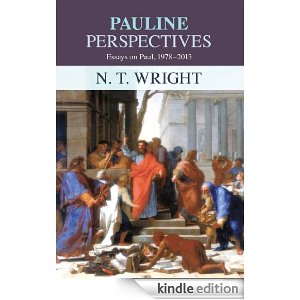
BEN: One of your earliest important works was entitled The Climax of the Covenant. On the surface at least, this book seems rather different than your later work when it comes to ‘the New Perspective on Paul’, particularly on the issue of the so-called boundary defining things in early Judaism– circumcision, sabbath keeping, food laws. What was it that did or didn’t convince you about the arguments of Jimmy Dunn and others that when Paul refers to ‘works of the Law’ it is a sort of code language for these boundary markers of the Jewish faith? How would you view that issue now?
TOM: When I first developed my main proposals on Paul – i.e. in the mid-70s – I became convinced that the only way to make sense of Romans and Galatians without postulating a major and problematic change of mind on Paul’s part was to see his fundamental charge against his Jewish contemporaries – including his own former self – not as legalistic works-righteousness, i.e. trying to earn justification or salvation by good moral works, but as what I loosely called ‘national righteousness’. By that I meant the attempt to confine grace to one race. This is clear in the reading of Rom 10.2-3 which I (like some others) proposed: ‘seeking to establish their own righteousness’ meant ‘a righteousness for Jews and Jews only’. This is why they didn’t submit to ‘God’s righteousness’, to the righteous covenant plan of God as set out in 9.6-29, resulting in their failure to attain covenant membership while the Gentiles had done so (Rom 9.30f., where ‘righteousness’ MUST mean ‘covenant membership’, since Paul is here summing up what he’s said in 9.6-29, especially 9.24 where, as is well known, Paul includes Gentiles in the ‘call’ of God).
All this made, and makes, a whole lot of sense of the dense and difficult passages Rom. 3.21-31 (as a whole . . . far too many expositors see a sharp break between vv 26 and 27 but for Paul it’s all part of the same thing), and also Gal. 2.15-21. But to begin with, I kept stumbling over what then Paul meant by ‘works of the law’. Indeed, I recall explaining my ideas to Bishop Stephen Neill back in the late 1970s and he was very interested but said, ‘Then why did Paul say what he did about works of the law?’ At that time I had no good answer for that.
Then, after Jimmy Dunn had read my thesis in 1980 and began to develop his own version of what I had already called a ‘new perspective’, he proposed that by ‘works of the law’ Paul meant the ‘works’ which divided Jews from gentiles. Since I had already been thinking of that division as the thing which justification overcame in Rom 3 and Gal. 2.15-21 etc., it made very good sense. It still does – though of course as always with Paul his phrases are not mathematical symbols which always mean exactly the same thing. It depends on the context.
Jimmy and I have disagreed over how to interpret the key parallel phrase in 4QMMT. You need to look at our respective articles for details. I am convinced (a) that the parallel is important: these are the ‘works’ which mark out the true people of God over against others; (b) that the parallel is NOT exact because in Qumran the ‘works’ are marking out one set of Jews against another set of Jews, not (as in Paul) Jews from gentiles; (c) that the ‘works’ in question are therefore NOT the primary works of Mosaic Torah, as in Galatians etc., but are rather specific cultic regulations which will separate ‘true Jews’ from other Jews.
And of course, as Jimmy and I have, I think, both now said several times, though a primary emphasis in e.g. Galatians is on the ‘works’ that mark out Jew from Gentile (Sabbath, food, circumcision – and we might add Temple observance, endogamy, etc.), Paul is of course clear that anyone who takes on Torah is obliged to keep the whole thing, so that ‘works’ then become far wider in principle.
But the point would still stand: this is NOT a polemic against Pelagian or Arminian self-help moralism, to which the so-called ‘old perspective’ still clings rather frantically (and hence a covert plea for a kind of antinomianism – as has been all too common in western Protestantism), but rather a polemic against the ‘boasting’ that would set Israel according to the flesh inalienably above the Gentiles. This is so clearly in Ephesians 2.8-10, where ‘not of works, lest any should boast’ leads directly to the long exposition of the inclusion of the Gentiles . . .
By the way, Romans 4.4f. does NOT offer a good argument against this. See my article on Abraham, the last big piece in the Perspectives volume. ‘Reward’ there refers to the misthos of Genesis 15.1, which is the family God is promising Abraham – which is the subject of the whole of Romans 4 . . .
There is of course more to it than this (there always is with Paul), but not less. Hope this helps!
Previous Post

October 14, 2013
Why I'm Not a Calvinist
Next Post

October 16, 2013 'Captain Phillips' and his Pirate Days
Browse Our Archives
Select a Category Uncategorized
Select a Month November 2026 October 2026 September 2026 August 2026 July 2026 June 2026 May 2026 April 2026 March 2026 February 2026 January 2026 December 2025 November 2025 October 2025 September 2025 August 2025 July 2025 June 2025 May 2025 April 2025 March 2025 February 2025 January 2025 December 2024 November 2024 October 2024 September 2024 August 2024 July 2024 June 2024 May 2024 April 2024 March 2024 February 2024 January 2024 December 2023 November 2023 October 2023 September 2023 August 2023 July 2023 June 2023 May 2023 April 2023 March 2023 February 2023 January 2023 December 2022 November 2022 October 2022 September 2022 August 2022 July 2022 June 2022 May 2022 April 2022 March 2022 February 2022 January 2022 December 2021 November 2021 October 2021 September 2021 August 2021 July 2021 June 2021 May 2021 April 2021 March 2021 February 2021 January 2021 December 2020 November 2020 October 2020 September 2020 August 2020 July 2020 June 2020 May 2020 April 2020 March 2020 February 2020 January 2020 December 2019 November 2019 October 2019 September 2019 August 2019 July 2019 June 2019 May 2019 April 2019 March 2019 February 2019 January 2019 December 2018 November 2018 October 2018 September 2018 August 2018 July 2018 June 2018 May 2018 April 2018 March 2018 February 2018 January 2018 December 2017 November 2017 October 2017 September 2017 August 2017 July 2017 June 2017 May 2017 April 2017 March 2017 February 2017 January 2017 December 2016 November 2016 October 2016 September 2016 August 2016 July 2016 June 2016 May 2016 April 2016 March 2016 February 2016 January 2016 December 2015 November 2015 October 2015 September 2015 August 2015 July 2015 June 2015 May 2015 April 2015 March 2015 February 2015 January 2015 December 2014 November 2014 October 2014 September 2014 August 2014 July 2014 June 2014 May 2014 April 2014 March 2014 February 2014 January 2014 December 2013 November 2013 October 2013 September 2013 August 2013 July 2013 June 2013 May 2013 April 2013 March 2013 February 2013 January 2013 December 2012 November 2012 October 2012 September 2012 August 2012 July 2012 June 2012 May 2012 April 2012 March 2012 February 2012 January 2012 December 2011 November 2011 October 2011 September 2011 August 2011 July 2011 June 2011 May 2011 April 2011 March 2011 February 2011 January 2011
Follow Us!
TAKE THE
Religious Wisdom Quiz
Which Christian observance celebrates the descent of the Holy Spirit on the apostles?
Select your answer to see how you score.
Epiphany Ash Wednesday Ascension Pentecost
Books by This Author Books by Ben Witherington
Related posts from The Bible and Culture
Jesus is Coming with Glory and Power

Rock N' Roll-- Morphing into/for a New Generation...

Salisbury Cathedral (outside)-- Part Four
Salisbury Cathedral (the windows)-- Part Three
TRENDING AT PATHEOS Evangelical

The Adventurous Lectionary – Advent 2 - December...
The Adventurous Lectionary – The Second Sunday of Advent - December 6,...

Prioritizing Jesus This Advent
Miller’s Station UMC| 29 November 2026| Mathew 19:16-27 When we prioritize Jesus,...

A Subtle Indicator of Legalism
Legalism was invented by pastors who don’t want to be woken up...
The Two Advents of the Babe and the...
We just celebrated the great family holiday of Thanksgiving and after going...

What are your dreams trying to tell you?...
Dreams can seem crazy. You’re suddenly with a person you haven’t seen...

Advent Begins in the Waiting: Preparing for Jesus
The Christmas season seems to arrive earlier every year. Before Halloween decorations...
view all Evangelical blogs
Ad-Free & Subscriber Log-In Subscription Support
- About Us
- 2026 Calendar
- Videos
- Podcasts
- Library of World Religions
- Faith In Media Tracker
- Advertise With Us
- Write for Us
- Privacy Policy
- Terms of Service
- Do Not Sell My Data
- Contact Us
- Radiant Digital
- Manage Newsletter Subscriptions
- Unsubscribe From Notifications
- Sitemap
Copyright 2008-2026, Patheos, part of the Radiant Digital network of media brands. All rights reserved.
Subscription Support Ad-Free & Subscriber Log-In
Follow Patheos