
BuddhistCatholicContemplativeEvangelicalGeneral ChristianHinduJewishLatter-day SaintMuslimNew VisionsProgressive Christian
Beliefs
- Buddhist
- Catholic
- Contemplative
- Evangelical
- General Christian
- Hindu
- Jewish
- Latter-day Saint
- More Voices
- Muslim
- New Visions
- Pagan
- Progressive Christian
Topics
- Religion News
- Food and Religion
- Sports and Religion
- Religious Art
- Religious Music and Entertainment
- Religious Events
- History and Religion
- Style and Religion
- Politics and Religion
- Women in Religion
- Recreation Outdoors and Religion
- Business Finance and Religion
- Careers Workplace and Religion
- Education and Religion
- Family Parenting and Religion
- Health Fitness and Religion
- Home and Religion
- Relationships and Religion
- Technology and Religion
- Travel and Religion
Columnists
- Buddhist Columnists
- Business Finance and Religion Columnists
- Careers Workplace and Religion Columnists
- Catholic Columnists
- Contemplative Columnists
- Education and Religion Columnists
- Evangelists Columnists
- Family Parenting and Religion Columnists
- General Christian Columnists
- Health Fitness and Religion Columnists
- Hindu Columnists
- History and Religion Columnists
- Home and Religion Columnists
- Jewish Columnists
- More Voices Columnists
- Latter Day Columnists
- Muslim Columnists
- New Visions Columnists
- Nonreligious Columnists
- Pagan Columnists
- Politics and Religion Columnists
- Progressive Columnists
- Recreation Outdoors and Religion Columnists
- Relationships and Religion Columnists
- Religion News Columnists
- Religious Art Columnists
- Religious Events Columnists
- Religious Music and Entertainment Columnists
- Sports and Religion Columnists
- Style and Religion Columnists
- Technology and Religion Columnists
- Travel and Religion Columnists
- Women in Religion Columnists
Resource Library
- 2026 Calendar
- Library of World Religions
- The 100 Most Holy Places on Earth
- Patheos Answers
- Podcasts
- Videos
- Faith Leaders Database
- Anglican Episcopalian
- Bahai
- Baptist
- Buddhism
- Christianity
- Confucianism
- Eastern Orthodoxy
- Hinduism
- Holiness and Pentecostal
- ISKCON
- Islam
- Judaism
- Lutheran
- Methodist
- The Church of Jesus Christ of Latter-day Saints
- New Age
- Paganism
- Presbytarian and Reformed
- Protestantism
- Religion Behind the Scenes
- Roman Catholic
- Scientology
- Shia Islam
- Sikhism
- Sufism
- Sunni Islam
- Taoism
- Zen
- See all religions
Research Tools
 Ad-Free & Subscriber Log-In Subscription Support
Follow Patheos 

- Trending:
- Advent
- |
- Forgiveness
- |
- Thanksgiving
- |
- Election
- |
- Seasonal Holidays
- |
- Marriage

- Home
- Evangelical
- Paul and the Heritage of Israel– Part Ten
Paul and the Heritage of Israel– Part Ten
Last updated on: March 13, 2015 at 11:04 pm by Ben Witherington
Paul and the Heritage of Israel– Part Ten 2015-03-13T23:04:02-04:00 Ben Witherington
Patheos Explore the world's faith through different perspectives on religion and spirituality! Patheos has the views of the prevalent religions and spiritualities of the world.

The article by Andreas Dettwiler (translated by Eric Gilchrest and Nicholas Zola, the former of which is one of my own former students) has much the same orientation as the article by Sterling, reviewed in the previous post in this particular series. That is, it involves a comparison of the supposedly deutero-Pauline Colossians and Ephesians to the portrait of Paul in Acts. Like so many who take this view of the pseudonymous character of those Pauline letters, the author talks about a Pauline school, something for which we have no historical evidence or basis whatsoever. Dettwiler however wants to emphasis that authority stressed in these documents.
Thus, for example Dettwiler points out that in Colossians and Ephesians Paul is presented as an uncontested authority figure, in contrast to the earlier Paulines. This contrast forgets that: 1) Colossians is written to a congregation Paul did not found and had not gotten embroiled in controversy with, and 2) Ephesians is a circular document not an ad hoc particularistic one. This does not allow the confident conclusion “Therefore, the Paul of Colossians, and even more noticeably the Paul of Ephesians, seems to have been a figure detached from any historical contigency or individuality.” (p. 249).
With those sorts of presuppositions, Dettwiler then is somewhat surprised that the image of Paul conveyed in these documents doesn’t amount to guilding the lily, or turning Paul into a hero. He is also somewhat surprised that in the case of Ephesians the writer “does not seem to have made any effort to create a strong and convincing ‘pseudepigraphical situation’.” And then he endorses the conclusion that “we are dealing here with a pseudepigraphy that lacks real pseudepigraphical elements.” (p. 251), in contrast to some efforts in that direction in Colossians. Of course these puzzles disappear if these are Pauline documents, and the later one is a circular letter. Sometimes scholarly presuppositions create more problems than they solve. Of course all of this is brought into question by Ehrman’s now very detailed demonstration that there was no literary convention in antiquity of pseudepigraphy that made it an ethically unobjectionable practice.
I agree with Dettwiler however that Luke does not present Paul as a largely polemical figure. It is untrue to say that Paul is not presented as a controversial figure, at least in the context of Jerusalem. To the contrary, Paul is constantly embroiled in controversy in Acts when he goes to Jerusalem, and finally it leads to his incarceration. What is interesting about this is that Luke is fair enough to show that the controversy was with both non-Christian Jews, and Christian ones (see Acts 15). Note as well, that not even the Christian ones come to his defense when he is under house arrest in Caesarea Maritima. Not even Luke presents us with an uncontroversial, non-polemical Paul. Dettwiler explains the lack of calling Paul an apostle in Acts as a result of Luke being in a community where the term was limited to the 12. This hardly explains what we find in Acts 14. Is Paul then presented as a figure of uncontested authority in Acts and Ephesians? No, in the former case, and the matter is not an issue in Ephesians.
Dettwiler then turns to the dialogical nature of ancient friendly letters, as outlined by Cicero and Seneca. Here he is on more solid footing. He quote Stan Stowers approvingly when he says that letters convey a fictive presence of the author to the recipient when the author is absent (earlier scholars called this the apostolic parousia–see p.255). Dettwiler however makes a good point when he stresses that the mention of Paul being in chains underscores the forced absence of the apostle, and gives more pathos to these Pauline letters especially underlining his suffering on their behalf. I also agree with Dettwiler that Luke, while alluding to the demise of the person of Paul, stresses the ongoing endurance of the Word, boldly proclaimed in the capital city– Rome (p. 256). But then Luke is writing salvation not a biography of Paul.
Dettwiler goes on to emphasis the ‘musterion’ dimension of both Colossians and Ephesians, with Paul being the special emissary who unveils the mystery of God’s inclusion of the Gentiles into God’s people without their becoming practicing Jews. Dettwiler admits that this seems to be stressing that Paul has a very high authority, indeed a unique one to unveil this form of the Gospel and so reach the Gentiles for Christ. It is going too far however to speak of a quasi-soteriological status for Paul (p. 258). Yet Paul is the paradigmatic presenter of the Good News for the Gentiles, and both Colossians and Ephesians allude to this, but so does Acts in a different narratival way.
Dettwiler is however on to something in stressing that in Acts it is Paul the founder of communities that is stressed whereas in the letters it is Paul the developer and nurturer of communities, hence Luke does not mention the letters. Put another way Luke is focusing on evangelism, Paul in his letters on discipleship. (see p. 260). This should have led to the conclusion that it’s not a big deal that Luke chooses not to mention the letters. It’s outside the scope of what he is trying to unveil in Acts— the spread of the Word across the Mediterranean to more and more people groups. Dettwiler concludes his essay (pp. 262-63) by rightly stressing that more reflection should be given to the relationship of Paul as paradigmatic presenter of the Gospel, and Paul as a unique and distinctive proclaimer of the Good News to the Gentiles. Here I would just suggest that as 1 Cor. 3 says, there is a difference between the historical role the man played as church planter, which was often unique, and the message or Word that he planted, which was shared by Apollos and others.
Previous Post

March 20, 2013
Downton Abbey--- Season Three
Next Post

March 22, 2013 As Good as it Getz
Browse Our Archives
Select a Category Uncategorized
Select a Month November 2026 October 2026 September 2026 August 2026 July 2026 June 2026 May 2026 April 2026 March 2026 February 2026 January 2026 December 2025 November 2025 October 2025 September 2025 August 2025 July 2025 June 2025 May 2025 April 2025 March 2025 February 2025 January 2025 December 2024 November 2024 October 2024 September 2024 August 2024 July 2024 June 2024 May 2024 April 2024 March 2024 February 2024 January 2024 December 2023 November 2023 October 2023 September 2023 August 2023 July 2023 June 2023 May 2023 April 2023 March 2023 February 2023 January 2023 December 2022 November 2022 October 2022 September 2022 August 2022 July 2022 June 2022 May 2022 April 2022 March 2022 February 2022 January 2022 December 2021 November 2021 October 2021 September 2021 August 2021 July 2021 June 2021 May 2021 April 2021 March 2021 February 2021 January 2021 December 2020 November 2020 October 2020 September 2020 August 2020 July 2020 June 2020 May 2020 April 2020 March 2020 February 2020 January 2020 December 2019 November 2019 October 2019 September 2019 August 2019 July 2019 June 2019 May 2019 April 2019 March 2019 February 2019 January 2019 December 2018 November 2018 October 2018 September 2018 August 2018 July 2018 June 2018 May 2018 April 2018 March 2018 February 2018 January 2018 December 2017 November 2017 October 2017 September 2017 August 2017 July 2017 June 2017 May 2017 April 2017 March 2017 February 2017 January 2017 December 2016 November 2016 October 2016 September 2016 August 2016 July 2016 June 2016 May 2016 April 2016 March 2016 February 2016 January 2016 December 2015 November 2015 October 2015 September 2015 August 2015 July 2015 June 2015 May 2015 April 2015 March 2015 February 2015 January 2015 December 2014 November 2014 October 2014 September 2014 August 2014 July 2014 June 2014 May 2014 April 2014 March 2014 February 2014 January 2014 December 2013 November 2013 October 2013 September 2013 August 2013 July 2013 June 2013 May 2013 April 2013 March 2013 February 2013 January 2013 December 2012 November 2012 October 2012 September 2012 August 2012 July 2012 June 2012 May 2012 April 2012 March 2012 February 2012 January 2012 December 2011 November 2011 October 2011 September 2011 August 2011 July 2011 June 2011 May 2011 April 2011 March 2011 February 2011 January 2011
Follow Us!
TAKE THE
Religious Wisdom Quiz
"Thou shalt not..."
Select your answer to see how you score.
Covet Have Pride Fight Give into the Vainness of Men
Books by This Author Books by Ben Witherington
Related posts from The Bible and Culture

Salisbury Cathedral (outside)-- Part Four
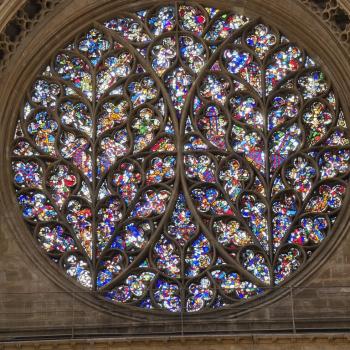
Salisbury Cathedral (the windows)-- Part Three
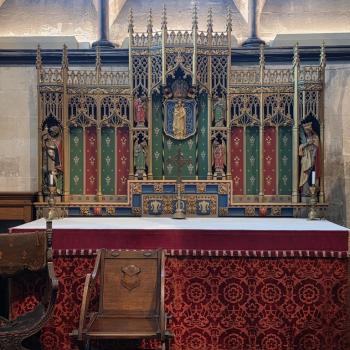
Salisbury Cathedral-- Part Two

Salisbury: Magna Carta and Magna Steeple---Part One
TRENDING AT PATHEOS Evangelical

When Worry Gets You Nowhere, How Can Faith...
Sometimes, we think that by worrying, we can somehow predict the future....

The Wasp And I: Meditations on Repentance
How can we enter the power and joy of the repentant self...

Reflections on the Evangelical Theological Society
As I mentioned before, this year, for the first time since 2005,...

Demmed if it do and demmed if it...
"First Presidency Announces Salt Lake Temple Rededication Date" Apropos of that,...

Stop Making Thanksgiving Problematic And Just Give Thanks
“What if, today, we were grateful for everything?” –Charlie Brown I...

Sunday Readings: Stay Awake and Hope
The First Sunday of Advent begins a new liturgical year, and the...
view all Evangelical blogs
Ad-Free & Subscriber Log-In Subscription Support
- About Us
- 2026 Calendar
- Videos
- Podcasts
- Library of World Religions
- Faith In Media Tracker
- Advertise With Us
- Write for Us
- Privacy Policy
- Terms of Service
- Do Not Sell My Data
- Contact Us
- Radiant Digital
- Manage Newsletter Subscriptions
- Unsubscribe From Notifications
- Sitemap
Copyright 2008-2026, Patheos, part of the Radiant Digital network of media brands. All rights reserved.
Subscription Support Ad-Free & Subscriber Log-In
Follow Patheos