
BuddhistCatholicContemplativeEvangelicalGeneral ChristianHinduJewishLatter-day SaintMuslimNew VisionsProgressive Christian
Beliefs
- Buddhist
- Catholic
- Contemplative
- Evangelical
- General Christian
- Hindu
- Jewish
- Latter-day Saint
- More Voices
- Muslim
- New Visions
- Pagan
- Progressive Christian
Topics
- Religion News
- Food and Religion
- Sports and Religion
- Religious Art
- Religious Music and Entertainment
- Religious Events
- History and Religion
- Style and Religion
- Politics and Religion
- Women in Religion
- Recreation Outdoors and Religion
- Business Finance and Religion
- Careers Workplace and Religion
- Education and Religion
- Family Parenting and Religion
- Health Fitness and Religion
- Home and Religion
- Relationships and Religion
- Technology and Religion
- Travel and Religion
Columnists
- Buddhist Columnists
- Business Finance and Religion Columnists
- Careers Workplace and Religion Columnists
- Catholic Columnists
- Contemplative Columnists
- Education and Religion Columnists
- Evangelists Columnists
- Family Parenting and Religion Columnists
- General Christian Columnists
- Health Fitness and Religion Columnists
- Hindu Columnists
- History and Religion Columnists
- Home and Religion Columnists
- Jewish Columnists
- More Voices Columnists
- Latter Day Columnists
- Muslim Columnists
- New Visions Columnists
- Nonreligious Columnists
- Pagan Columnists
- Politics and Religion Columnists
- Progressive Columnists
- Recreation Outdoors and Religion Columnists
- Relationships and Religion Columnists
- Religion News Columnists
- Religious Art Columnists
- Religious Events Columnists
- Religious Music and Entertainment Columnists
- Sports and Religion Columnists
- Style and Religion Columnists
- Technology and Religion Columnists
- Travel and Religion Columnists
- Women in Religion Columnists
Resource Library
- 2026 Calendar
- Library of World Religions
- The 100 Most Holy Places on Earth
- Patheos Answers
- Podcasts
- Videos
- Faith Leaders Database
- Anglican Episcopalian
- Bahai
- Baptist
- Buddhism
- Christianity
- Confucianism
- Eastern Orthodoxy
- Hinduism
- Holiness and Pentecostal
- ISKCON
- Islam
- Judaism
- Lutheran
- Methodist
- The Church of Jesus Christ of Latter-day Saints
- New Age
- Paganism
- Presbytarian and Reformed
- Protestantism
- Religion Behind the Scenes
- Roman Catholic
- Scientology
- Shia Islam
- Sikhism
- Sufism
- Sunni Islam
- Taoism
- Zen
- See all religions
Research Tools
 Ad-Free & Subscriber Log-In Subscription Support
Follow Patheos 

- Trending:
- Advent
- |
- Forgiveness
- |
- Thanksgiving
- |
- Election
- |
- Seasonal Holidays
- |
- Marriage

- Home
- Evangelical
- The Fascinating World of Ancient Papyri— Part Four
The Fascinating World of Ancient Papyri— Part Four
Last updated on: March 13, 2015 at 11:04 pm by Ben Witherington
The Fascinating World of Ancient Papyri— Part Four 2015-03-13T23:04:44-04:00 Ben Witherington
Patheos Explore the world's faith through different perspectives on religion and spirituality! Patheos has the views of the prevalent religions and spiritualities of the world.

How did scribes copy manuscripts? Did they take dictation, or copy line by line? Was there a particular professional way to form the Greek letters? In our last post here, we will allow William Johnson to offer us his findings on these sorts of matters.
p. 4— Johnson says “Systematic analysis of hundreds of bookrolls shows…that the rakish lean often seen in the columns of an ancient bookroll is a deliberate design feature…” Note the use of scribal dots to mark out the pattern before the column was written out. The bookroll was designed accordingly to principles surprisingly different from those of the codex.
pp. 8-9— “Obviously deliberate are the limited number of script types, and the consistent look and feel, such as the wide margins or (for prose) the narrow columns and very narrow intercolumns. Less obvious, but perhaps more telling, are subtle features such as the frequent slant to the columns and the tight spacing between the lines….the overall look of a document and that of a literary roll could not be more different. “
He remarks on “this definiteness and constancy of form. The tradition of book production is fundamentally conservative in almost all times and places, and it is reasonable to suspect from the outset that even subtle changes to the look of the bookroll may be the result of definable shifts in time or circumstance.”
p. 10– Too much of the study of papyri rolls has been based on too little a sample size. For example Fredric Kenyon puts the roll length limit at slight over 10 meters…. But this is based on exactly 14 rolls, and Johnson says… it turns out he is wrong.
p. 32— Of the sample size investigated, over half the papyri have either scholastic comments or sigla in the margins, and even those that don’t often enough have variants in the margin. In the sample, standard school texts such as Homer do not predominate. Rather these are mostly texts custom made for serious readers. “In none of the texts is it clear that the annotator has the same hand as the scribe who copied the text.
p. 33 In regard to format, the identity of the scribe is sometimes confirmed or rejected on the basis of layout. “Many of the formats are…strikingly homogeneous. Wherever it is possible to compare column width of different prose texts, the width agrees either exactly…or very nearly….in a well-executed literary roll, column widths seems to be measured before the writing of the column.(Moreover the scribe seems to have measured the columns one by one as he went along…).” Because column width remains constant indeed often exact, whereas the size and spacing of the writing can vary enormously this strongly suggests the columns were measured first before writing.
p. 34— The evidence Johnson examined disputes the common assumption that oratory tended to have narrow columns, commentaries wider columns, with history and philosophy in between. In other words, format is not apparently dictated by genre of the work copied.
p. 35 There were clearly various grades of papyri, from low to high quality. A given scribe may well use different punctuation systems for different texts, and rule of thumb in the Roman period seems to be that if a scribe found punctuation in the original, he was expected to copy it into the copy. Scribes tended to ignore reader’s scholia in the margins. Copying line by line is known, but it does not seem to have been customary in Oxyrhynchus in this period. He concludes this because line length doesn’t seem to vary, even when letters or added or accidentally omitted.
p. 53—There is good prima facie evidence that the near uniform evidence of column width in the Roman period suggests a tool of measurement to control the layout of the text, and this seems to have been part of the standard training of scribes.
p. 58— The evidence from scribal error argues mainly against the notion that scribes mostly copied line by line. Elaboration of punctuation over time is not in evidence…it does not appear that scribes did more than copy what punctuation they found in the original. But a scribe would make additions or corrections as he saw fit. Reader’s marks or scholia were largely ignored.
Now all of this is relevant to the study of early Christian manuscripts. For example, if Christian scribes were like the scribes at Oxyrhynchus then it is unlikely they simply copied into NT manuscripts the comments of previous scribes or readers found in the margins. At the same time, it is possible they might have left notes about variant readings in the margin. It needs to be noted however that scribes could do erasures or mark throughs, though it was difficult and sometimes messy. It depended on who the copy was for (e.g. was it for a patron or for personal use).
Previous Post

January 10, 2013
Closure
Next Post
January 12, 2013 An Interview and a U.K. Radio Show on the Birth Narratives
Browse Our Archives
Select a Category Uncategorized
Select a Month November 2026 October 2026 September 2026 August 2026 July 2026 June 2026 May 2026 April 2026 March 2026 February 2026 January 2026 December 2025 November 2025 October 2025 September 2025 August 2025 July 2025 June 2025 May 2025 April 2025 March 2025 February 2025 January 2025 December 2024 November 2024 October 2024 September 2024 August 2024 July 2024 June 2024 May 2024 April 2024 March 2024 February 2024 January 2024 December 2023 November 2023 October 2023 September 2023 August 2023 July 2023 June 2023 May 2023 April 2023 March 2023 February 2023 January 2023 December 2022 November 2022 October 2022 September 2022 August 2022 July 2022 June 2022 May 2022 April 2022 March 2022 February 2022 January 2022 December 2021 November 2021 October 2021 September 2021 August 2021 July 2021 June 2021 May 2021 April 2021 March 2021 February 2021 January 2021 December 2020 November 2020 October 2020 September 2020 August 2020 July 2020 June 2020 May 2020 April 2020 March 2020 February 2020 January 2020 December 2019 November 2019 October 2019 September 2019 August 2019 July 2019 June 2019 May 2019 April 2019 March 2019 February 2019 January 2019 December 2018 November 2018 October 2018 September 2018 August 2018 July 2018 June 2018 May 2018 April 2018 March 2018 February 2018 January 2018 December 2017 November 2017 October 2017 September 2017 August 2017 July 2017 June 2017 May 2017 April 2017 March 2017 February 2017 January 2017 December 2016 November 2016 October 2016 September 2016 August 2016 July 2016 June 2016 May 2016 April 2016 March 2016 February 2016 January 2016 December 2015 November 2015 October 2015 September 2015 August 2015 July 2015 June 2015 May 2015 April 2015 March 2015 February 2015 January 2015 December 2014 November 2014 October 2014 September 2014 August 2014 July 2014 June 2014 May 2014 April 2014 March 2014 February 2014 January 2014 December 2013 November 2013 October 2013 September 2013 August 2013 July 2013 June 2013 May 2013 April 2013 March 2013 February 2013 January 2013 December 2012 November 2012 October 2012 September 2012 August 2012 July 2012 June 2012 May 2012 April 2012 March 2012 February 2012 January 2012 December 2011 November 2011 October 2011 September 2011 August 2011 July 2011 June 2011 May 2011 April 2011 March 2011 February 2011 January 2011
Follow Us!
TAKE THE
Religious Wisdom Quiz
From a whirlwind, God questioned my understanding of creation's mysteries. What did God ask me to consider that I could not control?
Select your answer to see how you score.
The depths of the sea The stars and moon The Behemoth and Leviathan Thunder and lightning
Books by This Author Books by Ben Witherington
Related posts from The Bible and Culture
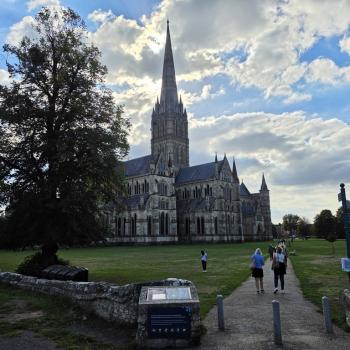
Salisbury Cathedral (outside)-- Part Four
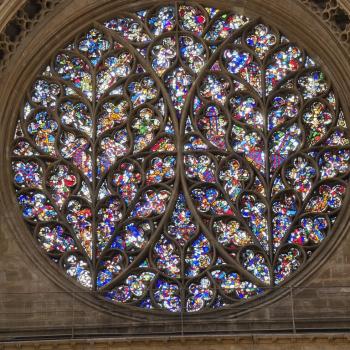
Salisbury Cathedral (the windows)-- Part Three
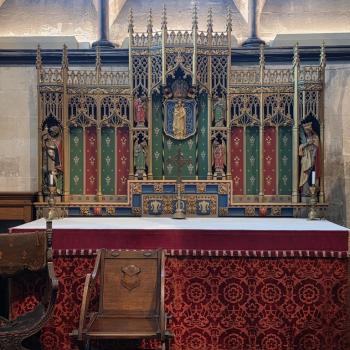
Salisbury Cathedral-- Part Two

Salisbury: Magna Carta and Magna Steeple---Part One
TRENDING AT PATHEOS Evangelical

How to Have Financial Transparency in Marriage
Despite the fact that financial issues and money problems are the number...
The Healing Power of Forgiveness in Marriage
Learning how to give and accept apologies are essential ingredients of a...

The West's Christian Moral Inheritance: A Legacy Denied
Whether we like it or not, our environment matters, shaping us both...

How Does Tôḏâ Connect Florida & Thanksgiving?
The big news this weekend has been about the continued flooding on...

Were Early Christians Drinking Psychedelic Wine?
The Secret Sacrament the Church Took Away The early Christian church was...

As we in the United States approach the national Thanksgiving holiday...
view all Evangelical blogs
Ad-Free & Subscriber Log-In Subscription Support
- About Us
- 2026 Calendar
- Videos
- Podcasts
- Library of World Religions
- Faith In Media Tracker
- Advertise With Us
- Write for Us
- Privacy Policy
- Terms of Service
- Do Not Sell My Data
- Contact Us
- Radiant Digital
- Manage Newsletter Subscriptions
- Unsubscribe From Notifications
- Sitemap
Copyright 2008-2026, Patheos. All rights reserved.
Subscription Support Ad-Free & Subscriber Log-In
Follow Patheos