
BuddhistCatholicContemplativeEvangelicalGeneral ChristianHinduJewishLatter-day SaintMuslimNew VisionsProgressive Christian
Beliefs
- Buddhist
- Catholic
- Contemplative
- Evangelical
- General Christian
- Hindu
- Jewish
- Latter-day Saint
- More Voices
- Muslim
- New Visions
- Pagan
- Progressive Christian
Topics
- Religion News
- Food and Religion
- Sports and Religion
- Religious Art
- Religious Music and Entertainment
- Religious Events
- History and Religion
- Style and Religion
- Politics and Religion
- Women in Religion
- Recreation Outdoors and Religion
- Business Finance and Religion
- Careers Workplace and Religion
- Education and Religion
- Family Parenting and Religion
- Health Fitness and Religion
- Home and Religion
- Relationships and Religion
- Technology and Religion
- Travel and Religion
Columnists
- Buddhist Columnists
- Business Finance and Religion Columnists
- Careers Workplace and Religion Columnists
- Catholic Columnists
- Contemplative Columnists
- Education and Religion Columnists
- Evangelists Columnists
- Family Parenting and Religion Columnists
- General Christian Columnists
- Health Fitness and Religion Columnists
- Hindu Columnists
- History and Religion Columnists
- Home and Religion Columnists
- Jewish Columnists
- More Voices Columnists
- Latter Day Columnists
- Muslim Columnists
- New Visions Columnists
- Nonreligious Columnists
- Pagan Columnists
- Politics and Religion Columnists
- Progressive Columnists
- Recreation Outdoors and Religion Columnists
- Relationships and Religion Columnists
- Religion News Columnists
- Religious Art Columnists
- Religious Events Columnists
- Religious Music and Entertainment Columnists
- Sports and Religion Columnists
- Style and Religion Columnists
- Technology and Religion Columnists
- Travel and Religion Columnists
- Women in Religion Columnists
Resource Library
- 2026 Calendar
- Library of World Religions
- The 100 Most Holy Places on Earth
- Patheos Answers
- Podcasts
- Videos
- Faith Leaders Database
- Anglican Episcopalian
- Bahai
- Baptist
- Buddhism
- Christianity
- Confucianism
- Eastern Orthodoxy
- Hinduism
- Holiness and Pentecostal
- ISKCON
- Islam
- Judaism
- Lutheran
- Methodist
- The Church of Jesus Christ of Latter-day Saints
- New Age
- Paganism
- Presbytarian and Reformed
- Protestantism
- Religion Behind the Scenes
- Roman Catholic
- Scientology
- Shia Islam
- Sikhism
- Sufism
- Sunni Islam
- Taoism
- Zen
- See all religions
Research Tools
 Ad-Free & Subscriber Log-In Subscription Support
Follow Patheos 

- Trending:
- Advent
- |
- Forgiveness
- |
- Thanksgiving
- |
- Election
- |
- Seasonal Holidays
- |
- Marriage

- Home
- Evangelical
- Early Christian Mauscripts and their Audiences
Early Christian Mauscripts and their Audiences
Last updated on: March 13, 2015 at 11:05 pm by Ben Witherington
Early Christian Mauscripts and their Audiences 2015-03-13T23:05:50-04:00 Ben Witherington
Patheos Explore the world's faith through different perspectives on religion and spirituality! Patheos has the views of the prevalent religions and spiritualities of the world.
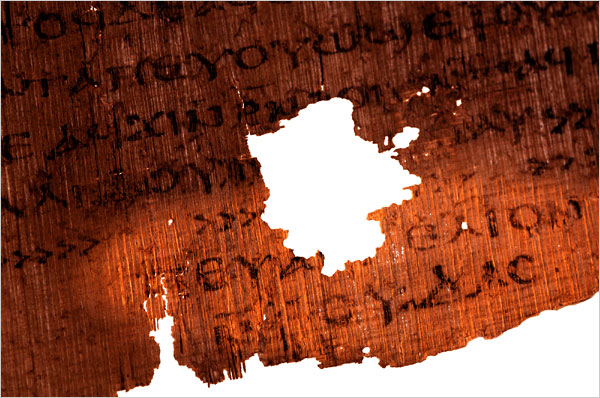
Here’s another helpful post by our colleague Larry Hurtado.
Early Christian Manuscripts and Their Readers
by larryhurtado
A few days ago I noted the publication of a multi-author volume: The Early Text of the New Testament, edited by Charles E. Hill and Michael J. Kruger (Oxford University Press). In this posting I give the gist of my own contribution to that volume: “Manuscripts and the Sociology of Early Christian Reading” (pp. 49-62).
I take my cue from a fascinating article by William A. Johnson (an American papyrologist) in which he contends that the rather severe and demanding features of high-quality ancient Greek literary manuscripts reflect the elite social-settings in which these manuscripts were intended to be read. [William A. Johnson, “Toward a Sociology of Reading in Classical Antiquity,” American Journal of Philology 121 (2000): 593–627.] These manuscripts often have elegant calligraphy, and seem more like works of art than practical texts. They make huge demands on readers, and only those with appropriate training in the ancient world would have been able to cope with them. Johnson argues that this was deliberate, to mark off these manuscripts by/for the elite circles in which they were used.
In my study, I consider the physical and visual features typical of earliest NT manuscripts, contending that they too likely reflect the circles in which they were to be read. These features are now increasingly well-known: esp. the preference for the codex format, the general size and spacing of the writing, the use of elementary punctuation, the use of other diacritical marks (e.g., diaeresis) to aid reading, and spaces and/or enlarged letters to signal sense-units. These features lead me to the following proposal:
“If Johnson is correct that the format of the pagan literary
rolls was intended to reflect and affirm the exclusivity of the elite social circles in which they were to be read, then Christian manuscripts (especially those that appear to have been prepared for public reading) typically seem to reflect a very different social setting, perhaps deliberately so. I propose that they reflect a concern to make the texts accessible to a wider range of reader competence, with fewer demands made on readers to engage and deliver
them. In turn, this probably reflects the more socially diverse and inclusive nature of typical early Christian groups. That is, I submit that these early Christian manuscripts are direct evidence and confirmation of the greater social breadth and diversity represented in early Christian circles, in comparison to the elite social circles in which pagan literary texts were more typically read.” (p. 59)
In short, these early NT manuscripts can be taken as physical evidence of the social character of the circles of early Christian readers. This is one example of the point I tried to make in my book, The Earliest Christian Artifacts: Manuscripts and Christian Origins (Eerdmans, 2006), that the physical and visual characteristics of early Christian manuscripts comprise data of relevance for wider historical questions about early Christianity.
I’ve put the pre-publication version of my essay under the “Selected Essay, etc.” tab of this blog site. In addition to my essay, there are twenty other contributions by a galaxy of scholars, covering a wide array of topics. (See my earlier posting for the link to Kruger’s blog posting that includes the table of contents.) Unfortunately, it’s an expensive volume; but it offers a good deal of scholarly value for the price.
Previous Post

October 24, 2012
The Worst Bible Reader in the World
Next Post
October 26, 2012 BW3 on his Gordon-Conwell Education
Browse Our Archives
Select a Category Uncategorized
Select a Month November 2026 October 2026 September 2026 August 2026 July 2026 June 2026 May 2026 April 2026 March 2026 February 2026 January 2026 December 2025 November 2025 October 2025 September 2025 August 2025 July 2025 June 2025 May 2025 April 2025 March 2025 February 2025 January 2025 December 2024 November 2024 October 2024 September 2024 August 2024 July 2024 June 2024 May 2024 April 2024 March 2024 February 2024 January 2024 December 2023 November 2023 October 2023 September 2023 August 2023 July 2023 June 2023 May 2023 April 2023 March 2023 February 2023 January 2023 December 2022 November 2022 October 2022 September 2022 August 2022 July 2022 June 2022 May 2022 April 2022 March 2022 February 2022 January 2022 December 2021 November 2021 October 2021 September 2021 August 2021 July 2021 June 2021 May 2021 April 2021 March 2021 February 2021 January 2021 December 2020 November 2020 October 2020 September 2020 August 2020 July 2020 June 2020 May 2020 April 2020 March 2020 February 2020 January 2020 December 2019 November 2019 October 2019 September 2019 August 2019 July 2019 June 2019 May 2019 April 2019 March 2019 February 2019 January 2019 December 2018 November 2018 October 2018 September 2018 August 2018 July 2018 June 2018 May 2018 April 2018 March 2018 February 2018 January 2018 December 2017 November 2017 October 2017 September 2017 August 2017 July 2017 June 2017 May 2017 April 2017 March 2017 February 2017 January 2017 December 2016 November 2016 October 2016 September 2016 August 2016 July 2016 June 2016 May 2016 April 2016 March 2016 February 2016 January 2016 December 2015 November 2015 October 2015 September 2015 August 2015 July 2015 June 2015 May 2015 April 2015 March 2015 February 2015 January 2015 December 2014 November 2014 October 2014 September 2014 August 2014 July 2014 June 2014 May 2014 April 2014 March 2014 February 2014 January 2014 December 2013 November 2013 October 2013 September 2013 August 2013 July 2013 June 2013 May 2013 April 2013 March 2013 February 2013 January 2013 December 2012 November 2012 October 2012 September 2012 August 2012 July 2012 June 2012 May 2012 April 2012 March 2012 February 2012 January 2012 December 2011 November 2011 October 2011 September 2011 August 2011 July 2011 June 2011 May 2011 April 2011 March 2011 February 2011 January 2011
Follow Us!
TAKE THE
Religious Wisdom Quiz
What does "Pentecost" mean in Greek?
Select your answer to see how you score.
Harvest Fire from Heaven Fiftieth Holy Day
Books by This Author Books by Ben Witherington
Related posts from The Bible and Culture

Salisbury Cathedral (outside)-- Part Four

Salisbury Cathedral (the windows)-- Part Three
Salisbury Cathedral-- Part Two

Salisbury: Magna Carta and Magna Steeple---Part One
TRENDING AT PATHEOS Evangelical

Adventurous Lectionary -1st. Sunday of Advent - November...
The Adventurous Lectionary - The First Sunday of Advent – November 29,...

Will Islam become the world's biggest religion by 2035? Congo will replace...

The resilience of the Christian faith in the english speaking world of...

An Advent Calendar, and a Tree full of...
I've spent the weekend deeply invested in internet drama about a $150...

How to Have Financial Transparency in Marriage
Despite the fact that financial issues and money problems are the number...
The Healing Power of Forgiveness in Marriage
Learning how to give and accept apologies are essential ingredients of a...
view all Evangelical blogs
Ad-Free & Subscriber Log-In Subscription Support
- About Us
- 2026 Calendar
- Videos
- Podcasts
- Library of World Religions
- Faith In Media Tracker
- Advertise With Us
- Write for Us
- Privacy Policy
- Terms of Service
- Do Not Sell My Data
- Contact Us
- Radiant Digital
- Manage Newsletter Subscriptions
- Unsubscribe From Notifications
- Sitemap
Copyright 2008-2026, Patheos. All rights reserved.
Subscription Support Ad-Free & Subscriber Log-In
Follow Patheos