
BuddhistCatholicContemplativeEvangelicalGeneral ChristianHinduJewishLatter-day SaintMuslimNew VisionsProgressive Christian
Beliefs
- Buddhist
- Catholic
- Contemplative
- Evangelical
- General Christian
- Hindu
- Jewish
- Latter-day Saint
- More Voices
- Muslim
- New Visions
- Pagan
- Progressive Christian
Topics
- Religion News
- Food and Religion
- Sports and Religion
- Religious Art
- Religious Music and Entertainment
- Religious Events
- History and Religion
- Style and Religion
- Politics and Religion
- Women in Religion
- Recreation Outdoors and Religion
- Business Finance and Religion
- Careers Workplace and Religion
- Education and Religion
- Family Parenting and Religion
- Health Fitness and Religion
- Home and Religion
- Relationships and Religion
- Technology and Religion
- Travel and Religion
Columnists
- Buddhist Columnists
- Business Finance and Religion Columnists
- Careers Workplace and Religion Columnists
- Catholic Columnists
- Contemplative Columnists
- Education and Religion Columnists
- Evangelists Columnists
- Family Parenting and Religion Columnists
- General Christian Columnists
- Health Fitness and Religion Columnists
- Hindu Columnists
- History and Religion Columnists
- Home and Religion Columnists
- Jewish Columnists
- More Voices Columnists
- Latter Day Columnists
- Muslim Columnists
- New Visions Columnists
- Nonreligious Columnists
- Pagan Columnists
- Politics and Religion Columnists
- Progressive Columnists
- Recreation Outdoors and Religion Columnists
- Relationships and Religion Columnists
- Religion News Columnists
- Religious Art Columnists
- Religious Events Columnists
- Religious Music and Entertainment Columnists
- Sports and Religion Columnists
- Style and Religion Columnists
- Technology and Religion Columnists
- Travel and Religion Columnists
- Women in Religion Columnists
Resource Library
- 2026 Calendar
- Library of World Religions
- The 100 Most Holy Places on Earth
- Patheos Answers
- Podcasts
- Videos
- Faith Leaders Database
- Anglican Episcopalian
- Bahai
- Baptist
- Buddhism
- Christianity
- Confucianism
- Eastern Orthodoxy
- Hinduism
- Holiness and Pentecostal
- ISKCON
- Islam
- Judaism
- Lutheran
- Methodist
- The Church of Jesus Christ of Latter-day Saints
- New Age
- Paganism
- Presbytarian and Reformed
- Protestantism
- Religion Behind the Scenes
- Roman Catholic
- Scientology
- Shia Islam
- Sikhism
- Sufism
- Sunni Islam
- Taoism
- Zen
- See all religions
Research Tools
 Ad-Free & Subscriber Log-In Subscription Support
Ad-Free & Subscriber Log-In Subscription Support
Follow Patheos 

- Trending:
- Forgiveness
- |
- Marriage
- |
- Consciousness
- |
- Death Penalty
- |
- Election
- |
- Halloween

- Home
- Evangelical
- Marked Messengers– Angelloi in Mark Part Two
Marked Messengers– Angelloi in Mark Part Two
Last updated on: March 13, 2015 at 11:10 pm by Ben Witherington
Marked Messengers– Angelloi in Mark Part Two 2015-03-13T23:10:03-04:00 Ben Witherington
Patheos Explore the world's faith through different perspectives on religion and spirituality! Patheos has the views of the prevalent religions and spiritualities of the world.
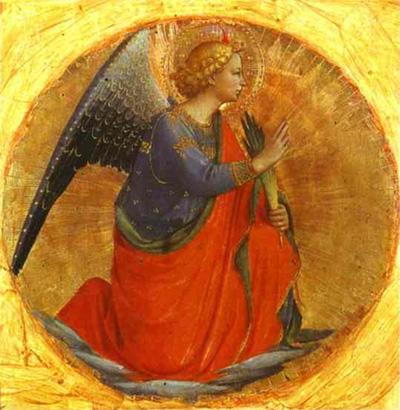
Two of the more controverted verses in all of the Gospel of Mark are Mark 8.38 and 9.1. We intend to discuss them in some detail. If you have read many scholarly commentaries on Mark, then you will know that these verses have a long history of being belabored, and are often used to prove that Mark, bless his little heart, and perhaps even Jesus, had a flawed eschatology. They predicted the timing of the second coming wrongly. This critique goes back at least as far as the turn of the 20th century with A. Schweitzer’s famous treatment of the matter.
What happens, however, when we bear in mind that the term angelloi is as likely to refer to human messengers as divine ones? First of all notice that Mark 8.38 is part of a speech given to the disciples contrasting them with outsiders called ‘this wicked and sinful generation’. The honor and shame language is used to say that this wicked generations being ashamed of Jesus will be returned in kind later by Jesus himself. Then Jesus refers to ‘when he …. in the glory of his Father with his holy messengers’. I have left out the translation of the verb, because too often it is simply assumed that erchomai always means to come. This is in fact not true. It can also mean ‘to make an appearance’ and so can be translated ‘to appear’. For example, it probably means this in John 4.27, and perhaps in Romans 9.9 as well, though in the latter case it may mean ‘return’ another possible meaning of this verb.
Let us suppose then for a minute we translate Mark 8.38 with the verb ‘appear’ so we have the rendering ‘when he appears in the glory of his Father with the holy messengers’. I submit that this is the perfect introduction to Mark 9.1-8 in toto. Mark is referring to the Transfiguration in Mark 8.38 and the messengers in question prove to be the two great human messengers of the OT— Moses and Elijah, the representatives of the Law and the Prophets. Neither Mark 8.38, nor Mark 9.1 are referring to the parousia or second coming of the Son of Man. They are both referring to the Transfiguration.
Sometimes there has been the critique of this, or similar views of these two verses that Mark 9.1 becomes innocuous if it refers to the Transfiguration, since Jesus speaks of those present not tasting death before they see the Kingdom come with power, and according to the narrative here the Transfiguration transpired six days later. Several points are in order: 1) Jesus only takes some up the mountain, namely the inner circle of the disciples, Peter, James, John, so it is certainly true that some do see the glory of Jesus and his kingly nature and reign before they die; 2) it is not clear that Mark 9.1 is in its original chronological placement in this Gospel, since Mark is clearly presenting materials he has edited down, and he skips many things in the editing. In other words, the saying in Mark 9.1 may have been spoken earlier in the ministry of Jesus, but even if not, it is a mistake to ignore the cloud of danger that hovers over the whole narrative at this point in the Markan story. Jesus has already predicted his demise once in Mark 8, will do so again in Mark, 9, and twice more in Mark 10. In addition we have already heard at length about the death of John in Mark 6. The possibility that the disciples, who by now are out and sharing the good news in Galilee and elsewhere, might lose their lives as John did, and as Jesus would, at any time, must be taken seriously. In those dangerous and ominous days, Mark 9.1, even if it only referred to the coming week, would hardly have been an innocuous remark.
I thus conclude as follows: 1) the reference to angelloi in Mark 8.38 refers to human messengers, namely Moses and Elijah who appear with Jesus in glory, Jesus having taken three of his own messengers up the mountain for the experience; 2) erchomai in Mark 8.38 probably means ‘appears’ Jesus will appear in his Father’s glory. This is not a reference at all to the second coming, nor to its timing, nor is Mark 9.1. As the rest of Mark shows, the Kingdom of God is already breaking into the world through the ministry of Jesus, and the Transfiguration proves to be a revelation of the divine saving activity ‘in power’. The point of the glowing Jesus is to make clear that the divine saving presence resides in him, and as the voice is to say, the disciples should be listening to him— God’s divine Son.
In short, neither of these verse have anything to do with predicting a near horizon for the second coming. This conclusion is further supported by Mark 13.32 which tells us in no uncertain terms that ‘no one knows the timing of the return of the Son of Man’, not even Jesus who made no such predictions, not even the human or divine messengers (angelloi), only God. In other words, Schweitzer and his successors have misread the eschatology of Mark, and this misreading continues to be perpetuated in recent commentaries (see e.g. Boring and Collins).
Previous Post

March 15, 2012
Post-Christian New Testament Studies
Next Post
March 17, 2012 The Patio Tomb--- Hurtado's Take
Browse Our Archives
Select a Category Uncategorized
Select a Month October 2026 September 2026 August 2026 July 2026 June 2026 May 2026 April 2026 March 2026 February 2026 January 2026 December 2025 November 2025 October 2025 September 2025 August 2025 July 2025 June 2025 May 2025 April 2025 March 2025 February 2025 January 2025 December 2024 November 2024 October 2024 September 2024 August 2024 July 2024 June 2024 May 2024 April 2024 March 2024 February 2024 January 2024 December 2023 November 2023 October 2023 September 2023 August 2023 July 2023 June 2023 May 2023 April 2023 March 2023 February 2023 January 2023 December 2022 November 2022 October 2022 September 2022 August 2022 July 2022 June 2022 May 2022 April 2022 March 2022 February 2022 January 2022 December 2021 November 2021 October 2021 September 2021 August 2021 July 2021 June 2021 May 2021 April 2021 March 2021 February 2021 January 2021 December 2020 November 2020 October 2020 September 2020 August 2020 July 2020 June 2020 May 2020 April 2020 March 2020 February 2020 January 2020 December 2019 November 2019 October 2019 September 2019 August 2019 July 2019 June 2019 May 2019 April 2019 March 2019 February 2019 January 2019 December 2018 November 2018 October 2018 September 2018 August 2018 July 2018 June 2018 May 2018 April 2018 March 2018 February 2018 January 2018 December 2017 November 2017 October 2017 September 2017 August 2017 July 2017 June 2017 May 2017 April 2017 March 2017 February 2017 January 2017 December 2016 November 2016 October 2016 September 2016 August 2016 July 2016 June 2016 May 2016 April 2016 March 2016 February 2016 January 2016 December 2015 November 2015 October 2015 September 2015 August 2015 July 2015 June 2015 May 2015 April 2015 March 2015 February 2015 January 2015 December 2014 November 2014 October 2014 September 2014 August 2014 July 2014 June 2014 May 2014 April 2014 March 2014 February 2014 January 2014 December 2013 November 2013 October 2013 September 2013 August 2013 July 2013 June 2013 May 2013 April 2013 March 2013 February 2013 January 2013 December 2012 November 2012 October 2012 September 2012 August 2012 July 2012 June 2012 May 2012 April 2012 March 2012 February 2012 January 2012 December 2011 November 2011 October 2011 September 2011 August 2011 July 2011 June 2011 May 2011 April 2011 March 2011 February 2011 January 2011
Follow Us!
TAKE THE
Religious Wisdom Quiz
Who was the first man created by God?
Select your answer to see how you score.
Moses Abraham Noah Adam
Books by This Author Books by Ben Witherington
Related posts from The Bible and Culture


Methodist Central Hall and Westminster Abbey


TRENDING AT PATHEOS Evangelical

The Problem with False Prophets
Miller’s Station UMC| 10/18/26| Anchor Verse: Jeremiah 23: 1, 9-23 I...

Emotion in Early Christianity by Andrew Crislip
Andrew Crislip’s Emotion in Early Christianity examines an often overlooked dimension of...

16 Spiritual Touchstones for a More Grounded Life
After decades of spiritual study, here are 16 principles I try...

Catholic Evangelization: Sharing Your Faith Every Day
Welcome back to the Graceful Awakening mini-series called, “From Faith to Mission.” ...

The Pillar of the Boatmen: the Ancient Monument...
The Pillar of the Boatmen is a Romano-Gaulish sculpture that dates from...

In one sense walking into Westminster Abbey is like walking down the...
view all Evangelical blogs
Ad-Free & Subscriber Log-In Subscription Support
- About Us
- 2026 Calendar
- Videos
- Podcasts
- Library of World Religions
- Faith In Media Tracker
- Advertise With Us
- Write for Us
- Privacy Policy
- Terms of Service
- Do Not Sell My Data
- Contact Us
- Radiant Digital
- Manage Newsletter Subscriptions
- Unsubscribe From Notifications
- Sitemap
Copyright 2008-2026, Patheos. All rights reserved.
Subscription Support Ad-Free & Subscriber Log-In
Follow Patheos