
BuddhistCatholicContemplativeEvangelicalGeneral ChristianHinduJewishLatter-day SaintMuslimNew VisionsProgressive Christian
Beliefs
- Buddhist
- Catholic
- Contemplative
- Evangelical
- General Christian
- Hindu
- Jewish
- Latter-day Saint
- More Voices
- Muslim
- New Visions
- Pagan
- Progressive Christian
Topics
- Religion News
- Food and Religion
- Sports and Religion
- Religious Art
- Religious Music and Entertainment
- Religious Events
- History and Religion
- Style and Religion
- Politics and Religion
- Women in Religion
- Recreation Outdoors and Religion
- Business Finance and Religion
- Careers Workplace and Religion
- Education and Religion
- Family Parenting and Religion
- Health Fitness and Religion
- Home and Religion
- Relationships and Religion
- Technology and Religion
- Travel and Religion
Columnists
- Buddhist Columnists
- Business Finance and Religion Columnists
- Careers Workplace and Religion Columnists
- Catholic Columnists
- Contemplative Columnists
- Education and Religion Columnists
- Evangelists Columnists
- Family Parenting and Religion Columnists
- General Christian Columnists
- Health Fitness and Religion Columnists
- Hindu Columnists
- History and Religion Columnists
- Home and Religion Columnists
- Jewish Columnists
- More Voices Columnists
- Latter Day Columnists
- Muslim Columnists
- New Visions Columnists
- Nonreligious Columnists
- Pagan Columnists
- Politics and Religion Columnists
- Progressive Columnists
- Recreation Outdoors and Religion Columnists
- Relationships and Religion Columnists
- Religion News Columnists
- Religious Art Columnists
- Religious Events Columnists
- Religious Music and Entertainment Columnists
- Sports and Religion Columnists
- Style and Religion Columnists
- Technology and Religion Columnists
- Travel and Religion Columnists
- Women in Religion Columnists
Resource Library
- 2026 Calendar
- Library of World Religions
- The 100 Most Holy Places on Earth
- Patheos Answers
- Podcasts
- Videos
- Faith Leaders Database
- Anglican Episcopalian
- Bahai
- Baptist
- Buddhism
- Christianity
- Confucianism
- Eastern Orthodoxy
- Hinduism
- Holiness and Pentecostal
- ISKCON
- Islam
- Judaism
- Lutheran
- Methodist
- The Church of Jesus Christ of Latter-day Saints
- New Age
- Paganism
- Presbytarian and Reformed
- Protestantism
- Religion Behind the Scenes
- Roman Catholic
- Scientology
- Shia Islam
- Sikhism
- Sufism
- Sunni Islam
- Taoism
- Zen
- See all religions
Research Tools
 Ad-Free & Subscriber Log-In Subscription Support
Follow Patheos 

- Trending:
- Advent
- |
- Forgiveness
- |
- Thanksgiving
- |
- Election
- |
- Seasonal Holidays
- |
- Marriage

- Home
- Evangelical
- Defending Constantine— Part Five
Defending Constantine— Part Five
Last updated on: March 13, 2015 at 11:14 pm by Guest Contributor
Defending Constantine— Part Five 2015-03-13T23:14:45-04:00 Guest Contributor
Patheos Explore the world's faith through different perspectives on religion and spirituality! Patheos has the views of the prevalent religions and spiritualities of the world.
 Constantine was what Andy Crouch calls a culture-maker. The question is whether he was building a good culture which distilled Christian values, or somehow distorted Christian values. Besides all his church building exercises, there were also Constantine’s legislative initiative, one of the earliest being tax exemption for clergy (yeah!). Constantine said this would protect them from harassment by heretics.
One of the problems in evaluating Constantine and the impact of his reign is that edicts and promulgations by Emperors didn’t function in the same way that laws do today. By this I mean that provincial governors tended to take such things as moral exhortations or good rules of thumb, and they were honored in the breech sometimes as much as in the observance. When it came to sacrifices, Constantine did specifically prohibit his provincial governors from offering pagan sacrifices at official functions, and the specific reason for this was so Christians could be civil servants without violating their consciences. Here is one place where Eusebius has over-egged the pudding. Constantine did not prohibit all sacrifices under all situations or occasions or in all pagan temples in the Empire. He did make clear that he found such sacrifices abhorrent, but the so-called Edict of Milan was his real view, and so he tried to persuade out of existence these practices, not legally bring the hammer down in every conceivable place and circumstance. Constantine knew in any case that his vigorous anti-pagan legislation would not necessarily be vigorously enforced in various provinces anyway. It was a question of how much change could be implemented without violating conscience, and how quickly.
What about Constantine and the Jews? Were his policies a change towards anti-Semitism? In fact Roman law long before Constantine had basically prohibited Jews from proselytizing for their faith. For example they had been prohibited from circumcising converts unless they were slaves. Constantine did not change this law, but what he did do was give rabbis and other Jewish leaders the same tax exemption as clergy, and under Constantine, for the first time since Hadrian’s rule, Jews were allowed to make a pilgrimage to Jerusalem. Furthermore, Constantine left the Jewish patriarch in Constantinople alone, and allowed him to judge religious issues within his own community, but not only religious issues, also civil issues. The same privilege would be extended to Christians as they built up church law and canon law. It is true of course he threatened Jews who harassed converts to Christianity and strengthened rules against circumcising non-Jews. Constantine does not appear to have been as anti-Semitic as many of his predecessors in the Emperor’s chair, but there is clearly some prejudice in evidence in his life and work.
One of the central charges sometimes made by Anabaptists against Constantine is that he was responsible for the de-Judaizing of Christianity by merging the Christian faith with the Roman Empire. The truth is far otherwise. Christianity was overwhelmingly Gentile in character long before Constantine. Indeed, it may even have had a majority of Gentile members by the end of the first century A.D. On this blog in earlier posts I have criticized at length Luke Johnson’s recent tome Among the Gentiles for offering the exaggerated opposite thesis, namely that Christianity was a Gentile religion basically almost from day one. This also is not quite accurate.
The claim of Yoder in his recent book *The Jewish Christian Schism Revisited (*Eerdmans 2003) is that it was the merging of Christianity with the power of the Empire that de-Judaized Christianity. Thus Christians abandoned the specifics of Jewish law, which were now played off against the Gospel. They abandoned Jewish universalism for the pseudo-universalism of Greek culture and Roman power, and of course when they picked up the sword they left behind the Jewish pacifism of Jesus. Thus even the Judaism the West has known since Constantine is a product of Christianity and specifically of the Constantinian apostasy which has gone on until the present in various quarters.
As Leithart points out this is mostly false for a whole series of historical reasons, not least of which is that it ignores the re-Judaizing of Christianity that took place after Constantine where ministers became priests, the Lord’s Supper became a sacrifice modeled on the OT and basilicas began to be seen as old style Temples. And the theological underpinning for such hermeneutical moves is already evident in Augustine, whose pro-Jewish theology and protection of Jews from persecution should be noted. It is hard indeed to examine medieval Orthodox or Catholic praxis and religion and not think it was more heavily indebted to Judaism than to earliest Christianity. The OT hermeneutic and way of reading even the NT did not disappear with Constantine. If anything, it became more widespread in Christendom.
On the issue of pacifism, it does seem to be true that there were less Christian pacifists than before the time of Constantine, but it was not because Constantine dictated such a change. It is not the Jewishness of Christianity that is suddenly left behind with Constantine, it is the clandestined and underground character of the faith that is left behind. Nor can we even say Christianity lost its minority status with Constantine. Definitely not. Even the most liberal estimates suggest that by 337 when Constantine died, no more than say 25% max of the Empire was Christian. What was left behind was that Christianity was a persecuted minority. And there is the rub.
Yoder would have it that when Christianity loses its beleaguered underdog status it loses something essential, it loses for example its counter-cultural element. But Christianity was never intended to be counter cultural in the full sense of that term. Counter-cultural is simply reaction to the dominant culture. As Andy Crouch reminds us, Christianity at heart is about building its own positive culture, and rightly or wrongly that is what Constantine was trying to do. There is a difference between building culture and transforming culture and rejecting culture and to some degree Christianity was about all three of these things from the start. It was however only the anti-Christian elements of the culture that was rejected by the earliest Christians such as Paul. By contrast, Paul says in Phil. 4 that Christians should sift the culture not simply have an allergic reaction to it. Whatever was noble or honorable or comported with the Gospel in the culture should be affirmed.
Think on these things
Previous Post

May 8, 2011
Motherload
Next Post
May 10, 2011 Defending Constantine--- Part Six: On to Nicaea
Browse Our Archives
Select a Category Uncategorized
Select a Month November 2026 October 2026 September 2026 August 2026 July 2026 June 2026 May 2026 April 2026 March 2026 February 2026 January 2026 December 2025 November 2025 October 2025 September 2025 August 2025 July 2025 June 2025 May 2025 April 2025 March 2025 February 2025 January 2025 December 2024 November 2024 October 2024 September 2024 August 2024 July 2024 June 2024 May 2024 April 2024 March 2024 February 2024 January 2024 December 2023 November 2023 October 2023 September 2023 August 2023 July 2023 June 2023 May 2023 April 2023 March 2023 February 2023 January 2023 December 2022 November 2022 October 2022 September 2022 August 2022 July 2022 June 2022 May 2022 April 2022 March 2022 February 2022 January 2022 December 2021 November 2021 October 2021 September 2021 August 2021 July 2021 June 2021 May 2021 April 2021 March 2021 February 2021 January 2021 December 2020 November 2020 October 2020 September 2020 August 2020 July 2020 June 2020 May 2020 April 2020 March 2020 February 2020 January 2020 December 2019 November 2019 October 2019 September 2019 August 2019 July 2019 June 2019 May 2019 April 2019 March 2019 February 2019 January 2019 December 2018 November 2018 October 2018 September 2018 August 2018 July 2018 June 2018 May 2018 April 2018 March 2018 February 2018 January 2018 December 2017 November 2017 October 2017 September 2017 August 2017 July 2017 June 2017 May 2017 April 2017 March 2017 February 2017 January 2017 December 2016 November 2016 October 2016 September 2016 August 2016 July 2016 June 2016 May 2016 April 2016 March 2016 February 2016 January 2016 December 2015 November 2015 October 2015 September 2015 August 2015 July 2015 June 2015 May 2015 April 2015 March 2015 February 2015 January 2015 December 2014 November 2014 October 2014 September 2014 August 2014 July 2014 June 2014 May 2014 April 2014 March 2014 February 2014 January 2014 December 2013 November 2013 October 2013 September 2013 August 2013 July 2013 June 2013 May 2013 April 2013 March 2013 February 2013 January 2013 December 2012 November 2012 October 2012 September 2012 August 2012 July 2012 June 2012 May 2012 April 2012 March 2012 February 2012 January 2012 December 2011 November 2011 October 2011 September 2011 August 2011 July 2011 June 2011 May 2011 April 2011 March 2011 February 2011 January 2011
Follow Us!
TAKE THE
Religious Wisdom Quiz
Who was the tax collector who climbed a tree to see Jesus?
Select your answer to see how you score.
Zacchaeus Philip Nicodemus Matthew
Books by This Author Books by Ben Witherington
Related posts from The Bible and Culture

Rock N' Roll-- Morphing into/for a New Generation...

Salisbury Cathedral (outside)-- Part Four
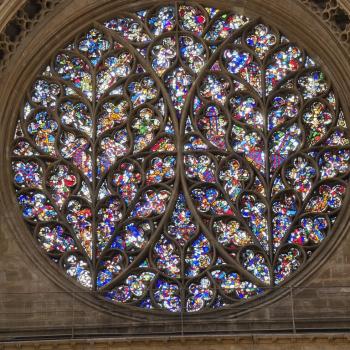
Salisbury Cathedral (the windows)-- Part Three
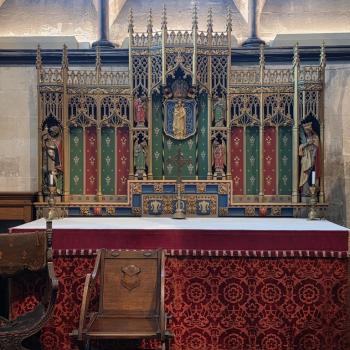
Salisbury Cathedral-- Part Two
TRENDING AT PATHEOS Evangelical

Blue Christmas: Making Room for Grief at Church
A Blue Christmas service makes room for grief, remembrance, and hope. Explore...

We Can Trust That God Will Use Our...
A Jesus-loving young friend who is going through deep suffering sent me...

Everything is worship for Quakers. The Quakers emphasize contemplation, equality, pacifism and...

Happy Thanksgiving! I published this Thanksgiving column back in 2017 in...

More Than a Meal: A Messianic Thanksgiving
A Messianic Thanksgiving What if Thanksgiving became more than a meal to...

The Darkening of the Sun, Moon, and Stars
The darkening of the sun and moon and the falling of stars...
view all Evangelical blogs
Ad-Free & Subscriber Log-In Subscription Support
- About Us
- 2026 Calendar
- Videos
- Podcasts
- Library of World Religions
- Faith In Media Tracker
- Advertise With Us
- Write for Us
- Privacy Policy
- Terms of Service
- Do Not Sell My Data
- Contact Us
- Radiant Digital
- Manage Newsletter Subscriptions
- Unsubscribe From Notifications
- Sitemap
Copyright 2008-2026, Patheos, part of the Radiant Digital network of media brands. All rights reserved.
Subscription Support Ad-Free & Subscriber Log-In
Follow Patheos