
BuddhistCatholicContemplativeEvangelicalGeneral ChristianHinduJewishLatter-day SaintMuslimNew VisionsProgressive Christian
Beliefs
- Buddhist
- Catholic
- Contemplative
- Evangelical
- General Christian
- Hindu
- Jewish
- Latter-day Saint
- More Voices
- Muslim
- New Visions
- Pagan
- Progressive Christian
Topics
- Religion News
- Food and Religion
- Sports and Religion
- Religious Art
- Religious Music and Entertainment
- Religious Events
- History and Religion
- Style and Religion
- Politics and Religion
- Women in Religion
- Recreation Outdoors and Religion
- Business Finance and Religion
- Careers Workplace and Religion
- Education and Religion
- Family Parenting and Religion
- Health Fitness and Religion
- Home and Religion
- Relationships and Religion
- Technology and Religion
- Travel and Religion
Columnists
- Buddhist Columnists
- Business Finance and Religion Columnists
- Careers Workplace and Religion Columnists
- Catholic Columnists
- Contemplative Columnists
- Education and Religion Columnists
- Evangelists Columnists
- Family Parenting and Religion Columnists
- General Christian Columnists
- Health Fitness and Religion Columnists
- Hindu Columnists
- History and Religion Columnists
- Home and Religion Columnists
- Jewish Columnists
- More Voices Columnists
- Latter Day Columnists
- Muslim Columnists
- New Visions Columnists
- Nonreligious Columnists
- Pagan Columnists
- Politics and Religion Columnists
- Progressive Columnists
- Recreation Outdoors and Religion Columnists
- Relationships and Religion Columnists
- Religion News Columnists
- Religious Art Columnists
- Religious Events Columnists
- Religious Music and Entertainment Columnists
- Sports and Religion Columnists
- Style and Religion Columnists
- Technology and Religion Columnists
- Travel and Religion Columnists
- Women in Religion Columnists
Resource Library
- 2026 Calendar
- Library of World Religions
- The 100 Most Holy Places on Earth
- Patheos Answers
- Podcasts
- Videos
- Faith Leaders Database
- Anglican Episcopalian
- Bahai
- Baptist
- Buddhism
- Christianity
- Confucianism
- Eastern Orthodoxy
- Hinduism
- Holiness and Pentecostal
- ISKCON
- Islam
- Judaism
- Lutheran
- Methodist
- The Church of Jesus Christ of Latter-day Saints
- New Age
- Paganism
- Presbytarian and Reformed
- Protestantism
- Religion Behind the Scenes
- Roman Catholic
- Scientology
- Shia Islam
- Sikhism
- Sufism
- Sunni Islam
- Taoism
- Zen
- See all religions
Research Tools
 Ad-Free & Subscriber Log-In Subscription Support
Follow Patheos 

- Trending:
- Advent
- |
- Forgiveness
- |
- Thanksgiving
- |
- Election
- |
- Seasonal Holidays
- |
- Marriage

- Home
- Evangelical
- Defending Constantine— Part Two
Defending Constantine— Part Two
Last updated on: March 13, 2015 at 11:14 pm by Guest Contributor
Defending Constantine— Part Two 2015-03-13T23:14:47-04:00 Guest Contributor
Patheos Explore the world's faith through different perspectives on religion and spirituality! Patheos has the views of the prevalent religions and spiritualities of the world.
 Constantine was a military man through and through. Long before he was an Emperor, he was a rising star in the Roman army. He was not a philosopher nor a theologian, and those who have tried to suggest that Constantine somehow created Christian orthodoxy by meddling in church councils such as the one at Nicaea in 325 honestly do not know what they are talking about. Constantine was a facilitator and promoter of church councils, working hard for unity in a divided group of clerics and types of Christianity in the east and west, but an inventor of Christian orthodoxy—- not so much.
Though we know Constantine as a Roman Emperor, we need to bear in mind he spent the vast majority of his life in the Eastern part of the Empire, and thus it is no surprise that he established his own capital in Turkey, at present day Istanbul (a name derived from the name Constantinople). In fact, Constantine never visited Spain, Africa, southern Italy, Sicily, Greece, Palestine, or Egypt. He should not be thought of as some sort of world conqueror like Alexander or the first Augustus. Constantine had followed his father Constantius in the military, and in fact he had been born near the Danube in a military barracks where his father was on another campaign, and moved around with his father thereafter. He was in short a military brat, as we would call him. It appears that Constantine was the product of a tryst with a commoner that Constantius had because Helena, his mother did not have a full-endowed marriage. It was on a military campaign in Britain in A.D. 306 that Constantius, who had quelled another British revolt, fell ill and died in York in the northeast of England. The story goes that with his dying breath he named Constantine his successor. What we need to bear in mind about all this is that Constantius lived at a time when there were in effect four emperors at once, and naming his son as his successor did not mean he would immediately, or even soon, rule the entire Roman Empire.
Constantine had plenty of military savvy and ambition and soon after the death of his father he sent Galerius, the Eastern Augustus an image of himself crowned with laurels and Galerius accepted Constantine as a legitimate member of the imperial college, as a ruler of a part of the Empire. Constantine’s right to rule a part of the Empire was contested by Maxentius, and there were bloody conflicts. One of the ways Constantine stood out from other Emperors of the day was that as soon as he assumed power he made an edict putting an end to the persecution of Christians in the regions he controlled, and thus immediately had the sympathies of Christians everywhere. Now if only Galerius and others would follow his lead. Maxentius made the mistake of not building such a power base.
Most of us know the famous story of the battle of Milvan Bridge in the summer of 312 between the forces of Constantine and Maxentius. This was a battle at the Tiber river—- yes two Roman commanders fighting over Italy itself, not some far flung province. Constantine won this battle and was awarded a triumph in Rome, which was supposed to climax with a sacrifice in the Temple of Jupiter. Constantine however refused. As Leithart says “As soon as he defeated Maxentius, Constantine made it clear that a new political theology was coming to be, a poltical theology without sacrifice. It was a signal of the opposition to sacrifice that he would hold to consistently for the rest of his life.” (p. 67).
What in the world could have caused a person raised at the bosom of Roman thought and politics and military life to renounce pagan sacrifice altogether? The answer is, Constantine’s conversion to Christianity at or before the battle of Milvan Bridge and we will examine it and the famous Edict of tolerance set up by Constantine in 312, in our next post. For now what needs to be said is that one of the reasons folks like John Howard Yoder object so strongly to Constantine, his ideology, his practices, his rule, is because Constantine claimed that it was a vision of Christ’s cross with the words ‘in this sign conquer’ that led to his conversion, his military victory, and his sole rule of the Empire. The idea that Christ’s cross might become an ensign or even an instigator of military victory is something deeply repugnant to pacifists. And Yoder badly wants to be able to argue that Christians were overwhelmingly pacifistic prior to Constantine, and that Constantine caused the fall from that stance of primordial grace which he identifies with the teachings of Jesus.
As we shall see, history is messy. While I think Yoder is right about the teachings of Jesus (and Paul) and is also right that there was a strong pacifistic tradition in the early centuries of the church, especially before Constantine, what history does not prove is that all Christians were pacifists before Constantine. There were undoubtedly some Christians like Constantine who had other views. And whatever we make of the vision of Constantine, even if we want to say he misinterpreted the vision, there can be little doubt it changed Constantine’s life in a more Christian direction, led to the end of persecutions of Christians and the legitimizing of Christianity as a legal religion, and frankly, all of those things need to be seen as good things.
Previous Post

May 3, 2011
Papias and the Mysterious Menorah---- Sale!!
Next Post
May 5, 2011 Defending Constantine--- Part Three
Browse Our Archives
Select a Category Uncategorized
Select a Month November 2026 October 2026 September 2026 August 2026 July 2026 June 2026 May 2026 April 2026 March 2026 February 2026 January 2026 December 2025 November 2025 October 2025 September 2025 August 2025 July 2025 June 2025 May 2025 April 2025 March 2025 February 2025 January 2025 December 2024 November 2024 October 2024 September 2024 August 2024 July 2024 June 2024 May 2024 April 2024 March 2024 February 2024 January 2024 December 2023 November 2023 October 2023 September 2023 August 2023 July 2023 June 2023 May 2023 April 2023 March 2023 February 2023 January 2023 December 2022 November 2022 October 2022 September 2022 August 2022 July 2022 June 2022 May 2022 April 2022 March 2022 February 2022 January 2022 December 2021 November 2021 October 2021 September 2021 August 2021 July 2021 June 2021 May 2021 April 2021 March 2021 February 2021 January 2021 December 2020 November 2020 October 2020 September 2020 August 2020 July 2020 June 2020 May 2020 April 2020 March 2020 February 2020 January 2020 December 2019 November 2019 October 2019 September 2019 August 2019 July 2019 June 2019 May 2019 April 2019 March 2019 February 2019 January 2019 December 2018 November 2018 October 2018 September 2018 August 2018 July 2018 June 2018 May 2018 April 2018 March 2018 February 2018 January 2018 December 2017 November 2017 October 2017 September 2017 August 2017 July 2017 June 2017 May 2017 April 2017 March 2017 February 2017 January 2017 December 2016 November 2016 October 2016 September 2016 August 2016 July 2016 June 2016 May 2016 April 2016 March 2016 February 2016 January 2016 December 2015 November 2015 October 2015 September 2015 August 2015 July 2015 June 2015 May 2015 April 2015 March 2015 February 2015 January 2015 December 2014 November 2014 October 2014 September 2014 August 2014 July 2014 June 2014 May 2014 April 2014 March 2014 February 2014 January 2014 December 2013 November 2013 October 2013 September 2013 August 2013 July 2013 June 2013 May 2013 April 2013 March 2013 February 2013 January 2013 December 2012 November 2012 October 2012 September 2012 August 2012 July 2012 June 2012 May 2012 April 2012 March 2012 February 2012 January 2012 December 2011 November 2011 October 2011 September 2011 August 2011 July 2011 June 2011 May 2011 April 2011 March 2011 February 2011 January 2011
Follow Us!
TAKE THE
Religious Wisdom Quiz
Who was David's military commander and nephew?
Select your answer to see how you score.
Joab Abishai Benaiah Ittai
Books by This Author Books by Ben Witherington
Related posts from The Bible and Culture

Rock N' Roll-- Morphing into/for a New Generation...

Salisbury Cathedral (outside)-- Part Four

Salisbury Cathedral (the windows)-- Part Three
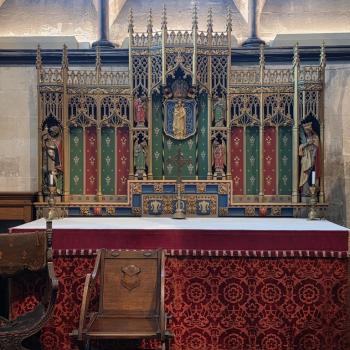
Salisbury Cathedral-- Part Two
TRENDING AT PATHEOS Evangelical

Just as the emergence of leaves on the fig tree signals the...
Belief and Disbelief in Christ's Presence in Holy...
A study found that only 29% of Catholics believe that the bread...

Blue Christmas: Making Room for Grief at Church
A Blue Christmas service makes room for grief, remembrance, and hope. Explore...

We Can Trust That God Will Use Our...
A Jesus-loving young friend who is going through deep suffering sent me...

Everything is worship for Quakers. The Quakers emphasize contemplation, equality, pacifism and...

Happy Thanksgiving! I published this Thanksgiving column back in 2017 in...
view all Evangelical blogs
Ad-Free & Subscriber Log-In Subscription Support
- About Us
- 2026 Calendar
- Videos
- Podcasts
- Library of World Religions
- Faith In Media Tracker
- Advertise With Us
- Write for Us
- Privacy Policy
- Terms of Service
- Do Not Sell My Data
- Contact Us
- Radiant Digital
- Manage Newsletter Subscriptions
- Unsubscribe From Notifications
- Sitemap
Copyright 2008-2026, Patheos, part of the Radiant Digital network of media brands. All rights reserved.
Subscription Support Ad-Free & Subscriber Log-In
Follow Patheos