
BuddhistCatholicContemplativeEvangelicalGeneral ChristianHinduJewishLatter-day SaintMuslimNew VisionsProgressive Christian
Beliefs
- Buddhist
- Catholic
- Contemplative
- Evangelical
- General Christian
- Hindu
- Jewish
- Latter-day Saint
- More Voices
- Muslim
- New Visions
- Pagan
- Progressive Christian
Topics
- Religion News
- Food and Religion
- Sports and Religion
- Religious Art
- Religious Music and Entertainment
- Religious Events
- History and Religion
- Style and Religion
- Politics and Religion
- Women in Religion
- Recreation Outdoors and Religion
- Business Finance and Religion
- Careers Workplace and Religion
- Education and Religion
- Family Parenting and Religion
- Health Fitness and Religion
- Home and Religion
- Relationships and Religion
- Technology and Religion
- Travel and Religion
Columnists
- Buddhist Columnists
- Business Finance and Religion Columnists
- Careers Workplace and Religion Columnists
- Catholic Columnists
- Contemplative Columnists
- Education and Religion Columnists
- Evangelists Columnists
- Family Parenting and Religion Columnists
- General Christian Columnists
- Health Fitness and Religion Columnists
- Hindu Columnists
- History and Religion Columnists
- Home and Religion Columnists
- Jewish Columnists
- More Voices Columnists
- Latter Day Columnists
- Muslim Columnists
- New Visions Columnists
- Nonreligious Columnists
- Pagan Columnists
- Politics and Religion Columnists
- Progressive Columnists
- Recreation Outdoors and Religion Columnists
- Relationships and Religion Columnists
- Religion News Columnists
- Religious Art Columnists
- Religious Events Columnists
- Religious Music and Entertainment Columnists
- Sports and Religion Columnists
- Style and Religion Columnists
- Technology and Religion Columnists
- Travel and Religion Columnists
- Women in Religion Columnists
Resource Library
- 2026 Calendar
- Library of World Religions
- The 100 Most Holy Places on Earth
- Patheos Answers
- Podcasts
- Videos
- Faith Leaders Database
- Anglican Episcopalian
- Bahai
- Baptist
- Buddhism
- Christianity
- Confucianism
- Eastern Orthodoxy
- Hinduism
- Holiness and Pentecostal
- ISKCON
- Islam
- Judaism
- Lutheran
- Methodist
- The Church of Jesus Christ of Latter-day Saints
- New Age
- Paganism
- Presbytarian and Reformed
- Protestantism
- Religion Behind the Scenes
- Roman Catholic
- Scientology
- Shia Islam
- Sikhism
- Sufism
- Sunni Islam
- Taoism
- Zen
- See all religions
Research Tools
 Ad-Free & Subscriber Log-In Subscription Support
Ad-Free & Subscriber Log-In Subscription Support
Follow Patheos 

- Trending:
- Forgiveness
- |
- Marriage
- |
- Consciousness
- |
- Death Penalty
- |
- Election
- |
- Halloween

- Home
- New Visions
- Health, Fitness and Religion
- Sin: The Shocking Path to Enlightenment
Sin: The Shocking Path to Enlightenment
Last updated on: August 28, 2023 at 6:57 pm by Mark J. Platten
Sin: The Shocking Path to Enlightenment 2023-08-28T18:57:43-06:00 Mark J. Platten
Patheos Explore the world's faith through different perspectives on religion and spirituality! Patheos has the views of the prevalent religions and spiritualities of the world.

Naked Man Holding Apple Inviting a Sinful Act Source: Canva
Hey there, curious souls! Get ready for a mind-blowing revelation because today, we’re diving headfirst into a topic that’s been deemed the ultimate taboo for centuries: sin. That’s right, buckle up because we’re about to take a wild ride beyond the ordinary, beyond what you thought you knew about sin, and straight into the heart of the sacred and the divine.
The Devilish Reputation of Sin
Sin has been the black sheep of the moral family for ages. It’s that naughty word that sends shivers down our spines, making us fear Hell or worse – jail. But what if I told you, we’ve got it all wrong? What if sinning is the key to connecting with the Divine?
Did you know that the fear of sin has deep historical roots? From the time of ancient civilizations to modern religions, the concept of sin has played a pivotal role in shaping human behavior and ethics.
What Is Sin Anyway?
Before we dive deeper, let’s decode this enigmatic term, ‘sin.’ In Aramaic, the language of the New Testament, ‘sin’ was akin to missing the mark, like an archer’s arrow veering off-course. In Hebrew, ‘sin,’ or ‘cheit,’ literally means ‘to go astray’ or an archery target – another bullseye for missing the mark.
The origins of the word “sin” in different cultures highlight a common theme – it’s about deviating from a desired path or potential. This concept has transcended time and continues to influence our moral compass.
Sin as a Cosmic Wake-Up Call
Hold onto your seats, folks, because here comes the shocker! The Greek perspective sees sin as an invitation to remember our purpose, to become the best version of ourselves and offer our unique gifts to the world. Sinning, in this light, is an inspiration, not a punishment – it’s urging us to keep striving until we hit the mark, like a cosmic game of darts where the bullseye is our true self-expression.
But, wait! Before you think I’m advocating a wild, lawless free-for-all, hear me out. Our ‘true self-expression’ isn’t about destruction; it’s about discovering our potential. Those destructive tendencies? They’re learned behaviors, also missing the mark on our soul’s work.
The Greeks attributed sin to ignorance aligns with the idea that challenges and setbacks often lead to personal growth. It’s not about falling down; it’s about rising stronger each time.
The Forgiveness Game
Almost every faith has some form of forgiveness practice – Catholic confession, Jewish Yom Kippur, or private confessions for Protestants. Hindus and Buddhists delve into karma, where intentional actions echo through lifetimes. Indigenous cultures had their take too, because sin is part of the fabric of what it is to be human and there has to be pathways to turn it into a positive force, lest we sink in despair with no way to redeem ourselves.
The Sinful Brain
Ever wonder why teenagers sometimes make questionable choices? Well, their prefrontal cortex, the part of the brain responsible for rational decisions, doesn’t fully mature until their mid to late 20s. So, cut them some slack – they literally can’t always think straight!
Brain development studies have shown that the prefrontal cortex, responsible for impulse control and rational thinking, undergoes significant changes during adolescence, affecting decision-making processes.
Subconscious Shenanigans
Here’s a mind-blowing fact I discussed in a previous post: our subconscious controls a whopping 90-95% of our cognitive function! When we’re extremely stressed, we’re thrown into the fight, flight, or freeze response.
In traumatic situations, the subconscious hijacks the conscious mind because our safety supersedes the extra time it would take for the conscious mind to reason what’s going on and make a decision. By that time, the saber-toothed tiger already had you for lunch!
What’s interesting is the subconscious mind is preverbal…that belongs to the development of prefrontal cortex and the conscious mind. So, oftentimes, victims of trauma have difficulty talking about it or finding words to describe what happened because the conscious mind was offline when the event happened.
Sin and the Subconscious
Now, let’s connect the dots. So, why does sin matter in this subconscious tale? Well, since our subconscious responds to emotions and safety, our ongoing sins help it decide what’s safe, what to reinforce, and where to focus our energy. In essence, we must sin to grow, to become the best version of ourselves. Studies on habit formation and behavior change emphasize the importance of emotional responses in reinforcing certain behaviors, making sin a powerful tool for personal evolution.
The Traps of Shame
But wait, there’s a catch. The shame, punishment, and persecution that often accompany our sins can be stifling. They keep us stuck in a cycle of fear, preventing us from reaching our full potential and creativity.
Or worse, we believe we are our sins, and that not only have we missed the mark, but we are incapable of anything but missing the mark because we believe we are flawed, broken, and irredeemable.
How many have we pushed into believing this about themselves, who were never able to adjust their aim? How much humanity and its infinite potential have we decimated by placing this sort of burden on our fellow humans? We must do better.
Creative Genius Lost
Remember that NASA study on genius? It found that 98% of 4- and 5-year-olds were creative geniuses. But as they grew older, that genius dwindled. Only 2% of adults maintained that level of creativity. What happened? Society, shame, and fear of sin often strangle our creative spark. This is the cost of being shut down when we sin. We’re missing out on 96% of the creative genius we had as children. If we could learn to teach healthy ways of experiencing sin and nurture/coach our children, perhaps we’d have a much different world.
The Original Sin Twist
Now, let’s talk about the elephant in the room: original sin in the Christian faith. What if that story was mistranslated? What if God didn’t want to keep Adam and Eve from the fruit but instead wanted them to take a bite?
Why would God create something, place it where they could easily get to it, and then tell them not to eat of it? Ask any parent and they’ll tell you the fastest way to get a child to do something is tell them they can’t. It’s almost a command to their souls to do the very thing they’re told not to do! So, I’m pretty sure God knew that by saying “don’t do this,” what was really being said is, “I want you do this.”
The Gift of Imperfection
What if Eden was the cage, not paradise? Maybe God didn’t kick Adam and Eve out, but invited them into their sovereign gift of choice so they (and we) could grow, create, and evolve without divine intervention. Original sin might just be the greatest gift we’ve ever received, an opportunity to create so God can evolve with us.
Embrace Your Inner Child
So, here’s the shocking revelation: Go forth and sin! Embrace risk, tap into your inner four-year-old where everything is possible, and miss the mark. Because, my friends, that’s how you achieve your true self-expression and preserve your connection to the universe.
Are you ready to rewrite the rules? It’s time to sin your way to greatness!
General Christian
Relationships and Religion
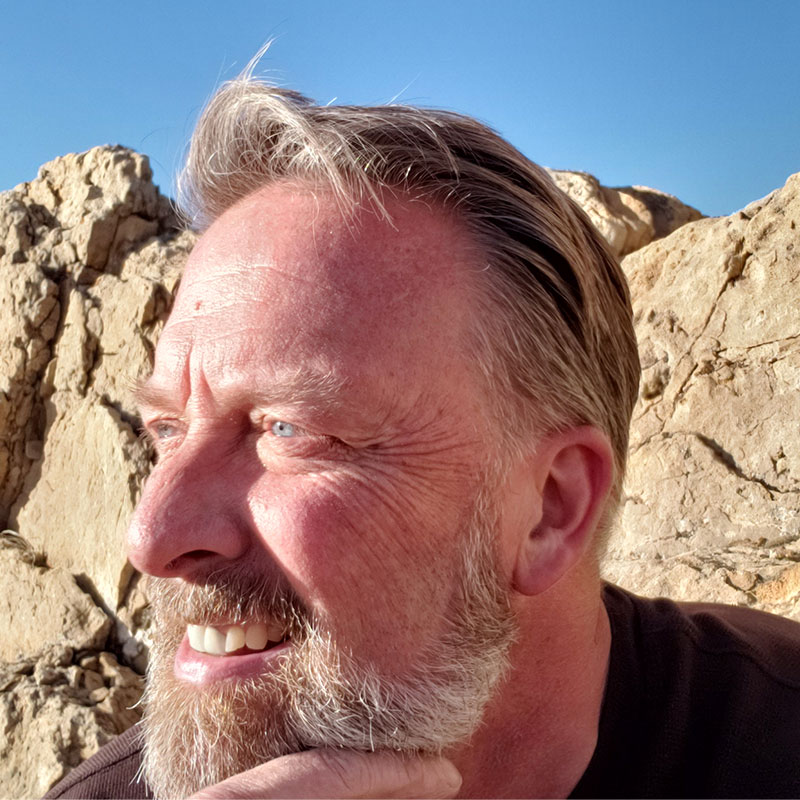
About Mark J. Platten
Mark J. Platten is the founder of Integral Human Initiative where he helps people find their passion, purpose, and path by integrates brain science, indigenous wisdom, rites/rituals/ceremonies, connection with nature, and current research to help others become the best version of themselves so they can give their gifts to the world. Mark's Amazon bestseller, "The Art of Connecting With Nature," is an anthology exploring how the contributors connect to nature through various rites, rituals, ceremonies, and practices. He is also a contributing author on four other Amazon #1 bestselling books, has presented three times at the Parliament of the Worlds Religions, is ordained in two traditions, and a high priest in a pagan tradition. On the academic/professional side, Mark has an MBA in Organizational Management, served seven years as an Air Force officer, worked internationally for 15 years, and since 2008 has been faculty at Colorado State University where he's received over 30 state and 20 national awards for his programs. You can read more about the author here.
Previous Post

August 16, 2023
When the Divine Went Silent: A Shocking Revelation
Next Post

September 26, 2023 Duality: Embracing the Gift of Choice for Divine Evolution
Recent Comments
Browse Our Archives
Select a Category Uncategorized
Select a Month February 2024 January 2024 December 2023 September 2023 August 2023
Follow Us!
TAKE THE
Religious Wisdom Quiz
Who taught Apollos about the gospel of Jesus Christ.
Select your answer to see how you score.
Timothy Barnabas Aquila and Priscilla Paul
Books by This Author Books by Beyond the Ordinary
Related posts from Beyond the Ordinary

Self-Help Addiction: Escaping Cycles of Endless Improvement


You as the Sculptor of Reality

Embracing Shadows: Unveiling the True Light Within
TRENDING AT PATHEOS New Visions

Did Prayer Cure His Cancer? Or Was It...
At 4 AM one morning, Joshua W. Brown’s wife awoke to a...

8 Ways a Near-Death Experience Rewires the Soul
Does Consciousness Survive Physical Death? After 50 Years of Research, Dr. Raymond...

Holy Longing: What Our Restlessness Is Telling Us
“One can find so many pains when the rain is falling.” -John...

What this is NOT about. This blog is definitely not about...

Who said the Israelites were God’s chosen? That’s right, they did. Who...

The Spirit World Is the Real World: God...
A Monk’s Wisdom on Body and Spirit I sit with Brother Martin...
view all New Visions blogs
What Are Your Thoughts?leave a comment
Ad-Free & Subscriber Log-In Subscription Support
- About Us
- 2026 Calendar
- Videos
- Podcasts
- Library of World Religions
- Faith In Media Tracker
- Advertise With Us
- Write for Us
- Privacy Policy
- Terms of Service
- Do Not Sell My Data
- Contact Us
- Radiant Digital
- Manage Newsletter Subscriptions
- Unsubscribe From Notifications
- Sitemap
Copyright 2008-2026, Patheos. All rights reserved.
Subscription Support Ad-Free & Subscriber Log-In
Follow Patheos