
BuddhistCatholicContemplativeEvangelicalGeneral ChristianHinduJewishLatter-day SaintMuslimNew VisionsProgressive Christian
Beliefs
- Buddhist
- Catholic
- Contemplative
- Evangelical
- General Christian
- Hindu
- Jewish
- Latter-day Saint
- More Voices
- Muslim
- New Visions
- Pagan
- Progressive Christian
Topics
- Religion News
- Food and Religion
- Sports and Religion
- Religious Art
- Religious Music and Entertainment
- Religious Events
- History and Religion
- Style and Religion
- Politics and Religion
- Women in Religion
- Recreation Outdoors and Religion
- Business Finance and Religion
- Careers Workplace and Religion
- Education and Religion
- Family Parenting and Religion
- Health Fitness and Religion
- Home and Religion
- Relationships and Religion
- Technology and Religion
- Travel and Religion
Columnists
- Buddhist Columnists
- Business Finance and Religion Columnists
- Careers Workplace and Religion Columnists
- Catholic Columnists
- Contemplative Columnists
- Education and Religion Columnists
- Evangelists Columnists
- Family Parenting and Religion Columnists
- General Christian Columnists
- Health Fitness and Religion Columnists
- Hindu Columnists
- History and Religion Columnists
- Home and Religion Columnists
- Jewish Columnists
- More Voices Columnists
- Latter Day Columnists
- Muslim Columnists
- New Visions Columnists
- Nonreligious Columnists
- Pagan Columnists
- Politics and Religion Columnists
- Progressive Columnists
- Recreation Outdoors and Religion Columnists
- Relationships and Religion Columnists
- Religion News Columnists
- Religious Art Columnists
- Religious Events Columnists
- Religious Music and Entertainment Columnists
- Sports and Religion Columnists
- Style and Religion Columnists
- Technology and Religion Columnists
- Travel and Religion Columnists
- Women in Religion Columnists
Resource Library
- 2026 Calendar
- Library of World Religions
- The 100 Most Holy Places on Earth
- Patheos Answers
- Podcasts
- Videos
- Faith Leaders Database
- Anglican Episcopalian
- Bahai
- Baptist
- Buddhism
- Christianity
- Confucianism
- Eastern Orthodoxy
- Hinduism
- Holiness and Pentecostal
- ISKCON
- Islam
- Judaism
- Lutheran
- Methodist
- The Church of Jesus Christ of Latter-day Saints
- New Age
- Paganism
- Presbytarian and Reformed
- Protestantism
- Religion Behind the Scenes
- Roman Catholic
- Scientology
- Shia Islam
- Sikhism
- Sufism
- Sunni Islam
- Taoism
- Zen
- See all religions
Research Tools
 Ad-Free & Subscriber Log-In Subscription Support
Ad-Free & Subscriber Log-In Subscription Support
Follow Patheos 

- Trending:
- Forgiveness
- |
- Marriage
- |
- Consciousness
- |
- Death Penalty
- |
- Election
- |
- Halloween
 Between Two Kingdoms
- Home
- Evangelical
- Religious Music & Entertainment
- The “Common Good” Doesn’t Have to Suck
The “Common Good” Doesn’t Have to Suck
Last updated on: October 6, 2022 at 2:28 pm by John Ehrett
The “Common Good” Doesn’t Have to Suck 2022-10-06T14:28:56-05:00 John Ehrett
Patheos Explore the world's faith through different perspectives on religion and spirituality! Patheos has the views of the prevalent religions and spiritualities of the world.

Image credit: Captured by CM
Allow me a brief meditation on a thing I’ve learned since becoming a dad.
Were I a single man, without children, I’d probably spend a lot of time reading in my comfy armchair (technically, I do spend a lot of time doing that, but I’d spend even more). For the sake of argument, let’s say we’re talking about three hours in the evening. That’s a good thing, and it brings me joy.
Ever since our son came along, though, our evenings have looked rather different. There’s the long stroller walk after his second nap, the flurry of cooking or heating up some dinner that everyone can eat (alas, cold pizza is no longer an option), supper, after-supper playtime, and often a bath. And usually, before it’s his bedtime, I get about half an hour or so to sit and read aloud with him—often reading and rereading Goodnight Moon, The Very Busy Spider, Hop on Pop, and other old standbys.
And I love doing it. That half hour of reading with my son will, almost without fail, bring me, personally, far more joy than three hours of reading alone in my basement. It also will bring my son more happiness than if he were left alone. And it will benefit my family as a whole by settling the little guy down for bed and freeing up my wife to do other tasks.
I think that when Christians and others talk about concepts like the “common good,” this is the sort of thing they’re getting at. The “good” that obtains in this situation is undoubtedly different than the “good” of me sitting in my armchair reading alone all evening, but it is fuller and deeper, and I don’t resent having to scale back that prior good.
For what it’s worth, a larger point that follows from this is that I wouldn’t have really understood this idea before I was in the midst of parenting. Specifically, there seem to be ways in which human beings were created to flourish that aren’t always readily recognizable “from the outside”; the meaningfulness and beauty of them is something that needs to be lived into.
But because of the “nonobviousness” of these ways of flourishing, it’s not surprising that many millennials have elected to opt out: I could never settle down and have kids. They’re so much work. I’d lose so much time. Well, yeah, there’s a lot of work involved. Nobody who’s taken care of a toddler for even an hour would disagree with that. And some days are harder than others, of course.
But the critical point that gets lost in this framing is that happiness doesn’t have to be zero-sum. More specifically, implicit here seems to be the notion that “if I’m helping meet someone else’s needs, my needs aren’t being met.” That certainly can be the case, but it doesn’t need to be; your own efforts can contribute to the good of a relationship that, ultimately, brings you far more joy than if you hadn’t made the initial commitment.
I’ve made this point before, but I’ve often thought that the way some conservatives talk about things like the “common good” can be very off-putting, as if the “good of all” needs to be a sort of metaphysical steamroller that obliterates individuality and press-gangs everyone into a state of misery. This is not only terrible messaging, it’s wrong. A “horizontal” unity reduces everyone to the least common denominator, but a “vertical” unity is one in which the goods of the individual and the many overlap—and traditionally speaking, appeals to the common good are appeals to the latter. On this view individual and communal goods, properly understood, aren’t actually opposed; they can only be pitted against one another through error or misjudgment.
The family, in short, is the exemplar case of the common good. And it is so very worth it.
Previous Post

September 13, 2022
“No Way Home” and Whether God Should Change the Past
Next Post
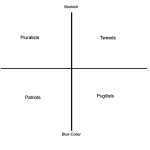
November 29, 2022 A Typology of Conservative Protestants in an Anxious Age
Browse Our Archives
Select a Category Culture Ecclesiology Education Imagination Movies Political Theory Scripture Uncategorized Worship
Select a Month December 2022 November 2022 October 2022 September 2022 August 2022 June 2022 May 2022 April 2022 March 2022 February 2022 January 2022 December 2021 November 2021 October 2021 September 2021 August 2021 July 2021 June 2021 May 2021 April 2021 March 2021 February 2021 January 2021 December 2020 November 2020 October 2020 September 2020 August 2020 July 2020 June 2020 May 2020 April 2020 March 2020 February 2020 January 2020 December 2019 November 2019 October 2019 September 2019 August 2019 June 2019 April 2019 January 2019 December 2018 October 2018 September 2018 August 2018 July 2018 June 2018 May 2018
TAKE THE
Religious Wisdom Quiz
True or False: The Israelites crossed the Red Sea by boat.
Select your answer to see how you score.
TRUE FALSE
Related posts from Between Two Kingdoms

Some Questions for National Conservatism’s Theological Critics



TRENDING AT PATHEOS Evangelical

The REST of Your Life: A Creative Wrestles...
This week I had a conversation with a good friend from church....

How the author of the world's best hymn...
I've been working with John Newton for a while now. This makes...

Long before this Lectio Divina, Psalm 130 - the song - started...

What About the Trees? Another Living Parable
After I finished writing the last article about falling leaves as a...

Why Classical Education Is a Conversation, Not a...
Come and Read: Joy in Classical Education When I was a little...

Cornell University has received a great deal of negative publicity and intense...
view all Evangelical blogs
Ad-Free & Subscriber Log-In Subscription Support
- About Us
- 2026 Calendar
- Videos
- Podcasts
- Library of World Religions
- Faith In Media Tracker
- Advertise With Us
- Write for Us
- Privacy Policy
- Terms of Service
- Do Not Sell My Data
- Contact Us
- Radiant Digital
- Manage Newsletter Subscriptions
- Unsubscribe From Notifications
- Sitemap
Copyright 2008-2026, Patheos. All rights reserved.
Subscription Support Ad-Free & Subscriber Log-In
Follow Patheos