
BuddhistCatholicContemplativeEvangelicalGeneral ChristianHinduJewishLatter-day SaintMuslimNew VisionsProgressive Christian
Beliefs
- Buddhist
- Catholic
- Contemplative
- Evangelical
- General Christian
- Hindu
- Jewish
- Latter-day Saint
- More Voices
- Muslim
- New Visions
- Pagan
- Progressive Christian
Topics
- Religion News
- Food and Religion
- Sports and Religion
- Religious Art
- Religious Music and Entertainment
- Religious Events
- History and Religion
- Style and Religion
- Politics and Religion
- Women in Religion
- Recreation Outdoors and Religion
- Business Finance and Religion
- Careers Workplace and Religion
- Education and Religion
- Family Parenting and Religion
- Health Fitness and Religion
- Home and Religion
- Relationships and Religion
- Technology and Religion
- Travel and Religion
Columnists
- Buddhist Columnists
- Business Finance and Religion Columnists
- Careers Workplace and Religion Columnists
- Catholic Columnists
- Contemplative Columnists
- Education and Religion Columnists
- Evangelists Columnists
- Family Parenting and Religion Columnists
- General Christian Columnists
- Health Fitness and Religion Columnists
- Hindu Columnists
- History and Religion Columnists
- Home and Religion Columnists
- Jewish Columnists
- More Voices Columnists
- Latter Day Columnists
- Muslim Columnists
- New Visions Columnists
- Nonreligious Columnists
- Pagan Columnists
- Politics and Religion Columnists
- Progressive Columnists
- Recreation Outdoors and Religion Columnists
- Relationships and Religion Columnists
- Religion News Columnists
- Religious Art Columnists
- Religious Events Columnists
- Religious Music and Entertainment Columnists
- Sports and Religion Columnists
- Style and Religion Columnists
- Technology and Religion Columnists
- Travel and Religion Columnists
- Women in Religion Columnists
Resource Library
- 2026 Calendar
- Library of World Religions
- The 100 Most Holy Places on Earth
- Patheos Answers
- Podcasts
- Videos
- Faith Leaders Database
- Anglican Episcopalian
- Bahai
- Baptist
- Buddhism
- Christianity
- Confucianism
- Eastern Orthodoxy
- Hinduism
- Holiness and Pentecostal
- ISKCON
- Islam
- Judaism
- Lutheran
- Methodist
- The Church of Jesus Christ of Latter-day Saints
- New Age
- Paganism
- Presbytarian and Reformed
- Protestantism
- Religion Behind the Scenes
- Roman Catholic
- Scientology
- Shia Islam
- Sikhism
- Sufism
- Sunni Islam
- Taoism
- Zen
- See all religions
Research Tools
 Ad-Free & Subscriber Log-In Subscription Support
Ad-Free & Subscriber Log-In Subscription Support
Follow Patheos 

- Trending:
- Forgiveness
- |
- Marriage
- |
- Consciousness
- |
- Death Penalty
- |
- Election
- |
- Halloween
 Between Two Kingdoms
- Home
- Evangelical
- Religious Music & Entertainment
- After “Faithful Presence”
After “Faithful Presence”
Last updated on: February 4, 2022 at 10:05 am by John Ehrett
After “Faithful Presence” 2022-02-04T10:05:49-05:00 John Ehrett
Patheos Explore the world's faith through different perspectives on religion and spirituality! Patheos has the views of the prevalent religions and spiritualities of the world.
 Over the last few years, one of the most common phrases used to refer to Christian cultural engagement has been “faithful presence.” The term comes from sociologist James Davison Hunter’s 2010 book To Change the World: The Irony, Tragedy, and Possibility in the Late Modern World, which defines it somewhat impressionistically. Among other things, Hunter invokes the idea of “engagement in and with the world around us” and the requirement that “that Christians be fully present and committed to their tasks.”
To illustrate this approach, Hunter gives the example of a woman “who rang up and bagged groceries and whose sphere of influence was only six square feet. Every day she greeted her customers with genuine enthusiasm, remembering customers’ names and asking about their families. She would end every conversation by saying that she was going to pray for their family.” (268–69) There’s a close resemblance here, of course, to the Lutheran doctrine of vocation—of serving God by loving one’s neighbor. And if this is what “faithful presence” means, what Christian could possibly disagree?
Where the question becomes substantially more difficult, though, is where leadership roles within decidedly “secular” institutions are on the table. How should Christians act under such conditions? For Hunter, given that cultural change occurs through “dense networks of elites operating in common purpose within institutions at the high-prestige centers of cultural production,” and because Christians are not presently capable of acting strategically within such spaces, “Constantinian forms of engagement” are misguided. (274, 280) Indeed, Hunter goes so far as to suggest that perhaps “the healthiest course of action for Christians . . . is to be silent for a season and learn how to enact their faith in public through acts of shalom rather than to try again to represent it publicly through law, policy, and political mobilization.” (281)
In recent months, a number of critiques of Hunter’s “faithful presence” paradigm have come to the fore. Increasingly, evidence suggests that highly visible Christians in “mainstream” institutions have been heavily influenced by the ideas and values of those institutions, rather than vice versa. The church, not the world, is at risk of being changed. And moreover, the “faithful presence” model doesn’t seem to answer an important question: when a Christian finds herself in an authority role, how ought she exercise that authority? Should she act as if her metaphysical-theological commitments are entirely immaterial to her work? Is that even possible?
The feasibility of Hunter’s model seems to be predicated on the assumption that “secular” power or influence is the sort of thing that one can wield indefinitely without it becoming an end in itself. But if and when it does become an end in itself, then retaining one’s position will become an objective for which one can justify compromising their value commitments: if I make this one compromise, I can keep being faithfully present in a position of influence. It strikes me as naïve to assume that most power-holders can withstand that temptation.
Now, the standard proposed move—in response to criticisms like the one I’ve just laid out—is to stress the need to build alternative institutions (schools and universities in particular) that don’t happen to be “captured” by ideological opponents. And American Christians have a long tradition of doing precisely that: the flagship example would be J. Gresham Machen founding Westminster Theological Seminary after departing from Princeton. The general idea here is that a degree of institutional separatism, at least on the educational side of things, can produce leaders with stiffer spines.
But how, precisely, does one staff or defend such alternative institutions? It has often seemed to me that an important condition for the preservation of the integrity of a tradition is the testing of that tradition against others; absent such testing, adherents become indifferent to the beauty they’ve inherited, and the meanings of symbols and concepts risk being lost or subverted through neglect and inattention. Probably this doesn’t mean throwing all adherents into the cauldron of “liquid modernity” and hoping for the best, but those who write and speak and teach within tradition-bound communities ought to properly understand what members will inevitably find themselves up against. Hunter agrees, writing that “[t]he church will not flourish in itself nor serve well the common good if it isolates itself from the larger culture, fails to understand its nature and inner logic, and is incapable of working within it.” (285)
So some, at least, must “venture out” from the safe walls of those counter-institutions, into a world characterized by pervasive interpretive pluralism about even the basic facts of reality. Or, put more simply: you can build your Hillsdales or Concordias and send your people there, but should everyone who teaches at those schools be credentialed by them “all the way up”? Have we not substituted one extreme (assimilation) for another (separatism)?
This is a vexing question—not least because there’s a long history of seemingly well-credentialed Christian leaders claiming a measure of orthodoxy, while seemingly working to undermine that orthodoxy within institutions. (This dynamic was precisely what led to the Seminex controversy in my own LCMS denomination in the 1970s.) So I certainly don’t pretend to have all the answers here.
Let me take an early stab at an alternative, though. Perhaps instead of “faithful presence,” we ought to speak of an overarching model more like “faithful voyaging”—a model in which an individual is formed by Christian community, serves faithfully when called to duty elsewhere, but also always expects to eventually set that “role” aside and return to their community of origin. The only question is when that role must be relinquished. This entails that, when in a position or institution of influence, an individual ought to conduct herself in such a way that she will still be recognizable to the community that formed her once she cedes that influence. Here we have something like the ancient metaphysical principle of exitus/reditus—origination of created things from God and their inevitable return to Him— transposed into the vocational register: we go out from the church, and we return to the church. And this framework applies both to those who venture out intellectually, with an eye to staffing the aforementioned alternative institutions, and to those who venture out for the purpose of exercising authority in the “secular” sphere.
All of that is embryonic, of course. But if Hunter’s “faithful presence” approach has proven flawed, then we have a responsibility to start looking elsewhere.
Previous Post

January 27, 2022
“The Secret History” as Cautionary Tale
Next Post

February 14, 2022 Does “Kenogaia” Have a Happy Ending?
Browse Our Archives
Select a Category Culture Ecclesiology Education Imagination Movies Political Theory Scripture Uncategorized Worship
Select a Month December 2022 November 2022 October 2022 September 2022 August 2022 June 2022 May 2022 April 2022 March 2022 February 2022 January 2022 December 2021 November 2021 October 2021 September 2021 August 2021 July 2021 June 2021 May 2021 April 2021 March 2021 February 2021 January 2021 December 2020 November 2020 October 2020 September 2020 August 2020 July 2020 June 2020 May 2020 April 2020 March 2020 February 2020 January 2020 December 2019 November 2019 October 2019 September 2019 August 2019 June 2019 April 2019 January 2019 December 2018 October 2018 September 2018 August 2018 July 2018 June 2018 May 2018
TAKE THE
Religious Wisdom Quiz
Who was the oldest person in the Bible?
Select your answer to see how you score.
Methuselah Noah Abraham Adam
Related posts from Between Two Kingdoms

The Best Books I Read This Year (2022...
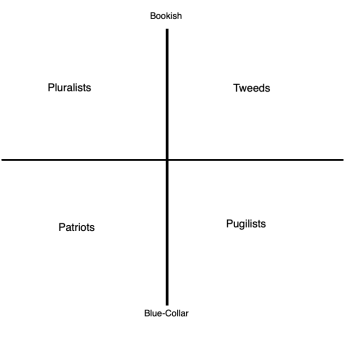
A Typology of Conservative Protestants in an Anxious...

The MFA Novel and the Mystery Box
Tim Keller and the Two Senses of “Winsome”
TRENDING AT PATHEOS Evangelical

The REST of Your Life: A Creative Wrestles...
This week I had a conversation with a good friend from church....

How the author of the world's best hymn...
I've been working with John Newton for a while now. This makes...

Long before this Lectio Divina, Psalm 130 - the song - started...

What About the Trees? Another Living Parable
After I finished writing the last article about falling leaves as a...

Why Classical Education Is a Conversation, Not a...
Come and Read: Joy in Classical Education When I was a little...

Cornell University has received a great deal of negative publicity and intense...
view all Evangelical blogs
Ad-Free & Subscriber Log-In Subscription Support
- About Us
- 2026 Calendar
- Videos
- Podcasts
- Library of World Religions
- Faith In Media Tracker
- Advertise With Us
- Write for Us
- Privacy Policy
- Terms of Service
- Do Not Sell My Data
- Contact Us
- Radiant Digital
- Manage Newsletter Subscriptions
- Unsubscribe From Notifications
- Sitemap
Copyright 2008-2026, Patheos. All rights reserved.
Subscription Support Ad-Free & Subscriber Log-In
Follow Patheos