
BuddhistCatholicContemplativeEvangelicalGeneral ChristianHinduJewishLatter-day SaintMuslimNew VisionsProgressive Christian
Beliefs
- Buddhist
- Catholic
- Contemplative
- Evangelical
- General Christian
- Hindu
- Jewish
- Latter-day Saint
- More Voices
- Muslim
- New Visions
- Pagan
- Progressive Christian
Topics
- Religion News
- Food and Religion
- Sports and Religion
- Religious Art
- Religious Music and Entertainment
- Religious Events
- History and Religion
- Style and Religion
- Politics and Religion
- Women in Religion
- Recreation Outdoors and Religion
- Business Finance and Religion
- Careers Workplace and Religion
- Education and Religion
- Family Parenting and Religion
- Health Fitness and Religion
- Home and Religion
- Relationships and Religion
- Technology and Religion
- Travel and Religion
Columnists
- Buddhist Columnists
- Business Finance and Religion Columnists
- Careers Workplace and Religion Columnists
- Catholic Columnists
- Contemplative Columnists
- Education and Religion Columnists
- Evangelists Columnists
- Family Parenting and Religion Columnists
- General Christian Columnists
- Health Fitness and Religion Columnists
- Hindu Columnists
- History and Religion Columnists
- Home and Religion Columnists
- Jewish Columnists
- More Voices Columnists
- Latter Day Columnists
- Muslim Columnists
- New Visions Columnists
- Nonreligious Columnists
- Pagan Columnists
- Politics and Religion Columnists
- Progressive Columnists
- Recreation Outdoors and Religion Columnists
- Relationships and Religion Columnists
- Religion News Columnists
- Religious Art Columnists
- Religious Events Columnists
- Religious Music and Entertainment Columnists
- Sports and Religion Columnists
- Style and Religion Columnists
- Technology and Religion Columnists
- Travel and Religion Columnists
- Women in Religion Columnists
Resource Library
- 2026 Calendar
- Library of World Religions
- The 100 Most Holy Places on Earth
- Patheos Answers
- Podcasts
- Videos
- Faith Leaders Database
- Anglican Episcopalian
- Bahai
- Baptist
- Buddhism
- Christianity
- Confucianism
- Eastern Orthodoxy
- Hinduism
- Holiness and Pentecostal
- ISKCON
- Islam
- Judaism
- Lutheran
- Methodist
- The Church of Jesus Christ of Latter-day Saints
- New Age
- Paganism
- Presbytarian and Reformed
- Protestantism
- Religion Behind the Scenes
- Roman Catholic
- Scientology
- Shia Islam
- Sikhism
- Sufism
- Sunni Islam
- Taoism
- Zen
- See all religions
Research Tools
 Ad-Free & Subscriber Log-In Subscription Support
Ad-Free & Subscriber Log-In Subscription Support
Follow Patheos 

- Trending:
- Forgiveness
- |
- Marriage
- |
- Consciousness
- |
- Death Penalty
- |
- Election
- |
- Halloween
 Between Two Kingdoms
- Home
- Evangelical
- Religious Music & Entertainment
- Finding What We Want in “Midnight Mass”
Finding What We Want in “Midnight Mass”
Last updated on: October 22, 2021 at 9:39 am by John Ehrett
Finding What We Want in “Midnight Mass” 2021-10-22T09:39:17-05:00 John Ehrett
Patheos Explore the world's faith through different perspectives on religion and spirituality! Patheos has the views of the prevalent religions and spiritualities of the world.
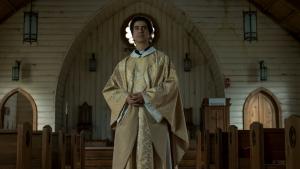
Image credit: Netflix
On the recommendation of some folks whose opinions I trust, I recently invested seven hours of my life into Mike Flanagan’s new Netflix horror-drama miniseries Midnight Mass. Flanagan’s directorial approach isn’t always my cup of tea—I have a soft spot for good jump scares and nerve-jangling climaxes, and Flanagan is a slow-burn director—but I must admit, this series ended up worthy of the hype.
(Spoilers throughout. There’s really only one big spoiler for this show worth noting, but you’ve been warned.)
Midnight Mass tells the story of a mysterious Catholic religious revival on a remote Maine island. Under the leadership of charismatic priest Paul Hill, the local parish witnesses striking miracles of healing that defy ready scientific explanation. Naturally, these events are treated with cynicism by the local skeptics, including protagonist Riley—who has recently been released from prison after killing a girl in a drunk-driving accident.
What makes this miniseries so unique is the sheer amount of time it devotes to allowing its characters to “work out their salvation,” so to speak. Lengthy monologues on subjects like the afterlife and the problem of evil are narrative fixtures—and thanks to the very talented actors onscreen, they are mesmerizing. I can’t recall ever seeing a show in this genre so committed to taking its own theological underpinnings seriously.
In perhaps the single best scene of Midnight Mass, Riley and sort-of love interest Erin (a Christian, at least formally) debate their different understandings of what happens after death. Unsurprising, the atheistic Riley argues that death is simply the cessation of consciousness—but it’s the way he argues that’s particularly fascinating. For Riley, haunted by bloody images of the young woman he killed, annihilation promises sweet release from the ghosts of his past, and a total dissolution into the void of nonbeing. It is, in short, a kind of anticipated peace.
What Flanagan manages to convey here—whether intentionally or not—is the idea that ostensibly secular convictions are not always motivated by “objective science.” Riley’s longing for oblivion is an inversion of the claim that Christian beliefs about heaven and the new creation are primarily about wish-fulfillment; for the nontheistic Riley, materialistic self-obliteration is his dearest wish. What could be worse, for the guilt-scarred conscience, than the Christian promise of eternal life—an eternity of reckoning with one’s sins?
This perspectival playfulness isn’t limited to one scene. Indeed, the miniseries’ big twist is that Father Paul is not a miracle worker, but the acolyte of an ancient vampire whom he believes to be a biblical angel. (I don’t think the word “vampire” is ever actually used onscreen, even though we’re talking about creatures that drink blood and burn in sunlight.) And who are we viewers, strictly speaking, to tell Father Paul he’s wrong? We only approach Midnight Mass as an audience reared on Dracula stories and conditioned to spot the “tells” of vampire stories, after all. If the creature at the story’s heart were actually an angel, would we ever be capable of recognizing it as such?
Something like this, I think, is the fundamental philosophical problem underlying arguments about religion that devolve into fights over “evidence.” From the perspective of the classical theist, the presence of any finite reality at all is prima facie evidence of an ontologically infinite Source. As such, every natural thing of any sort testifies to the creative handiwork of God. But for those who do not understand or accept this metaphysical paradigm, the created order is evidence of nothing in particular; it’s just there, raw data from which we might or might not infer the presence of an almighty demiurgic “orderer” existing alongside other beings. The interpretive grid is the whole ballgame, in short; piling up second-order arguments for the reality of the supernatural is somewhat beside the point.
What is expected—and required—is trust. For the Christian, this is always also trust in a person, the author of a transcendent narrative, a living Logos who alone can mitigate the interpretive chaos we experience when we confront the “data” of reality. Apart from that, pretty much everything is epistemological fair game; vampires can be called “angels” and self-extinction can be deemed “heaven.” And that’s the really eerie truth at the core of Midnight Mass.
Previous Post

September 27, 2021
The Three Little Pigs and the Last Judgment
Next Post
November 11, 2021 What Kept Me Engaged in Church
Browse Our Archives
Select a Category Culture Ecclesiology Education Imagination Movies Political Theory Scripture Uncategorized Worship
Select a Month December 2022 November 2022 October 2022 September 2022 August 2022 June 2022 May 2022 April 2022 March 2022 February 2022 January 2022 December 2021 November 2021 October 2021 September 2021 August 2021 July 2021 June 2021 May 2021 April 2021 March 2021 February 2021 January 2021 December 2020 November 2020 October 2020 September 2020 August 2020 July 2020 June 2020 May 2020 April 2020 March 2020 February 2020 January 2020 December 2019 November 2019 October 2019 September 2019 August 2019 June 2019 April 2019 January 2019 December 2018 October 2018 September 2018 August 2018 July 2018 June 2018 May 2018
TAKE THE
Religious Wisdom Quiz
In Revelation, what do the souls under the altar cry out for?
Select your answer to see how you score.
Justice and vengeance for their blood The return of Christ Mercy for their persecutors Peace on earth
Related posts from Between Two Kingdoms

“No Way Home” and Whether God Should Change...

“Everything Everywhere All At Once” Wasn’t Really My...

The Movie Sequels You Hate Are About Technological...
“Pan’s Labyrinth” and the Logic of Sacrifice
TRENDING AT PATHEOS Evangelical

The REST of Your Life: A Creative Wrestles...
This week I had a conversation with a good friend from church....

How the author of the world's best hymn...
I've been working with John Newton for a while now. This makes...

Long before this Lectio Divina, Psalm 130 - the song - started...

What About the Trees? Another Living Parable
After I finished writing the last article about falling leaves as a...

Why Classical Education Is a Conversation, Not a...
Come and Read: Joy in Classical Education When I was a little...

Cornell University has received a great deal of negative publicity and intense...
view all Evangelical blogs
Ad-Free & Subscriber Log-In Subscription Support
- About Us
- 2026 Calendar
- Videos
- Podcasts
- Library of World Religions
- Faith In Media Tracker
- Advertise With Us
- Write for Us
- Privacy Policy
- Terms of Service
- Do Not Sell My Data
- Contact Us
- Radiant Digital
- Manage Newsletter Subscriptions
- Unsubscribe From Notifications
- Sitemap
Copyright 2008-2026, Patheos. All rights reserved.
Subscription Support Ad-Free & Subscriber Log-In
Follow Patheos