
BuddhistCatholicContemplativeEvangelicalGeneral ChristianHinduJewishLatter-day SaintMuslimNew VisionsProgressive Christian
Beliefs
- Buddhist
- Catholic
- Contemplative
- Evangelical
- General Christian
- Hindu
- Jewish
- Latter-day Saint
- More Voices
- Muslim
- New Visions
- Pagan
- Progressive Christian
Topics
- Religion News
- Food and Religion
- Sports and Religion
- Religious Art
- Religious Music and Entertainment
- Religious Events
- History and Religion
- Style and Religion
- Politics and Religion
- Women in Religion
- Recreation Outdoors and Religion
- Business Finance and Religion
- Careers Workplace and Religion
- Education and Religion
- Family Parenting and Religion
- Health Fitness and Religion
- Home and Religion
- Relationships and Religion
- Technology and Religion
- Travel and Religion
Columnists
- Buddhist Columnists
- Business Finance and Religion Columnists
- Careers Workplace and Religion Columnists
- Catholic Columnists
- Contemplative Columnists
- Education and Religion Columnists
- Evangelists Columnists
- Family Parenting and Religion Columnists
- General Christian Columnists
- Health Fitness and Religion Columnists
- Hindu Columnists
- History and Religion Columnists
- Home and Religion Columnists
- Jewish Columnists
- More Voices Columnists
- Latter Day Columnists
- Muslim Columnists
- New Visions Columnists
- Nonreligious Columnists
- Pagan Columnists
- Politics and Religion Columnists
- Progressive Columnists
- Recreation Outdoors and Religion Columnists
- Relationships and Religion Columnists
- Religion News Columnists
- Religious Art Columnists
- Religious Events Columnists
- Religious Music and Entertainment Columnists
- Sports and Religion Columnists
- Style and Religion Columnists
- Technology and Religion Columnists
- Travel and Religion Columnists
- Women in Religion Columnists
Resource Library
- 2026 Calendar
- Library of World Religions
- The 100 Most Holy Places on Earth
- Patheos Answers
- Podcasts
- Videos
- Faith Leaders Database
- Anglican Episcopalian
- Bahai
- Baptist
- Buddhism
- Christianity
- Confucianism
- Eastern Orthodoxy
- Hinduism
- Holiness and Pentecostal
- ISKCON
- Islam
- Judaism
- Lutheran
- Methodist
- The Church of Jesus Christ of Latter-day Saints
- New Age
- Paganism
- Presbytarian and Reformed
- Protestantism
- Religion Behind the Scenes
- Roman Catholic
- Scientology
- Shia Islam
- Sikhism
- Sufism
- Sunni Islam
- Taoism
- Zen
- See all religions
Research Tools
 Ad-Free & Subscriber Log-In Subscription Support
Ad-Free & Subscriber Log-In Subscription Support
Follow Patheos 

- Trending:
- Forgiveness
- |
- Marriage
- |
- Consciousness
- |
- Death Penalty
- |
- Election
- |
- Halloween
 Between Two Kingdoms
- Home
- Evangelical
- Religious Music & Entertainment
- The “Matrix” Sequels Are Better Than You Remember
The “Matrix” Sequels Are Better Than You Remember
Last updated on: December 6, 2021 at 9:02 pm by John Ehrett
The “Matrix” Sequels Are Better Than You Remember 2021-12-06T21:02:00-05:00 John Ehrett
Patheos Explore the world's faith through different perspectives on religion and spirituality! Patheos has the views of the prevalent religions and spiritualities of the world.
 It’s become a matter of conventional wisdom that the Wachowski siblings’ Matrix film trilogy—which first blew minds in 1999 and careened to an explosive finish in 2003—can best be described as “one great movie followed up by two mediocre sequels.”
The Matrix coupled a thoroughly creative “fight the power” storyline with a sleek cyberpunk aesthetic and eye-popping visuals. It was an exhilarating tale of liberation from the “machines” that control our lives, of awakening from unconscious slavery into an ethos of freedom and choice. (The word “redpill” has even become part of the quasi-mainstream political vocabulary today.) Who can forget the final image of protagonist Neo flying up into the camera, backed by the rebellious chords of Rage Against the Machine’s “Wake Up” and Marilyn Manson’s “Rock Is Dead”?
In light of all that, I can see why the sequel films went over like a lead balloon with many fans. Reloaded and Revolutionshad very little to do with liberating anyone else from the Matrix, and far more to do with a weighty mythology of Architects and Oracles and biblically-weighted references. The swagger of the first gave way to a haze of melodrama and metaphysics. And that’s saying nothing of the odd cinematic structure: Reloaded lacks a third act and Revolutions lacks a first and second.
The first time I watched the trilogy, I was mystified, to say the least. In particular, I couldn’t quite track all the inner logic of Revolutions; the imagery and symbolism was all very powerful, particularly as someone pretty well versed in the Christian tradition, but it was hard to figure out how all the story pieces linked up. The movie doesn’t attempt to connect many of these dots, leaving viewers with a cryptic and somewhat abrupt ending.
Nevertheless, I get the urge to rewatch The Matrix on a pretty regular basis—and not just the first film. It’s abundantly clear, even on an initial viewing, that there’s a real significance underlying all the ponderous meditations on free will and control, a degree of intellectual seriousness that’s very rare to see in big-budget moviemaking today. And frankly, I prefer movies that leave a little mystery and uncertainty in the mix, rather than attempting to fill in every detail with turgid backstory.
Now, I’m well aware that opinions on the philosophy of The Matrix are like rear ends (that is to say, every one of us has them). And to be sure, this is a film that can readily be explored through the lenses of Buddhism or capitalism or gender theory, just to name a few paradigms. So just consider this an exploration of a few narrative elements I’ve picked up on over the years of repeat viewings, details that keep me coming back to the much-maligned sequels and that make me excited for the fourth installment.
To begin with, perhaps the theme I find most interesting about the Matrix sequels is the shift of antagonist that plays out across both films. From a high-level standpoint, the original Matrix is pretty straightforward: Neo and companions Trinity and Morpheus battle the sentient Machines in order to free humanity from oppression. Indeed, midway through the first film, the wise Morpheus famously introduces Neo to “the desert of the real,” awakening him to the reality that the Matrix is a gigantic digital simulation layered over the ruins of an apocalyptic Earth. Outside the Matrix is a ruin of tunnels and stone and metal and black clouds, where the few surviving humans try to scratch out a desperate living.
But the Wachowskis don’t rest content with this easy dichotomy. Instead, we meet more and more sympathetic “virtual” figures as the films unfold, from Reloaded’s lovelorn Persephone to the humanlike programs Rama-Kandra and Sati at the train station in Revolutions. All this culminates in Neo’s final vision of the Machine City/Mainframe: a world ablaze with fiery light, seething with energy, that could not be further from a sterile wasteland. Morpheus, in a sense, was wrong from the start: the purported “desert of the real” was actually teeming with life, and it is this realization that dramatically shifts the trajectory of the story.
Indeed, the trilogy’s real enemy is not the Machines themselves, but the rogue program Agent Smith, who is keen to quite literally “remake the world in his own image.” Smith has only marginal “realness” of his own; he reproduces by copying his image “over” other programs and human representations within the Matrix. In short, he is a quintessentially demonic figure in the very deepest sense; he is ontologically parasitic, more akin to Madeleine L’Engle’s Echthroi than to the fallen angels Asmodeus or Belphegor in Christian folklore.
It is Smith’s parasitic nature that foregrounds one of the trilogy’s subtlest, and most interesting, themes: the idea of incarnation.
In one of the most shocking moments of Reloaded, Neo exercises preternatural abilities outside the confines of the Matrix program, destroying a horde of oncoming Machines using psychic-electrical powers. This is clarified in Revolutions by the Oracle, who explains that “[t]he power of the One extends beyond this world. It reaches from here all the way back to where it came from”—to, that is, the godlike Source, the superintelligence generating the Matrix and guiding the Machines.
One could phrase the matter thus: Neo is both fully human—capable of transitioning between the “real world” and the Matrix—and fully “Machine,” capable of exercising direct power over them outside the digital world. As messianic imagery in movies goes, one must admit that this distinctive cyber-Christology is an intellectual cut above the norm.
Such a “union of persons” is the antithesis of Smith’s nature. In Revolutions, Smith can only possess the villainous Bane, not join with him as a single integrated hypostasis—manifesting, that is, merely as a parodic version of Neo. This point is particularly driven home by Smith’s lengthy diatribe against fleshly humanity in the original film: “I can taste your stink. And every time I do I feel I have somehow been infected by it, it’s repulsive.”
And it is Neo’s “ontological wholeness”—a corollary of his exitus/reditus relationship to the Source—that drives the trilogy’s climax: Neo voluntarily chooses to submit to Smith’s attempted assimilation, and in so doing tears him apart from the inside out with a brilliant white light. It’s an arresting image, but one that goes entirely unexplained onscreen, forcing the viewer to fill in some of the narrative blanks.
All throughout Revolutions, one encounters the gnomic phrase “everything that has a beginning has an end.” What might this mean? I’ll hazard a guess. Smith is a pure creation of the system; by contrast, Neo has, in a sense, no beginning and hence no end. Reloaded’s Architect reveals that Neo is not the first “One” to venture through the Matrix in defense of humanity, and the enigmatic Oracle promises at the end of Revolutions that someday, Neo will be seen again. Thus, in the climactic battle between the parasitic and the real, the parasitic Smith (the ontological “naught,” who originated in time and so must dissolve in time) must necessarily be destroyed.
Note that Neo’s sacrifice is not only the act by which the “powers and principalities” of the Matrix are overcome; his “death” is also deemed sufficient to avert the judgment of the Machines upon those who revolted against their prior purpose (sustaining the Machines, that is). And it is an act that allows for Revolutions to conclude with the hauntingly evocative proclamation “Zion! Zion! Zion, it’s over! The war is over!”
Suffice it to say that this is rich thematic stuff, regardless of whether all of it was consciously intended by the Wachowskis (I wouldn’t necessarily put it past them, though). And while plenty could be said about the sequels’ choppier storytelling elements—what was the deal with the “werewolves” in Reloaded, anyway?—I would far rather watch a movie that paints on a gigantic metaphysical canvas, and occasionally finds that its reach exceeds its grasp, than a movie that leans on irony and familiarity to get as many people in seats as possible.
In any event, if it’s been a while since you’ve seen the sequels, I highly recommend trying them again before the latest installment drops in December. Allow yourself to be persuaded that there’s more to them than meets the eye. It’s worth the time investment.
Previous Post

August 22, 2021
Deconstruction is Conversion
Next Post

September 24, 2021 Bishop Spong's Radical Gambit
Browse Our Archives
Select a Category Culture Ecclesiology Education Imagination Movies Political Theory Scripture Uncategorized Worship
Select a Month December 2022 November 2022 October 2022 September 2022 August 2022 June 2022 May 2022 April 2022 March 2022 February 2022 January 2022 December 2021 November 2021 October 2021 September 2021 August 2021 July 2021 June 2021 May 2021 April 2021 March 2021 February 2021 January 2021 December 2020 November 2020 October 2020 September 2020 August 2020 July 2020 June 2020 May 2020 April 2020 March 2020 February 2020 January 2020 December 2019 November 2019 October 2019 September 2019 August 2019 June 2019 April 2019 January 2019 December 2018 October 2018 September 2018 August 2018 July 2018 June 2018 May 2018
TAKE THE
Religious Wisdom Quiz
Why was it scandalous for the woman to anoint Jesus' feet with tears?
Select your answer to see how you score.
She was a child She was foreign She was a known sinner She was wealthy
Related posts from Between Two Kingdoms

“No Way Home” and Whether God Should Change...

“Everything Everywhere All At Once” Wasn’t Really My...

The Movie Sequels You Hate Are About Technological...
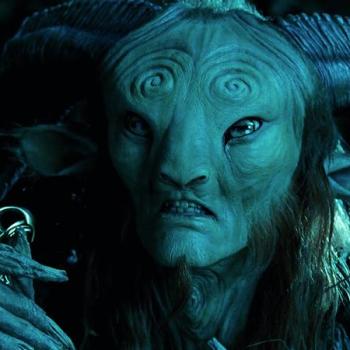
“Pan’s Labyrinth” and the Logic of Sacrifice
TRENDING AT PATHEOS Evangelical

The REST of Your Life: A Creative Wrestles...
This week I had a conversation with a good friend from church....

How the author of the world's best hymn...
I've been working with John Newton for a while now. This makes...

Long before this Lectio Divina, Psalm 130 - the song - started...

What About the Trees? Another Living Parable
After I finished writing the last article about falling leaves as a...

Why Classical Education Is a Conversation, Not a...
Come and Read: Joy in Classical Education When I was a little...

Cornell University has received a great deal of negative publicity and intense...
view all Evangelical blogs
Ad-Free & Subscriber Log-In Subscription Support
- About Us
- 2026 Calendar
- Videos
- Podcasts
- Library of World Religions
- Faith In Media Tracker
- Advertise With Us
- Write for Us
- Privacy Policy
- Terms of Service
- Do Not Sell My Data
- Contact Us
- Radiant Digital
- Manage Newsletter Subscriptions
- Unsubscribe From Notifications
- Sitemap
Copyright 2008-2026, Patheos. All rights reserved.
Subscription Support Ad-Free & Subscriber Log-In
Follow Patheos