
BuddhistCatholicContemplativeEvangelicalGeneral ChristianHinduJewishLatter-day SaintMuslimNew VisionsProgressive Christian
Beliefs
- Buddhist
- Catholic
- Contemplative
- Evangelical
- General Christian
- Hindu
- Jewish
- Latter-day Saint
- More Voices
- Muslim
- New Visions
- Pagan
- Progressive Christian
Topics
- Religion News
- Food and Religion
- Sports and Religion
- Religious Art
- Religious Music and Entertainment
- Religious Events
- History and Religion
- Style and Religion
- Politics and Religion
- Women in Religion
- Recreation Outdoors and Religion
- Business Finance and Religion
- Careers Workplace and Religion
- Education and Religion
- Family Parenting and Religion
- Health Fitness and Religion
- Home and Religion
- Relationships and Religion
- Technology and Religion
- Travel and Religion
Columnists
- Buddhist Columnists
- Business Finance and Religion Columnists
- Careers Workplace and Religion Columnists
- Catholic Columnists
- Contemplative Columnists
- Education and Religion Columnists
- Evangelists Columnists
- Family Parenting and Religion Columnists
- General Christian Columnists
- Health Fitness and Religion Columnists
- Hindu Columnists
- History and Religion Columnists
- Home and Religion Columnists
- Jewish Columnists
- More Voices Columnists
- Latter Day Columnists
- Muslim Columnists
- New Visions Columnists
- Nonreligious Columnists
- Pagan Columnists
- Politics and Religion Columnists
- Progressive Columnists
- Recreation Outdoors and Religion Columnists
- Relationships and Religion Columnists
- Religion News Columnists
- Religious Art Columnists
- Religious Events Columnists
- Religious Music and Entertainment Columnists
- Sports and Religion Columnists
- Style and Religion Columnists
- Technology and Religion Columnists
- Travel and Religion Columnists
- Women in Religion Columnists
Resource Library
- 2026 Calendar
- Library of World Religions
- The 100 Most Holy Places on Earth
- Patheos Answers
- Podcasts
- Videos
- Faith Leaders Database
- Anglican Episcopalian
- Bahai
- Baptist
- Buddhism
- Christianity
- Confucianism
- Eastern Orthodoxy
- Hinduism
- Holiness and Pentecostal
- ISKCON
- Islam
- Judaism
- Lutheran
- Methodist
- The Church of Jesus Christ of Latter-day Saints
- New Age
- Paganism
- Presbytarian and Reformed
- Protestantism
- Religion Behind the Scenes
- Roman Catholic
- Scientology
- Shia Islam
- Sikhism
- Sufism
- Sunni Islam
- Taoism
- Zen
- See all religions
Research Tools
 Ad-Free & Subscriber Log-In Subscription Support
Ad-Free & Subscriber Log-In Subscription Support
Follow Patheos 

- Trending:
- Forgiveness
- |
- Marriage
- |
- Consciousness
- |
- Death Penalty
- |
- Election
- |
- Halloween
 Between Two Kingdoms
- Home
- Evangelical
- Religious Music & Entertainment
- Whose Cynicism? Whose Theory? How (Not) to Critique Postmodernity
Whose Cynicism? Whose Theory? How (Not) to Critique Postmodernity
Last updated on: October 5, 2020 at 8:09 am by John Ehrett
Whose Cynicism? Whose Theory? How (Not) to Critique Postmodernity 2020-10-05T08:09:06-05:00 John Ehrett
Patheos Explore the world's faith through different perspectives on religion and spirituality! Patheos has the views of the prevalent religions and spiritualities of the world.

Image credit: Thinkspot
Almost everyone in modern America is now familiar with phrases like “white privilege,” “oppression,” “appropriation” and so on—and almost everyone is also keenly aware that these terms simply weren’t part of the mainstream social discourse up until a few years ago. What changed?
Helen Pluckrose and James Lindsay’s new book Cynical Theories: How Activist Scholarship Made Everything About Race, Gender, and Identity—and Why This Harms Everybody is a sustained attempt to “name the elephant”—to accessibly systematize the contemporary currents of social-justice thought into a (relatively) clear intellectual trajectory. Both authors—Lindsay in particular—have become known for their sharp opposition to the concepts and tactics of contemporary social justice organizing, culminating in 2018’s “Grievance Studies Affair” in which they placed a number of hoax papers into journals broadly committed to this particular intellectual framework.
As an engaging (if obviously polemical) introduction to the seminal literature in this tradition, Cynical Theories largely delivers. As a genuine answer to the claims of social justice advocates, however, the book does not.
From the start, Pluckrose and Lindsay draw an important—to my mind, critical—distinction between the postmodernism of the twentieth century and the social theories of the present, which they call “applied postmodernism.” The first postmodernism, Pluckrose and Lindsay argue, burned itself out in a frenzy of deconstruction and subversion. In denying the truth of all metanarratives—overarching accounts of reality—it sawed off the very intellectual branch upon which it itself rested (rather like the earlier, similarly ill-fated philosophical project of “logical positivism”).
Postmodern theoretical currents, however, did not lie dormant for long. Pluckrose and Lindsay contend that, just as Rene Descartes centered the thinking ego as the indubitable and irreducible epistemological fact, so the “applied postmodernists” of today have chosen to take the experience of oppression as their primary daretur, or epistemological “given.” On this view, there is no longer the need—as before—to deny the legitimacy of all metanarratives. Rather, a new metanarrative is simply required.
This is an interesting and insightful claim, and it rings true to me. Building on that analytical foundation, Pluckrose and Lindsay proceed to canvas five major sub-disciplines within the broad domain of applied postmodernism—postcolonial theory, queer theory, critical race theory, gender theory, and disability/fat studies. In each chapter, Pluckrose and Lindsay follow a similar pattern, identifying foundational source texts in each subfield and tracing their developments forward in time.
All of this is quite interesting from a historical perspective—I learned a good deal about disciplines (queer theory and disability studies, in particular) in which I don’t do much reading myself. Pluckrose and Lindsay are also particularly good at explaining how scholars working in the tradition of applied postmodernism have built out and nuanced their positions in the wake of criticism from other subfields. Yet in the end, I fear that Pluckrose and Lindsay’s book will be of very little help to those seeking to enter the lists against today’s proponents of social justice, for the simple reason that they have missed the force of their opponents’ critique.
An example serves to illustrate this: throughout their book, Pluckrose and Lindsay frequently invoke the “medical consensus” against scholars working in the fields of disability studies and fat studies. But what is the “medical consensus” but the product of individual doctors, bringing their own histories and viewpoints to the table, with (potentially) latent agendas of their own? The fact that the “medical consensus” has been so readily impacted by proponents of “applied postmodernism” (just consider the increasing politicization of the American Psychiatric Association’s Diagnostic and Statistical Manual of Mental Disorders) should surely raise questions about the wisdom of unreflectively deferring to “scientific consensus.” Did Michel Foucault’s History of Madness—which argued that in many respects, what counts as “insane” or “sane” behavior has been conditioned by cultural perceptions of deviance—really get it completely wrong?
There’s a bit of a problem, then, in Pluckrose and Lindsay’s purported alternative to applied postmodernism—modern liberalism. “Trust the scientists” is every bit as much of a value judgment as “trust the oppressed.”
It is no good to suggest, as Pluckrose and Lindsay do, that “liberalism” is not a metanarrative because “metanarratives are unreliable” and liberal societies are conversely “self-correcting.” For one thing, the intellectual ferment and internal self-criticism that are endemic to applied postmodernism, which Pluckrose and Lindsay take pains to draw out, obviously reflect attempts at such self-correction. But more importantly, Pluckrose and Lindsay’s “liberalism” (I hate using this term in this context, but it is theirs, and so I’ll employ it) rests on the unfalsifiable assumption that the human intellect can indeed attain to objective truths under its own power—that the results produced by scientific inquiry will, over time, be increasingly free of the bias of their investigators.
That claim is every bit as “metanarratival” as the applied postmodern assumption that oppression is the essential fact of human existence. Why, pray tell, should we not instead assume that science, as a product of self-interested actors is hopelessly corrupt and will always reinforce some power dynamic or other? So too, Pluckrose and Lindsay appeal repeatedly to “human rights” as a positive legacy of liberalism—but if we’re limited to science as our one tool of intellectual investigation, I invite the authors to show me what a “human right” looks like under a microscope. And how could one ever “scientifically” arbitrate questions of ultimate value, such as the inherent goodness or badness of the liberal order itself?
In short, it strikes me as rather obvious that merely yelling out the principles of liberalism in a louder voice, as this book does, simply fails to address the fundamental criticisms leveled by the applied postmodernists. There is no way to get around the fact that one inevitably occupies a particular tradition of intellectual inquiry. And so the applied postmodernists are correct in claiming that, for the human being, there is no purely “neutral” starting point from which one begins. (For a fuller treatment of this issue, I recommend Alasdair MacIntyre’s Whose Justice? Which Rationality?)
But this need not entail nihilism about the possibility of knowledge, or concede everything to the applied postmodernists. One can certainly agree with Pluckrose and Lindsay that there are indeed objective truths of reality—truths validated when we, provisionally, act upon claims and find them vindicated—while also agreeing that one always approaches the intellectual task as an individual profoundly shaped by family, history, and culture. And for what it’s worth, “tradition” isn’t a dirty word: as Michael Polanyi argued in The Logic of Liberty, scientific investigation—with its reliance on disciplinary canons and formalized methods of inquiry—is the paradigmatic tradition.
This tradition-centric understanding of epistemology, however, produces a number of natural follow-up questions: how do individuals from “competing” traditions engage with one another? Is it impossible for traditions to “fail” or otherwise be falsified?
It’s precisely that question which MacIntyre considers in Three Rival Versions of Moral Enquiry, his follow-up to Whose Justice?, which places the Thomistic Catholic tradition into conversation with both modern liberalism and the strain of critical thought inaugurated by Friedrich Nietzsche. Notably, the strain of postmodernism MacIntyre considers in Three Rival Versions is its earlier, deconstructive expression; the book does not specifically engage with an intellectual tradition epistemically grounded in the experience of oppression. For present purposes, however, the most important element of Three Rival Versions is MacIntyre’s principle for cross-engagement between rival “rationalities”: a tradition of thought only fails when, on its own premises, it can no longer make sense of challenging data or phenomena (I’m oversimplifying, but that’s the gist of it).
Approaching Pluckrose and Lindsay’s book through the lens of MacIntyre’s criterion reveals where Cynical Theories goes argumentatively astray: it simply assumes the truth of its own underlying metanarrative—modern liberalism—rather than truly reckoning with applied postmodernism on its own terms. Perhaps this is simply a matter of convenience, and Pluckrose and Lindsay assume they’re writing for an already-sympathetic audience. But it seems to me that anyone genuinely on the fence won’t find their approach compelling.
What happens, though, if we “enter into” applied postmodernism, as Pluckrose and Lindsay have framed it, to critique it on its own terms? Are there any directions in which such a project might go? I think perhaps there are.
Pluckrose and Lindsay conceive of applied postmodernism as a development of the claims that oppression is the primary datum of experience, and that confronting the effects of oppression is the paramount goal of politics. To my mind, this raises questions about whether such oppression is inevitable—and, further, whether it is remediable. It seems to me that, on this metanarrative, to suggest that a zero-oppression state is possible is to undercut the basis of knowledge as such, so it is not clear how such a claim could ever be coherently pressed.
If oppression is ubiquitous, then, is it remediable? A troublesome dilemma now appears.
Assuming remediation of wrongs is possible, there is no way to ascertain the point at which historical oppression has been remediated and unjustifiable new oppression (of the historical oppressor) has begun. On the other hand, assuming remediation of wrongs is impossible, there is no way to discern who ultimately bears final responsibility for initiating and perpetuating oppression, because historical knowledge is perpetually incomplete—such that the problem of illegitimate oppression is unfixable in principle and thus a futile basis for political action. One is left forever treating symptoms without the hope of a cure—which sounds a good deal like the intellectual cul-de-sac within which the first generation of postmodernists found themselves.
Perhaps I am wrong about this, though. In any event, Pluckrose and Lindsay’s book will primarily be of interest to educated readers in search of a well-written, comprehensive critical survey of the humanities fields often grouped together today as “cultural studies.” Beyond that, its value is less clear. As is probably evident, I am not myself committed to the metanarrative of applied postmodernism, but I can’t help thinking that it deserves a more careful and self-reflective engagement than this.
Previous Post

September 22, 2020
Can Startups Design Religions?
Next Post

October 14, 2020 The Intellect as Vale of Tears
Browse Our Archives
Select a Category Culture Ecclesiology Education Imagination Movies Political Theory Scripture Uncategorized Worship
Select a Month December 2022 November 2022 October 2022 September 2022 August 2022 June 2022 May 2022 April 2022 March 2022 February 2022 January 2022 December 2021 November 2021 October 2021 September 2021 August 2021 July 2021 June 2021 May 2021 April 2021 March 2021 February 2021 January 2021 December 2020 November 2020 October 2020 September 2020 August 2020 July 2020 June 2020 May 2020 April 2020 March 2020 February 2020 January 2020 December 2019 November 2019 October 2019 September 2019 August 2019 June 2019 April 2019 January 2019 December 2018 October 2018 September 2018 August 2018 July 2018 June 2018 May 2018
TAKE THE
Religious Wisdom Quiz
How many verses are in the shortest chapter in the Bible?
Select your answer to see how you score.
7 5 10 2
Related posts from Between Two Kingdoms

The Best Books I Read This Year (2022...
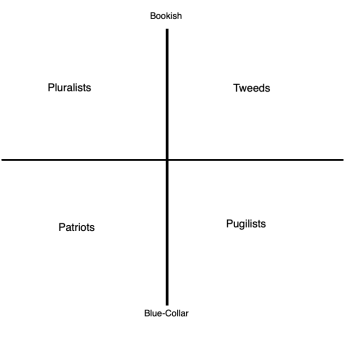
A Typology of Conservative Protestants in an Anxious...

The MFA Novel and the Mystery Box

Tim Keller and the Two Senses of “Winsome”
TRENDING AT PATHEOS Evangelical

The REST of Your Life: A Creative Wrestles...
This week I had a conversation with a good friend from church....

How the author of the world's best hymn...
I've been working with John Newton for a while now. This makes...

Long before this Lectio Divina, Psalm 130 - the song - started...

What About the Trees? Another Living Parable
After I finished writing the last article about falling leaves as a...

Why Classical Education Is a Conversation, Not a...
Come and Read: Joy in Classical Education When I was a little...

Cornell University has received a great deal of negative publicity and intense...
view all Evangelical blogs
Ad-Free & Subscriber Log-In Subscription Support
- About Us
- 2026 Calendar
- Videos
- Podcasts
- Library of World Religions
- Faith In Media Tracker
- Advertise With Us
- Write for Us
- Privacy Policy
- Terms of Service
- Do Not Sell My Data
- Contact Us
- Radiant Digital
- Manage Newsletter Subscriptions
- Unsubscribe From Notifications
- Sitemap
Copyright 2008-2026, Patheos. All rights reserved.
Subscription Support Ad-Free & Subscriber Log-In
Follow Patheos