
BuddhistCatholicContemplativeEvangelicalGeneral ChristianHinduJewishLatter-day SaintMuslimNew VisionsProgressive Christian
Beliefs
- Buddhist
- Catholic
- Contemplative
- Evangelical
- General Christian
- Hindu
- Jewish
- Latter-day Saint
- More Voices
- Muslim
- New Visions
- Pagan
- Progressive Christian
Topics
- Religion News
- Food and Religion
- Sports and Religion
- Religious Art
- Religious Music and Entertainment
- Religious Events
- History and Religion
- Style and Religion
- Politics and Religion
- Women in Religion
- Recreation Outdoors and Religion
- Business Finance and Religion
- Careers Workplace and Religion
- Education and Religion
- Family Parenting and Religion
- Health Fitness and Religion
- Home and Religion
- Relationships and Religion
- Technology and Religion
- Travel and Religion
Columnists
- Buddhist Columnists
- Business Finance and Religion Columnists
- Careers Workplace and Religion Columnists
- Catholic Columnists
- Contemplative Columnists
- Education and Religion Columnists
- Evangelists Columnists
- Family Parenting and Religion Columnists
- General Christian Columnists
- Health Fitness and Religion Columnists
- Hindu Columnists
- History and Religion Columnists
- Home and Religion Columnists
- Jewish Columnists
- More Voices Columnists
- Latter Day Columnists
- Muslim Columnists
- New Visions Columnists
- Nonreligious Columnists
- Pagan Columnists
- Politics and Religion Columnists
- Progressive Columnists
- Recreation Outdoors and Religion Columnists
- Relationships and Religion Columnists
- Religion News Columnists
- Religious Art Columnists
- Religious Events Columnists
- Religious Music and Entertainment Columnists
- Sports and Religion Columnists
- Style and Religion Columnists
- Technology and Religion Columnists
- Travel and Religion Columnists
- Women in Religion Columnists
Resource Library
- 2026 Calendar
- Library of World Religions
- The 100 Most Holy Places on Earth
- Patheos Answers
- Podcasts
- Videos
- Faith Leaders Database
- Anglican Episcopalian
- Bahai
- Baptist
- Buddhism
- Christianity
- Confucianism
- Eastern Orthodoxy
- Hinduism
- Holiness and Pentecostal
- ISKCON
- Islam
- Judaism
- Lutheran
- Methodist
- The Church of Jesus Christ of Latter-day Saints
- New Age
- Paganism
- Presbytarian and Reformed
- Protestantism
- Religion Behind the Scenes
- Roman Catholic
- Scientology
- Shia Islam
- Sikhism
- Sufism
- Sunni Islam
- Taoism
- Zen
- See all religions
Research Tools
 Ad-Free & Subscriber Log-In Subscription Support
Follow Patheos 

- Trending:
- Advent
- |
- Forgiveness
- |
- Thanksgiving
- |
- Election
- |
- Seasonal Holidays
- |
- Marriage
 Between Two Kingdoms
- Home
- Evangelical
- Religious Music & Entertainment
- The Long Theological Shadow
The Long Theological Shadow
Last updated on: September 5, 2018 at 3:31 pm by John Ehrett
The Long Theological Shadow 2018-09-05T15:31:43-05:00 John Ehrett
Patheos Explore the world's faith through different perspectives on religion and spirituality! Patheos has the views of the prevalent religions and spiritualities of the world.

Image credit: Pixabay
You’d be forgiven for thinking that many American churches these days are desperately trying to be something they’re not. A drive through my North Texas suburb takes one past massive churches bearing names like “Freedom,” “Sojourn,” “The Ridge,” “Bent Tree,” and—my personal favorite—“fellowshipchurch.com.” Stodgy designators like Methodist and Presbyterian and Lutheran are out; sleeker, more “seeker-friendly” names are in. (Some groups conceal their crypto-Baptist sensibilities better than others.)
On some level, though, these rebranding campaigns make sense. Broadly speaking, organized religion has fallen out of favor with my generation. “I’m spiritual, but not religious” has become ubiquitous to the point of banality. And skepticism—though less of God than of His institutional representatives—is undeniably the order of the day (often, sadly, for good reason). While some argue that millennials will be back to the pews as soon as they have kids—following an age-old pattern—it’s hard to avoid the realization that something is different this time. Any honest observer has to admit that many likely won’t be coming back.
Though I was brought up in conservative Lutheran parishes—not exactly known for their embrace of cultural fads—my upbringing was inflected (by osmosis) with 1990s-2000s evangelical sensibilities. And true to form, I was a typical “church kid”—reading in church, helping lead youth group classes, doing service projects, and so on. (At one point I even went to a youth retreat for potential future ministers.) I later headed off to a small Christian college near Washington, D.C., with a student body composed of people with histories much like mine. We were all full of enthusiasm and energy, and we were going to change the world. At least, we thought so.
Over and over again, the same pattern would play out. A couple years in, something would happen—usually a bitter disappointment of some sort—and students would find themselves calling their foundations into question. I’m sure this is the case at any college, but I have to think the effects were particularly pronounced at mine. Once that disillusionment set in, it was very difficult to shake. To this day, many alumni from my school continue to post extended screeds on social media about the poison of evangelical culture, the horrors of homeschooling, and the evils of the patriarchy. (It’s worth noting that despite all their claims of liberation from their oppressive upbringing, most still strike me as profoundly unhappy. We called them the “bitter alumni” for a reason.)
In recent years, there’s emerged a cottage industry of “exvangelical” books and podcasts catering to this specific demographic—those raised Christian, but now seeking forms of spirituality or authenticity outside the constraints of church. Besides the big names like Rachel Held Evans and Rob Bell, one thinks of Peter Enns and Jared Byas’ The Bible for Normal People, Kevin Porter and Caroline Ely’s Good Christian Fun, Mike McHargue and Michael Gungor’s The Liturgists, and many others. Most echo a common refrain: You just do you, folks. It’s cool if religion works for you, but it’s also cool if it doesn’t.
This message is both temporarily reassuring and ultimately dissatisfying. Perhaps it’s a message some folks long to hear—especially those emerging from distinctly toxic environments—but it provides small comfort in the long run. You do you necessarily transforms matters of core conviction into optional window dressing, forcing any seeker of truth—real, foundational, objective truth—to leave disappointed. (Although, as it turns out, most “exvangelicals” do have their own absolute, core convictions after all.)
I find these “exvangelical” perspectives interesting for a different reason: namely, the common thread in their accounts of why they left the church behind. Many talk about hypocrisy among church leadership, sexual abuse scandals, disagreement with traditional attitudes towards homosexuality, and so forth. But one criticism stands out as nearly universal: I never felt like I could ask questions. I never felt like I was allowed to wonder “why.”
This is a shame, because perhaps paradoxically, the engagement with such questions is one of the church’s profoundest strengths. In fact, it’s what kept me in—and more specifically, what kept me Lutheran.
At the same time one contingent of my college peers was abandoning their upbringing, another cohort was evolving in a different direction. They were realizing that the liturgy of centuries past was rather more substantive than the latest praise-and-worship jam. They were appreciating the gift of a vast historical tradition that had long ago reckoned with every question my generation could throw at it. (There really is nothing new under the sun.) Most importantly, they were beginning to explore the shadowy and largely misunderstood (for American Protestants) expanse of centuries between the era of the apostles and the beginning of the Reformation. Some went on to swim the Tiber to become Catholic, others swam the Bosporus to become Orthodox, and still others became Anglican or Lutheran or magisterial Presbyterian.
Sometimes it takes being a bystander to others’ journeys to realize what’s most important in your own. That’s precisely how I began to see the church universal—my church—through different eyes.
I awakened to the understanding, first and foremost, that Christianity had always been much more than hellfire insurance. The church had grappled with the most important issues in existence—questions of duty and free will and politics and sex and art and so on—for millennia. In fact, most of the history of the West was a story of engagement with the truth-claims of the Christian tradition. Those truth-claims form the groundwork for contemporary cultural debates over equality, liberty, identity, and countless others. Far from being a question-free zone, the church had always been the epicenter of engagement with those questions.
A necessary consequence of this insight was the recognition, with St. Augustine, that “all truth is God’s truth.” That is to say, it makes little sense to carve out “sacred” and “secular” categories of reasoning. Rather, everyday reality is saturated with matters of eternal concern, whether or not we’re aware of it. I’m a touch leery of using the term “worldview” here—but that’s really what we’re talking about. To put it simply: everything we encounter is ultimately “theological,” whether we admit it or not. All aspects of our experience implicate questions of ultimate concern, as Paul Tillich might say. The real question is whether we’re willing to acknowledge that.
Perhaps the churches of today’s seeking millennials and “exvangelicals” went astray when they sought to disavow the uniqueness of their role—the wonderful joy and privilege of engaging those foundational concerns. And I’m certainly not the first to suggest this, but the megachurches maybe lost a generation when they sought to rebrand as something more akin to a spa or corporate retreat than a place of reverence, a site of encounter with the ultimate source and end of all reality. Such a rebranding, after all, concedes far too much to the desaturated cultural landscape of late modern life.
Perhaps in the end, all those pesky questions were never really threats, but signs of a heartfelt longing to know God more deeply.
Previous Post

August 9, 2018
The Strange Allure of Twitch.tv
Next Post

September 14, 2018 “Nun” Dare Call It Religious?
Browse Our Archives
Select a Category Culture Ecclesiology Education Imagination Movies Political Theory Scripture Uncategorized Worship
Select a Month December 2022 November 2022 October 2022 September 2022 August 2022 June 2022 May 2022 April 2022 March 2022 February 2022 January 2022 December 2021 November 2021 October 2021 September 2021 August 2021 July 2021 June 2021 May 2021 April 2021 March 2021 February 2021 January 2021 December 2020 November 2020 October 2020 September 2020 August 2020 July 2020 June 2020 May 2020 April 2020 March 2020 February 2020 January 2020 December 2019 November 2019 October 2019 September 2019 August 2019 June 2019 April 2019 January 2019 December 2018 October 2018 September 2018 August 2018 July 2018 June 2018 May 2018
TAKE THE
Religious Wisdom Quiz
Who wrote Lamentations, mourning Jerusalem's destruction?
Select your answer to see how you score.
Jeremiah Isaiah Ezra Obadiah
Related posts from Between Two Kingdoms

The Best Books I Read This Year (2022...
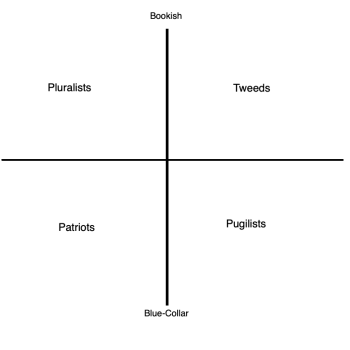
A Typology of Conservative Protestants in an Anxious...

The MFA Novel and the Mystery Box

Tim Keller and the Two Senses of “Winsome”
TRENDING AT PATHEOS Evangelical

When you hear the word riches, what comes to mind? For most...

Don’t Miss the Parents: A Creative Christmas Meditation
As we enter the Advent Season, I see many people trying to...

Making Stones Into Bread: Choosing the “Right” Work
I was on my online arts ministry Zoom meeting with the International...

Ukraine’s exhausted Christians face fifth winter of war
By Julian Lukins The full-scale war in Ukraine is taking “a serious...

Russell Brand's Conviction is not anti-Christian Persecution
How do we shed the reputation that the Church is OK with...

Have you ever caught yourself saying, “I’ll do it tomorrow,” or “Now...
view all Evangelical blogs
Ad-Free & Subscriber Log-In Subscription Support
- About Us
- 2026 Calendar
- Videos
- Podcasts
- Library of World Religions
- Faith In Media Tracker
- Advertise With Us
- Write for Us
- Privacy Policy
- Terms of Service
- Do Not Sell My Data
- Contact Us
- Radiant Digital
- Manage Newsletter Subscriptions
- Unsubscribe From Notifications
- Sitemap
Copyright 2008-2026, Patheos, part of the Radiant Digital network of media brands. All rights reserved.
Subscription Support Ad-Free & Subscriber Log-In
Follow Patheos