
BuddhistCatholicContemplativeEvangelicalGeneral ChristianHinduJewishLatter-day SaintMuslimNew VisionsProgressive Christian
Beliefs
- Buddhist
- Catholic
- Contemplative
- Evangelical
- General Christian
- Hindu
- Jewish
- Latter-day Saint
- More Voices
- Muslim
- New Visions
- Pagan
- Progressive Christian
Topics
- Religion News
- Food and Religion
- Sports and Religion
- Religious Art
- Religious Music and Entertainment
- Religious Events
- History and Religion
- Style and Religion
- Politics and Religion
- Women in Religion
- Recreation Outdoors and Religion
- Business Finance and Religion
- Careers Workplace and Religion
- Education and Religion
- Family Parenting and Religion
- Health Fitness and Religion
- Home and Religion
- Relationships and Religion
- Technology and Religion
- Travel and Religion
Columnists
- Buddhist Columnists
- Business Finance and Religion Columnists
- Careers Workplace and Religion Columnists
- Catholic Columnists
- Contemplative Columnists
- Education and Religion Columnists
- Evangelists Columnists
- Family Parenting and Religion Columnists
- General Christian Columnists
- Health Fitness and Religion Columnists
- Hindu Columnists
- History and Religion Columnists
- Home and Religion Columnists
- Jewish Columnists
- More Voices Columnists
- Latter Day Columnists
- Muslim Columnists
- New Visions Columnists
- Nonreligious Columnists
- Pagan Columnists
- Politics and Religion Columnists
- Progressive Columnists
- Recreation Outdoors and Religion Columnists
- Relationships and Religion Columnists
- Religion News Columnists
- Religious Art Columnists
- Religious Events Columnists
- Religious Music and Entertainment Columnists
- Sports and Religion Columnists
- Style and Religion Columnists
- Technology and Religion Columnists
- Travel and Religion Columnists
- Women in Religion Columnists
Resource Library
- 2026 Calendar
- Library of World Religions
- The 100 Most Holy Places on Earth
- Patheos Answers
- Podcasts
- Videos
- Faith Leaders Database
- Anglican Episcopalian
- Bahai
- Baptist
- Buddhism
- Christianity
- Confucianism
- Eastern Orthodoxy
- Hinduism
- Holiness and Pentecostal
- ISKCON
- Islam
- Judaism
- Lutheran
- Methodist
- The Church of Jesus Christ of Latter-day Saints
- New Age
- Paganism
- Presbytarian and Reformed
- Protestantism
- Religion Behind the Scenes
- Roman Catholic
- Scientology
- Shia Islam
- Sikhism
- Sufism
- Sunni Islam
- Taoism
- Zen
- See all religions
Research Tools
 Ad-Free & Subscriber Log-In Subscription Support
Ad-Free & Subscriber Log-In Subscription Support
Follow Patheos 

- Trending:
- Forgiveness
- |
- Marriage
- |
- Consciousness
- |
- Death Penalty
- |
- Election
- |
- Halloween
 Between the Shadows
- Home
- Pagan
- Pagan Book Review: Circe by Madeline Miller
Pagan Book Review: Circe by Madeline Miller
Last updated on: July 21, 2019 at 8:14 am by Sable Aradia
Pagan Book Review: Circe by Madeline Miller 2019-07-20T13:31:31-08:00 Sable Aradia
Patheos Explore the world's faith through different perspectives on religion and spirituality! Patheos has the views of the prevalent religions and spiritualities of the world.

My rating: 5 of 5 stars
Every now and then you accidentally discover a gem of a book. The way this was marketed, I would not have read it. It was pitched to the general fiction and literary markets, and we found it on a sale table at our local Coles bookstore.
It was my partner Jamie who picked it up. He’s been doing a deep dive into the Odyssey, and so it seemed natural that when he had some money in his pocket that was earmarked for books, this would catch his eye. He decided to give it a shot, and after he’d read it, he kept urging me to read it.
I was reluctant. Circe has always been one of my favourite characters from myth, and I wasn’t certain I’d appreciate a retelling. But eventually I needed something for the bathtub and it was close to hand, so I thought I’d give it a whirl.
I’m very glad I did! This is a story that might well have been written for me: a witch, a marginalized person, a woman, a humanist, a lonely child and often lonely adult. Like any good myth, it can be read in a variety of different ways. Jamie didn’t see the explicitly feminist narrative that many reviewers are lauding at all. Instead, he saw it through the eyes of a humanist, a witch, a marginalized person, and a lonely child and often lonely adult. He was surprised when I told him that many were interpreting it as a primarily feminist perspective, but he saw it when I pointed it out. Still, he thinks it transcends that.
However you choose to slice it, this is a story about someone surrounded by overwhelmingly powerful forces who is seeking to find freedom in her own life in the midst of them. It’s a story for anyone who has been oppressed by powerful forces in what Miller describes so accurately as “the cycle of fear.” And just like it said at Eleusis, Miller tells us that the key to finding one’s personal power is to Know Thyself.
Circe is the daughter of a nymph and the powerful Titan Helios. She is born with little power of her own; a less-than-divine look, and a human voice. Miller explores what it might mean to be a goddess with a human voice, and she interprets it as marking Circe as a target for derision.
Circe is an attempt by her mother to gain status, nothing more, and Helios cares only for how his children reflect on him. As Miller says, “he was a harp with one string, and the note it played was himself.” She has no relationship with her siblings either, who are poisoned by this dysfunctional environment, even when she raises her youngest sibling in lieu of their parents. There is no love and less nurturing in Circe’s childhood. Like most children with emotionally distant parents, she aches for a sign of love or approval from them, and spends much of her early adulthood seeking that missing validation from the people around her – and not getting it.
Circe discovers that like all of her siblings, she has a talent for witchcraft. Like most powerless people who discovers a source of her own personal power, she is punished for claiming it. Her early experimentation is wild beyond her dreams; she creates the monster Scylla.
This is a stone of guilt she carries throughout the book, because she aches for the many mortals who have fallen to Scylla’s depredations. Like many people who have lacked compassion in her own life, she is compassionate towards others. This, too, is viewed as a weakness by her power-focused family trapped in their cycle of fear, and is exploited many times. This echoes my own experience, and at times I found the book deeply uncomfortable to read in places as I remembered by own wounds in Circe’s.
She is banished to her island, nominally because of her transformation of Scylla (which is regarded as a false boast at first, so incredulous are Circe’s family that she could have any power of her own.) There, she explores the only thing left to her, her witchcraft, and becomes very, very good at it. Like many lonely creative people, she finds refuge in her Art, as I have.
Eventually the other gods realize this island is a convenient place to exile their own misbehaving daughters, so they send nymphs to her, nominally to “serve her,” but they never do. Instead, they continue to highlight Circe’s isolation, a group of “false friends” all around her that make her feel even more alone. She begins to transform men who visit the island to pigs when a random group of sailors attack her.
Odysseus comes to her island the same way wayward travelers usually do, and she finds love with him for a time, imperfect though he is. He inadvertently teaches her to know herself. And when he leaves, she is stronger than when he arrives.
I’ll not tell you any more of the plot, but I will tell you two things. First, that many of the deeper observations about the human condition are in the parts I’m not telling. Second, that it in no means centers around Odysseus. This is Circe’s story.
Miller also explores a great many of the ideas in the Odyssey and in other Greek myths that are the most troubling to me as a humanist; the unjust suffering of Prometheus, the petty and cruel nature of the gods, the lauding of “heroes” who are in many ways truly vile people, the “values” of patriarchy and how they are only upheld by the suffering of young men and all women, existential angst, and what it means to be human. It’s moving and powerful and passionate, and Miller urges us to seek our own answers in Circe’s struggle to find some. She demonstrates a deep understanding of the symbolism and multi-faceted narratives of myth, and since she is a scholar of the classics, perhaps this is not surprising.
One review I read on a strictly science fiction and fantasy book site claimed the book was “boring.” I disagree completely. However, if you don’t appreciate a book where the primary conflict is internal, maybe this isn’t for you.
I notice that Goodreads suggests The Handmaid’s Tale and Harry Potter and the Deathly Hallows as similar books that I might enjoy if I liked this one. I don’t think it has a lot in common with either of them. A better suggestion might be Wicked: The Life and Times of the Wicked Witch of the West, although this book is more internally-focused and less angry.
It’s worth noting, also, that the writing style is deceptively simple and unobtrusive. Miller is not in love with her own clever metaphors, yet she makes many of them. As a writer, I can’t help but respect the achievement. In ways, her prose echoes the deft hand of Ursula K. Le Guin.
I dreamed of people who had hurt and betrayed me through their own selfishness last night after I finished this book, and I was able to name that sense of betrayal and to know it was not ever about me – it was about them. And that was powerful healing. Thank you, Madeline Miller.
I would strongly recommend this book to anyone, especially to fantasy-lovers, historical fiction readers, humanists, Pagans, women, anyone who has ever felt trapped by the overwhelming forces of an unjust system, and anyone who was ever a lonely or neglected child or a lonely adult.
Introducing Sable Aradia’s School of Witchcraft! Check it out on Teachable!
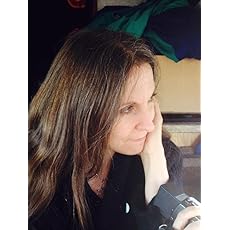
About Sable Aradia
Lady Sable Aradia (Diane Morrison) is a traditional witch, licensed Wiccan minister and an initiated Third Degree High Priestess in the Star Sapphire and Pagans for Peace traditions. A popular writer at both PaganSquare and the Patheos Pagan channel, she has been teaching and advocating Witchcraft and magick for about twenty years. She is also a science fiction and fantasy writer and a National Novel Writing Month winner. She lives in Vernon, BC, Canada. You can read more about the author here.
Previous Post

June 11, 2019
Seekers and Guides: Lesson 20: Perfect Love and Perfect Trust
Next Post

October 1, 2019 Dear Greta Thunberg
Browse Our Archives
Select a Category A Quest for Canada Between the Shadows Books Columns Current Events Dance & Sacred Movement Feminism From the Shadows Gender How To Access Services Humour Intent Interviews Intoxicants Magick My Books Opinion Pagan community Pagan music Politics Praxis Quantum Woo Reviews Rituals Sabbats Sacred Universe Seekers and Guides Sexuality Sit for a Spell Stories the Craft The Great Rite the Scourge The Witch's Eight Paths of Power Theology Traditions Trance Video Wicca Witchcraft Witchcraft & Voodoo Witchcraft & Voodoo Writing
Select a Month October 2019 July 2019 June 2019 May 2019 March 2019 February 2019 January 2019 December 2018 October 2018 September 2018 August 2018 July 2018 June 2018 May 2018 April 2018 March 2018 February 2018 December 2017 November 2017 October 2017 September 2017 August 2017 July 2017 June 2017 May 2017 April 2017 March 2017 February 2017 January 2017 December 2016 November 2016 October 2016 September 2016 August 2016 July 2016 June 2016 May 2016 April 2016 March 2016 February 2016 January 2016 December 2015 November 2015 October 2015 September 2015 August 2015 July 2015 June 2015 May 2015 April 2015 March 2015 February 2015 January 2015 December 2014 November 2014 October 2014 September 2014
Follow Us!
TAKE THE
Religious Wisdom Quiz
What did God make on the fourth day of creation?
Select your answer to see how you score.
Man Plants Fish and birds Sun, moon, and stars
Related posts from Between the Shadows

Pagan Book Review: The Chains that Bind by...
Witchcraft & Voodoo: Ritual Tools (Video Premiere)
"Riders of the Rainbow Ridge" by Diana Paxson...
TRENDING AT PATHEOS Pagan

I was recently chatting with someone on Instagram. She asked me what...

While there are many people who share their results, the end of...

On July 23, I saw Christopher Nolan's The Odyssey which is Homer’s...

As I write this two big events have just finished up. One...

Restoring the Watershed of Divine Love
Perhaps cooperation is not something we manufacture through legislation, ideology, or moral...

Many UUs don’t pray because of bad experiences in a previous religion,...
view all Pagan blogs
Ad-Free & Subscriber Log-In Subscription Support
- About Us
- 2026 Calendar
- Videos
- Podcasts
- Library of World Religions
- Faith In Media Tracker
- Advertise With Us
- Write for Us
- Privacy Policy
- Terms of Service
- Do Not Sell My Data
- Contact Us
- Radiant Digital
- Manage Newsletter Subscriptions
- Unsubscribe From Notifications
- Sitemap
Copyright 2008-2026, Patheos. All rights reserved.
Subscription Support Ad-Free & Subscriber Log-In
Follow Patheos