
BuddhistCatholicContemplativeEvangelicalGeneral ChristianHinduJewishLatter-day SaintMuslimNew VisionsProgressive Christian
Beliefs
- Buddhist
- Catholic
- Contemplative
- Evangelical
- General Christian
- Hindu
- Jewish
- Latter-day Saint
- More Voices
- Muslim
- New Visions
- Pagan
- Progressive Christian
Topics
- Religion News
- Food and Religion
- Sports and Religion
- Religious Art
- Religious Music and Entertainment
- Religious Events
- History and Religion
- Style and Religion
- Politics and Religion
- Women in Religion
- Recreation Outdoors and Religion
- Business Finance and Religion
- Careers Workplace and Religion
- Education and Religion
- Family Parenting and Religion
- Health Fitness and Religion
- Home and Religion
- Relationships and Religion
- Technology and Religion
- Travel and Religion
Columnists
- Buddhist Columnists
- Business Finance and Religion Columnists
- Careers Workplace and Religion Columnists
- Catholic Columnists
- Contemplative Columnists
- Education and Religion Columnists
- Evangelists Columnists
- Family Parenting and Religion Columnists
- General Christian Columnists
- Health Fitness and Religion Columnists
- Hindu Columnists
- History and Religion Columnists
- Home and Religion Columnists
- Jewish Columnists
- More Voices Columnists
- Latter Day Columnists
- Muslim Columnists
- New Visions Columnists
- Nonreligious Columnists
- Pagan Columnists
- Politics and Religion Columnists
- Progressive Columnists
- Recreation Outdoors and Religion Columnists
- Relationships and Religion Columnists
- Religion News Columnists
- Religious Art Columnists
- Religious Events Columnists
- Religious Music and Entertainment Columnists
- Sports and Religion Columnists
- Style and Religion Columnists
- Technology and Religion Columnists
- Travel and Religion Columnists
- Women in Religion Columnists
Resource Library
- 2026 Calendar
- Library of World Religions
- The 100 Most Holy Places on Earth
- Patheos Answers
- Podcasts
- Videos
- Faith Leaders Database
- Anglican Episcopalian
- Bahai
- Baptist
- Buddhism
- Christianity
- Confucianism
- Eastern Orthodoxy
- Hinduism
- Holiness and Pentecostal
- ISKCON
- Islam
- Judaism
- Lutheran
- Methodist
- The Church of Jesus Christ of Latter-day Saints
- New Age
- Paganism
- Presbytarian and Reformed
- Protestantism
- Religion Behind the Scenes
- Roman Catholic
- Scientology
- Shia Islam
- Sikhism
- Sufism
- Sunni Islam
- Taoism
- Zen
- See all religions
Research Tools
 Ad-Free & Subscriber Log-In Subscription Support
Ad-Free & Subscriber Log-In Subscription Support
Follow Patheos 

- Trending:
- Forgiveness
- |
- Marriage
- |
- Consciousness
- |
- Death Penalty
- |
- Election
- |
- Halloween
 Between the Shadows
- Home
- Pagan
- Book Review: The Secret History of the Mongol Queens by Jack Weatherford
Book Review: The Secret History of the Mongol Queens by Jack Weatherford
Last updated on: September 16, 2016 at 9:00 am by Sable Aradia
Book Review: The Secret History of the Mongol Queens by Jack Weatherford 2016-09-13T12:10:58-08:00 Sable Aradia
Patheos Explore the world's faith through different perspectives on religion and spirituality! Patheos has the views of the prevalent religions and spiritualities of the world.
 The Secret History of the Mongol Queens: How the Daughters of Genghis Khan Rescued His Empire by Jack Weatherford
My rating: 5 of 5 stars
Read for the Vernon Summer Library Reading Challenge.
Picture everything you think you know about the Mongols. What would you say about them? I imagine if you’re like most people, you think of horses, steppelands, stirrups, the greatest warriors in history, very masculine men who would freely rape women whenever they liked, and Kublai Khan’s pleasure dome. If you’re up on pop culture you probably think of the Dothraki, who were clearly modeled after them. Now I’ll tell you that everything you think you know is wrong, except for the stirrups and the pleasure dome.
Apparently the Mongols, in the course of running their empire, kept a secret history which was separate from the public history that they told. They split this history up into many smaller documents in different locations so that they could spread the propaganda they considered immediately relevant as they needed to. Oddly, archeologists have found that much of it has been grossly edited. Whole sections were cut out, others rearranged or even blacked out. Not all of the same records were edited evenly, and in places, a name or two was missed that we otherwise would not have known about.
Since only the Mongols themselves had access to the Secret History, one must wonder why their own historical record was so drastically altered. So Jack Weatherford (and other historians) went digging. And what they discovered, by comparison with other surrounding sources and writers, like the Chinese, the Turks, and so forth, is that Genghis Khan is nothing like the savage, lusty barbarian that popular culture would have us believe. Genghis Khan was a brilliant politician, statesman, tactician and strategist, whose respect for women was so profound that he established his wife and daughters as rulers of vast portions of his empire, and who traced descent of the royal family through the matrilineal line; something he had to do, being the son of a captive, in order to establish himself as a Mongol in the first place. His sons and grandsons, and the wives of those men, spent the next several years fighting among themselves, and it still took hundreds of years for them to destroy the empire that Genghis Khan had built.
According to the Secret History, Genghis Khan, when starving with his followers in the desert (if modern readers are thinking of Daenerys Stormborn, you’d be right to do so, since I’m pretty sure George R.R. Martin is mining her story whole hock from the Mongol Queens and from Genghis Khan himself), the man who would someday be called Genghis Khan went on a pilgrimage to the holy oasis of his people, and such sites had always been associated with women. The sky was male and the earth and the water were female. There he met a Muslim merchant who, out of kindness and quite likely a sincere belief in his faith, gave the Mongol band food to eat from the livestock he was selling. Genghis felt that the Mother Goddess had blessed him, and he promised to honour Her and to reward the merchant greatly at some future date – both promises which he kept.
He spent the next several years conquering local tribes and raising support, and eventually he called a grand meeting of all the tribes at a sacred site to the Mongols and was elected the Great Khan. He gave a speech about how society needed to run like the two wheels of a cart. Men, he said, were best suited to warfare; women were best suited to civilization and government. A woman ruled her own yurt (or ger, which is what the Mongols actually called them) and no one could gainsay her in her own ger, and anyone who entered must show her deference at all times. It was natural that such a belief would grown out of this existing custom. He established four of his daughters as the rulers of the territories directly surrounding the center of Mongolia itself, which was the center of his empire, and he established four of his sons as generals holding the fort in the four territories that bordered the surrounding nations.
All accounts say they governed those territories bravely and well. One in particular, Al-Altun, who ruled the Uighur, was renowned for her mercy when she pleaded for her father to spare her people, even though they had rebelled against her. Another, Alaqat Beki, ruler of most of the essential Silk Road, was renowned for her statesmanship and diplomacy. Certainly not everyone approved; most of the surrounding cultures, if the surviving writings were any indication of general opinion, used the presence of female rulers as evidence of the Mongols’ barbarity, and at any rate, women involved in government was certainly not something that these writers approved of. But even they did not say that the Mongol Queens were bad at their jobs.
Genghis Khan used political marriages to his daughters to cement alliances that were necessary to hold his empire together, but to marry a Mongol Queen was no easy life. One was given the title of Royal Consort, not Khan in any way, and he was expected to spend the rest of his time campaigning in the Khan’s army, which of course was extremely dangerous. When a husband died, it was customary for the Mongol Queen to marry a male relative of her dead husband’s – perhaps a stepson, uncle or brother-in-law – in order to affirm the alliance.
By the time of the reign of Ogodei, the grandson of Genghis Khan, the mothers of these Royal Consorts were resentful of the power of the Mongol Queens and sought to establish their sons in their place. Ogodei was simply the winner of this contest at the time. But in order to cement his power he had to reduce the power of women in the Mongol Empire, hence the infamous mass rape of Oirat, in which four thousand girls and women, from the age of seven and above, were raped. I have heard it presented as a factual statement that the most widespread genetics in the world come from Genghis Khan, and that the reason is that he was a serial rapist. I think that Genghis Khan would be horrified that some people have this idea of him, since he would have viewed that as a sacrilege. But if it’s true that mass rape is the reason his genetics are so widespread, then his grandson Ogodei is the reason.
Fans of Game of Thrones would relish the saga of politics, war and betrayal that follows, in which everyone from generals in the army to Muslim merchants to petty warlords to Chinese bureaucrats try to get a piece of the action, first by trying to control the granddaughters of Genghis Khan and then by controlling the grandsons. We are treated to a few stories of great Mongol Queens in this period, including Khutulun, who rode into battle with her father and refused to marry any man who could not beat her at wrestling (and thus she remained unwed until she finally gave up and chose a husband for herself.) The final Mongol Queen of whom we know is Manduhai the Wise, who united the core of Mongolia, abandoned the outside world, and established the Mongolia that we know today, rather than letting it fall into the dust of antiquity. Weatherford writes that it was the enduring legends of Manduhai the Wise, which he kept encountering in his travels in Mongolia, that prompted the writing of this book, especially since he did not initially believe them.
Sounds like a bunch of popularized revisionist feminist “history” with little real documentation, kind of like the Holy Grail and the line of Mary Magdalene, doesn’t it? Except it isn’t. Weatherford carefully provides all of his documentation, which is extensive, in his bibliography, and he has been recognized for his work by the Mongol Nation with the Order of the Polar Star.
I read this book largely because fantasy author Kate Elliott recommended it in her blog as an example of how you can include women in “realistic” medieval fantasies without them being mere decorations and broodmares. The Mongol Queens certainly were not. They were statesmen, diplomats, politicians, and even generals and warriors. Some of them even led their armies personally at the warfront. Mounted archers and cavalry have no advantage for size, as foot soldiers do in a shield wall, and therefore, there was no reason why a woman could not excel there; and the Mongol Queens often did.
So why were the Secret Histories edited to exclude the Mongol Queens? Weatherford suggests it was the men who wanted to run the empire in the place of the daughters of Genghis Khan who did so, which would damage the legitimacy of the women if they attempted to claim power. Future writers among the Muslims and the Chinese, the most literate cultures who were part of the empire, would have agreed with the choice because they did not approve of women rulers. But don’t go off blaming the men of the piece in entirety; remember that these men were usually in collusion with their wives or mothers, who wanted to increase their own personal power through their husbands or sons.
I do have some criticisms of this book. Weatherford in no way considers the climate factor in the historical events he relates. One of the factors that contributed to the events of the life of Genghis Khan was a seven-year period of record rainfall on the normally-dry steppelands, which resulted in a record surplus of horses and resources, thus making Mongol expansion possible. He prayed for a blessing from the Water Goddess; perhaps She answered him. Then again, perhaps this is something that the author was unaware of. Nor does Weatherford do more than passingly suggest that the outbreak of Black Plague that decimated Europe might have contributed to the downfall of the Mongol Empire, and since historians generally accept that the expansion of the Mongols was the most significant factor in the rapid spread of the Plague, this seems to me a gross oversight. Also, it is difficult to discern the thesis that Weatherford is presenting. I think his point is simply to prove the existence of the Mongol Queens? But I can’t tell for sure because he’s not clear.
Still, I would highly recommend this book because I think what it has to say is important, especially to any history lover. And I know that any fan of Game of Thrones would love it as well.
Like Between the Shadows on Facebook and never miss a post!
Previous Post

September 13, 2016
Video: Summer Okanagan Library Reading Challenge Update Sept 7 #ORL
Next Post
September 16, 2016 Summer Okanagan Library Reading Challenge Update Sept 9 #ORL @WW_End
Browse Our Archives
Select a Category A Quest for Canada Between the Shadows Books Columns Current Events Dance & Sacred Movement Feminism From the Shadows Gender How To Access Services Humour Intent Interviews Intoxicants Magick My Books Opinion Pagan community Pagan music Politics Praxis Quantum Woo Reviews Rituals Sabbats Sacred Universe Seekers and Guides Sexuality Sit for a Spell Stories the Craft The Great Rite the Scourge The Witch's Eight Paths of Power Theology Traditions Trance Video Wicca Witchcraft Witchcraft & Voodoo Witchcraft & Voodoo Writing
Select a Month October 2019 July 2019 June 2019 May 2019 March 2019 February 2019 January 2019 December 2018 October 2018 September 2018 August 2018 July 2018 June 2018 May 2018 April 2018 March 2018 February 2018 December 2017 November 2017 October 2017 September 2017 August 2017 July 2017 June 2017 May 2017 April 2017 March 2017 February 2017 January 2017 December 2016 November 2016 October 2016 September 2016 August 2016 July 2016 June 2016 May 2016 April 2016 March 2016 February 2016 January 2016 December 2015 November 2015 October 2015 September 2015 August 2015 July 2015 June 2015 May 2015 April 2015 March 2015 February 2015 January 2015 December 2014 November 2014 October 2014 September 2014
Follow Us!
TAKE THE
Religious Wisdom Quiz
What does "Rabbi" mean?
Select your answer to see how you score.
Teacher Priest Messenger Scribe
Related posts from Between the Shadows

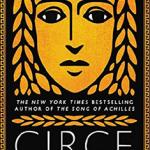
Pagan Book Review: Circe by Madeline Miller
Pagan Book Review: The Chains that Bind by...
Witchcraft & Voodoo: Ritual Tools (Video Premiere)
TRENDING AT PATHEOS Pagan

I was recently chatting with someone on Instagram. She asked me what...

While there are many people who share their results, the end of...

On July 23, I saw Christopher Nolan's The Odyssey which is Homer’s...

As I write this two big events have just finished up. One...

Restoring the Watershed of Divine Love
Perhaps cooperation is not something we manufacture through legislation, ideology, or moral...

Many UUs don’t pray because of bad experiences in a previous religion,...
view all Pagan blogs
Ad-Free & Subscriber Log-In Subscription Support
- About Us
- 2026 Calendar
- Videos
- Podcasts
- Library of World Religions
- Faith In Media Tracker
- Advertise With Us
- Write for Us
- Privacy Policy
- Terms of Service
- Do Not Sell My Data
- Contact Us
- Radiant Digital
- Manage Newsletter Subscriptions
- Unsubscribe From Notifications
- Sitemap
Copyright 2008-2026, Patheos. All rights reserved.
Subscription Support Ad-Free & Subscriber Log-In
Follow Patheos