
BuddhistCatholicContemplativeEvangelicalGeneral ChristianHinduJewishLatter-day SaintMuslimNew VisionsProgressive Christian
Beliefs
- Buddhist
- Catholic
- Contemplative
- Evangelical
- General Christian
- Hindu
- Jewish
- Latter-day Saint
- More Voices
- Muslim
- New Visions
- Pagan
- Progressive Christian
Topics
- Religion News
- Food and Religion
- Sports and Religion
- Religious Art
- Religious Music and Entertainment
- Religious Events
- History and Religion
- Style and Religion
- Politics and Religion
- Women in Religion
- Recreation Outdoors and Religion
- Business Finance and Religion
- Careers Workplace and Religion
- Education and Religion
- Family Parenting and Religion
- Health Fitness and Religion
- Home and Religion
- Relationships and Religion
- Technology and Religion
- Travel and Religion
Columnists
- Buddhist Columnists
- Business Finance and Religion Columnists
- Careers Workplace and Religion Columnists
- Catholic Columnists
- Contemplative Columnists
- Education and Religion Columnists
- Evangelists Columnists
- Family Parenting and Religion Columnists
- General Christian Columnists
- Health Fitness and Religion Columnists
- Hindu Columnists
- History and Religion Columnists
- Home and Religion Columnists
- Jewish Columnists
- More Voices Columnists
- Latter Day Columnists
- Muslim Columnists
- New Visions Columnists
- Nonreligious Columnists
- Pagan Columnists
- Politics and Religion Columnists
- Progressive Columnists
- Recreation Outdoors and Religion Columnists
- Relationships and Religion Columnists
- Religion News Columnists
- Religious Art Columnists
- Religious Events Columnists
- Religious Music and Entertainment Columnists
- Sports and Religion Columnists
- Style and Religion Columnists
- Technology and Religion Columnists
- Travel and Religion Columnists
- Women in Religion Columnists
Resource Library
- 2026 Calendar
- Library of World Religions
- The 100 Most Holy Places on Earth
- Patheos Answers
- Podcasts
- Videos
- Faith Leaders Database
- Anglican Episcopalian
- Bahai
- Baptist
- Buddhism
- Christianity
- Confucianism
- Eastern Orthodoxy
- Hinduism
- Holiness and Pentecostal
- ISKCON
- Islam
- Judaism
- Lutheran
- Methodist
- The Church of Jesus Christ of Latter-day Saints
- New Age
- Paganism
- Presbytarian and Reformed
- Protestantism
- Religion Behind the Scenes
- Roman Catholic
- Scientology
- Shia Islam
- Sikhism
- Sufism
- Sunni Islam
- Taoism
- Zen
- See all religions
Research Tools
 Ad-Free & Subscriber Log-In Subscription Support
Ad-Free & Subscriber Log-In Subscription Support
Follow Patheos 

- Trending:
- Forgiveness
- |
- Marriage
- |
- Consciousness
- |
- Death Penalty
- |
- Election
- |
- Halloween
 Between the Shadows
- Home
- Pagan
- Book Review: People of the River by W. Michael Gear and Kathleen O’Neal Gear
Book Review: People of the River by W. Michael Gear and Kathleen O’Neal Gear
Last updated on: September 27, 2016 at 9:00 am by Sable Aradia
Book Review: People of the River by W. Michael Gear and Kathleen O’Neal Gear 2016-09-13T12:11:40-08:00 Sable Aradia
Patheos Explore the world's faith through different perspectives on religion and spirituality! Patheos has the views of the prevalent religions and spiritualities of the world.
 People of the River by W. Michael Gear
My rating: 4 of 5 stars
Read for the Vernon Library Summer Reading challenge.
This is my first acquaintance with these writers, who have written a whole series of historical novels about the First Nations. I was hesitant because these do not sound like First Nations names, but I figured since they are archeologists they couldn’t be too bad.
In this novel, the Mississippian culture, known for their enormous earth mounds to archaeologists and having a high culture that was somewhat comparable to the high cultures of the Central American First Nations, is in serious trouble. Historically the culture fell apart when a climate shift between a several hundred years’ wet spell and a drier change occurred. In the O’Gears’ novel, this is because the Sun Chief, the high chief of the Mississippian Nations, has done something to offend the spirit of First Woman, who has the power to show people to the opening to the underworld, or to bar the way; and also, because their culture, in exacting tribute from the surrounding villages, has brought harm to the local people and to Earth Mother by its greedy ways. The story centers around three Dreamers, or shamans, whose spiritual quests to resolve the issue have real-world effects, thus making this more of a magical realism/fantasy novel than historical fiction (which I don’t mind, because I love that kind of thing, but in a way I’d like to give their publishers hell for false advertising), and around two warriors in service to the Sun Chief, who are aware that he’s gone insane, and that the things they are being ordered to do are morally wrong, but who can’t see a way out of the situation without the complete collapse of their culture.
I really enjoyed this look into the spirituality of the First Nations of the Mississippi and a glimpse into their world, but I have some caveats to this. First of all, I really could have used less descriptions of the necklaces and kirtles that were worn by the first cousin of the best friend of the warrior’s wife, if you see what I’m saying. I imagine this is a fault of being archaeologists, because they think all of that stuff is fascinating, but I would have personally preferred it were left for important situations, such as what a warrior of the Starborn caste wears compared to what a ruling chieftain of the Sunborn caste wears compared to what the common people wear, and I would prefer it were kept to the main characters. I think the book could have been about a hundred pages shorter, which was very frustrating, especially since I was reading it for a reading challenge that had an imminent deadline. Second, I got a strong sense of European conceit. For instance, the authors insisted on referring to the ruler of the nation, highest of the Sunborn caste, as High Chief, when I don’t think “King” would have been inappropriate, since that’s what he was. I don’t know if this is some particularity of archaeology, in which “Chief” and “King” might have some very specific meanings, but to me it seemed like they were not quite granting the Mississippian culture the respect it deserved. Certainly the power of the High Chief was as vast and as absolute as that of any of the ancient Middle Eastern priest-kings, if this story is to be taken as a quality novelization of a historical culture; and “Chief” is certainly not what they called him at all, since that is an English word and I’m certain their title was in the Mississippian language.
But, it was interesting how small a scale we were discussing, and perhaps that’s why the particular titles were chosen. The Sun Chief could command an army of a thousand warriors, which was frightening enough that most of the surrounding nations had to combine their forces in order to oppose him. I suppose that sounds like a lot, but ancient armies usually numbered in the thousands in the Middle East and Mediterranean.
Despite my criticisms and a slow build, the story kept me glued to the pages about a hundred pages in, and it kept me riveted to the edge of my seat by the last hundred pages. Really a good read, and I learned a lot about the Mississippian First Nations besides the point. What made it even more interesting to me is that about the time I finished the book, I was travelling in and around the Great Lakes, which of course are not that far north of the book’s location; and as a matter of fact, the characters made reference to trade with the First Nations of the Great Lakes. Since I’m from British Columbia, it made it all the more immediate, somehow. All in all, an excellent read that I would recommend, and I’ll probably pick up the rest of the O’Gears’ “People” books in time.
Like Between the Shadows on Facebook and never miss a post!

Next Post

October 15, 2016 A Quest for Canada
Browse Our Archives
Select a Category A Quest for Canada Between the Shadows Books Columns Current Events Dance & Sacred Movement Feminism From the Shadows Gender How To Access Services Humour Intent Interviews Intoxicants Magick My Books Opinion Pagan community Pagan music Politics Praxis Quantum Woo Reviews Rituals Sabbats Sacred Universe Seekers and Guides Sexuality Sit for a Spell Stories the Craft The Great Rite the Scourge The Witch's Eight Paths of Power Theology Traditions Trance Video Wicca Witchcraft Witchcraft & Voodoo Witchcraft & Voodoo Writing
Select a Month October 2019 July 2019 June 2019 May 2019 March 2019 February 2019 January 2019 December 2018 October 2018 September 2018 August 2018 July 2018 June 2018 May 2018 April 2018 March 2018 February 2018 December 2017 November 2017 October 2017 September 2017 August 2017 July 2017 June 2017 May 2017 April 2017 March 2017 February 2017 January 2017 December 2016 November 2016 October 2016 September 2016 August 2016 July 2016 June 2016 May 2016 April 2016 March 2016 February 2016 January 2016 December 2015 November 2015 October 2015 September 2015 August 2015 July 2015 June 2015 May 2015 April 2015 March 2015 February 2015 January 2015 December 2014 November 2014 October 2014 September 2014
Follow Us!
TAKE THE
Religious Wisdom Quiz
What was the primary construction in Biblical times?
Select your answer to see how you score.
Wooden mallet Stone hammer Iron hammer Bronze chisel
Related posts from Between the Shadows

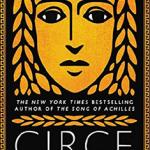
Pagan Book Review: Circe by Madeline Miller

Pagan Book Review: The Chains that Bind by...

Witchcraft & Voodoo: Ritual Tools (Video Premiere)
TRENDING AT PATHEOS Pagan

I was recently chatting with someone on Instagram. She asked me what...

While there are many people who share their results, the end of...

On July 23, I saw Christopher Nolan's The Odyssey which is Homer’s...

As I write this two big events have just finished up. One...

Restoring the Watershed of Divine Love
Perhaps cooperation is not something we manufacture through legislation, ideology, or moral...

Many UUs don’t pray because of bad experiences in a previous religion,...
view all Pagan blogs
Ad-Free & Subscriber Log-In Subscription Support
- About Us
- 2026 Calendar
- Videos
- Podcasts
- Library of World Religions
- Faith In Media Tracker
- Advertise With Us
- Write for Us
- Privacy Policy
- Terms of Service
- Do Not Sell My Data
- Contact Us
- Radiant Digital
- Manage Newsletter Subscriptions
- Unsubscribe From Notifications
- Sitemap
Copyright 2008-2026, Patheos. All rights reserved.
Subscription Support Ad-Free & Subscriber Log-In
Follow Patheos