
BuddhistCatholicContemplativeEvangelicalGeneral ChristianHinduJewishLatter-day SaintMuslimNew VisionsProgressive Christian
Beliefs
- Buddhist
- Catholic
- Contemplative
- Evangelical
- General Christian
- Hindu
- Jewish
- Latter-day Saint
- More Voices
- Muslim
- New Visions
- Pagan
- Progressive Christian
Topics
- Religion News
- Food and Religion
- Sports and Religion
- Religious Art
- Religious Music and Entertainment
- Religious Events
- History and Religion
- Style and Religion
- Politics and Religion
- Women in Religion
- Recreation Outdoors and Religion
- Business Finance and Religion
- Careers Workplace and Religion
- Education and Religion
- Family Parenting and Religion
- Health Fitness and Religion
- Home and Religion
- Relationships and Religion
- Technology and Religion
- Travel and Religion
Columnists
- Buddhist Columnists
- Business Finance and Religion Columnists
- Careers Workplace and Religion Columnists
- Catholic Columnists
- Contemplative Columnists
- Education and Religion Columnists
- Evangelists Columnists
- Family Parenting and Religion Columnists
- General Christian Columnists
- Health Fitness and Religion Columnists
- Hindu Columnists
- History and Religion Columnists
- Home and Religion Columnists
- Jewish Columnists
- More Voices Columnists
- Latter Day Columnists
- Muslim Columnists
- New Visions Columnists
- Nonreligious Columnists
- Pagan Columnists
- Politics and Religion Columnists
- Progressive Columnists
- Recreation Outdoors and Religion Columnists
- Relationships and Religion Columnists
- Religion News Columnists
- Religious Art Columnists
- Religious Events Columnists
- Religious Music and Entertainment Columnists
- Sports and Religion Columnists
- Style and Religion Columnists
- Technology and Religion Columnists
- Travel and Religion Columnists
- Women in Religion Columnists
Resource Library
- 2026 Calendar
- Library of World Religions
- The 100 Most Holy Places on Earth
- Patheos Answers
- Podcasts
- Videos
- Faith Leaders Database
- Anglican Episcopalian
- Bahai
- Baptist
- Buddhism
- Christianity
- Confucianism
- Eastern Orthodoxy
- Hinduism
- Holiness and Pentecostal
- ISKCON
- Islam
- Judaism
- Lutheran
- Methodist
- The Church of Jesus Christ of Latter-day Saints
- New Age
- Paganism
- Presbytarian and Reformed
- Protestantism
- Religion Behind the Scenes
- Roman Catholic
- Scientology
- Shia Islam
- Sikhism
- Sufism
- Sunni Islam
- Taoism
- Zen
- See all religions
Research Tools
 Ad-Free & Subscriber Log-In Subscription Support
Ad-Free & Subscriber Log-In Subscription Support
Follow Patheos 

- Trending:
- Forgiveness
- |
- Marriage
- |
- Consciousness
- |
- Death Penalty
- |
- Election
- |
- Halloween
 Between the Shadows
- Home
- Pagan
- Canadian Magick
Canadian Magick
Last updated on: July 1, 2016 at 4:58 pm by Sable Aradia
Canadian Magick 2016-07-01T16:58:47-08:00 Sable Aradia
Patheos Explore the world's faith through different perspectives on religion and spirituality! Patheos has the views of the prevalent religions and spiritualities of the world.
Happy Canada Day! I thought that it might be fun to celebrate Canada Day by sharing the meaning and magick behind a few of Canada’s national symbols.
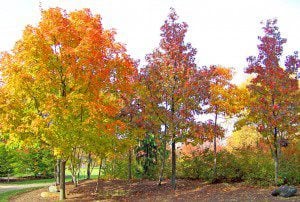
Maple Trees by David Wagner. Public domain image courtesy Publicdomainpictures.net
Maple
One of the most striking of Canada’s national symbols is the maple leaf that adorns our flag. Something that people come from all over the world to see is the beauty of our maple forests in Central Canada showing In the fall. Though at this time of year, the leaves of the Canadian maple are still green. This is one and the same with the famous maple tree that produces the sap that becomes maple syrup.
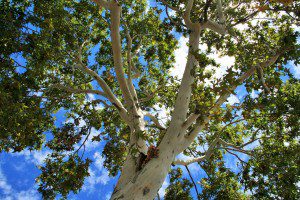
Maple Tree by Lynn Greyling. Public domain image courtesy Publicdomainpictures.net
In this capacity the leaf represents our sovereignty. It’s a symbol of the land itself, probably because the vast rolling hills of autumn maples is a striking sight that made a powerful impression on the early settlers. The maple leaf flag design was proposed by George Stanley to replace the Union Jack, and it was based on the flag of the Royal Military College of Canada.
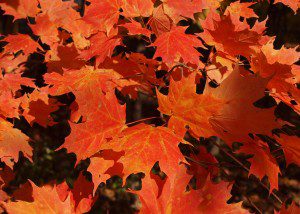
Maple Leaves by JKS Lola. Public domain image courtesy Publicdomainpictures.net
Magickally, the maple tree is associated with elemental air and the planetary energies of Jupiter; as such, it could be used in magic associated with study, travel, spirituality, leadership, enlightenment and politics. It’s also used in magick for love or money, and it is a traditional wood for magick wands. It is said that a child passed through the branches of a maple tree will have a long life.
There was a maple tree in the front yard of the house where I grew up, and it was struck by lightning twice. I’m not sure if that was just freak luck or if something in the maple serves as a lightning rod. I saved a branch for a wand when my parents sold the house, and twenty years later I finally made an amber and jet wand out of it.
Sap comes up out of the sugar maple in February and so it’s also a great symbol of renewal and the Imbolc energies of spring’s return.
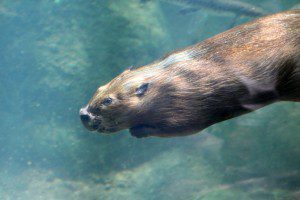
Beaver Underwater by Lilla Frerichs. Public domain image courtesy Publicdomainpictures.net
Beaver
Okay, let’s face it – the real reason that the beaver became Canada’s national animal is that our country was founded on trading in its fur to make hats. But it has lots of powerful totemic symbolism as well.
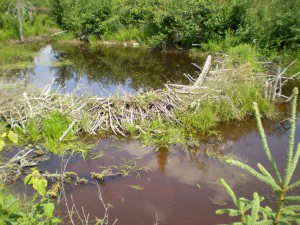
Beaver Dam by Charles Rondeau. Public domain image courtesy Publicdomainpictures.net
The beaver is known for its amazing construction work. It makes complex dam structures to control the flow of water through its home and to protect its babies. Naturally it has become widely recognized as a symbol of industriousness, purposeful busyness, and cleverness. It’s also a very social animal, and so it’s a symbol of the bonds between family.
Call upon Beaver to summon the focus and industriousness to take on projects of importance; any magick involving housing or shelter; for finding a new job, especially in trades; for any work of construction or engineering; for blessing or building a home; to build bonds between family; and perhaps, by extension in the modern era, for works of electricity or power, since their activities are like those of a hydroelectric dam in miniature; or indeed, for any magick surrounding the proper building and functioning of any work of technology.
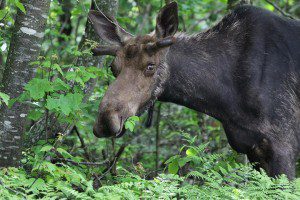
Portrait by Bobby Mikul. Public domain image courtesy Publicdomainpictures.net
Moose
Most commonly the moose is seen as a comical symbol, but I think that’s just because the closest most people have been to a moose is Rocky & Bullwinkle. Real life moose are not funny. They’re some of the biggest animals you’ve ever seen, for one thing; bringing back ancestral memories of being trampled by megafauna. I’ve heard stories of a bull moose charging a bus on the highway head-on and walking away from the crash. The bus didn’t. Driving past them in Canada is a freaky experience because they walk all over long stretches of treed highway in the middle of the night like deer, and they’re at least twice as big as your car.
As a result, moose are traditionally associated with majesty, autonomy, and pride. Call upon Moose to stop being self-critical; to help you to achieve respect in a role of leadership; to encourage autonomy in yourself and others; to determine what the problem is when you sense that something is amiss; or to find the strength to endure great trials. In Wicca, the moose could be seen as a North American incarnation of the Horned God.
On the other hand, the fact that the moose is often seen in a comical role is perhaps commensurate with our Canadian brand of self-depreciating humour. Yeah, okay, we’re kind of funny, and we’re willing to laugh at ourselves; but once we decide to charge your car . . .
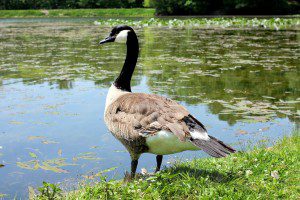
Goose on Edge of Lake by Lilla Frerichs. Public domain image courtesy Publicdomainpictures.net
Canada Goose
Ironically because there are so many of these birds in Central Canada, most people there see them a bit like pigeons or seagulls; a public nuisance. Especially as they flock together for the fall migration their droppings get everywhere, as do the feathers of their molts. When geese take up residence in a place and lay eggs, they defend that place aggressively, and while in my home town the couple that took up residence at the park by the local city bus terminal have become a fixture we’re happy to indulge, where there are so many of them, they can cause a real problem and a safety hazard to small children. In the West, however, we cannot help but be amazed by the long vees of flying birds, nor haunted by the plaintive loneliness in their call.
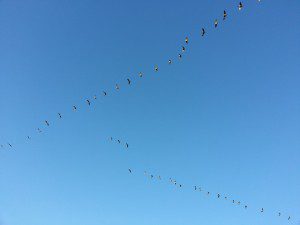
Goose Migration by Charles Rondeau. Public domain image courtesy Publicdomainpictures.net
The goose comes to us with both European and First Nations’ associations. In European myth it symbolizes good fortune (goose that lays golden eggs) or completion (your goose is cooked). It makes frequent appearances in fairy tales and Celtic myths as a symbol of enchantment or intelligence. To First Nations’ peoples it symbolizes the importance of respectful communication and teamwork; geese take turns leading the vee and thus, being the one to break the wind, and thus they all share in the responsibility and it’s never one person’s work alone. Because they are also very protective of their young they symbolize family and the protection of babies as well.
Call upon Goose to increase your creativity; to build community; to bless a journey, especially one that is long or spiritual; when entering a new relationship; to protect your family; or when you want to have children.
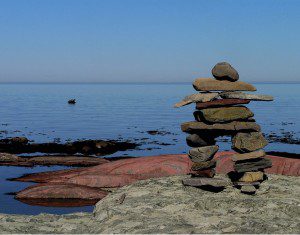
Inukshuk by Imaginart. Public domain image.
Inukshuk
The ᐃᓄᒃᓱᒃ is more closely pronounced inuksuk, but inukshuk is the more commonly-known English spelling; though the Canadian Government tries to promote the Inuit-preferred spelling (and there are many regional variations). The word comes from the Northern Aboriginal morphemes inuk meaning “person” and suk meaning “ersatz” or “substitute.” An innuguaq ᐃᓄᙳᐊᖅ, or “imitation person” is a related structure, such as the one featured a the logo of the 2010 Winter Olympics in Vancouver, but though it’s been conflated with the inuksuk, it’s not precisely the same thing. An ancient Inuit cultural symbol, in recent years it has increasingly been seen as a Canadian cultural symbol.
Inuksuk were used by Inuit and other peoples north of the Arctic Circle as guideposts and waymarkers, especially over long stretches of tundra with few natural landmarks. They may have been used in navigation, to mark caches, fishing spots, travel routes, food caches, hunting grounds, and sacred places. The Inupiat in northern Alaska used inuksuit to help guide caribou into contained areas for slaughter. An inuksuk presides over Vancouver’s English Bay, and it is meant to symbolize welcome to the world; but Canadian soldiers erected one on Hans Island, along with a plaque and a Canadian flag, as a way to claim it in Canada’s long running territorial dispute with Denmark over the island. Many inuksuk have been donated by the Canadian government to cities around the world as gestures of friendship. In the past several years many Canadians have been guided to build inuksuk along the Trans-Canada highway, and park rangers have a continual problem with Canadians erecting inuksuk in national parks, since they might confuse travelers and be mixed up with actual waymarkers.
So the inuksuk is kind of a Canadian totemic figure. It symbolizes territory and sovereignty, but also welcome and friendship. It symbolizes the coming together of different peoples, but it also symbolizes borders. Use inuksuk to invite friendship; to mark a sacred journey; to guard and protect property and borders; to protect sacred ground; or to invite blessings on a meeting or on a hunting trip.
Happy Canada Day, and happy Independence Day to my American friends!
Like Between the Shadows on Facebook and never miss a post!
The Witch's Eight Paths of Power
Previous Post

June 23, 2016
Video: Witchcraft & Voodoo Episode 7 - Divination
Next Post
July 5, 2016 Video: Witchcraft & Voodoo Episode 8 - The Money Issue
Browse Our Archives
Select a Category A Quest for Canada Between the Shadows Books Columns Current Events Dance & Sacred Movement Feminism From the Shadows Gender How To Access Services Humour Intent Interviews Intoxicants Magick My Books Opinion Pagan community Pagan music Politics Praxis Quantum Woo Reviews Rituals Sabbats Sacred Universe Seekers and Guides Sexuality Sit for a Spell Stories the Craft The Great Rite the Scourge The Witch's Eight Paths of Power Theology Traditions Trance Video Wicca Witchcraft Witchcraft & Voodoo Witchcraft & Voodoo Writing
Select a Month October 2019 July 2019 June 2019 May 2019 March 2019 February 2019 January 2019 December 2018 October 2018 September 2018 August 2018 July 2018 June 2018 May 2018 April 2018 March 2018 February 2018 December 2017 November 2017 October 2017 September 2017 August 2017 July 2017 June 2017 May 2017 April 2017 March 2017 February 2017 January 2017 December 2016 November 2016 October 2016 September 2016 August 2016 July 2016 June 2016 May 2016 April 2016 March 2016 February 2016 January 2016 December 2015 November 2015 October 2015 September 2015 August 2015 July 2015 June 2015 May 2015 April 2015 March 2015 February 2015 January 2015 December 2014 November 2014 October 2014 September 2014
Follow Us!
TAKE THE
Religious Wisdom Quiz
What did God make on the fourth day of creation?
Select your answer to see how you score.
Fish and birds Man Plants Sun, moon, and stars
Related posts from Between the Shadows

Pagan Book Review: Circe by Madeline Miller
Pagan Book Review: The Chains that Bind by...
Witchcraft & Voodoo: Ritual Tools (Video Premiere)
TRENDING AT PATHEOS Pagan

I was recently chatting with someone on Instagram. She asked me what...

While there are many people who share their results, the end of...

On July 23, I saw Christopher Nolan's The Odyssey which is Homer’s...

As I write this two big events have just finished up. One...

Restoring the Watershed of Divine Love
Perhaps cooperation is not something we manufacture through legislation, ideology, or moral...

Many UUs don’t pray because of bad experiences in a previous religion,...
view all Pagan blogs
Ad-Free & Subscriber Log-In Subscription Support
- About Us
- 2026 Calendar
- Videos
- Podcasts
- Library of World Religions
- Faith In Media Tracker
- Advertise With Us
- Write for Us
- Privacy Policy
- Terms of Service
- Do Not Sell My Data
- Contact Us
- Radiant Digital
- Manage Newsletter Subscriptions
- Unsubscribe From Notifications
- Sitemap
Copyright 2008-2026, Patheos. All rights reserved.
Subscription Support Ad-Free & Subscriber Log-In
Follow Patheos