
BuddhistCatholicContemplativeEvangelicalGeneral ChristianHinduJewishLatter-day SaintMuslimNew VisionsProgressive Christian
Beliefs
- Buddhist
- Catholic
- Contemplative
- Evangelical
- General Christian
- Hindu
- Jewish
- Latter-day Saint
- More Voices
- Muslim
- New Visions
- Pagan
- Progressive Christian
Topics
- Religion News
- Food and Religion
- Sports and Religion
- Religious Art
- Religious Music and Entertainment
- Religious Events
- History and Religion
- Style and Religion
- Politics and Religion
- Women in Religion
- Recreation Outdoors and Religion
- Business Finance and Religion
- Careers Workplace and Religion
- Education and Religion
- Family Parenting and Religion
- Health Fitness and Religion
- Home and Religion
- Relationships and Religion
- Technology and Religion
- Travel and Religion
Columnists
- Buddhist Columnists
- Business Finance and Religion Columnists
- Careers Workplace and Religion Columnists
- Catholic Columnists
- Contemplative Columnists
- Education and Religion Columnists
- Evangelists Columnists
- Family Parenting and Religion Columnists
- General Christian Columnists
- Health Fitness and Religion Columnists
- Hindu Columnists
- History and Religion Columnists
- Home and Religion Columnists
- Jewish Columnists
- More Voices Columnists
- Latter Day Columnists
- Muslim Columnists
- New Visions Columnists
- Nonreligious Columnists
- Pagan Columnists
- Politics and Religion Columnists
- Progressive Columnists
- Recreation Outdoors and Religion Columnists
- Relationships and Religion Columnists
- Religion News Columnists
- Religious Art Columnists
- Religious Events Columnists
- Religious Music and Entertainment Columnists
- Sports and Religion Columnists
- Style and Religion Columnists
- Technology and Religion Columnists
- Travel and Religion Columnists
- Women in Religion Columnists
Resource Library
- 2026 Calendar
- Library of World Religions
- The 100 Most Holy Places on Earth
- Patheos Answers
- Podcasts
- Videos
- Faith Leaders Database
- Anglican Episcopalian
- Bahai
- Baptist
- Buddhism
- Christianity
- Confucianism
- Eastern Orthodoxy
- Hinduism
- Holiness and Pentecostal
- ISKCON
- Islam
- Judaism
- Lutheran
- Methodist
- The Church of Jesus Christ of Latter-day Saints
- New Age
- Paganism
- Presbytarian and Reformed
- Protestantism
- Religion Behind the Scenes
- Roman Catholic
- Scientology
- Shia Islam
- Sikhism
- Sufism
- Sunni Islam
- Taoism
- Zen
- See all religions
Research Tools
 Ad-Free & Subscriber Log-In Subscription Support
Ad-Free & Subscriber Log-In Subscription Support
Follow Patheos 

- Trending:
- Forgiveness
- |
- Marriage
- |
- Consciousness
- |
- Death Penalty
- |
- Election
- |
- Halloween
 Between the Shadows
- Home
- Pagan
- Book Review: Oryx and Crake by Margaret Atwood
Book Review: Oryx and Crake by Margaret Atwood
Last updated on: May 11, 2016 at 8:00 am by Sable Aradia
Book Review: Oryx and Crake by Margaret Atwood 2016-05-08T20:02:55-08:00 Sable Aradia
Patheos Explore the world's faith through different perspectives on religion and spirituality! Patheos has the views of the prevalent religions and spiritualities of the world.
 Oryx and Crake by Margaret Atwood
My rating: 5 of 5 stars
Read for the Women of Genre Fiction Reading Challenge 2016 and the Apocalypse Now Reading Challenge 2016.
Method of the world’s destruction: ecological devastation, corporate greed, and a mad scientist’s bioengineered supervirus.
Oryx and Crake is the second Margaret Atwood book I have read. I am finding that I have mixed feelings about her. I think she’s a brilliant writer. Her prose is magical and her sense of character amazing. I can’t help but feel a little pride in her as a Canadian. But the critics always wax rhetoric about how wonderfully original she is. She’s not, at least not that I’ve seen yet. Obviously these people just don’t read science fiction.
Atwood’s basic scenario here is a weird mating of The Time Machine, The Stand, and Frankenstein. Professional reviewers claim that Atwood has written “an innovative apocalyptic scenario in a world that is at once changed and all-too familiar because corporations have taken us on an uncontrolled genetic engineering ride.” It sells books because of our secret fears of genetic engineering. However, it’s not true, and if that’s what these people think then they weren’t paying attention. Also, one professional reviewer who was quoted on the cover of the edition I read said it was “uproariously funny.” I don’t think it was funny at all, and I think that if this guy thought it was funny he’s probably one of the corporate drones that Atwood was critiquing in the book. Someone in a review also said that it was confusing because she jumps back and forth between different moments in time and changes tenses when she does; and this same reviewer had the audacity to criticize Atwood’s grammar! Her grammar was the professional quality one might expect of such a critically acclaimed writer, and the story started in media res and was told primarily in flashbacks, and if that was confusing, I think you should stick with teen fiction.
What is actually great about this book is the fact that it is a brilliantly-written Greek tragedy that ultimately results in the likely extinction of the human race; along with quite a lot of the animals that we are familiar with. There’s a lot of “for want of a nail” stuff going on here. At several points disaster could have been averted, but it isn’t because of human flaws and human mistakes, and so all hell literally breaks loose. The epicenter of many of those flaws and mistakes is the protagonist, once called Jimmy but now known as Snowman, who found himself uniquely in a position by which he could have saved the world but, like Hamlet, fails to do so because of ignorance, negligence, and his tragic flaw, which is a desperate desire to be loved or even liked by someone, largely stemming from childhood neglect, emotionally distant parents, and a very lonely childhood. I love it because so many people in real life fail to do the right thing because of that flaw, or they overlook things that probably should have triggered alarm bells.
Others have found Snowman to be really unlikable as a result of those tragic flaws, but I didn’t. I found I had a lot of sympathy for him, and I could understand why he did a lot of what he did. Jimmy’s mother reminded me of my own, who was bipolar, undiagnosed and untreated for the length of my childhood. You learn that she and Jimmy’s father were at odds over some morality issue associated with the work that Jimmy’s father did for the Corporation they both used to work for. And in this future vision, Corporations own Compounds and keep their people entirely separated from the rest of the world, which they call the “pleeblands” (which of course was actually “plebelands” at one time, one would guess), and your worth, status and wealth depend entirely on your usefulness to the Corporation. Scientists and mathematicians are valued; artists and writers are considered a waste of oxygen; unless they write advertising for the Corporation, of course. Protesting the Corporations is outlawed and demonstrations are punishable by death. In this, Atwood borrows extensively from the cyberpunk subgenre of science fiction (or, if you believe her and the critics, she reinvents the wheel).
You learn also, mostly as side stories in Jimmy’s personal observations of what goes on around him growing up, that the world is in a desperate state of ecological disaster due to climate change, there are too many people and too little resources, and the work that the genetic engineering companies do is actually important, or at least some of it is, in assuring the human race’s survival; except that they create primarily what makes the CEOs of the Corporations money, rather than what is good for humanity, due to selfishness and an innate sense of their own superiority over the pleebs (the rest of the planet). In this we also see some shades of the overpopulation horrors of the 1970s, such as in Soylent Green (or Make Room! Make Room!, as the book it was based on was called.)
Quickly you learn that Snowman is looking after an artificially-created sentient race that bears some resemblance to humans, and who comes from humans, but who aren’t quite human. They’ll remind science fiction aficionados of H.G. Wells‘ Eloi. They were created by someone named Crake, who is a very important character in the novel, being the mad scientist in question, and who was once a friend of Snowman’s. Also, there was someone named Oryx in his past, a woman he quite clearly loved, who for some reason was believed by the Crakers to be the creatrix of the animals. But since they are guileless, innocent, and somewhat simple like the Eloi, their beliefs seem almost mythological or biblical. You also learn that Crake was somehow responsible for whatever killed humanity, which was clearly a plague, and if Atwood tried to tell me she never read either The Stand or I Am Legend I would call her a liar, because parts of the book were full of eerie scenes of human life stopped dead, just like Stephen King and Richard Matheson wrote about so well. The title of the book is meant to represent both sides of human nature and not just the characters.
Sounds like spoilers? Nope, not a bit, because you find out most of this stuff in the first chapter. The story is more about how it all unfolds than what happened. And in this, Atwood displays a masterful understanding of the dark side of human nature and how the light side of it can be manipulated and twisted to dark purposes. It’s an amazing story and I was reading it with page-turning alacrity because it was gripping and fascinating. Only at the very end does everything become clear.
There are many questions that should concern the modern mind. Have we already gone so far with climate change that it will inevitably destroy the human race? How far is too far to go with genetic engineering? What are we going to do when there are so many of us that we overwhelm the planet’s resources to care for us, which might already have happened? Are we doomed to destroy ourselves out of greed, neglect, indifference?
And yet there are also subtler questions of human morality and the nature of religion. The Buddha’s dilemma comes up; the Buddha abandoned his wife and child to pursue enlightenment. Did he do the right thing? Buddhism is founded on the idea that attachment is sin, but if anyone did this in modern society we would call them a nutbar or a jerk, and certainly they don’t have normal human empathy and are probably something of a sociopath. There’s a Frankenstein-like element too; the Biblical references in the story of the Crakers is quite clear. Did God mean to create us? If so, was S/He aware of the full consequences of that? Were we created imperfectly and almost by accident, to be lesser, or greater, beings than our creator(s)? Was the Creation a total accident, or some madman’s weird plan?
And there’s a subtle human dilemma too, and that is the damage created by neglecting a child and denying them real love. Snowman might have been able to recognize that Crake was a sociopath if he’d had anything resembling normal parental empathy, but he had no basis of comparison. Is Atwood subtly critiquing the fact that since our society demands that both parents work, our children are being raised by babysitters and the internet? I think perhaps she is.
I really wish I could recommend this novel to everyone, because it does what really good science fiction is supposed to do, which is to make you question the world and society we live in, in a setting that is weird enough to make us feel a little safer than confronting it directly in the present, real world. But not too safe, because some of this sounds a little far-fetched; but not enough of it. Not enough of it by far.
Like Between the Shadows on Facebook and never miss a post!
Previous Post

May 6, 2016
The Irrational Fear of Death
Next Post

May 19, 2016 Seekers and Guides: Why Witches Wield Wands
Browse Our Archives
Select a Category A Quest for Canada Between the Shadows Books Columns Current Events Dance & Sacred Movement Feminism From the Shadows Gender How To Access Services Humour Intent Interviews Intoxicants Magick My Books Opinion Pagan community Pagan music Politics Praxis Quantum Woo Reviews Rituals Sabbats Sacred Universe Seekers and Guides Sexuality Sit for a Spell Stories the Craft The Great Rite the Scourge The Witch's Eight Paths of Power Theology Traditions Trance Video Wicca Witchcraft Witchcraft & Voodoo Witchcraft & Voodoo Writing
Select a Month October 2019 July 2019 June 2019 May 2019 March 2019 February 2019 January 2019 December 2018 October 2018 September 2018 August 2018 July 2018 June 2018 May 2018 April 2018 March 2018 February 2018 December 2017 November 2017 October 2017 September 2017 August 2017 July 2017 June 2017 May 2017 April 2017 March 2017 February 2017 January 2017 December 2016 November 2016 October 2016 September 2016 August 2016 July 2016 June 2016 May 2016 April 2016 March 2016 February 2016 January 2016 December 2015 November 2015 October 2015 September 2015 August 2015 July 2015 June 2015 May 2015 April 2015 March 2015 February 2015 January 2015 December 2014 November 2014 October 2014 September 2014
Follow Us!
TAKE THE
Religious Wisdom Quiz
After my test ended, I received double what I lost, except for one category where the number remained the same. What was restored equally?
Select your answer to see how you score.
His servants His flocks His wealth His children
Related posts from Between the Shadows

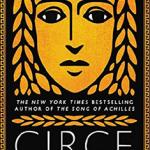
Pagan Book Review: Circe by Madeline Miller
Pagan Book Review: The Chains that Bind by...
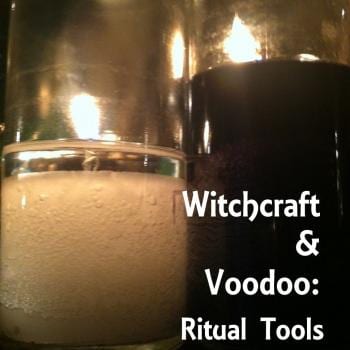
Witchcraft & Voodoo: Ritual Tools (Video Premiere)
TRENDING AT PATHEOS Pagan

When we talk about Greek religion, we often begin with the dodekatheion—the...

I was recently chatting with someone on Instagram. She asked me what...

While there are many people who share their results, the end of...

On July 23, I saw Christopher Nolan's The Odyssey which is Homer’s...

As I write this two big events have just finished up. One...

Restoring the Watershed of Divine Love
Perhaps cooperation is not something we manufacture through legislation, ideology, or moral...
view all Pagan blogs
Ad-Free & Subscriber Log-In Subscription Support
- About Us
- 2026 Calendar
- Videos
- Podcasts
- Library of World Religions
- Faith In Media Tracker
- Advertise With Us
- Write for Us
- Privacy Policy
- Terms of Service
- Do Not Sell My Data
- Contact Us
- Radiant Digital
- Manage Newsletter Subscriptions
- Unsubscribe From Notifications
- Sitemap
Copyright 2008-2026, Patheos. All rights reserved.
Subscription Support Ad-Free & Subscriber Log-In
Follow Patheos