
BuddhistCatholicContemplativeEvangelicalGeneral ChristianHinduJewishLatter-day SaintMuslimNew VisionsProgressive Christian
Beliefs
- Buddhist
- Catholic
- Contemplative
- Evangelical
- General Christian
- Hindu
- Jewish
- Latter-day Saint
- More Voices
- Muslim
- New Visions
- Pagan
- Progressive Christian
Topics
- Religion News
- Food and Religion
- Sports and Religion
- Religious Art
- Religious Music and Entertainment
- Religious Events
- History and Religion
- Style and Religion
- Politics and Religion
- Women in Religion
- Recreation Outdoors and Religion
- Business Finance and Religion
- Careers Workplace and Religion
- Education and Religion
- Family Parenting and Religion
- Health Fitness and Religion
- Home and Religion
- Relationships and Religion
- Technology and Religion
- Travel and Religion
Columnists
- Buddhist Columnists
- Business Finance and Religion Columnists
- Careers Workplace and Religion Columnists
- Catholic Columnists
- Contemplative Columnists
- Education and Religion Columnists
- Evangelists Columnists
- Family Parenting and Religion Columnists
- General Christian Columnists
- Health Fitness and Religion Columnists
- Hindu Columnists
- History and Religion Columnists
- Home and Religion Columnists
- Jewish Columnists
- More Voices Columnists
- Latter Day Columnists
- Muslim Columnists
- New Visions Columnists
- Nonreligious Columnists
- Pagan Columnists
- Politics and Religion Columnists
- Progressive Columnists
- Recreation Outdoors and Religion Columnists
- Relationships and Religion Columnists
- Religion News Columnists
- Religious Art Columnists
- Religious Events Columnists
- Religious Music and Entertainment Columnists
- Sports and Religion Columnists
- Style and Religion Columnists
- Technology and Religion Columnists
- Travel and Religion Columnists
- Women in Religion Columnists
Resource Library
- 2026 Calendar
- Library of World Religions
- The 100 Most Holy Places on Earth
- Patheos Answers
- Podcasts
- Videos
- Faith Leaders Database
- Anglican Episcopalian
- Bahai
- Baptist
- Buddhism
- Christianity
- Confucianism
- Eastern Orthodoxy
- Hinduism
- Holiness and Pentecostal
- ISKCON
- Islam
- Judaism
- Lutheran
- Methodist
- The Church of Jesus Christ of Latter-day Saints
- New Age
- Paganism
- Presbytarian and Reformed
- Protestantism
- Religion Behind the Scenes
- Roman Catholic
- Scientology
- Shia Islam
- Sikhism
- Sufism
- Sunni Islam
- Taoism
- Zen
- See all religions
Research Tools
 Ad-Free & Subscriber Log-In Subscription Support
Ad-Free & Subscriber Log-In Subscription Support
Follow Patheos 

- Trending:
- Forgiveness
- |
- Marriage
- |
- Consciousness
- |
- Death Penalty
- |
- Election
- |
- Halloween
 Between the Shadows
- Home
- Pagan
- From the Shadows: “Just My Opinion”
From the Shadows: “Just My Opinion”
Last updated on: March 7, 2018 at 9:53 am by Sable Aradia
From the Shadows: “Just My Opinion” 2018-03-07T09:53:24-08:00 Sable Aradia
Patheos Explore the world's faith through different perspectives on religion and spirituality! Patheos has the views of the prevalent religions and spiritualities of the world.

“Hey, I Want Hay!” by Melissa BoyceBright. Courtesy of PublicDomainImages.net; used by permission.
As I’m sure you’re aware by now, “From the Shadows” is a prelude to a rant. I would like to rant about a pet peeve of mine in the Pagan community, online and in person, and that is this: when you state something as a fact or an absolute, it is NOT “just your opinion!”
This catchphrase is typically used in the community as a way of avoiding the consequences of one’s statements. Someone makes a statement, and when another person takes issue with that statement, the person who made the statement tries to duck the debate or the hurt feelings that result by telling us that this is “just their opinion.” Some examples of these absolutist statements that I have seen in the past include:
“Polytheism is theism. So if you don’t believe in literal gods, you’re doing it wrong.”
“Belief in literal gods is stupid and irrational.”
“People who don’t believe in literal gods are not really faithful (Pagan/Polytheist/whatever.)”
“Wiccans are gender-essentialist.”
“Wiccans (or Wiccanates) are fluffy.” (Said to me by a store owner who hosted me for my book tour. Yes, seriously.)
“Traditional Witches are more authentic.”
“Old Pagans are stuffy and hidebound.”
“Young Pagans are lazy and have no real idea of direction.”
“Patriarchy is the result of the violence of men.”
“Feminists hate men.”
“You’re worshiping [insert deity name here] wrong because historically . . .”
“You can’t practice [insert Pagan religion here] because your ancestors had a different practice.”
Without getting into the many reasons why all of these statements are factually wrong, and why many of them are actually (thin) covers for sexism, racism, ageism, and other forms of prejudice, this is not the way the English language works. When you state that something is, or is not, something else, that is a statement of fact. A statement of fact is not an opinion.
An opinion is a belief about which the person who offers it is not entirely sure. In general, they believe this idea or state of affairs to be true, but they are aware that their belief may not be correct, may be based in misinformation or a lack of information, or may be somewhat askew. If you know that you’re right, that’s not an opinion!
An opinion is prefaced with, “I think,” “I believe,” “to my understanding,” or maybe even, “in my opinion.” It is prefaced by a qualifier that gives room for variation or disagreement. Let’s revisit the above statements in ways that change them from statements of fact into actual opinions:
“Polytheism is theism. So in my understanding of polytheism, a belief in literal gods is essential.”
“I find it difficult to accept the existence of literal gods. I think that gods should be understood as metaphors or archetypes.”
“I don’t really understand Pagans who don’t believe in literal gods. To me, that belief seems like the foundation of polytheist (Pagan/whatever) faith.”
“Wicca strikes me as a gender-essentialist religion because of its cosmology.” Or even, “I seem to meet a lot of gender-essentialist Wiccans.”
“From what I’ve seen of Wicca (Wiccanate Paganism) it seems simplistic.”
“I prefer traditional witchcraft to Wicca because it feels more authentic to me.”
“A lot of the Pagan elders I’ve met seem stuffy and hidebound.”
“A lot of the younger Pagans I’ve met seem to me like they’re scattered, unfocused, and not prepared to do the necessary work.”
“Patriarchy encourages men to be violent.” (Bonus points if you add something to the effect of “but not all of them are.”)
“Some feminists seem like they’re more interested in hating men than supporting women.”
“Historically there’s no evidence that [insert deity name here] was worshiped that way, and I prefer historical accuracy in my practice.”
“I believe that people should practice the Paganism of their ancestors if they choose to practice a Pagan path.”
If one is not prepared to qualify one’s statements in this way (in other words, if one believes one does know something to be true) then one should be prepared to defend that statement. One should accept that others may find the statement objectionable and that they may be inclined to argue. And if said person is prepared to accept that, I think that’s fine. I don’t have to agree with them and I may choose to challenge them on it.
But, to make a statement like this and then retreat behind, “But that’s just my opinion!” is cowardice. It takes advantage of us and our Pagan ethic of trying to be inclusive. We Pagans try to accept the validity of a variety of viewpoints; and so when someone says that “this is just their opinion,” we immediately check ourselves at the door. We ask ourselves if we’re coming across more aggressively than we intend to, or if we are getting angrier than we ought to, and we chastise ourselves for our intolerance. But the person who makes such a statement and then retreats behind “opinion” is fully aware of that, and is trying to defang us unfairly. The person who makes such a statement is the one who is displaying intolerance, and we have a right to object. Not only that, but said person is refusing to allow those who may have been maligned or misrepresented by such statements the right to defend themselves.
“It’s just my opinion” is meant to be a qualifier based in humility. It is meant as a way to invite discourse, and to allow room for other opinions. It’s meant to suggest that discussion is an option and that your belief might change if you are exposed to contrary evidence. It is not meant to be used as a shield to hide behind after you have chosen to lob a bombastic statement because you think your superior wisdom is going to batter down the walls of the opposing argument like a catapult stone.
When we’re discussing faith, by definition a lot of what we’re talking about is unknowable and it’s reasonable to assume that others might have come to different conclusions. Certainly we don’t appreciate it when fundamentalist Christians try to tell us that they know how we’re damned to hell unless we accept Jesus as our personal Lord and Saviour; but that’s “just their opinion.” Why would any of us think that speaking in this way ourselves is likely to get any better results?
Freedom of speech is about the relationship between government and citizens. Freedom of speech is the right to speak freely without persecution from authority. It is not the right to say whatever we want, to whomever we want, without consequence. It does not trump the right to safety of person or any other human right (which is why hate speech is not okay) and it does not mean that other people don’t have the right to freely state their objections and arguments to “your opinion.”
So, please qualify your statements so that they are not absolutes; or have the courage of your convictions, and be prepared to defend your statements with intelligent argument. If you can’t do either, please don’t subject us to “your opinion.”
Like Between the Shadows on Facebook and never miss a post!
Previous Post

December 20, 2015
Blessed Solstice
Next Post

January 7, 2016 Interview with Jason Mankey, Author of "The Witch's Athame"
Browse Our Archives
Select a Category A Quest for Canada Between the Shadows Books Columns Current Events Dance & Sacred Movement Feminism From the Shadows Gender How To Access Services Humour Intent Interviews Intoxicants Magick My Books Opinion Pagan community Pagan music Politics Praxis Quantum Woo Reviews Rituals Sabbats Sacred Universe Seekers and Guides Sexuality Sit for a Spell Stories the Craft The Great Rite the Scourge The Witch's Eight Paths of Power Theology Traditions Trance Video Wicca Witchcraft Witchcraft & Voodoo Witchcraft & Voodoo Writing
Select a Month October 2019 July 2019 June 2019 May 2019 March 2019 February 2019 January 2019 December 2018 October 2018 September 2018 August 2018 July 2018 June 2018 May 2018 April 2018 March 2018 February 2018 December 2017 November 2017 October 2017 September 2017 August 2017 July 2017 June 2017 May 2017 April 2017 March 2017 February 2017 January 2017 December 2016 November 2016 October 2016 September 2016 August 2016 July 2016 June 2016 May 2016 April 2016 March 2016 February 2016 January 2016 December 2015 November 2015 October 2015 September 2015 August 2015 July 2015 June 2015 May 2015 April 2015 March 2015 February 2015 January 2015 December 2014 November 2014 October 2014 September 2014
Follow Us!
TAKE THE
Religious Wisdom Quiz
In the Parable of the Pearl of Great Price, what does the merchant do?
Select your answer to see how you score.
Finds a lost coin Sells all to buy the pearl Buys many pearls Builds a bigger barn
Related posts from Between the Shadows

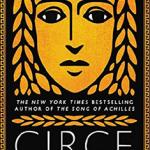
Pagan Book Review: Circe by Madeline Miller
Pagan Book Review: The Chains that Bind by...
Witchcraft & Voodoo: Ritual Tools (Video Premiere)
TRENDING AT PATHEOS Pagan

I was recently chatting with someone on Instagram. She asked me what...

While there are many people who share their results, the end of...

On July 23, I saw Christopher Nolan's The Odyssey which is Homer’s...

As I write this two big events have just finished up. One...

Restoring the Watershed of Divine Love
Perhaps cooperation is not something we manufacture through legislation, ideology, or moral...

Many UUs don’t pray because of bad experiences in a previous religion,...
view all Pagan blogs
Ad-Free & Subscriber Log-In Subscription Support
- About Us
- 2026 Calendar
- Videos
- Podcasts
- Library of World Religions
- Faith In Media Tracker
- Advertise With Us
- Write for Us
- Privacy Policy
- Terms of Service
- Do Not Sell My Data
- Contact Us
- Radiant Digital
- Manage Newsletter Subscriptions
- Unsubscribe From Notifications
- Sitemap
Copyright 2008-2026, Patheos. All rights reserved.
Subscription Support Ad-Free & Subscriber Log-In
Follow Patheos