
BuddhistCatholicContemplativeEvangelicalGeneral ChristianHinduJewishLatter-day SaintMuslimNew VisionsProgressive Christian
Beliefs
- Buddhist
- Catholic
- Contemplative
- Evangelical
- General Christian
- Hindu
- Jewish
- Latter-day Saint
- More Voices
- Muslim
- New Visions
- Pagan
- Progressive Christian
Topics
- Religion News
- Food and Religion
- Sports and Religion
- Religious Art
- Religious Music and Entertainment
- Religious Events
- History and Religion
- Style and Religion
- Politics and Religion
- Women in Religion
- Recreation Outdoors and Religion
- Business Finance and Religion
- Careers Workplace and Religion
- Education and Religion
- Family Parenting and Religion
- Health Fitness and Religion
- Home and Religion
- Relationships and Religion
- Technology and Religion
- Travel and Religion
Columnists
- Buddhist Columnists
- Business Finance and Religion Columnists
- Careers Workplace and Religion Columnists
- Catholic Columnists
- Contemplative Columnists
- Education and Religion Columnists
- Evangelists Columnists
- Family Parenting and Religion Columnists
- General Christian Columnists
- Health Fitness and Religion Columnists
- Hindu Columnists
- History and Religion Columnists
- Home and Religion Columnists
- Jewish Columnists
- More Voices Columnists
- Latter Day Columnists
- Muslim Columnists
- New Visions Columnists
- Nonreligious Columnists
- Pagan Columnists
- Politics and Religion Columnists
- Progressive Columnists
- Recreation Outdoors and Religion Columnists
- Relationships and Religion Columnists
- Religion News Columnists
- Religious Art Columnists
- Religious Events Columnists
- Religious Music and Entertainment Columnists
- Sports and Religion Columnists
- Style and Religion Columnists
- Technology and Religion Columnists
- Travel and Religion Columnists
- Women in Religion Columnists
Resource Library
- 2026 Calendar
- Library of World Religions
- The 100 Most Holy Places on Earth
- Patheos Answers
- Podcasts
- Videos
- Faith Leaders Database
- Anglican Episcopalian
- Bahai
- Baptist
- Buddhism
- Christianity
- Confucianism
- Eastern Orthodoxy
- Hinduism
- Holiness and Pentecostal
- ISKCON
- Islam
- Judaism
- Lutheran
- Methodist
- The Church of Jesus Christ of Latter-day Saints
- New Age
- Paganism
- Presbytarian and Reformed
- Protestantism
- Religion Behind the Scenes
- Roman Catholic
- Scientology
- Shia Islam
- Sikhism
- Sufism
- Sunni Islam
- Taoism
- Zen
- See all religions
Research Tools
 Ad-Free & Subscriber Log-In Subscription Support
Ad-Free & Subscriber Log-In Subscription Support
Follow Patheos 

- Trending:
- Forgiveness
- |
- Marriage
- |
- Consciousness
- |
- Death Penalty
- |
- Election
- |
- Halloween
 Between the Shadows
- Home
- Pagan
- Book Review: A Companion to Wolves by Sarah Monette and Elizabeth Bear
Book Review: A Companion to Wolves by Sarah Monette and Elizabeth Bear
Last updated on: February 2, 2016 at 2:58 pm by Sable Aradia
Book Review: A Companion to Wolves by Sarah Monette and Elizabeth Bear 2016-02-02T14:58:37-08:00 Sable Aradia
Patheos Explore the world's faith through different perspectives on religion and spirituality! Patheos has the views of the prevalent religions and spiritualities of the world.
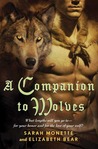 A Companion to Wolves by Sarah Monette
My rating: 5 of 5 stars
I read this book because I was doing a couple of reading challenges; one to read speculative fiction by “new-to-me” female authors, the other to read LGBTQ related speculative fiction, and this book qualified for both lists and I thought the cover was intriguing. You can find the list of LGBTQ speculative fiction that I’m referring to at: https://www.worldswithoutend.com/list….
I have read nothing by either Sarah Monette or Elizabeth Bear so this was a completely new experience for me. I could not tell where the writing of one ended and the other began. I’m not sure if that’s their style under normal circumstances or if I just can’t tell because I’m not familiar with them. But I thought it worth mentioning because I find this can be a factor in co-written books from time to time.
I was going to save reading it until I was finished the current Honor Harrington novel I was working on, but I started it when I couldn’t find the HH book and then just never put it down. So it grabs you right away and keeps you turning the pages to find out what happens next.
Isolfr is the son of a Jarl (a nobleman like a baronet, who owns a keep and is responsible for a protectorate) who is chosen to join an order of warriors who bond with a creature called a trellwolf, which is a giant, considerably more intelligent and sentient wolf who is the natural enemy of trolls. Or rather, the sending of sons in tithe to the order is demanded as one of many feudal obligations, and Isolfr’s father tries to keep him out of sight to avoid having to send him in tithe; partially because Isolfr is his father’s heir, and partially because he does not approve of the order. The wolfcarls (the men who have bonded to wolves) are known to mate when their wolves do, and he is offended by this and strongly disapproves of it, though some family history complicates the matter as well. When Isolfr chooses to disregard his father’s commands and fulfill his household’s tithe as requested, this sets the two against each other in a conflict that rapidly becomes central to the book as the trolls, for some reason, stop venturing into the territory of men in warbands and start coming down in force.
Veteran readers of speculative fiction will be reminded of the bond between Anne McCaffery’s Pernese dragons and their riders, and between the Companions and the Heralds of Mercedes Lackey’s Valdemar novels. Perhaps some of you do not remember, but of the five types of dragons, the golds and the greens were female. Because women were forbidden to ride any but the golden queens in their feudal society (and also forbidden to go into combat because the queens would become sterile if they chewed firestone, which gave dragons the ability to breathe fire,) green riders are male. But dragons have mating heats, kind of like wolves, which overwhelms the telepathic/empathic bond between the dragons and their riders, and so since green and blue dragons tend to mate, green and blue riders tend to be gay.
This is not a central part of the plot in any of the Pern novels as I can recall, but I can see its influence on Monette and Bear, and this situation *is* central to the plot of “A Companion to Wolves,” with all the headaches of prejudices, interrelationships, status, and so forth; especially since, in this cold world out of Norse myth, women are forbidden to be warriors, and so a band of wolves and bonded humans contains only men. To make matters more complicated, Isolfr bonds with an alpha bitch, bringing a whole host of unique problems and concerns, and he, of course labours under the prejudices acquired from having been raised by his father. Other reviews have cited numerous consent issues. They’re not wrong, so that’s a trigger you may wish to stay away.
However, I have done a fair bit of research into wolf packs and how they interact because their social structure is interesting and complicated, and I was playing in a role-playing game of werewolves, so I wanted to understand how humans, dealing with the instincts of wolves, might act. I wish I’d read this book. Watching the characters struggle with exactly that problem makes for a fascinating read. The alpha bitch is the central authority and social glue of a wolf pack, so a man bonded to such a wolf finds himself filling the same role in their world, regardless of his youth or his personal wishes.
The world in which this takes place is beautifully realized. This is a world out of the Poetic Eddas. It is far to the North — far enough that there is a midnight sun and snow most of the year. Norse religion is the faith of the culture; people wear Hammers of Thor into battle for protection and make prayers to Othinn and Freya. Younger sons go a’viking to make their fortune so that they may provide for a future wife. And there are trolls and svartalfar and trellwolves. People who know anything about Norse culture and mythology will cheer these beautifully-realized mythological creatures, which are far closer to traditional stories than most works of fantasy literature I have read.
If I might make one small criticism of this book, it is clear that the authors are not fighters. They do not realize the fight scenes in the sort of detail that satisfies someone like myself, who has a little bit of martial training. Like when reading a Mercedes Lackey novel, many of the fights happen off-camera, partially because that’s just not the story that the authors want to tell. Don’t get me wrong; it’s not like they are confusing or anything, it’s just that they lack a certain technical detail. This does not extend to an understanding of the circumstances and tactics around war, however; here they perform admirably. And the aftermaths of the fight scenes are brilliantly realized. These writers go where the story takes them. They do not blink in the face of things that might make people uncomfortable, from bloody war and the wounds it causes, to the bedroom. Then again, I understand that modern editors are often not interested in the fine detail of the fight scenes, so perhaps that’s an editorial choice and not an author’s one.
Another minor criticism is that the cast of characters gets out of hand. Because much of the plot is about interconnecting relationships and politics there is a whole host of people and wolves with unfamilar-sounding names introduced, and there’s no clear convention that names the wolves any differently than the wolfless people, though most wolfcarls (but not all!) use the suffix “fr” at the end of their names. The writers seem to have been aware of this, and they try to mitigate it by making a list of characters, whether they are wolves or people, and what their group of affiliation is at the beginning of the book, but I found I had to consult it frequently and it slowed down the action and pulled me out of the story more than I cared for.
Also, the slightly-sudden wrapping up of a lot of loose ends may rankle some at the end of the novel. I accepted it at the time but in retrospect, some of it feels a little rushed. Then again, much of it happens because of the pressures of war, and that I can understand.
As a veteran reader of speculative fiction, I must also give a deep bow of respect to Monette and Bear for their beautifully realized aliens. Their sentient non-humans are not humans in funny suits. They do not think like humans. Many of them do not even really think in words, such as the wolves. And yet their intelligence is clearly communicated. They apply particularly deft hands to this aspect of their craft.
As you can tell, I thoroughly enjoyed this book and I would definitely recommend it. It’s the first in a series of three books called the “Iskryne” series. I’m sure I’ll look for the rest of them.
Like Between the Shadows on Facebook and never miss a post!
Previous Post

January 22, 2016
Book Reviews: The Last Herald-Mage of Valdemar by Mercedes Lackey
Next Post

January 30, 2016 The Handmaid's Tale
Browse Our Archives
Select a Category A Quest for Canada Between the Shadows Books Columns Current Events Dance & Sacred Movement Feminism From the Shadows Gender How To Access Services Humour Intent Interviews Intoxicants Magick My Books Opinion Pagan community Pagan music Politics Praxis Quantum Woo Reviews Rituals Sabbats Sacred Universe Seekers and Guides Sexuality Sit for a Spell Stories the Craft The Great Rite the Scourge The Witch's Eight Paths of Power Theology Traditions Trance Video Wicca Witchcraft Witchcraft & Voodoo Witchcraft & Voodoo Writing
Select a Month October 2019 July 2019 June 2019 May 2019 March 2019 February 2019 January 2019 December 2018 October 2018 September 2018 August 2018 July 2018 June 2018 May 2018 April 2018 March 2018 February 2018 December 2017 November 2017 October 2017 September 2017 August 2017 July 2017 June 2017 May 2017 April 2017 March 2017 February 2017 January 2017 December 2016 November 2016 October 2016 September 2016 August 2016 July 2016 June 2016 May 2016 April 2016 March 2016 February 2016 January 2016 December 2015 November 2015 October 2015 September 2015 August 2015 July 2015 June 2015 May 2015 April 2015 March 2015 February 2015 January 2015 December 2014 November 2014 October 2014 September 2014
Follow Us!
TAKE THE
Religious Wisdom Quiz
What did Solomon build for foreign wives that angered God?
Select your answer to see how you score.
Armies City walls High places (shrines) Ships at Tarshish
Related posts from Between the Shadows

Pagan Book Review: Circe by Madeline Miller

Pagan Book Review: The Chains that Bind by...

Witchcraft & Voodoo: Ritual Tools (Video Premiere)
TRENDING AT PATHEOS Pagan

I was recently chatting with someone on Instagram. She asked me what...

While there are many people who share their results, the end of...

On July 23, I saw Christopher Nolan's The Odyssey which is Homer’s...

As I write this two big events have just finished up. One...

Restoring the Watershed of Divine Love
Perhaps cooperation is not something we manufacture through legislation, ideology, or moral...

Many UUs don’t pray because of bad experiences in a previous religion,...
view all Pagan blogs
Ad-Free & Subscriber Log-In Subscription Support
- About Us
- 2026 Calendar
- Videos
- Podcasts
- Library of World Religions
- Faith In Media Tracker
- Advertise With Us
- Write for Us
- Privacy Policy
- Terms of Service
- Do Not Sell My Data
- Contact Us
- Radiant Digital
- Manage Newsletter Subscriptions
- Unsubscribe From Notifications
- Sitemap
Copyright 2008-2026, Patheos. All rights reserved.
Subscription Support Ad-Free & Subscriber Log-In
Follow Patheos