
BuddhistCatholicContemplativeEvangelicalGeneral ChristianHinduJewishLatter-day SaintMuslimNew VisionsProgressive Christian
Beliefs
- Buddhist
- Catholic
- Contemplative
- Evangelical
- General Christian
- Hindu
- Jewish
- Latter-day Saint
- More Voices
- Muslim
- New Visions
- Pagan
- Progressive Christian
Topics
- Religion News
- Food and Religion
- Sports and Religion
- Religious Art
- Religious Music and Entertainment
- Religious Events
- History and Religion
- Style and Religion
- Politics and Religion
- Women in Religion
- Recreation Outdoors and Religion
- Business Finance and Religion
- Careers Workplace and Religion
- Education and Religion
- Family Parenting and Religion
- Health Fitness and Religion
- Home and Religion
- Relationships and Religion
- Technology and Religion
- Travel and Religion
Columnists
- Buddhist Columnists
- Business Finance and Religion Columnists
- Careers Workplace and Religion Columnists
- Catholic Columnists
- Contemplative Columnists
- Education and Religion Columnists
- Evangelists Columnists
- Family Parenting and Religion Columnists
- General Christian Columnists
- Health Fitness and Religion Columnists
- Hindu Columnists
- History and Religion Columnists
- Home and Religion Columnists
- Jewish Columnists
- More Voices Columnists
- Latter Day Columnists
- Muslim Columnists
- New Visions Columnists
- Nonreligious Columnists
- Pagan Columnists
- Politics and Religion Columnists
- Progressive Columnists
- Recreation Outdoors and Religion Columnists
- Relationships and Religion Columnists
- Religion News Columnists
- Religious Art Columnists
- Religious Events Columnists
- Religious Music and Entertainment Columnists
- Sports and Religion Columnists
- Style and Religion Columnists
- Technology and Religion Columnists
- Travel and Religion Columnists
- Women in Religion Columnists
Resource Library
- 2026 Calendar
- Library of World Religions
- The 100 Most Holy Places on Earth
- Patheos Answers
- Podcasts
- Videos
- Faith Leaders Database
- Anglican Episcopalian
- Bahai
- Baptist
- Buddhism
- Christianity
- Confucianism
- Eastern Orthodoxy
- Hinduism
- Holiness and Pentecostal
- ISKCON
- Islam
- Judaism
- Lutheran
- Methodist
- The Church of Jesus Christ of Latter-day Saints
- New Age
- Paganism
- Presbytarian and Reformed
- Protestantism
- Religion Behind the Scenes
- Roman Catholic
- Scientology
- Shia Islam
- Sikhism
- Sufism
- Sunni Islam
- Taoism
- Zen
- See all religions
Research Tools
 Ad-Free & Subscriber Log-In Subscription Support
Ad-Free & Subscriber Log-In Subscription Support
Follow Patheos 

- Trending:
- Forgiveness
- |
- Marriage
- |
- Consciousness
- |
- Death Penalty
- |
- Election
- |
- Halloween
 Between the Shadows
- Home
- Pagan
- Seekers and Guides: The Three Degrees of Wicca
Seekers and Guides: The Three Degrees of Wicca
Last updated on: March 7, 2018 at 10:50 am by Sable Aradia
Seekers and Guides: The Three Degrees of Wicca 2018-03-07T10:50:56-08:00 Sable Aradia
Patheos Explore the world's faith through different perspectives on religion and spirituality! Patheos has the views of the prevalent religions and spiritualities of the world.
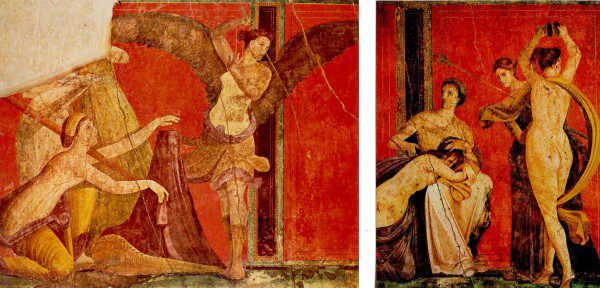
Wicca has changed a great deal from its founding in its modern form with the New Forest Coven. Once, degrees and initiations were an essential part of the practice, but now, with solitaries and eclectics outnumbering most other forms of Wicca, such ways have been almost forgotten. Most Witches today do not understand the purpose or need for initiations. They tend to view them as excuses for “trad Witches” to be arrogant and hierarchical. Unfortunately, even some initiated Witches seem to see it that way. My background includes eclectic and solitary practice, as well as initiation in two very different traditions, so I thought I ought to take some time to explain what initiation and the Three Degrees of Wicca are all about.
What Initiation is Not
Sometimes, Witches seek initiation as a way of “legitimizing” their Craft. If that’s what you’re looking for, you’re wasting your time. Initiations are generally only considered valid within whatever tradition you have chosen to study. Someone will always take issue anyway, especially if they have sour grapes against your tradition (or even against a handful of tradition members). It’s not a Pagan “merit badge” system.
Sometimes, Witches seek initiation to gain power. This doesn’t work either. Having the degree will not make you any better at Witchcraft (although the things you learn in seeking the degree might). Nor does it make anyone respect you or regard your word as being more significant than anyone else’s, unless they are brand new to the Craft and don’t know any better. Only Third Degree initiates are supposed to be able to start their own traditions, but in reality, that and five bucks might buy you a cup of coffee.
Some seek initiation for status. This has limited application in some circles, but generally, Pagans really don’t care; and for everyone who does, somebody else will denounce you as being arrogant, self-centered, and egotistical for having the degree in the first place.
What Initiation Is
Initiation represents recognition of a certain level of mystical understanding. Part of its purpose is recognition, but it is generally not given until the community already treats you as if you were of the relevant degree and is honestly surprised when they learn you are not. Partly separates one stage of the initiate’s life from the next stage. In some traditions, it also links you to the lineage of those who have come before you, and it teaches something in a living, breathing way that ideally, transforms the initiate and improves him or her as a person and a Witch.
Requirements
Each tradition will have its own requirements. Some demand achievements and assignments. I personally believe that one should be cautious of these. In my opinion, the lessons of initiation are intangible and difficult to codify. It’s more a certain “knowing” that is intuitive and spiritual, and judging whether or not a student is ready is not easily defined.

First Degree
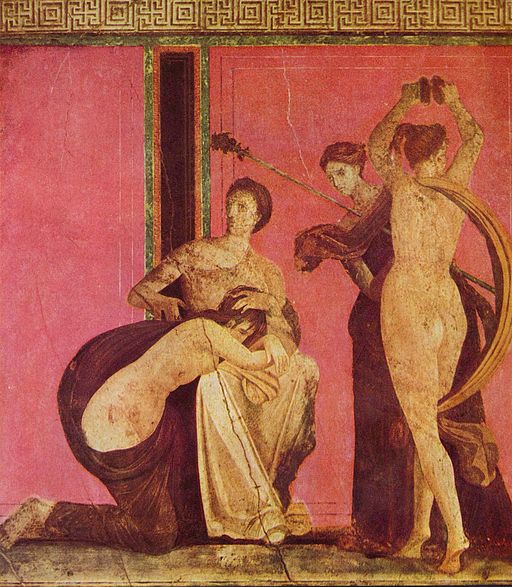
Most paths of Wicca follow the traditional practice of insisting on at least a year and a day of study before initiating anyone to the First Degree. In some groups, this is referred to as becoming one of the “twice-born.” The Mystery taught is the Mystery of Birth. In many variations of a theme, you will be brought blindfolded and bound (by a symbolic umbilical cord) and usually naked, challenged at the threshold of the circle to determine if you enter of your own free will, and your measure will be taken and returned to you (cutting the umbilical cord). It symbolizes being reborn into a new life of being a Witch. Mostly what initiators are looking for is whether or not Wicca is your chosen path and whether you are willing to accept the responsibilities of that; and in order to be sure of this, you need to know exactly what it is that you’re getting into, so a basic understanding of Wiccan practice and theology is required. In my tradition, I also insist that you own an athame, because that is the most essential of Wiccan tools.
Second Degree
At Second Degree, you should have enough understanding of the Craft to be able to teach it. Most people have been practicing for a few years before they are ready for it. The Mystery of the initiation is about Death; particularly, Death of the Ego to grow closer to the Divine. This ritual is the one with the most variations between traditions, but it always involves a symbolic death, ordeal, and rebirth; again, requiring the initiate to be naked and vulnerable. Reaching this degree is defined by a lot of personal conflicts and getting one’s feces to coagulate. When you know what you need to know to instruct others, and get through your personal ego and power issues, you are ready for the degree. In a way it’s a refining process. An initiate is seeking to become a better conductor of Divine Will and magick by getting one’s own ego out of the way. I insist that my initiates own their own basic ritual tools at this point, because they can teach Wicca on their own, and they sure won’t be using mine when they do!
Third Degree
Witches who have reached Third Degree should be able to understand Wicca well enough to intelligently debate and create theology. If you aren’t already leading your own coven, you soon will be. In some traditions, this degree is only granted to those who intend to form their own covens; coven Witches can remain at Second Degree for years. The Mystery is Love and Sex: how the joining together of two creates something greater than the sum of its parts. The most common form of initiation is the Great Rite. In my own practice, my Third Degree initiates are people whom I recognize as mystical, magickal, and spiritual equals, people whom I believe have as much to teach me about the Craft as I have to teach them. I love getting together with them to practice when I can, because it’s like working with superconductors as far as the magickal “juice” goes, but they all lead their own groups and teach in their own ways. According to Judy Harrow, it takes an average of seven to ten years to achieve a Third Degree, the equivalent of a Master’s degree.

Like us on Facebook at the Patheos Pagan Facebook page or the Between the Shadows Facebook page.
The Witch's Eight Paths of Power
British Traditional Witchcraft
The Witch's Eight Paths of Power
Previous Post
May 12, 2015
Seekers and Guides: A Coven Leader's Primer
Next Post
May 21, 2015 Songs of the Northern Tribes
Browse Our Archives
Select a Category A Quest for Canada Between the Shadows Books Columns Current Events Dance & Sacred Movement Feminism From the Shadows Gender How To Access Services Humour Intent Interviews Intoxicants Magick My Books Opinion Pagan community Pagan music Politics Praxis Quantum Woo Reviews Rituals Sabbats Sacred Universe Seekers and Guides Sexuality Sit for a Spell Stories the Craft The Great Rite the Scourge The Witch's Eight Paths of Power Theology Traditions Trance Video Wicca Witchcraft Witchcraft & Voodoo Witchcraft & Voodoo Writing
Select a Month October 2019 July 2019 June 2019 May 2019 March 2019 February 2019 January 2019 December 2018 October 2018 September 2018 August 2018 July 2018 June 2018 May 2018 April 2018 March 2018 February 2018 December 2017 November 2017 October 2017 September 2017 August 2017 July 2017 June 2017 May 2017 April 2017 March 2017 February 2017 January 2017 December 2016 November 2016 October 2016 September 2016 August 2016 July 2016 June 2016 May 2016 April 2016 March 2016 February 2016 January 2016 December 2015 November 2015 October 2015 September 2015 August 2015 July 2015 June 2015 May 2015 April 2015 March 2015 February 2015 January 2015 December 2014 November 2014 October 2014 September 2014
Follow Us!
TAKE THE
Religious Wisdom Quiz
What did God make on the fourth day of creation?
Select your answer to see how you score.
Fish and birds Man Plants Sun, moon, and stars
Related posts from Between the Shadows

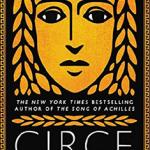
Pagan Book Review: Circe by Madeline Miller
Pagan Book Review: The Chains that Bind by...
Witchcraft & Voodoo: Ritual Tools (Video Premiere)
TRENDING AT PATHEOS Pagan

I was recently chatting with someone on Instagram. She asked me what...

While there are many people who share their results, the end of...

On July 23, I saw Christopher Nolan's The Odyssey which is Homer’s...

As I write this two big events have just finished up. One...

Restoring the Watershed of Divine Love
Perhaps cooperation is not something we manufacture through legislation, ideology, or moral...

Many UUs don’t pray because of bad experiences in a previous religion,...
view all Pagan blogs
Ad-Free & Subscriber Log-In Subscription Support
- About Us
- 2026 Calendar
- Videos
- Podcasts
- Library of World Religions
- Faith In Media Tracker
- Advertise With Us
- Write for Us
- Privacy Policy
- Terms of Service
- Do Not Sell My Data
- Contact Us
- Radiant Digital
- Manage Newsletter Subscriptions
- Unsubscribe From Notifications
- Sitemap
Copyright 2008-2026, Patheos. All rights reserved.
Subscription Support Ad-Free & Subscriber Log-In
Follow Patheos