
BuddhistCatholicContemplativeEvangelicalGeneral ChristianHinduJewishLatter-day SaintMuslimNew VisionsProgressive Christian
Beliefs
- Buddhist
- Catholic
- Contemplative
- Evangelical
- General Christian
- Hindu
- Jewish
- Latter-day Saint
- More Voices
- Muslim
- New Visions
- Pagan
- Progressive Christian
Topics
- Religion News
- Food and Religion
- Sports and Religion
- Religious Art
- Religious Music and Entertainment
- Religious Events
- History and Religion
- Style and Religion
- Politics and Religion
- Women in Religion
- Recreation Outdoors and Religion
- Business Finance and Religion
- Careers Workplace and Religion
- Education and Religion
- Family Parenting and Religion
- Health Fitness and Religion
- Home and Religion
- Relationships and Religion
- Technology and Religion
- Travel and Religion
Columnists
- Buddhist Columnists
- Business Finance and Religion Columnists
- Careers Workplace and Religion Columnists
- Catholic Columnists
- Contemplative Columnists
- Education and Religion Columnists
- Evangelists Columnists
- Family Parenting and Religion Columnists
- General Christian Columnists
- Health Fitness and Religion Columnists
- Hindu Columnists
- History and Religion Columnists
- Home and Religion Columnists
- Jewish Columnists
- More Voices Columnists
- Latter Day Columnists
- Muslim Columnists
- New Visions Columnists
- Nonreligious Columnists
- Pagan Columnists
- Politics and Religion Columnists
- Progressive Columnists
- Recreation Outdoors and Religion Columnists
- Relationships and Religion Columnists
- Religion News Columnists
- Religious Art Columnists
- Religious Events Columnists
- Religious Music and Entertainment Columnists
- Sports and Religion Columnists
- Style and Religion Columnists
- Technology and Religion Columnists
- Travel and Religion Columnists
- Women in Religion Columnists
Resource Library
- 2026 Calendar
- Library of World Religions
- The 100 Most Holy Places on Earth
- Patheos Answers
- Podcasts
- Videos
- Faith Leaders Database
- Anglican Episcopalian
- Bahai
- Baptist
- Buddhism
- Christianity
- Confucianism
- Eastern Orthodoxy
- Hinduism
- Holiness and Pentecostal
- ISKCON
- Islam
- Judaism
- Lutheran
- Methodist
- The Church of Jesus Christ of Latter-day Saints
- New Age
- Paganism
- Presbytarian and Reformed
- Protestantism
- Religion Behind the Scenes
- Roman Catholic
- Scientology
- Shia Islam
- Sikhism
- Sufism
- Sunni Islam
- Taoism
- Zen
- See all religions
Research Tools
 Ad-Free & Subscriber Log-In Subscription Support
Ad-Free & Subscriber Log-In Subscription Support
Follow Patheos 

- Trending:
- Forgiveness
- |
- Marriage
- |
- Consciousness
- |
- Death Penalty
- |
- Election
- |
- Halloween
 Benjamin the Scribe
- Home
- Latter-day Saint
- BoM Gospel Doctrine Lesson 19: Mosiah 18-24
BoM Gospel Doctrine Lesson 19: Mosiah 18-24
Last updated on: May 22, 2016 at 10:42 am by Ben Spackman
BoM Gospel Doctrine Lesson 19: Mosiah 18-24 2016-05-22T10:42:38-05:00 Ben Spackman
Patheos Explore the world's faith through different perspectives on religion and spirituality! Patheos has the views of the prevalent religions and spiritualities of the world.
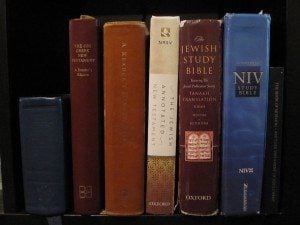
My bookshelf
Mormons have a thing about Doctrine, with a capital D. We try to define it, we argue about it, we prioritize it. We even misquote scripture about “bearing down in pure testimony” (Alma 4:19), er, “pure doctrine” which is not a scriptural phrase, and I’m not even sure what it means. We tend to read scripture looking for doctrine. Sometimes, because of cultural expectations about how to identify doctrine, we can’t see it when it’s right in front of us.
I think we are conditioned to identify simple propositional phrases as “doctrine” like, “tithing is 10% of increase” or “charity is the pure love of Christ.” But what if this is not primarily the way scripture is meant to teach?
Much of the chapters we read today does not contain any sentences like those. It’s stories, instead, and not stories with obvious and pithy moral imperatives for us to follow, like parts of the Gospels, or any “thus we see” from Book of Mormon editors. So, if doctrine is the purpose of scripture, and these stories don’t contain much doctrine… then what’s the point?
I suggest that scripture often teaches in more subtle ways and on a larger scale than the sentence or story level. Often, a point is made by how different stories or passages are arranged; we recognize the point by refocusing our reading and noticing an implicit pattern of comparison between them. This kind of dilberate arrangement-for-contrast happens as well with the Gospels and Old Testament laws. We need to learn to look at the forest, not the trees.
So today, I want to compare the story of Limhi’s people with the story of Alma’s people, and draw some important doctrine from the comparison. In particular, read and reread these stories focused on comparisons of how each group gets into bondage, and how they get out.
They are both in bondage, and require God to deliver them (Mosiah 21:5, Mosiah 24:21)
The bondage of Limhi’s people comes because of sin (namely, living like King Noah, ignoring Abinadi, and killing him. See Mosiah 11:21-25)
The bondage of Alma’s people comes because “the Lord sees fit to try his people.” (Mosiah 22:21-22)
Limhi’s people try to force their way out of bondage militarily, but are badly beaten every time.(Mos 21:6-12)
Alma’s people support each other, and “submit cheerfully and with patience to all the will of the lord.” (Mosiah 24:15)
In both cases, eventually they humble themselves and turn to God. (Mosiah 21:13-15)
Limhi’s people escape through Gideon’s plan, which takes advantages of the guards drinking to a senseless stupor. (Mosiah 22:5-10. I might ask, why didn’t Gideon think of this sooner? Did God inspire him? The text doesn’t say so, but contrast Mosiah 21:5 which implies divine intervention)
Alma’s people escape through divine intervention, which puts the guards into an unnatural sleep…or senseless stupor. (Mosiah 24:19)
Both groups return to the land of Zarahemla, which they had originally come from.
What’s the doctrine here? Regardless of how you got into whatever mess you’re in, whether sin (Limhi’s people) or just “bad luck” (Alma’s people), the Lord delivers those who humble themselves and put their trust in him. Nephi’s comment about tender mercies…
If I wanted to stretch the metaphor a bit, I would say, this is salvation history. We’re away from our original home, in wilderness. Sometimes evil or misfortune happen to us through no conscious choice of our own, but sometimes we choose it. Either way, the result is that we come into bondage. The only way out is to humble ourselves and depend on God, who delivers us.
Grant Hardy writes in Understanding the Book of Mormon:A Reader’s Guide
Mormon’s literary ambitions can also be seen in the organization of his narratives. While theological implications are never far away, the exact meaning to be gained from comparing similar stories is often left to readers, while Mormon’s skill (and delight) in constructing narratives is clearly evident….
The fact that Mormon tells these stories [of Alma and Limhi] one right after the other encourages us to think of them as a pair, as does some of the distinctive language he employs. In both cases, we read how they “gather(ed) their flocks together,” “depart(ed) … into the wilderness,” and “after being many/twelve days in the wilderness … they arrived in the land of Zarahemla … and (King) Mosiah received them with joy” (Mosiah 22:10, 11, 13, 14; Mosiah 24:18, 20, 25). In addition, the idea that none could deliver them but God appears only four times in the Book of Mormon, each time associated with the peoples of Limhi and Alma:
Mosiah 11:23: “except this people repent and turn unto the Lord their God, they shall be brought into bondage; and none shall deliver them, except it be the Lord the Almighty God” (Abinadi’s initial prophecy to Noah’s people)
Mosiah 23:23: “For behold, I will show unto you that they were brought into bondage, and none could deliver them but the Lord their God, yea, even the God of Abraham and Isaac and of Jacob” (Mormon’s cautious editorial foreshadowing)
Mosiah 24:21: “they poured out their thanks to God because he … had delivered them out of bondage; for they were in bondage, and none could deliver them except it were the Lord their God” (Mormon’s narrative summary)
Alma 36:2: “I would that ye should do as I have done, in remembering the captivity of our fathers; for they were in bondage, and none could deliver them except it was the God of Abraham, and the God of Isaac, and the God of Jacob” (Alma2’s sermon to his son Helaman)
There is thus a similarly happy outcome for both groups, but also a significant difference: extraordinary faith begets extraordinary results. The second deliverance (brought about through a divinely induced sleep) is obviously more miraculous than the first (which depended on the effects of alcohol). Gideon becomes something of a national hero, with a city named in his honor (Alma 6:7), and while there is never a city that bears the name of Alma1 (so far as we know), he is allowed to establish branches of the church through the land of Zarahemla.
The most recent (subscription require) Journal of Book of Mormon Studies has an interview with Grant Hardy about this book as well as several other articles about or responding to his Book of Mormon work.
Tidbits-
- Here’s the collection of articles pertaining to today’s chapters at Book of Mormon Central.
- Mosiah 21:23 Back in Mosiah 18:8-10, we read that the baptismal covenant includes “bearing one another’s burdens, that they may be light.” Well, here they are literally doing just that. Baptism entails duties and responsibilities within a community, as well as support from that community.
- On baptism in Mosiah 18, I’ll repeat some earlier commentary. Baptism is not the covenant itself, but the witness or sign of the covenant we make. At least in modern times, the terms of that covenant are spelled out in the pre-baptismal interview, where the baptisee must verbally agree to the terms of the baptismal covenant; otherwise, they don’t get baptized. This does not seem to be in force for e.g. Acts 8:27-40. Mosiah 18:10 says that our baptism serves as “as a witness before [God] that [we] have entered into a covenant” and Alma 7:15 similar says “show unto your God that ye are willing to repent of your sins and enter into a covenant with him to keep his commandments, and witness it unto him this day by going into the waters of baptism.” Thus did Joseph Smith preach that “Baptism is a sign to God, to angels to heaven that we do the will of God ” Words of Joseph Smith, 108. The association of a public witness or visible sign with a covenant goes all the way back to Genesis 9:12-13, and Genesis 17:11, and is found elsewhere too.
As always, you can help me pay my tuition here, or you can support my work through making your regular Amazon purchases through this Amazon link. You can also get updates by email whenever a post goes up (subscription box on the right). If you friend me on Facebook, please drop me a note telling me you’re a reader. I tend not to accept friend requests from people I’m not acquainted with.
Previous Post

May 15, 2016
Mormons, Evangelicals, Tradition, and Sunday School
Next Post
June 3, 2016 Scripture, Context, and Genres: Scattered Reading
Browse Our Archives
Select a Category ancient languages Announcements Book of Mormon books D&C evolution Genesis Gospel Doctrine Gospel Doctrine Resources history LDS Church History New Testament Old Testament prophets science and religion scripture study Seminary teaching temple Uncategorized
Select a Month August 2019 July 2019 June 2019 March 2019 January 2019 December 2018 November 2018 October 2018 September 2018 August 2018 July 2018 June 2018 May 2018 April 2018 March 2018 February 2018 January 2018 December 2017 November 2017 October 2017 September 2017 August 2017 July 2017 June 2017 May 2017 April 2017 March 2017 February 2017 January 2017 December 2016 November 2016 October 2016 September 2016 August 2016 July 2016 June 2016 May 2016 April 2016 March 2016 February 2016 January 2016 December 2015 November 2015 October 2015 September 2015 August 2015 July 2015 June 2015 May 2015 April 2015 March 2015 February 2015 January 2015 November 2014 October 2014 July 2014 June 2014 May 2014 April 2014 March 2014 February 2014 January 2014 January 2010 December 2009
Follow Us!
TAKE THE
Religious Wisdom Quiz
What did the prodigal son ask his father for?
Select your answer to see how you score.
A new home A wife A sword His inheritance
Related posts from Benjamin the Scribe
Mormon Said It, I Believe It, That Settles...

An Easter Post: Refugees, Mormons, and the Law...

BoM Gospel Doctrine Lesson 45-46: Ether

BoM Gospel Doctrine Lesson 43-44: Mormon 1-9
TRENDING AT PATHEOS Latter-day Saint

Did Prayer Cure His Cancer? Or Was It...
At 4 AM one morning, Joshua W. Brown’s wife awoke to a...

8 Ways a Near-Death Experience Rewires the Soul
Does Consciousness Survive Physical Death? After 50 Years of Research, Dr. Raymond...

Holy Longing: What Our Restlessness Is Telling Us
“One can find so many pains when the rain is falling.” -John...

What this is NOT about. This blog is definitely not about...

Who said the Israelites were God’s chosen? That’s right, they did. Who...

The Spirit World Is the Real World: God...
A Monk’s Wisdom on Body and Spirit I sit with Brother Martin...
view all Latter-day Saint blogs
Ad-Free & Subscriber Log-In Subscription Support
- About Us
- 2026 Calendar
- Videos
- Podcasts
- Library of World Religions
- Faith In Media Tracker
- Advertise With Us
- Write for Us
- Privacy Policy
- Terms of Service
- Do Not Sell My Data
- Contact Us
- Radiant Digital
- Manage Newsletter Subscriptions
- Unsubscribe From Notifications
- Sitemap
Copyright 2008-2026, Patheos. All rights reserved.
Subscription Support Ad-Free & Subscriber Log-In
Follow Patheos