
BuddhistCatholicContemplativeEvangelicalGeneral ChristianHinduJewishLatter-day SaintMuslimNew VisionsProgressive Christian
Beliefs
- Buddhist
- Catholic
- Contemplative
- Evangelical
- General Christian
- Hindu
- Jewish
- Latter-day Saint
- More Voices
- Muslim
- New Visions
- Pagan
- Progressive Christian
Topics
- Religion News
- Food and Religion
- Sports and Religion
- Religious Art
- Religious Music and Entertainment
- Religious Events
- History and Religion
- Style and Religion
- Politics and Religion
- Women in Religion
- Recreation Outdoors and Religion
- Business Finance and Religion
- Careers Workplace and Religion
- Education and Religion
- Family Parenting and Religion
- Health Fitness and Religion
- Home and Religion
- Relationships and Religion
- Technology and Religion
- Travel and Religion
Columnists
- Buddhist Columnists
- Business Finance and Religion Columnists
- Careers Workplace and Religion Columnists
- Catholic Columnists
- Contemplative Columnists
- Education and Religion Columnists
- Evangelists Columnists
- Family Parenting and Religion Columnists
- General Christian Columnists
- Health Fitness and Religion Columnists
- Hindu Columnists
- History and Religion Columnists
- Home and Religion Columnists
- Jewish Columnists
- More Voices Columnists
- Latter Day Columnists
- Muslim Columnists
- New Visions Columnists
- Nonreligious Columnists
- Pagan Columnists
- Politics and Religion Columnists
- Progressive Columnists
- Recreation Outdoors and Religion Columnists
- Relationships and Religion Columnists
- Religion News Columnists
- Religious Art Columnists
- Religious Events Columnists
- Religious Music and Entertainment Columnists
- Sports and Religion Columnists
- Style and Religion Columnists
- Technology and Religion Columnists
- Travel and Religion Columnists
- Women in Religion Columnists
Resource Library
- 2026 Calendar
- Library of World Religions
- The 100 Most Holy Places on Earth
- Patheos Answers
- Podcasts
- Videos
- Faith Leaders Database
- Anglican Episcopalian
- Bahai
- Baptist
- Buddhism
- Christianity
- Confucianism
- Eastern Orthodoxy
- Hinduism
- Holiness and Pentecostal
- ISKCON
- Islam
- Judaism
- Lutheran
- Methodist
- The Church of Jesus Christ of Latter-day Saints
- New Age
- Paganism
- Presbytarian and Reformed
- Protestantism
- Religion Behind the Scenes
- Roman Catholic
- Scientology
- Shia Islam
- Sikhism
- Sufism
- Sunni Islam
- Taoism
- Zen
- See all religions
Research Tools
 Ad-Free & Subscriber Log-In Subscription Support
Follow Patheos 

- Trending:
- Advent
- |
- Forgiveness
- |
- Thanksgiving
- |
- Election
- |
- Seasonal Holidays
- |
- Marriage
 Benjamin the Scribe
- Home
- Latter-day Saint
- BoM Gospel Doctrine Lesson 13: Jacob 5-7
BoM Gospel Doctrine Lesson 13: Jacob 5-7
Last updated on: March 29, 2016 at 10:18 pm by Ben Spackman
BoM Gospel Doctrine Lesson 13: Jacob 5-7 2016-03-29T22:18:04-05:00 Ben Spackman
Patheos Explore the world's faith through different perspectives on religion and spirituality! Patheos has the views of the prevalent religions and spiritualities of the world.
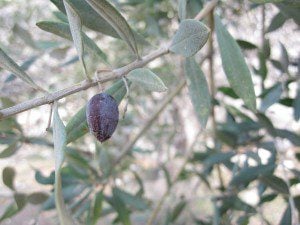
My picture, from the Kidron Valley.
The previous lesson covered Jacob 1-4, and this one the lengthy allegory of the olive tree and its interpretation in chapters 5-6. This is understandable from a how-much-material-can-I-really-cover perspective, but there’s a way in which this division obscures important things.
Let me give some background that leads in. The Bible did not originally have chapter or verse divisions, and of course, these non-existent breaks were not numbered. The Hebrew Bible, however, did have loose “paragraph” breaks, represented in the KJV with a paragraph marker, ❡.
This is why within the Bible itself, no one ever quotes another scripture by chapter or verse number; you couldn’t get more specific than using the traditional author’s name, e.g. “as Isaiah said” or the general section (Law, Prophets, Writings), e.g. Luke 24:44. Sometimes references were even more loose as to their source. Hebrews 2:5 prefaces a quote of Psalm 8:4 with a degree of vagueness at home on a junior high history test, “someone has testified somewhere that…” I dunno, like David in the psalms mebbe? Shrug. (Minus two points, says the teacher.) According to tradition, during the 13th century, Stephen Langton, archbishop of Canterbury created the modern chapter breaks during his commute. Since his commute was by horse, not the smoothest of conveyances, the chapter divisions aren’t always entirely logical. (For more on this, see here, or this book.)
When it comes to the Book of Mormon, the 1830 chapter divisions were based on breaks on the plates, sometimes long, sometimes short. However, our current chapter divisions don’t correspond to the 1830 chapters, as you can see from the chart here (also available in pdf). For the 1879 version, Orson Pratt divided it up into verses and shortened the chapters, into what we have today. Well, so what?
One of the most important factors to understanding scripture is context, of which there are several kinds. The most relevant here is what I call context-on-the-page, that is, what comes immediately before and after a given line, verse, chapter, etc. Although verse divisions and numbers make it easier to find something, it also encourages us to read that verse as if it’s a distinct and separate thought from what comes before and after, and this kind of distancing from immediate context leads to proof-texting, also known as “wresting the scriptures.” (There’s an entire issue with this, but it’s beyond the scope of my pst. Basically, scriptural authors routinely ignore context in interpreting other scriptures, as Nephi does in 1 Nephi 19:23 and the Isaiah chapters.)
I used to ask my BYU and institute students, why does Jacob quote the allegory of the olive tree? What’s his point? And I got puzzled stares. As a separate chapter, it was just, you know, Jacob’s turn to talk, and this is what he wanted to talk about, right? It’s Jacob’s General Conference talk?
As you can see from the chart I linked to earlier, and this scan of the 1830 Book of Mormon at the Joseph Smith papers, Jacob 4-5 were originally one chapter. If, however, you are doing your reading based on chapters, you’ll read Jacob 5 on a different day, a different Sunday, than the day you read Jacob 4, because those chapters have been split up.
Again, so what?
The end of Jacob 4 mentions “the Jews” several times, which has a fuzzy referent in the Book of Mormon. (Is it modern Jews? Is it Judeans? Is it those at Jerusalem, as Nephi says?) In any case, Jacob says that the Jews will reject Jesus, “the stone upon which they might build.” Then he asks an important question in v. 17
And now, my beloved, how is it possible that these, after having rejected the sure foundation, can ever build upon it, that it may become the head of their corner?
Having set up the question, Jacob says, “Well, I’ll tell you.”
Behold, my beloved brethren, I will unfold this mystery unto you.
And then… CHAPTER BREAK!
Chapter 5 is a lengthy response to the question Jacob sets up at the end of chapter 4. Chapter 5 is thus not an independent, General Conference talk. But if you completely separate chapter 4 from 5 (as our lessons do), you’ll be missing important context framing that long long chapter, explaining why he tells it.
And this is why it’s important to pay attention to context-on-the-page.
Joseph Smith knew this. When it came to interpreting scripture, he suggested looking to context.
“I have a key by which I understand the scriptures. I enquire, what was the question which drew out the answer, or caused Jesus to utter the parable?… To ascertain its meaning, we must dig up the root and ascertain what it was that drew the saying out of Jesus.” –TPJS, p.276
As for the content of chapter 5, that’s fairly well known, and I don’t have a lot to say about it. The Olive Tree allegory has generated a lot of discussion, including a series of essays here. BYU Studies has some useful charts here, here, and here.
Note also, that Jacob 5 constitutes one obvious example of different genres in scripture. Parable is one obvious one, and here (though the term isn’t used in the Book of Mormon itself), we call this the allegory of the Olive tree. Aspects of the allegory generally have a one-to-one correspondence to peoples and historical changes.
The ancient world had a variety of genres, just as the modern world does. However, in translation, in another culture with a different worldview, we can’t always recognize those genres anymore, as Elder Widtsoe hinted at.
As in all good books every literary device is used in the Bible [and other scripture] that will drive the lesson home. It contains history, poetry and allegory [and other genres too]. These are not always distinguishable, now that the centuries have passed away since the original writing.- Widtsoe, In Search of Truth, 1930 (my emphasis.) You can download the entire book here or read a good excerpt at Keepapitchinin, a good Mormon history blog.
Tidbits
Jacob 6:6– “Yea, today, if ye will hear his voice, harden not your hearts; for why will ye die?” This kind of rhetoric is found in Deuteronomy, emphasizing the blessings and cursings of the covenant.
28:15-19 See, I have set before you today life and prosperity, death and adversity. If you obey the commandments of the LORD… then you shall live…and the LORD your God will bless you in the land that you are entering to possess.
17 But if your heart turns away… 18 I declare to you today that you shall perish; you shall not live long in the land that you are crossing the Jordan to enter and possess.19 I call heaven and earth to witness against you today that I have set before you life and death, blessings and curses. Choose life so that you and your descendants may live,
Similar rhetoric is found in the prophets who echo the Deuteronomistic covenant language, such as Jeremiah 21:8, 27:13, but especially Ezekiel, writing in Babylon after the destruction of Israel (and thus not on the Brass Plates). Note that shūv, translated as “turn back” could also be translated as “repent.”
Eze 33:11- Say to them, As I live, says the Lord GOD, I have no pleasure in the death of the wicked, but that the wicked turn from their ways and live; turn back, turn back from your evil ways; for why will you die, O house of Israel?
Eze 18:31- Cast away from you all the transgressions that you have committed against me, and get yourselves a new heart and a new spirit! Why will you die, O house of Israel? 32 For I have no pleasure in the death of anyone, says the Lord GOD. Turn, then, and live.
Jacob 7- Here we meet the first of the unholy trinity in the Book of Mormon: Sherem, Nehor (Alma 1), and Korihor (Alma 30). Sherem undercuts the most basic part of the gospel, that of a redeeming messiah. However, Jacob, because of his personal experiences (7:5), “could not be shaken.” Compare Paul’s experience in 1Co 2:5, and 1Co 2:14, and my post here.
As always, you can support my work through making your regular Amazon purchases through this Amazon link. Or you can donate directly here.

You can also get updates by email whenever a post goes up (subscription box on the right). If you friend me on Facebook, please drop me a note telling me you’re a reader. I tend not to accept friend requests from people I’m not acquainted with.
Previous Post
March 19, 2016
BoM Gospel Doctrine Lesson 12: Jacob 1-4
Next Post

March 27, 2016 An Easter Post: Refugees, Mormons, and the Law of Moses
Browse Our Archives
Select a Category ancient languages Announcements Book of Mormon books D&C evolution Genesis Gospel Doctrine Gospel Doctrine Resources history LDS Church History New Testament Old Testament prophets science and religion scripture study Seminary teaching temple Uncategorized
Select a Month August 2019 July 2019 June 2019 March 2019 January 2019 December 2018 November 2018 October 2018 September 2018 August 2018 July 2018 June 2018 May 2018 April 2018 March 2018 February 2018 January 2018 December 2017 November 2017 October 2017 September 2017 August 2017 July 2017 June 2017 May 2017 April 2017 March 2017 February 2017 January 2017 December 2016 November 2016 October 2016 September 2016 August 2016 July 2016 June 2016 May 2016 April 2016 March 2016 February 2016 January 2016 December 2015 November 2015 October 2015 September 2015 August 2015 July 2015 June 2015 May 2015 April 2015 March 2015 February 2015 January 2015 November 2014 October 2014 July 2014 June 2014 May 2014 April 2014 March 2014 February 2014 January 2014 January 2010 December 2009
Follow Us!
TAKE THE
Religious Wisdom Quiz
True or False: According to Hebrews, faith is the substance of things hoped for and the evidence of things not seen.
Select your answer to see how you score.
FALSE TRUE
Related posts from Benjamin the Scribe
Mormon Said It, I Believe It, That Settles...

An Easter Post: Refugees, Mormons, and the Law...
BoM Gospel Doctrine Lesson 45-46: Ether

BoM Gospel Doctrine Lesson 43-44: Mormon 1-9
TRENDING AT PATHEOS Latter-day Saint

Did Prayer Cure His Cancer? Or Was It...
At 4 AM one morning, Joshua W. Brown’s wife awoke to a...

8 Ways a Near-Death Experience Rewires the Soul
Does Consciousness Survive Physical Death? After 50 Years of Research, Dr. Raymond...

Holy Longing: What Our Restlessness Is Telling Us
“One can find so many pains when the rain is falling.” -John...

What this is NOT about. This blog is definitely not about...

Who said the Israelites were God’s chosen? That’s right, they did. Who...

The Spirit World Is the Real World: God...
A Monk’s Wisdom on Body and Spirit I sit with Brother Martin...
view all Latter-day Saint blogs
Ad-Free & Subscriber Log-In Subscription Support
- About Us
- 2026 Calendar
- Videos
- Podcasts
- Library of World Religions
- Faith In Media Tracker
- Advertise With Us
- Write for Us
- Privacy Policy
- Terms of Service
- Do Not Sell My Data
- Contact Us
- Radiant Digital
- Manage Newsletter Subscriptions
- Unsubscribe From Notifications
- Sitemap
Copyright 2008-2026, Patheos, part of the Radiant Digital network of media brands. All rights reserved.
Subscription Support Ad-Free & Subscriber Log-In
Follow Patheos