
BuddhistCatholicContemplativeEvangelicalGeneral ChristianHinduJewishLatter-day SaintMuslimNew VisionsProgressive Christian
Beliefs
- Buddhist
- Catholic
- Contemplative
- Evangelical
- General Christian
- Hindu
- Jewish
- Latter-day Saint
- More Voices
- Muslim
- New Visions
- Pagan
- Progressive Christian
Topics
- Religion News
- Food and Religion
- Sports and Religion
- Religious Art
- Religious Music and Entertainment
- Religious Events
- History and Religion
- Style and Religion
- Politics and Religion
- Women in Religion
- Recreation Outdoors and Religion
- Business Finance and Religion
- Careers Workplace and Religion
- Education and Religion
- Family Parenting and Religion
- Health Fitness and Religion
- Home and Religion
- Relationships and Religion
- Technology and Religion
- Travel and Religion
Columnists
- Buddhist Columnists
- Business Finance and Religion Columnists
- Careers Workplace and Religion Columnists
- Catholic Columnists
- Contemplative Columnists
- Education and Religion Columnists
- Evangelists Columnists
- Family Parenting and Religion Columnists
- General Christian Columnists
- Health Fitness and Religion Columnists
- Hindu Columnists
- History and Religion Columnists
- Home and Religion Columnists
- Jewish Columnists
- More Voices Columnists
- Latter Day Columnists
- Muslim Columnists
- New Visions Columnists
- Nonreligious Columnists
- Pagan Columnists
- Politics and Religion Columnists
- Progressive Columnists
- Recreation Outdoors and Religion Columnists
- Relationships and Religion Columnists
- Religion News Columnists
- Religious Art Columnists
- Religious Events Columnists
- Religious Music and Entertainment Columnists
- Sports and Religion Columnists
- Style and Religion Columnists
- Technology and Religion Columnists
- Travel and Religion Columnists
- Women in Religion Columnists
Resource Library
- 2026 Calendar
- Library of World Religions
- The 100 Most Holy Places on Earth
- Patheos Answers
- Podcasts
- Videos
- Faith Leaders Database
- Anglican Episcopalian
- Bahai
- Baptist
- Buddhism
- Christianity
- Confucianism
- Eastern Orthodoxy
- Hinduism
- Holiness and Pentecostal
- ISKCON
- Islam
- Judaism
- Lutheran
- Methodist
- The Church of Jesus Christ of Latter-day Saints
- New Age
- Paganism
- Presbytarian and Reformed
- Protestantism
- Religion Behind the Scenes
- Roman Catholic
- Scientology
- Shia Islam
- Sikhism
- Sufism
- Sunni Islam
- Taoism
- Zen
- See all religions
Research Tools
 Ad-Free & Subscriber Log-In Subscription Support
Follow Patheos 

- Trending:
- Advent
- |
- Forgiveness
- |
- Thanksgiving
- |
- Election
- |
- Seasonal Holidays
- |
- Marriage
 Benjamin the Scribe
- Home
- Latter-day Saint
- BoM Gospel Doctrine Lesson 11: 2Ne 31-33
BoM Gospel Doctrine Lesson 11: 2Ne 31-33
Last updated on: March 19, 2016 at 7:41 pm by Ben Spackman
BoM Gospel Doctrine Lesson 11: 2Ne 31-33 2016-03-19T19:41:29-05:00 Ben Spackman
Patheos Explore the world's faith through different perspectives on religion and spirituality! Patheos has the views of the prevalent religions and spiritualities of the world.
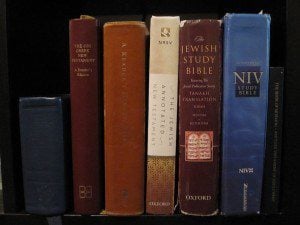
My bookshelf
These chapters are Nephi’s literary swan song, his winding down. He’s now in the position Lehi was in 2 Nephi 1-4, that is, old, preparing for his exit, and wanting to leave behind some words of guidance and distilled wisdom…. which makes for some interesting comparisons. Whereas Lehi spoke to his immediate children, Nephi speaks to his descendants and people. Notably, the closing arguments of Nephi’s life as the basics of the Gospel. He pleads with people to repent (31:11, 13, 17), be baptized (31:4-14), receive the Holy Ghost (31:12-14), and endure to the end (31:15-16, 19-20). This, according to the Book of Mormon, is the Gospel (see Noel Reynolds here for a shorter summary and here for an Ensign version.) The rest is just details or, as Joseph Smith called them, “appendages.”
Related to this is the logical-but-wrong idea that “fulness of the Gospel” includes all those “details” like eternal marriage, baptism for the dead, three degrees of glory, etc. The Book of Mormon, as is well known, is said to contain “the fulness of the gospel” but these things are not really mentioned in the Book of Mormon (although on becoming-as-God, see 3 Nephi 28:1), probably because the Nephite prophets didn’t know about them. Remember that line-upon-line thing. Also of interest is that the 1981 edition Introduction also said that the Bible too contained the fulness of the Gospel. (See this LDS history blog for data and discussion.)
But for outsiders who assume the Book of Mormon is The Mormon Bible, they are surprised (and often critical) to find that the it doesn’t forbid alcohol, or talk about endowment sessions, or any number of other uniquely Mormon things. The implication, then, is that “fulness of the gospel” does not mean a comprehensive laundry list of every practice, doctrine, policy, or ordinance, but is defining “the gospel” narrowly as the good news of Jesus’ salvation… as we saw Nephi (and Noel Reynolds) just do. For more on this aspect, see here.
31:3 “For the Lord God giveth light unto the understanding; for he speaketh unto men according to their language, unto their understanding.” I think one can parse this language in several ways, but it’s strikingly similar to D&C 1:24.
Behold, I am God and have spoken it; these commandments are of me, and were given unto my servants in their weakness, after the manner of their language, that they might come to understanding.
Both passages touch on the idea of accommodation, that God must adapt his message and commands to mankind’s fallen state. At minimum, this means language, but also extends to knowledge, culture, and worldview. This accommodative principle comes out of the Bible, was used extensively by Christians and Jews (including Jesus), and also has support from Joseph Smith, Brigham Young, and a dozen other General Authorities. I’ve got a chapter on this in my book with plenty of citations, but in the meantime, you can watch my presentation on it from BYU’s New Testament Commentary conference last summer. I adapted my research to fit the conference topic of Corinthians, where it turned out to fit quite naturally.
31:5 -“if the Lamb of God, he being holy, should have need to be baptized by water, to fulfil all righteousness, O then, how much more need have we, being unholy, to be baptized, yea, even by water!” Nephi makes a classic Jewish qal wahomer (pronounced “call wah hoe-MER) argument for baptism. The phrase literally means “light and heavy” and reasons from lesser to greater or vice-versa. That is, if something applies in a small case, surely it applies even more in a large case! This type of rhetoric/argument occurs in Old Testament (Pro. 12:3, 11:31, Jer 12:5, Eze 15:5, Exo 6:12, Genesis 44:8, etc.) but much more explicitly in the Talmud and New Testament, e.g. Matt 6:30, John 7:23, Rom 5:15, 2Co 3:7-11, etc.)
31:13-15 Baptism is not the covenant itself, but the witness or sign of the covenant we make. (At least in modern times, the terms of that covenant are spelled out in the pre-baptismal interview, where the baptisee must verbally agree to the terms of the baptismal covenant; otherwise, they don’t get baptized. This does not seem to be in force for e.g. Acts 8:27-40.) Mosiah 18:10 says that our baptism serves as “as a witness before [God] that [we] have entered into a covenant” and Alma 7:15 similar says “show unto your God that ye are willing to repent of your sins and enter into a covenant with him to keep his commandments, and witness it unto him this day by going into the waters of baptism.” Thus did Joseph Smith preach that “Baptism is a sign to God, to angels to heaven that we do the will of God ” Words of Joseph Smith, 108. The association of a public witness or visible sign with a covenant goes all the way back to Genesis 9:12-13, and Genesis 17:11, and is found elsewhere too.
31:19 “And now, my beloved brethren, after ye have gotten into this strait and narrow path, I would ask if all is done? Behold, I say unto you, Nay; for ye have not come thus far save it were by the word of Christ with unshaken faith in him, relying wholly upon the merits of him who is mighty to save.” I aways liked the phrase “mighty to save.” It’s an odd English construction, but the phrase appears in Isa. 63:1, and the construction elsewhere in the Old Testament (e.g. “near to flee” Gen 19:20) More importantly, when it comes to salvation and we are baptized people, upon whose merits do we rely? Our own? No, still on Christ’s merits! See my lengthy discussion on grace and works here.
32:8 Said Brigham Young, on the subject of not praying,
When we neglect any one of these duties, the enemy says, “I have made so much ground.” If the Devil can induce an Elder to drink a little, he is not satisfied with this triumph, but says to him, “Your wife and children know it, don’t pray tonight.” The Elder says to his family, “I feel tired tonight, we won’t have prayers.” The enemy says, “I have gained another point.” You indulge still further, and you will find other excuses. Your head is not right, your heart is not right, your conscience is not right, and you retire again without praying. By and by, you begin to doubt something the Lord has revealed to us, and it is not long before such a one is led away captive of the Devil. JD 18:216.- Discourses of Brigham Young, p. 81
33:2-3 “I Nephi, have written what I have written, and I esteem it as of great worth…” Back to 1Ne 19:6-7. Nephi’s writing what he thinks is worthwhile and important, and at this point, he says “Yeah, well… Those plates are all inscribed now, and I think it’s good.” Could he have done it better? Maybe. We acknowledge potential errors in judgment and writing from the get-go in the Book of Mormon, with the Title Page, c.f. Mormon 8:17, 9:31.
As always, you can support my work through making your regular Amazon purchases through this Amazon link. Or you can donate directly here.

You can also get updates by email whenever a post goes up (subscription box on the right). If you friend me on Facebook, please drop me a note telling me you’re a reader. I tend not to accept friend requests from people I’m not acquainted with.
Previous Post
March 14, 2016
Ten Intro Books For Getting a Handle on the Early Chapters of Genesis
Next Post

March 19, 2016 BoM Gospel Doctrine Lesson 12: Jacob 1-4
Browse Our Archives
Select a Category ancient languages Announcements Book of Mormon books D&C evolution Genesis Gospel Doctrine Gospel Doctrine Resources history LDS Church History New Testament Old Testament prophets science and religion scripture study Seminary teaching temple Uncategorized
Select a Month August 2019 July 2019 June 2019 March 2019 January 2019 December 2018 November 2018 October 2018 September 2018 August 2018 July 2018 June 2018 May 2018 April 2018 March 2018 February 2018 January 2018 December 2017 November 2017 October 2017 September 2017 August 2017 July 2017 June 2017 May 2017 April 2017 March 2017 February 2017 January 2017 December 2016 November 2016 October 2016 September 2016 August 2016 July 2016 June 2016 May 2016 April 2016 March 2016 February 2016 January 2016 December 2015 November 2015 October 2015 September 2015 August 2015 July 2015 June 2015 May 2015 April 2015 March 2015 February 2015 January 2015 November 2014 October 2014 July 2014 June 2014 May 2014 April 2014 March 2014 February 2014 January 2014 January 2010 December 2009
Follow Us!
TAKE THE
Religious Wisdom Quiz
I am the command to love the Lord your God with all your heart, soul, and strength. What am I?
Select your answer to see how you score.
The Shema The 8th Commandment The Golden Rule The law of Moses
Related posts from Benjamin the Scribe
Mormon Said It, I Believe It, That Settles...

An Easter Post: Refugees, Mormons, and the Law...

BoM Gospel Doctrine Lesson 45-46: Ether

BoM Gospel Doctrine Lesson 43-44: Mormon 1-9
TRENDING AT PATHEOS Latter-day Saint

Did Prayer Cure His Cancer? Or Was It...
At 4 AM one morning, Joshua W. Brown’s wife awoke to a...

8 Ways a Near-Death Experience Rewires the Soul
Does Consciousness Survive Physical Death? After 50 Years of Research, Dr. Raymond...

Holy Longing: What Our Restlessness Is Telling Us
“One can find so many pains when the rain is falling.” -John...

What this is NOT about. This blog is definitely not about...

Who said the Israelites were God’s chosen? That’s right, they did. Who...

The Spirit World Is the Real World: God...
A Monk’s Wisdom on Body and Spirit I sit with Brother Martin...
view all Latter-day Saint blogs
Ad-Free & Subscriber Log-In Subscription Support
- About Us
- 2026 Calendar
- Videos
- Podcasts
- Library of World Religions
- Faith In Media Tracker
- Advertise With Us
- Write for Us
- Privacy Policy
- Terms of Service
- Do Not Sell My Data
- Contact Us
- Radiant Digital
- Manage Newsletter Subscriptions
- Unsubscribe From Notifications
- Sitemap
Copyright 2008-2026, Patheos, part of the Radiant Digital network of media brands. All rights reserved.
Subscription Support Ad-Free & Subscriber Log-In
Follow Patheos