
BuddhistCatholicContemplativeEvangelicalGeneral ChristianHinduJewishLatter-day SaintMuslimNew VisionsProgressive Christian
Beliefs
- Buddhist
- Catholic
- Contemplative
- Evangelical
- General Christian
- Hindu
- Jewish
- Latter-day Saint
- More Voices
- Muslim
- New Visions
- Pagan
- Progressive Christian
Topics
- Religion News
- Food and Religion
- Sports and Religion
- Religious Art
- Religious Music and Entertainment
- Religious Events
- History and Religion
- Style and Religion
- Politics and Religion
- Women in Religion
- Recreation Outdoors and Religion
- Business Finance and Religion
- Careers Workplace and Religion
- Education and Religion
- Family Parenting and Religion
- Health Fitness and Religion
- Home and Religion
- Relationships and Religion
- Technology and Religion
- Travel and Religion
Columnists
- Buddhist Columnists
- Business Finance and Religion Columnists
- Careers Workplace and Religion Columnists
- Catholic Columnists
- Contemplative Columnists
- Education and Religion Columnists
- Evangelists Columnists
- Family Parenting and Religion Columnists
- General Christian Columnists
- Health Fitness and Religion Columnists
- Hindu Columnists
- History and Religion Columnists
- Home and Religion Columnists
- Jewish Columnists
- More Voices Columnists
- Latter Day Columnists
- Muslim Columnists
- New Visions Columnists
- Nonreligious Columnists
- Pagan Columnists
- Politics and Religion Columnists
- Progressive Columnists
- Recreation Outdoors and Religion Columnists
- Relationships and Religion Columnists
- Religion News Columnists
- Religious Art Columnists
- Religious Events Columnists
- Religious Music and Entertainment Columnists
- Sports and Religion Columnists
- Style and Religion Columnists
- Technology and Religion Columnists
- Travel and Religion Columnists
- Women in Religion Columnists
Resource Library
- 2026 Calendar
- Library of World Religions
- The 100 Most Holy Places on Earth
- Patheos Answers
- Podcasts
- Videos
- Faith Leaders Database
- Anglican Episcopalian
- Bahai
- Baptist
- Buddhism
- Christianity
- Confucianism
- Eastern Orthodoxy
- Hinduism
- Holiness and Pentecostal
- ISKCON
- Islam
- Judaism
- Lutheran
- Methodist
- The Church of Jesus Christ of Latter-day Saints
- New Age
- Paganism
- Presbytarian and Reformed
- Protestantism
- Religion Behind the Scenes
- Roman Catholic
- Scientology
- Shia Islam
- Sikhism
- Sufism
- Sunni Islam
- Taoism
- Zen
- See all religions
Research Tools
 Ad-Free & Subscriber Log-In Subscription Support
Ad-Free & Subscriber Log-In Subscription Support
Follow Patheos 

- Trending:
- Forgiveness
- |
- Marriage
- |
- Consciousness
- |
- Death Penalty
- |
- Election
- |
- Halloween
 Beneath the Moon
- Home
- Pagan
- The Art of Ritual: Inviting Deity
The Art of Ritual: Inviting Deity
Last updated on: February 21, 2020 at 8:30 am by Rachel Patterson
The Art of Ritual: Inviting Deity 2020-02-11T10:52:43+01:00 Rachel Patterson
Patheos Explore the world's faith through different perspectives on religion and spirituality! Patheos has the views of the prevalent religions and spiritualities of the world.
The Art of Ritual: Why do we invite deity?
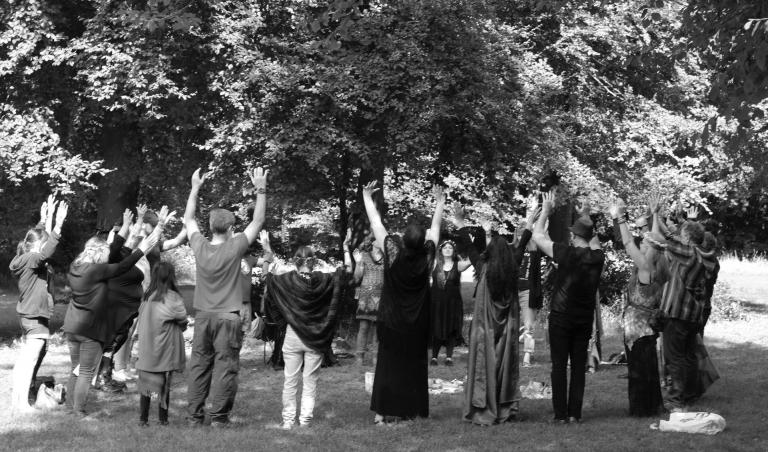
Usually deity is invited to join a ritual, which ones to invite is again, personal choice. Some groups may only work with specific deities whatever ritual they are performing, some will work with deities specific to the sabbat, some will call upon an all encompassing deity and just invite “The Lord and Lady” to join the rite. In coven rituals the Goddess and the God are often invited in by the High Priest or the High Priestess, but of course again if you are a solitary you will be doing all the calling. If you don’t work with deity you could just call upon Mother Earth and Father Sky, or you don’t have to include deity in your ritual at all.
Why invite deity? Well there are many reasons; we want to honour them, we would like them to witness the ritual, we would like them to enjoy the ritual, we ask for their wisdom, guidance and protection, we would like them to receive our offerings, we would like them to add their energy to our workings and to give us their blessings. The Gods can help teach us valuable lessons; they can influence our magical workings, increase our knowledge and inner strength and be there for us when we need support. But they also force us to take responsibility for our own actions and have a habit of kicking butt when necessary…
Bear in mind that each and every person may have a different perspective on deity and the divine, no one is wrong, no one is right, it just is. There are many, many aspects to deity and the divine from the gods in all their various pantheons (some of which are decidedly similar across the cultures) from nature spirits, to angels to demons. Most pagans (and I say most, this isn’t the case for everyone) will have a polytheistic belief which means instead of one god we have a whole heap load of them. My thoughts are these…deity is a huge multifaceted diamond, as one it is the divine (for me the goddess but with both feminine and masculine energies), but each facet is a different personality of deity which translate into all the different pantheons and deities therein. Of course…just because I believe it does not make it the ultimate answer.
I work with the gods to support me in my spiritual journey, over the years I have worked with many different pantheons and even more individual deities, each one has come to me for a particular reason to share their own unique energies, characteristics and wisdom. I haven’t always liked what they had to say or show me and sometimes I have fought against it but ultimately they have been there to do what was best for me.
Some traditions will only invite a goddess into the ritual preferring to work only with the feminine energy and this works well, especially in women only covens, moon circles and red tent rituals. In all of our coven rituals we bring in both the goddess and the god so that we have a balance, as we have both male and female members in the ritual it is how we prefer to work.
Who do you call?
As with most pagan questions there are many answers (fighting my inner 80s child who wants to answer with “Ghostbusters”). If you work with a specific pantheon then you might want to stick with deities within that group. If you are working a ritual for a specific sabbat you may choose to work with deities that correspond with the celebration for instance harvest gods and goddesses at Lughnasadh and dark gods and goddesses at Samhain. If you are working a ritual with an intent such as prosperity you might want to invite deities in that are associated with money and abundance.
One of the subjects that often comes up is “can I mix pantheons?” I can only answer this from personal experience…I have stuck with deities from the same pantheon and all has been fine and dandy but I have also mixed and matched. In fact my matron goddess is Celtic and my patron god is Hindu, not the most obvious of pairings but they tolerate each other. The rituals held by my coven tend to be written by a team of people, each one will make a suggestion for a deity they would like to call in, so for each ritual we have four deities; two goddesses and two gods and we have had a totally mixed bag of pantheons…I can report that so far other than a bit of rain we haven’t suffered any bolts of lightning or plagues of locusts. So my recommendation would be to go with your intuition and what works for you. What I would suggest is make sure you know at least a little bit of background about the deities you intend to work with before you invite them in you may not want to invite a powerful warrior god in for a love ritual…
How do you call them?
So you are ready to send out the party invites to the Lord and Lady, what do you do now? You know that I am going to say it’s up to you and personal choice right? However there are traditional ways of doing so. Whichever way you end up doing it always be respectful. A bellow of “oi you lot get over here” will either be ignored or you will pay for it.
Usually the male and female are invited separately. Invite them using their name, their title and say something about their reputation and the specific characteristics they bring with them, basically flatter them. Each invite is usually finished with ‘Hail and welcome’.
Ancestors
Some traditions will also invite their ancestors to join the ritual, the spirits of the land. It could be their own specific ancestors (i.e. grandparents) but it could also be the ancestors of their people so it might be Celtic spirits for instance. It could also be the ancestors of the land that you are standing on especially if you are outside in a forest or at a sacred place.
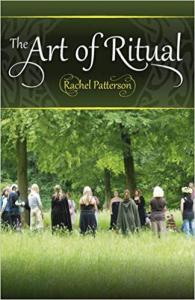
Taken from The Art of Ritual by Rachel Patterson
The Art of Ritual takes you through every step of ritual format from the basics to the more unusual. What ritual is, how to create it, work with it and all the different aspects and stages of putting a ritual together and how to get the best out of it whether you are a solitary or within a group. From set up through the entire process including the cake…this book covers just about all you should need to know to give you the best ritual experience. Drawn from the author’s own teachings and experiences this book also shares a variety or different ritual scripts and suggestions along with those from members of her coven.
Previous Post

February 14, 2020
The Art of Ritual: Calling the Quarters
Next Post

February 28, 2020 Altars: Keep the space…everybody keep the space…
Browse Our Archives
Select a Category Animal Magic Crystal Magic Curative Magic Deity Garden Magic Kitchen Witchcraft Magic Meditation moon magic Recipes Ritual sabbats spells Sun magic Uncategorized Wild Witchcraft
Select a Month January 2022 November 2021 October 2021 August 2021 July 2021 June 2021 May 2021 March 2021 January 2021 December 2020 November 2020 October 2020 September 2020 August 2020 July 2020 June 2020 May 2020 April 2020 March 2020 February 2020 January 2020 December 2019 November 2019 October 2019 September 2019 August 2019 July 2019 May 2019 April 2019 March 2019 February 2019 January 2019 November 2018 October 2018 September 2018 August 2018 July 2018 June 2018 May 2018 April 2018 March 2018 February 2018 January 2018 December 2017 November 2017 October 2017 September 2017 August 2017 July 2017 June 2017 May 2017 April 2017 March 2017 February 2017 January 2017 December 2016 November 2016 October 2016 September 2016 July 2016 June 2016 May 2016 March 2016 January 2016
Follow Us!
TAKE THE
Religious Wisdom Quiz
How many Psalms are attributed to David?
Select your answer to see how you score.
50 40 73 100
Related posts from Beneath the Moon
Course: Goddesses of Ancient Britain
Thoughts about the Triple Goddess
TRENDING AT PATHEOS Pagan

I was recently chatting with someone on Instagram. She asked me what...

While there are many people who share their results, the end of...

On July 23, I saw Christopher Nolan's The Odyssey which is Homer’s...

As I write this two big events have just finished up. One...

Restoring the Watershed of Divine Love
Perhaps cooperation is not something we manufacture through legislation, ideology, or moral...

Many UUs don’t pray because of bad experiences in a previous religion,...
view all Pagan blogs
Ad-Free & Subscriber Log-In Subscription Support
- About Us
- 2026 Calendar
- Videos
- Podcasts
- Library of World Religions
- Faith In Media Tracker
- Advertise With Us
- Write for Us
- Privacy Policy
- Terms of Service
- Do Not Sell My Data
- Contact Us
- Radiant Digital
- Manage Newsletter Subscriptions
- Unsubscribe From Notifications
- Sitemap
Copyright 2008-2026, Patheos. All rights reserved.
Subscription Support Ad-Free & Subscriber Log-In
Follow Patheos