
BuddhistCatholicContemplativeEvangelicalGeneral ChristianHinduJewishLatter-day SaintMuslimNew VisionsProgressive Christian
Beliefs
- Buddhist
- Catholic
- Contemplative
- Evangelical
- General Christian
- Hindu
- Jewish
- Latter-day Saint
- More Voices
- Muslim
- New Visions
- Pagan
- Progressive Christian
Topics
- Religion News
- Food and Religion
- Sports and Religion
- Religious Art
- Religious Music and Entertainment
- Religious Events
- History and Religion
- Style and Religion
- Politics and Religion
- Women in Religion
- Recreation Outdoors and Religion
- Business Finance and Religion
- Careers Workplace and Religion
- Education and Religion
- Family Parenting and Religion
- Health Fitness and Religion
- Home and Religion
- Relationships and Religion
- Technology and Religion
- Travel and Religion
Columnists
- Buddhist Columnists
- Business Finance and Religion Columnists
- Careers Workplace and Religion Columnists
- Catholic Columnists
- Contemplative Columnists
- Education and Religion Columnists
- Evangelists Columnists
- Family Parenting and Religion Columnists
- General Christian Columnists
- Health Fitness and Religion Columnists
- Hindu Columnists
- History and Religion Columnists
- Home and Religion Columnists
- Jewish Columnists
- More Voices Columnists
- Latter Day Columnists
- Muslim Columnists
- New Visions Columnists
- Nonreligious Columnists
- Pagan Columnists
- Politics and Religion Columnists
- Progressive Columnists
- Recreation Outdoors and Religion Columnists
- Relationships and Religion Columnists
- Religion News Columnists
- Religious Art Columnists
- Religious Events Columnists
- Religious Music and Entertainment Columnists
- Sports and Religion Columnists
- Style and Religion Columnists
- Technology and Religion Columnists
- Travel and Religion Columnists
- Women in Religion Columnists
Resource Library
- 2026 Calendar
- Library of World Religions
- The 100 Most Holy Places on Earth
- Patheos Answers
- Podcasts
- Videos
- Faith Leaders Database
- Anglican Episcopalian
- Bahai
- Baptist
- Buddhism
- Christianity
- Confucianism
- Eastern Orthodoxy
- Hinduism
- Holiness and Pentecostal
- ISKCON
- Islam
- Judaism
- Lutheran
- Methodist
- The Church of Jesus Christ of Latter-day Saints
- New Age
- Paganism
- Presbytarian and Reformed
- Protestantism
- Religion Behind the Scenes
- Roman Catholic
- Scientology
- Shia Islam
- Sikhism
- Sufism
- Sunni Islam
- Taoism
- Zen
- See all religions
Research Tools
 Ad-Free & Subscriber Log-In Subscription Support
Ad-Free & Subscriber Log-In Subscription Support
Follow Patheos 

- Trending:
- Forgiveness
- |
- Marriage
- |
- Consciousness
- |
- Death Penalty
- |
- Election
- |
- Halloween
 Beneath the Moon
- Home
- Pagan
- Moon Science
Moon Science
Last updated on: November 8, 2016 at 8:54 pm by Rachel Patterson
Moon Science 2016-11-08T20:54:51+01:00 Rachel Patterson
Patheos Explore the world's faith through different perspectives on religion and spirituality! Patheos has the views of the prevalent religions and spiritualities of the world.
Moon Science
Why is the moon so important? Why do we work with the moon and how come it has so much power over us and the planet? As a witch one of the first things I was taught was to create a moon diary and work with the phases of the moon for spell work and to notice how each phase affected me and my emotions; a moon diary is an excellent way of introducing yourself to moon magic and see exactly what each phase means to you.
I am going to look at possible answers to those questions eventually but first of all we need to start with…
The science bit…

The clever science bods reckon that when the Earth was in its infancy there was no moon at all *gasp*…then on some undetermined date a rogue planet smashed into the Earth like a cosmic game of pool, this caused the rogue planet to be obliterated and knocked a chunk off the side of the Earth too.
This all created a huge cloud of planet debris. The cloud rose up and up and eventually squished together into large particles that orbited the Earth, as time went on the particles all joined forces with each other and eventually et voila…the moon was formed.
Apparently using some clever gadget they can also measure the age of lunar rock and they know it is about 4.6 billion years old.
The moon is 238,900 miles away from the Earth and is 2,160 miles in diameter, that is about one eightieth of the Earth’s mass.
The moon itself has one sixth of the Earth’s gravity – that explains the space men doing the funny slow motion moon walk.
The moon takes about 27.3 days to spin once around on its own axis which is about the same time as it takes for the moon to complete on orbit of the Earth. Which means that the moon is synchronized with the Earth so we only ever see the same face of the moon at all times. What is jokingly called the ‘dark side’ of the moon i.e. the far side has only ever been seen from spacecraft.
What we see of the moon and what shape it is depends on the amount of illuminated moon and is relative to the position of the moon in relation to the earth and the sun. When the sun is directly behind us we see the full face of the moon as the moon is directly in front of us. When the moon is dark, on the new moon, the moon is directly between the Earth and the sun, the light of the sun only illuminates the far side of the moon, which we can’t see.
The moon orbits around the Earth at a whacking 2,300 miles an hour.
It is the gravitational pull from the moon on the Earth that causes the tides of the oceans. Where the ocean faces the moon the pull is strongest and where the ocean faces away from the moon the pull is weakest. These gravitational pulls cause bulges of water on the oceans, these bulges cause the high tides. As the Earth rotates the bulges move, one always facing the moon and the other always opposite. The rotation of the Earth and the combined forces of gravity are the main factors in creating two high tides and two low tides every day.
The lumpy surface of the moon is made up from lots of scars created by objects that hit the moon. Some of the largest scars are 1,500 miles across. At some point in its history the craters were filled with lava, these are the dark areas you can see on the surface of the moon and are referred to as ‘maria’ (a Latin word meaning ‘seas’).
No one has yet discovered a man in the moon or that there is any evidence it was made from cheese…
Previous Post
November 3, 2016
Into the dark depths of November...
Next Post
November 14, 2016 The Moon…what’s yours called?
Browse Our Archives
Select a Category Animal Magic Crystal Magic Curative Magic Deity Garden Magic Kitchen Witchcraft Magic Meditation moon magic Recipes Ritual sabbats spells Sun magic Uncategorized Wild Witchcraft
Select a Month January 2022 November 2021 October 2021 August 2021 July 2021 June 2021 May 2021 March 2021 January 2021 December 2020 November 2020 October 2020 September 2020 August 2020 July 2020 June 2020 May 2020 April 2020 March 2020 February 2020 January 2020 December 2019 November 2019 October 2019 September 2019 August 2019 July 2019 May 2019 April 2019 March 2019 February 2019 January 2019 November 2018 October 2018 September 2018 August 2018 July 2018 June 2018 May 2018 April 2018 March 2018 February 2018 January 2018 December 2017 November 2017 October 2017 September 2017 August 2017 July 2017 June 2017 May 2017 April 2017 March 2017 February 2017 January 2017 December 2016 November 2016 October 2016 September 2016 July 2016 June 2016 May 2016 March 2016 January 2016
Follow Us!
TAKE THE
Religious Wisdom Quiz
Who was the oldest man recorded in Genesis?
Select your answer to see how you score.
Enoch Jared Methuselah Noah
Related posts from Beneath the Moon
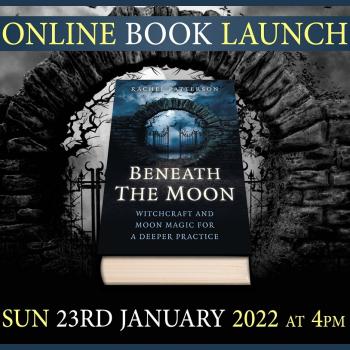
Beneath the Moon: Witchcraft and moon magic for...
Solar Eclipse and Eclipse Magic
Working With Magic in December

October Magic and a Mirror Spell
TRENDING AT PATHEOS Pagan

I was recently chatting with someone on Instagram. She asked me what...

While there are many people who share their results, the end of...

On July 23, I saw Christopher Nolan's The Odyssey which is Homer’s...

As I write this two big events have just finished up. One...

Restoring the Watershed of Divine Love
Perhaps cooperation is not something we manufacture through legislation, ideology, or moral...

Many UUs don’t pray because of bad experiences in a previous religion,...
view all Pagan blogs
Ad-Free & Subscriber Log-In Subscription Support
- About Us
- 2026 Calendar
- Videos
- Podcasts
- Library of World Religions
- Faith In Media Tracker
- Advertise With Us
- Write for Us
- Privacy Policy
- Terms of Service
- Do Not Sell My Data
- Contact Us
- Radiant Digital
- Manage Newsletter Subscriptions
- Unsubscribe From Notifications
- Sitemap
Copyright 2008-2026, Patheos. All rights reserved.
Subscription Support Ad-Free & Subscriber Log-In
Follow Patheos