
BuddhistCatholicContemplativeEvangelicalGeneral ChristianHinduJewishLatter-day SaintMuslimNew VisionsProgressive Christian
Beliefs
- Buddhist
- Catholic
- Contemplative
- Evangelical
- General Christian
- Hindu
- Jewish
- Latter-day Saint
- More Voices
- Muslim
- New Visions
- Pagan
- Progressive Christian
Topics
- Religion News
- Food and Religion
- Sports and Religion
- Religious Art
- Religious Music and Entertainment
- Religious Events
- History and Religion
- Style and Religion
- Politics and Religion
- Women in Religion
- Recreation Outdoors and Religion
- Business Finance and Religion
- Careers Workplace and Religion
- Education and Religion
- Family Parenting and Religion
- Health Fitness and Religion
- Home and Religion
- Relationships and Religion
- Technology and Religion
- Travel and Religion
Columnists
- Buddhist Columnists
- Business Finance and Religion Columnists
- Careers Workplace and Religion Columnists
- Catholic Columnists
- Contemplative Columnists
- Education and Religion Columnists
- Evangelists Columnists
- Family Parenting and Religion Columnists
- General Christian Columnists
- Health Fitness and Religion Columnists
- Hindu Columnists
- History and Religion Columnists
- Home and Religion Columnists
- Jewish Columnists
- More Voices Columnists
- Latter Day Columnists
- Muslim Columnists
- New Visions Columnists
- Nonreligious Columnists
- Pagan Columnists
- Politics and Religion Columnists
- Progressive Columnists
- Recreation Outdoors and Religion Columnists
- Relationships and Religion Columnists
- Religion News Columnists
- Religious Art Columnists
- Religious Events Columnists
- Religious Music and Entertainment Columnists
- Sports and Religion Columnists
- Style and Religion Columnists
- Technology and Religion Columnists
- Travel and Religion Columnists
- Women in Religion Columnists
Resource Library
- 2026 Calendar
- Library of World Religions
- The 100 Most Holy Places on Earth
- Patheos Answers
- Podcasts
- Videos
- Faith Leaders Database
- Anglican Episcopalian
- Bahai
- Baptist
- Buddhism
- Christianity
- Confucianism
- Eastern Orthodoxy
- Hinduism
- Holiness and Pentecostal
- ISKCON
- Islam
- Judaism
- Lutheran
- Methodist
- The Church of Jesus Christ of Latter-day Saints
- New Age
- Paganism
- Presbytarian and Reformed
- Protestantism
- Religion Behind the Scenes
- Roman Catholic
- Scientology
- Shia Islam
- Sikhism
- Sufism
- Sunni Islam
- Taoism
- Zen
- See all religions
Research Tools
 Ad-Free & Subscriber Log-In Subscription Support
Ad-Free & Subscriber Log-In Subscription Support
Follow Patheos 

- Trending:
- Forgiveness
- |
- Marriage
- |
- Consciousness
- |
- Death Penalty
- |
- Election
- |
- Halloween

- Home
- Catholic
- Relationships and Religion
- 6 Misconceptions About the Sacrament of Confession
6 Misconceptions About the Sacrament of Confession
Last updated on: May 27, 2026 at 8:20 am by Jocelyn Soriano
6 Misconceptions About the Sacrament of Confession 2026-05-07T12:21:48+08:00 Jocelyn Soriano
Patheos Explore the world's faith through different perspectives on religion and spirituality! Patheos has the views of the prevalent religions and spiritualities of the world.
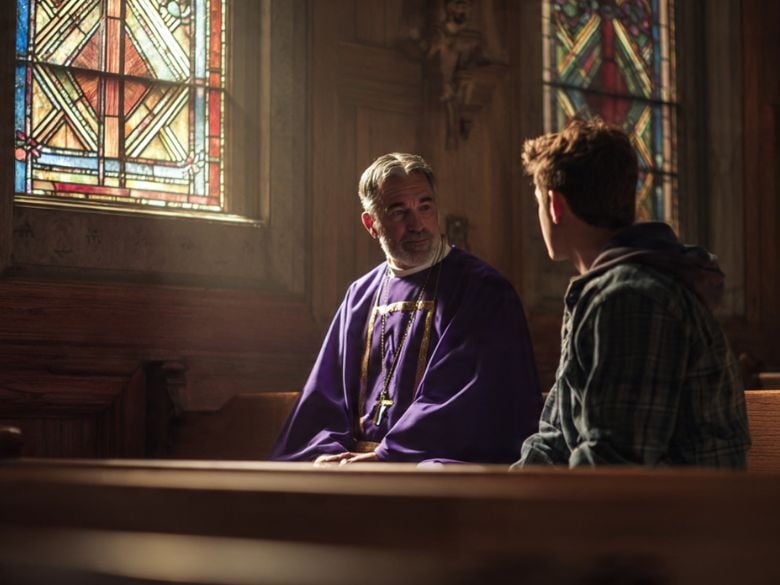
AI-Generated Image from Meta AI
My view on the Sacrament of Confession has changed so much throughout the years. From my innocent years to my more challenging experiences, my understanding has deepened about the sacrament that has often been feared, misjudged or taken for granted by many.
What is the Sacrament of Reconciliation?
The Catechism of the Catholic Church states: “Those who approach the sacrament of Penance obtain pardon from God’s mercy for the offense committed against him, and are, at the same time, reconciled with the Church which they have wounded by their sins and which by charity, by example, and by prayer labors for their conversion.” (CCC 1422)
This sacrament was instituted by Jesus Christ for sinners so He may meet our contrition with His abounding mercy and love.
It is here where sinners may be reconciled with the Father who awaits them with open arms.
Why The Misunderstanding?
If this sacrament is abounding with blessings and graces from God, why then do so many people fear it or have negative impressions about it?
Perhaps it’s because of a lack of proper catechesis, wrong impressions from the media or personal experiences that have failed to live up to the true intentions of this sacrament.
Here are some of the misunderstandings about the Sacrament of Confession:
1. You will encounter perfect priests
Nowhere does it say that priests would be perfect. While they were especially ordained to forgive sins with the authority given by Jesus Christ, not all of them are saints and most are still in the process of perfection. They are human beings just like us who can make mistakes, who can be tempted and who may not always know the right words to say to comfort every grieving heart.
Approach the sacrament with trust but approach it with awareness that although you will be meeting God. Although the priest is imperfect, Christ truly works through the sacrament and through the ministry entrusted to the priest.
Believe in the forgiveness promised by God. And forgive also your fellow human beings.
2. You need to have perfect contrition
Some people may not approach the confessional because they may feel that they haven’t felt sorry enough. Because of this, they miss the wonderful graces God is offering through the sacrament.
Know that perfect contrition is not required to go to confession. On the other hand, by experience, I realized that the sacrament itself helps bring you towards true repentance for your sins.
“The contrition called “imperfect” (or “attrition”) is also a gift of God, a prompting of the Holy Spirit. It is born of the consideration of sin’s ugliness or the fear of eternal damnation and the other penalties threatening the sinner (contrition of fear). Such a stirring of conscience can initiate an interior process which, under the prompting of grace, will be brought to completion by sacramental absolution. By itself however, imperfect contrition cannot obtain the forgiveness of grave sins, but it disposes one to obtain forgiveness in the sacrament of Penance.” (CCC 1453)
3. Confession is the same as receiving spiritual guidance and direction
Confession is a holy sacrament where you are forgiven for the sins you are sorry for. In the process, some kind of guidance may also take place. Penitents may inquire about a particular sin. Or the priest may offer some advice.
But you are not obliged to tell more than is necessary (outside of your sins) or to make long conversations on other matters with your priest. All talk must be in support of the sacrament and towards making a way for repentance to meet the mercy and forgiveness of God.
4. Penances are for punishment
The word “penance” seems to indicate some form of punishment. Hence, the common misconceptions and fears associated with it.
God’s forgiveness is a free gift of mercy, not something we earn through punishment. The penance given after absolution helps us cooperate with grace, seek healing, and repair the harm caused by sin.
“Many sins wrong our neighbor. One must do what is possible in order to repair the harm (e.g., return stolen goods, restore the reputation of someone slandered, pay compensation for injuries). Simple justice requires as much. But sin also injures and weakens the sinner himself, as well as his relationships with God and neighbor. Absolution takes away sin, but it does not remedy all the disorders sin has caused. Raised up from sin, the sinner must still recover his full spiritual health by doing something more to make amends for the sin: he must “make satisfaction for” or “expiate” his sins. This satisfaction is also called ‘penance.’” (CCC 1459)
“Therefore confess your sins to one another, and pray for one another, so that you may be healed. The prayer of the righteous is powerful and effective. – James 5:16 (NRSVCE)
5. Sins cannot be forgiven before confession
God has granted the sacrament of confession for our sake, but that doesn’t mean that He can never forgive us our sins outside of the sacrament.
Venial sins are not required to be confessed (although we are encouraged to do so for our spiritual growth).
Even mortal sins may be forgiven before reaching the confessional through perfect contrition — sorrow arising from love of God above all things — provided the person intends to go to confession as soon as possible.
“When it arises from a love by which God is loved above all else, contrition is called ‘perfect’ (contrition of charity). Such contrition remits venial sins; it also obtains forgiveness of mortal sins if it includes the firm resolution to have recourse to sacramental confession as soon as possible.” (CCC 1452)
6. Confession is not Biblical
While God can forgive us outside the sacrament of confession, he desired to give us the sacrament as a regular and sure means of being forgiven. This is especially true for mortal sins, which ordinarily must be confessed sacramentally in order to restore the life of grace in the soul.
“Jesus said to them again, “Peace be with you. As the Father has sent me, so I send you.” When he had said this, he breathed on them and said to them, ‘Receive the Holy Spirit. If you forgive the sins of any, they are forgiven them; if you retain the sins of any, they are retained.’” – John 20:21-23 (NRSVCE)
The Fountain of God’s Mercy
God’s mercy is immeasurable. He wants us to turn away from sin and live a life of holiness and love. Through His mercy and wisdom, He gave us the Sacrament of Reconciliation to reconcile us to Himself.
He did not give us this sacrament to hurt us or belittle us. He gave it as a remedy for our ailing souls and broken hearts.
Remember the Father who welcomes back the prodigal son with open arms. And remember Jesus, who did not condemn the woman caught in adultery.
He is also there for us, awaiting our return. Let nothing prevent us from falling back into the arms of His great love.
“And if people are hurt, what does Jesus do? Scold them because they are hurt? No, He comes and He carries them on His shoulders.” – Pope Francis
“’Woman, where are they? Has no one condemned you?’ She said, ‘No one, sir.’ And Jesus said, ‘Neither do I condemn you. Go your way, and from now on do not sin again.’” – John 8:10-11 (NRSVCE)
Related posts:
Why Confessing to a Priest Is a Blessing
When You Can’t Go to Confession, How Do You Obtain God’s Mercy?
Jocelyn Soriano is the author of the book Defending My Catholic Faith.
“Always be ready to give an explanation to anyone who asks you for a reason for your hope.” – 1 Peter 3:15 (NABRE)
Get my books on other Digital Stores

About Jocelyn Soriano
Jocelyn Soriano is an author, poet, and book reviewer. She is an introvert who enjoys a cup of coffee and listening to the cello ****** while working.
She wrote the books To Love an Invisible God, Defending My Catholic Faith and Mend My Broken Heart. She also wrote books on poetry including Poems of Love and Letting Go and Of Waves and Butterflies: Poems on Grief. She has published more than 15 books and developed her own Android applications including God’s Promises and Catholic Answers and Apologetics.
She writes about relationships and common questions about God and the Catholic faith at Single Catholic Writer. She is currently single and happy and she would like everyone to know how happy we can be by drawing close to the love of God!
You can read more about the author here.
Previous Post

May 20, 2026
7 Reasons Heaven Would Be Different From This Life
Next Post

June 3, 2026 Why Do Some People Hate Mother Teresa? 7 Deeper Reasons
Browse Our Archives
Select a Category Christmas Church Issue Divine Mercy End Times Grief Healing Heaven Joy Miracles Movie Review Movies New Age Prayer Questions to God Relationships Single Life Spiritual Growth Technology Virgin Mary Wealth Management
Select a Month October 2026 September 2026 August 2026 July 2026 June 2026 May 2026 April 2026 March 2026 February 2026 January 2026 December 2025 November 2025 October 2025 September 2025 August 2025 July 2025 June 2025 May 2025 April 2025 March 2025 February 2025 January 2025 December 2024 November 2024 October 2024 September 2024 August 2024 July 2024 June 2024 May 2024 April 2024 March 2024 February 2024 January 2024 December 2023 November 2023 October 2023 September 2023 August 2023 July 2023 June 2023 May 2023 April 2023 March 2023 February 2023 January 2023
Follow Us!
TAKE THE
Religious Wisdom Quiz
What is the largest Christian denomination in the world?
Select your answer to see how you score.
Catholic Protestant Lutheran Orthodox
Books by This Author Books by Beloved
Related posts from Beloved

6 Ways To Prevent Resentment From Breaking Our...

Is Forgiveness Unfair? Why Gratitude May Be the...

Why We Need The Silence In Between
When There Is No Apology: Finding Healing in...
TRENDING AT PATHEOS Catholic

The Sermon on the Mount, Part I: Matthew...
The Sermon on the Mount, Part I (Matthew 4:12-5:12) St. Matthew moves...

What's up from Crossway: Reviewing some of their latest A few weeks...

Janie Learns the Way of the Cross: A...
Teaching children about Jesus' Passion can be challenging. Many parents and educators...

Looking For Good Catholic Writing - October 2026
He alone extends the heavens, and he walks upon the waves of...

In "Irreplaceable," our book on vocation and technology, Trevor Sutton and I...

I was strolling through the top floor of the brand new Parthenon...
view all Catholic blogs
Ad-Free & Subscriber Log-In Subscription Support
- About Us
- 2026 Calendar
- Videos
- Podcasts
- Library of World Religions
- Faith In Media Tracker
- Advertise With Us
- Write for Us
- Privacy Policy
- Terms of Service
- Do Not Sell My Data
- Contact Us
- Radiant Digital
- Manage Newsletter Subscriptions
- Unsubscribe From Notifications
- Sitemap
Copyright 2008-2026, Patheos. All rights reserved.
Subscription Support Ad-Free & Subscriber Log-In
Follow Patheos