
BuddhistCatholicContemplativeEvangelicalGeneral ChristianHinduJewishLatter-day SaintMuslimNew VisionsProgressive Christian
Beliefs
- Buddhist
- Catholic
- Contemplative
- Evangelical
- General Christian
- Hindu
- Jewish
- Latter-day Saint
- More Voices
- Muslim
- New Visions
- Pagan
- Progressive Christian
Topics
- Religion News
- Food and Religion
- Sports and Religion
- Religious Art
- Religious Music and Entertainment
- Religious Events
- History and Religion
- Style and Religion
- Politics and Religion
- Women in Religion
- Recreation Outdoors and Religion
- Business Finance and Religion
- Careers Workplace and Religion
- Education and Religion
- Family Parenting and Religion
- Health Fitness and Religion
- Home and Religion
- Relationships and Religion
- Technology and Religion
- Travel and Religion
Columnists
- Buddhist Columnists
- Business Finance and Religion Columnists
- Careers Workplace and Religion Columnists
- Catholic Columnists
- Contemplative Columnists
- Education and Religion Columnists
- Evangelists Columnists
- Family Parenting and Religion Columnists
- General Christian Columnists
- Health Fitness and Religion Columnists
- Hindu Columnists
- History and Religion Columnists
- Home and Religion Columnists
- Jewish Columnists
- More Voices Columnists
- Latter Day Columnists
- Muslim Columnists
- New Visions Columnists
- Nonreligious Columnists
- Pagan Columnists
- Politics and Religion Columnists
- Progressive Columnists
- Recreation Outdoors and Religion Columnists
- Relationships and Religion Columnists
- Religion News Columnists
- Religious Art Columnists
- Religious Events Columnists
- Religious Music and Entertainment Columnists
- Sports and Religion Columnists
- Style and Religion Columnists
- Technology and Religion Columnists
- Travel and Religion Columnists
- Women in Religion Columnists
Resource Library
- 2026 Calendar
- Library of World Religions
- The 100 Most Holy Places on Earth
- Patheos Answers
- Podcasts
- Videos
- Faith Leaders Database
- Anglican Episcopalian
- Bahai
- Baptist
- Buddhism
- Christianity
- Confucianism
- Eastern Orthodoxy
- Hinduism
- Holiness and Pentecostal
- ISKCON
- Islam
- Judaism
- Lutheran
- Methodist
- The Church of Jesus Christ of Latter-day Saints
- New Age
- Paganism
- Presbytarian and Reformed
- Protestantism
- Religion Behind the Scenes
- Roman Catholic
- Scientology
- Shia Islam
- Sikhism
- Sufism
- Sunni Islam
- Taoism
- Zen
- See all religions
Research Tools
 Ad-Free & Subscriber Log-In Subscription Support
Follow Patheos 

- Trending:
- Advent
- |
- Forgiveness
- |
- Thanksgiving
- |
- Election
- |
- Seasonal Holidays
- |
- Marriage
 Becoming Faithful Questioners and Social Poets
- Home
- Progressive Christian
- 4 Ways of Relating With Nature: A Framework for Progressive Christians to Follow
4 Ways of Relating With Nature: A Framework for Progressive Christians to Follow
Last updated on: July 2, 2023 at 9:25 pm by Andrew Lang
4 Ways of Relating With Nature: A Framework for Progressive Christians to Follow 2023-07-02T21:25:57-07:00 Andrew Lang
Patheos Explore the world's faith through different perspectives on religion and spirituality! Patheos has the views of the prevalent religions and spiritualities of the world.

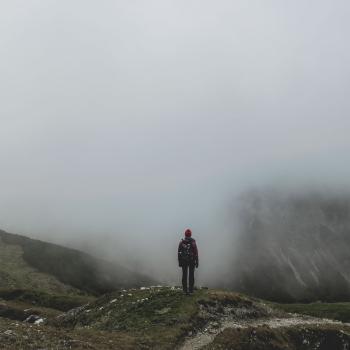
Tobias Keller/Unsplash
When was the last time you were able to genuinely spend time in nature?
I don’t mean going for a walk or texting as you venture around the local park loop. When I ask this question, I’m referring to the giving of yourself to nature: the experience of having no distractions, no interruptions, and no realization of anything but yourself in the natural world.
It’s rare.
In his book The Great Conversation, Belden C. Lane offers us four ways of relating to the natural world:
1. Relating with Nature As Users
This seems to be the default operating system of most of our culture.
In the Christian church, certainly. On the far right wing, we have dominionist theology which has as its basis the assumption of a “right to use.” In this world, everyone and everything has a space in the hierarchy: humans over nature; the “right” over the “wrong.”
And on the progressive side, we have a theology of “stewardship” that is still fully in the “User” camp.
When we discuss stewardship, we are placing ourselves as benevolent leaders, the ones who will “take care of everything” as we see just and good. There is still no true relationship being cultivated with nature other than a hierarchical, top-down approach. Call it “responsible use” if you will.
2. Relating with Nature as Explorers
At the recent United Methodist Greater Northwest Episcopal Area Annual Conference, the new Bishop Cedrick Bridgeforth raised the question of why young people aren’t coming to church in high numbers anymore.
His response was beautiful and – I think – right on. And it was incomplete.
In his response, he spoke of how the church has become rooted in a “come to us” mentality, entirely disconnected from the concept of exploring the world and getting hands-on in the midst of injustice. He pushed churches to change their posture from “come to us” to “go and get busy.”
But here’s where it’s incomplete.
Bishop Bridgeforth’s response was almost entirely related to issues of justice and injustice. Get busy making change out in the world. But this posture shift will not occur without a shift in the church’s spirituality as it relates to nature.
When one sees nature as “other” from our own humanity, there is little hope to engage in true healing and reconciliation within our species.
When the Universe is seen as fragmented, we will see ourselves as fragmented as well.
And so, to build on Bishop Bridgeforth’s message, I would add this: in order to organize the change we so desperately need, churches must embolden everyone we can to become explorers of the natural world and to see the connectedness of all things.
There can be no radical healing without the de-fragmentation of our Universe.
As a side note: I think many young people get this. This is why they spend their time in nature rather than sanctuaries. Instead of saying “come to us,” churches might take a page out of this book and put their hands to the soil.
From June 26th to June 29th, the award-winning book Unmasking the Inner Critic: Lessons for Living an Unconstricted Life is on sale on Amazon for just $.99 (eBook)!
3. Relating with Nature as Celebrants
Today, I sat at the beach for awhile.
Not in a chair or on a bench; I walked toward the water and found a rock that was already half-submerged with the water coming in. I knew, as turned out to be true, that by the time I left, I would be jumping over the splashing tide in order to stay dry.
And as I sat there on the rock, I simply gazed my eyes out across the water.
I watched as the birds floated by, the fish leaped into the air and back under again, and as the crab pots bobbled in the waves.
After about ten minutes, a harbor seal popped its little head above the water about five yards away from me. I’m not entirely sure it was looking at me, but it felt an awful lot like we were spending some time watching each other. It was a beautiful moment – a celebration of nature witnessing itself.
Because we’re part of nature too. I think we sometimes forget that.
What often keeps us relating to nature as users is the faulty belief that we are somehow entirely separate. When that falsity falls apart, it becomes possible not only to explore nature, but to celebrate it, subject to subject.
Nature witnessing itself in a beautiful and momentary deliciousness.
4. Relating with Nature as Lovers
I’ll admit I’m not sure I know this experience quite yet.
I’ve heard that some people draw so close to their pets they, too, become firmly entrenched in the family dynamic. In this moment, the pet becomes a member of the family, almost on par – and sometimes on par – with the human members.
I like my dog Pez a lot – but I don’t think we’re there yet.
And yet I feel I understand bits and pieces of such an experience.
When I drive past Mount Rainier in the morning, I always turn to it and murmur “Good morning, Grandma Mountain.” It all started when I was going through a rough patch in my romantic relationship and I felt a kindred kindness coming from the mountain.
It’s not quite love…but it’s not quite not love.
There’s a relatability that passes between Grandma Mountain and I, part of what Belden Lane calls the “Great Conversation” of nature seeing nature. I know that my life is mixed up with hers’ and that my health and her health are connected. We are beautifully interdependent on each other and yet independent as well.
As I continue my walk through life, I hope to feel this reciprocity of relationship more often within our natural world – and I hope to feel more and more connected in what Mary Oliver called the “family of things.”
Some questions for readers:
- What’s coming up for you when you read this? Any stories of connectedness with nature?
- How does nature play into your spirituality?
Want practical inner work teachings and resources every week?
Join 471+ folks receiving The Wednesday 1-2-3, my weekly email offering one contemplative and embodied teaching, two questions for your inner work, and three resources to go deeper.
Contemplative

About Andrew Lang
Andrew Lang is an educator in the Pacific Northwest, an alumnus of Richard Rohr’s Living School for Action and Contemplation, and award-winning author of Unmasking the Inner Critic: Lessons for Living an Unconstricted Life. Along with writing regularly, he facilitates workshops helping people to navigate their inner lives and explore their sense of identity and spirituality. You can find more of his writings and offerings at www.AndrewGLang.com. You can read more about the author here.
Previous Post

June 16, 2023
Understanding The Inner Critic's Use of Sunk Costs
Next Post

June 27, 2023 The Inner Critic is a Spiritual Issue - But Where is the Church?
Recent Comments
"good article."
Are You Uncomfortable Being in Church?
"Thanks Andrew. I'll be checking out some of these resources."
7 Resources for Progressive Christians Who ..."
"Thanks, Andrew. I read your piece not only as a lay theologian, but as a ..."
Church Should Feel Like a Workshop
"You're so, so welcome! Jenny is an absolutely wonderful guide in this work. Here is ..."
Moving Beyond the Harms of Purity ..."
Browse Our Archives
Select a Category Body Practices Book Recommendation Conversations Events Faithful Questioners Image of the Divine Social Poets Spiritual Practice Uncategorized Unmasking the Inner Critic Welcome Wisdom Teachers
Select a Month December 2023 November 2023 September 2023 August 2023 July 2023 June 2023 May 2023 April 2023 March 2023 February 2023 January 2023 December 2022 November 2022 October 2022 August 2022 July 2022 June 2022 May 2022 April 2022 March 2022 February 2022 January 2022 December 2021
Follow Us!
TAKE THE
Religious Wisdom Quiz
True or False: 1 Peter teaches that judgment must begin with the family of God.
Select your answer to see how you score.
TRUE FALSE
Related posts from Becoming Faithful Questioners and Social Poets
9 Inner Work Resources from 2023
Becoming Faithful Questioners and Social Poets

A Simple Storytelling Practice: Seeing the Divine All...
Becoming Faithful Questioners and Social Poets

3 Levels of Inner Work and Engaging in...
Becoming Faithful Questioners and Social Poets

Are You Uncomfortable Being in Church?
Becoming Faithful Questioners and Social Poets
TRENDING AT PATHEOS Progressive Christian

Let Matthew 25 Guide You to a Greater...
With the crisp feel of fall in the air, our minds quickly...

Can a Chatbot Touch Your Soul?
Can a chatbot offer genuine spiritual counsel? One conversation brought me to...

Religion and Politics: How Should We Then Live?
Two cultural axioms get repeated in polite company. Don't mix religion and...

7 Things We Get Wrong About Giving Thanks
It's a time of year when many of us turn to the...

Uncaging Truth: Spirituality Beyond Institutions
The Lost Connection: Why True Spirituality, Not Religion, Is the Key to...

Christ the King? Maybe We've Misunderstood the Crown
What do we mean when we say that Jesus is King? What...
view all Progressive Christian blogs
Ad-Free & Subscriber Log-In Subscription Support
- About Us
- 2026 Calendar
- Videos
- Podcasts
- Library of World Religions
- Faith In Media Tracker
- Advertise With Us
- Write for Us
- Privacy Policy
- Terms of Service
- Do Not Sell My Data
- Contact Us
- Radiant Digital
- Manage Newsletter Subscriptions
- Unsubscribe From Notifications
- Sitemap
Copyright 2008-2026, Patheos, part of the Radiant Digital network of media brands. All rights reserved.
Subscription Support Ad-Free & Subscriber Log-In
Follow Patheos