
BuddhistCatholicContemplativeEvangelicalGeneral ChristianHinduJewishLatter-day SaintMuslimNew VisionsProgressive Christian
Beliefs
- Buddhist
- Catholic
- Contemplative
- Evangelical
- General Christian
- Hindu
- Jewish
- Latter-day Saint
- More Voices
- Muslim
- New Visions
- Pagan
- Progressive Christian
Topics
- Religion News
- Food and Religion
- Sports and Religion
- Religious Art
- Religious Music and Entertainment
- Religious Events
- History and Religion
- Style and Religion
- Politics and Religion
- Women in Religion
- Recreation Outdoors and Religion
- Business Finance and Religion
- Careers Workplace and Religion
- Education and Religion
- Family Parenting and Religion
- Health Fitness and Religion
- Home and Religion
- Relationships and Religion
- Technology and Religion
- Travel and Religion
Columnists
- Buddhist Columnists
- Business Finance and Religion Columnists
- Careers Workplace and Religion Columnists
- Catholic Columnists
- Contemplative Columnists
- Education and Religion Columnists
- Evangelists Columnists
- Family Parenting and Religion Columnists
- General Christian Columnists
- Health Fitness and Religion Columnists
- Hindu Columnists
- History and Religion Columnists
- Home and Religion Columnists
- Jewish Columnists
- More Voices Columnists
- Latter Day Columnists
- Muslim Columnists
- New Visions Columnists
- Nonreligious Columnists
- Pagan Columnists
- Politics and Religion Columnists
- Progressive Columnists
- Recreation Outdoors and Religion Columnists
- Relationships and Religion Columnists
- Religion News Columnists
- Religious Art Columnists
- Religious Events Columnists
- Religious Music and Entertainment Columnists
- Sports and Religion Columnists
- Style and Religion Columnists
- Technology and Religion Columnists
- Travel and Religion Columnists
- Women in Religion Columnists
Resource Library
- 2026 Calendar
- Library of World Religions
- The 100 Most Holy Places on Earth
- Patheos Answers
- Podcasts
- Videos
- Faith Leaders Database
- Anglican Episcopalian
- Bahai
- Baptist
- Buddhism
- Christianity
- Confucianism
- Eastern Orthodoxy
- Hinduism
- Holiness and Pentecostal
- ISKCON
- Islam
- Judaism
- Lutheran
- Methodist
- The Church of Jesus Christ of Latter-day Saints
- New Age
- Paganism
- Presbytarian and Reformed
- Protestantism
- Religion Behind the Scenes
- Roman Catholic
- Scientology
- Shia Islam
- Sikhism
- Sufism
- Sunni Islam
- Taoism
- Zen
- See all religions
Research Tools
 Ad-Free & Subscriber Log-In Subscription Support
Follow Patheos 

- Trending:
- Advent
- |
- Forgiveness
- |
- Thanksgiving
- |
- Election
- |
- Seasonal Holidays
- |
- Marriage
 Becoming Faithful Questioners and Social Poets
- Home
- Progressive Christian
- 7 Ways New (and Experienced) Meditators Can Move Through Silence to Transformation
7 Ways New (and Experienced) Meditators Can Move Through Silence to Transformation
Last updated on: January 18, 2023 at 2:38 pm by Andrew Lang
7 Ways New (and Experienced) Meditators Can Move Through Silence to Transformation 2023-01-18T14:34:25-08:00 Andrew Lang
Patheos Explore the world's faith through different perspectives on religion and spirituality! Patheos has the views of the prevalent religions and spiritualities of the world.

Omid Armin/Unsplash
When you sit for a meditation, are you settling for a “high-class sedative?”
That’s what Thomas Keating called it when we engage in practices that numb us out with temporary feelings of bliss and contentment without challenging us.
To engage in spiritual practices that are truly change-making, we have to set aside our desire for comfort and instead lean into the discomfort of the unknown.
Because that’s how we deepen and grow.
Here are 7 ways you can build a practice that challenges you:
1. Practice identifying what your body is experiencing.
Many of us treat our bodies as if they are simply vehicles for our brains.
But our central nervous systems know different. Walk down a street and pay attention to how your body relates to your surroundings – you’ll quickly find that your body reacts faster to your context than your brain can understand it. In other words, your body holds knowledge about life that your brain is still trying to process.
Any holistic spiritual practice must include tapping into the knowledge your body holds and learning to listen to its language.
Tip: Include a body scan as you enter every period of silence.
2. Engage in silence with members of your spheres of influence.
Personal transformation means nothing if it isn’t connected to collective healing.
Here’s a way to begin tying the two together: find a community of silence-sitters, like you, who are willing to commit to engaging in silence as a group. But that’s not enough – make sure this group shares its insights and challenges together, including the questions they are grappling with. Then, embolden each other to take action on those insights.
Collective healing requires communal practice.
Tip: Use this framework when you gather a group together.
3. Shift your mindset from personal to collective.
It’s so important, I’ll say it again: personal transformation means nothing if it isn’t connected to collective healing.
In the Western world, many of us have been given a primary lens of individualism through which to understand our lives. It is a necessary and countercultural act to shift and instead recognize our personal lives within the context of community.
Our communities, the global community, and even our ancestral community.
You are not “self-made;” we are each community-made. Practice noticing how that is true in your life as often as you can.
Tip: When you finish a meditation, imagine and visualize your connectedness to your communities.
4. Get active in your communities.
Thomas Merton once told the parable of the spring and stream.
The spring is our inner life; the stream is the way we show up in the world (our actions.) Without action, our inner lives become stagnant; without contemplation and meditation, our actions dry up.
Each of us has an assortment of communities in which our streams can flow into: family, workplace, volunteer spaces, school, etc.
Be intentional with how your meditation is emboldening you to walk in your communities in a new way.
Tip: After a meditation, set an intention for how your silence will lead to a presence of compassion in your communities.
5. Learn to ask deep questions. Practice a lot.
Remember what you learned in elementary school?
Who? What? When? Where? Why? How?
Start to practice asking more questions about your inner life and how you can show up in the world. Here are some examples:
- What crossroads am I at right now?
- How can I make change in that space?
- Why did I respond with such anger?
- What fear is under that interaction for me?
- Who do I want to be in that space?
- When might I be able to listen a bit better?
Tip: Between meditations, make it a practice of writing down questions you have for your inner work and outer engagement in the world.
6. Engage in body practices between meditation sessions.
Every time we engage a body practice, we’re increasing our capacity to be present to our own experience of life.
And most of us need the practice! When I started doing regular body practices, I realized how much I had been neglecting my body, leading to issues sleeping, focusing, and yes, meditating.
Want to enhance your meditation? Make sure you’re honoring your body!
Tip: Integrate some version of this body practice into your day between meditations.
7. Learn from wisdom teachers. Listen to your inner teacher.
I define a wisdom teacher as someone who has:
- experienced harm and failure and sadness and suffering,
- developed the capacity to be present, even in the midst of the muck,
- learned to respond to the world with kindness and compassion, and
- shared the wisdom of their experience with others.
Listen to podcasts, read books, and honor the folks around you. You’ll find a person or two who fit this bill – and in their story, you’ll experience a resonance that invites you to become more present to your own.
Tip: Pay attention to resonance. When do you hear something from another that connects with your own story? What can you learn from this?
2023 Centering Prayer Summit – in two days!
Two of the wisdom teachers in my life, Phileena Nikole and Cynthia Bourgeault will be headlining the 2023 Centering Prayer Summit in a couple days. I highly, highly recommend you check it out – this is going to be a great event!

Contemplative
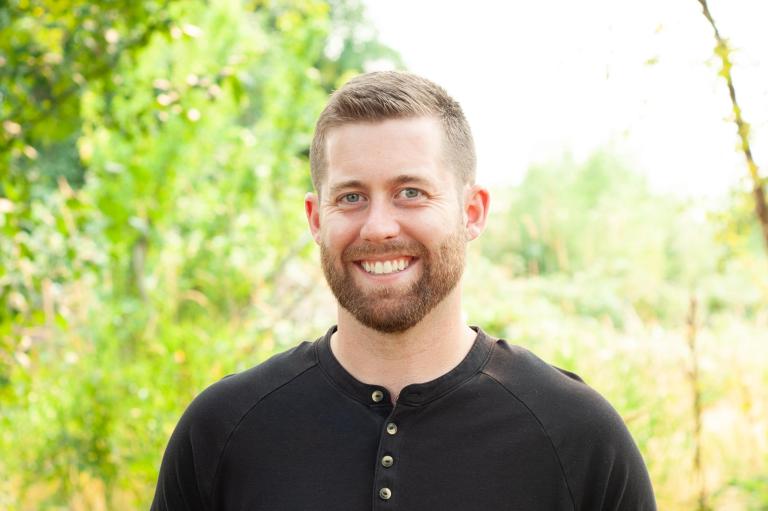
About Andrew Lang
Andrew Lang is an educator in the Pacific Northwest, an alumnus of Richard Rohr’s Living School for Action and Contemplation, and author of Unmasking the Inner Critic: Lessons for Living an Unconstricted Life. Along with writing regularly, he facilitates workshops helping people to navigate their inner lives and explore their sense of identity and spirituality. You can read more about the author here.
Previous Post

January 17, 2023
6 Key Components for a Deep and Meaning-Filled Small Group

Recent Comments
"good article."
Are You Uncomfortable Being in Church?
"Thanks Andrew. I'll be checking out some of these resources."
7 Resources for Progressive Christians Who ..."
"Thanks, Andrew. I read your piece not only as a lay theologian, but as a ..."
Church Should Feel Like a Workshop
"You're so, so welcome! Jenny is an absolutely wonderful guide in this work. Here is ..."
Moving Beyond the Harms of Purity ..."
Browse Our Archives
Select a Category Body Practices Book Recommendation Conversations Events Faithful Questioners Image of the Divine Social Poets Spiritual Practice Uncategorized Unmasking the Inner Critic Welcome Wisdom Teachers
Select a Month December 2023 November 2023 September 2023 August 2023 July 2023 June 2023 May 2023 April 2023 March 2023 February 2023 January 2023 December 2022 November 2022 October 2022 August 2022 July 2022 June 2022 May 2022 April 2022 March 2022 February 2022 January 2022 December 2021
Follow Us!
TAKE THE
Religious Wisdom Quiz
What day is often called the day of rest in the Bible?
Select your answer to see how you score.
Sabbath Wednesday Monday Friday
Related posts from Becoming Faithful Questioners and Social Poets
9 Inner Work Resources from 2023
Becoming Faithful Questioners and Social Poets
A Simple Storytelling Practice: Seeing the Divine All...
Becoming Faithful Questioners and Social Poets

3 Levels of Inner Work and Engaging in...
Becoming Faithful Questioners and Social Poets
Are You Uncomfortable Being in Church?
Becoming Faithful Questioners and Social Poets
TRENDING AT PATHEOS Progressive Christian

Personal Devotion After Deconstruction
It’s pretty standard for progressive believers to reject aspects of their religious...

The Secret behind A Charlie Brown Thanksgiving
Where Franklin Sat at Charlie Brown's Thanksgiving Table Sparky was sticking to...

Bridging the Gap Between God and Man
From Far Off to the Ultimate Embrace “God is a Spirit: and...

Let Matthew 25 Guide You to a Greater...
With the crisp feel of fall in the air, our minds quickly...

Can a Chatbot Touch Your Soul?
Can a chatbot offer genuine spiritual counsel? One conversation brought me to...

Religion and Politics: How Should We Then Live?
Two cultural axioms get repeated in polite company. Don't mix religion and...
view all Progressive Christian blogs
Ad-Free & Subscriber Log-In Subscription Support
- About Us
- 2026 Calendar
- Videos
- Podcasts
- Library of World Religions
- Faith In Media Tracker
- Advertise With Us
- Write for Us
- Privacy Policy
- Terms of Service
- Do Not Sell My Data
- Contact Us
- Radiant Digital
- Manage Newsletter Subscriptions
- Unsubscribe From Notifications
- Sitemap
Copyright 2008-2026, Patheos, part of the Radiant Digital network of media brands. All rights reserved.
Subscription Support Ad-Free & Subscriber Log-In
Follow Patheos