
BuddhistCatholicContemplativeEvangelicalGeneral ChristianHinduJewishLatter-day SaintMuslimNew VisionsProgressive Christian
Beliefs
- Buddhist
- Catholic
- Contemplative
- Evangelical
- General Christian
- Hindu
- Jewish
- Latter-day Saint
- More Voices
- Muslim
- New Visions
- Pagan
- Progressive Christian
Topics
- Religion News
- Food and Religion
- Sports and Religion
- Religious Art
- Religious Music and Entertainment
- Religious Events
- History and Religion
- Style and Religion
- Politics and Religion
- Women in Religion
- Recreation Outdoors and Religion
- Business Finance and Religion
- Careers Workplace and Religion
- Education and Religion
- Family Parenting and Religion
- Health Fitness and Religion
- Home and Religion
- Relationships and Religion
- Technology and Religion
- Travel and Religion
Columnists
- Buddhist Columnists
- Business Finance and Religion Columnists
- Careers Workplace and Religion Columnists
- Catholic Columnists
- Contemplative Columnists
- Education and Religion Columnists
- Evangelists Columnists
- Family Parenting and Religion Columnists
- General Christian Columnists
- Health Fitness and Religion Columnists
- Hindu Columnists
- History and Religion Columnists
- Home and Religion Columnists
- Jewish Columnists
- More Voices Columnists
- Latter Day Columnists
- Muslim Columnists
- New Visions Columnists
- Nonreligious Columnists
- Pagan Columnists
- Politics and Religion Columnists
- Progressive Columnists
- Recreation Outdoors and Religion Columnists
- Relationships and Religion Columnists
- Religion News Columnists
- Religious Art Columnists
- Religious Events Columnists
- Religious Music and Entertainment Columnists
- Sports and Religion Columnists
- Style and Religion Columnists
- Technology and Religion Columnists
- Travel and Religion Columnists
- Women in Religion Columnists
Resource Library
- 2026 Calendar
- Library of World Religions
- The 100 Most Holy Places on Earth
- Patheos Answers
- Podcasts
- Videos
- Faith Leaders Database
- Anglican Episcopalian
- Bahai
- Baptist
- Buddhism
- Christianity
- Confucianism
- Eastern Orthodoxy
- Hinduism
- Holiness and Pentecostal
- ISKCON
- Islam
- Judaism
- Lutheran
- Methodist
- The Church of Jesus Christ of Latter-day Saints
- New Age
- Paganism
- Presbytarian and Reformed
- Protestantism
- Religion Behind the Scenes
- Roman Catholic
- Scientology
- Shia Islam
- Sikhism
- Sufism
- Sunni Islam
- Taoism
- Zen
- See all religions
Research Tools
 Ad-Free & Subscriber Log-In Subscription Support
Ad-Free & Subscriber Log-In Subscription Support
Follow Patheos 

- Trending:
- Forgiveness
- |
- Marriage
- |
- Consciousness
- |
- Death Penalty
- |
- Election
- |
- Halloween
 Barefoot and Pregnant
- Home
- Catholic
- Giving the Truth a Level Playing Field
Giving the Truth a Level Playing Field
Last updated on: December 30, 2014 at 11:10 am by Calah Alexander
Giving the Truth a Level Playing Field 2014-12-30T11:10:05-05:00 Calah Alexander
Patheos Explore the world's faith through different perspectives on religion and spirituality! Patheos has the views of the prevalent religions and spiritualities of the world.
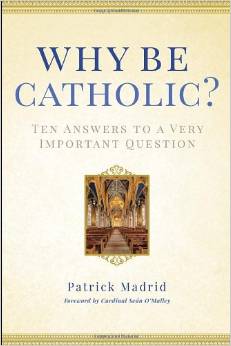
I recently got an advance copy of Patrick Madrid’s book Why Be Catholic?, and was supposed to read and review it the day before or the day it came out.
It was released June 3, so I get to start this review by apologizing to Patrick for being so lame about getting it written. I’d prefer to blame it on the kids, or laziness even, or nothing in particular, but the truth is that I really wanted to write a good review of it, in an effort to make peace after last year’s Twitter Swear-gate. But I kept getting frustrated by the anecdotes and was like, “do I write an honest review, and seal my fate as a nemesis of probably the most impossible person in the Catholic blogosphere to be a nemesis of, or do I just forget the review, and add to my collection of ‘Most Unreliable Book Reviewer Ever’ trophies?”
Luckily, Patrick himself saved me from both terrible fates by saying this in the final pages:
…but you will take nothing with you into the next life except for these two things: your love and your sins. And it is on these two things alone that you will be judged.
(Why Be Catholic?, p 202)
So after I regained consciousness, I was like, “well, played, Mr. Madrid. (PS thanx for the attitude adjustment).”
My irritation with the anecdotes was entirely a matter of personal taste. I appreciate self-deprecating humor, admissions of weakness, and blatant hyperbole. I find myself annoyed with anecdotes in which the story-teller appears…well, not necessarily better than they are, but better than I am.
That’s pretty awful though, and prideful, and all-around jerky. It’s certainly not loving. And given that just a few pages earlier, Patrick reminded me that “all members of the Body of Christ are bound by the law of charity,” I feel like I should just go ahead and not break that law, and admit that while the anecdotes used to illustrate the points made in the various chapters were not my favorite thing in the book, the rest of the book was clear, well-written, and enjoyable.
In fact, I am extremely grateful for this book. It’s apologetics, but it seemed to me to be the clearest apologetics for the Catholic faith aimed at Protestants that I have read since Rome Sweet Home…and that book was all I needed to pick up the phone and dial RCIA.
The most impressive thing about the book is, to my mind, the language Patrick Madrid uses. He uses particularly Protestant language, particularly Protestant imagery, and constructs an clear, unassailable defense of Catholicism from the Bible. Yep, that’s right, folks. Patrick Madrid, in this book, uses the Bible to prove that Catholicism is true.
No kidding, that’s a feat. I mean, it’s not really a feat per se, since all of Catholic teaching is based on scripture, but it’s a feat to do it in such a clear, accessible, entertaining manner. The only drawback to this is that any book is limited by the audience it is written for; this wouldn’t be a good book to convert, say, your atheist aunt, nor would it make an appropriate Christmas gift for your cousin who is a Trappist monk. It is written not to deepen faith (although I found that it deepened mine), but to help build it.
As a fellow UD alum, my favorite thing about this book was the way he deftly wove in philosophical principles, without which things like the Holy Mystery of the Eucharist would be impossible to discuss or attempt to explain. It’s such a UD thing to do, because without philosophy it is impossible to have a mind free enough to think critically. I admit that I giggled when I read this passage toward the beginning:
The appearances of a thing are not the thing itself. For example, picture in your mind a red, rubber bouncy ball. The color red of the ball is not the ball itself, nor is the texture, the bounciness, or even its round shape. Each of these distinguishing characteristics, indeed any distinguishing characteristic that our senses can detect, is an “accident,” or a property, of that red, rubber, bouncy ball, but none of them is the ball itself. This is a powerful Truth!
(Why Be Catholic?, p 60)
I giggled because I could practically see Fr. Lehrberger saying these words, bouncing the ball, walking around and showing it to us, with a pack of Pall Malls sticking out of the pocket of his Cistercian habit. Fr. Lehrberger also used to say that the duty of a Catholic university isn’t to convert anyone, but to give truth a level playing field. UD did that, and many of us converted because we saw Truth. Patrick Madrid’s book does much the same thing. When it comes to apologetics, there’s no greater success than that.
Click here to buy a copy of Why Be Catholic? on Amazon
Previous Post

June 5, 2014
The Rock Star and the Red Herring
Next Post
June 12, 2014 Talkin' Ain't Doin'
Browse Our Archives
Select a Category Uncategorized
Select a Month September 2016 August 2016 July 2016 June 2016 April 2016 March 2016 January 2016 December 2015 November 2015 October 2015 September 2015 August 2015 July 2015 June 2015 May 2015 April 2015 March 2015 February 2015 January 2015 December 2014 November 2014 October 2014 September 2014 August 2014 July 2014 June 2014 May 2014 April 2014 March 2014 February 2014 January 2014 December 2013 November 2013 October 2013 September 2013 August 2013 July 2013 June 2013 May 2013 April 2013 March 2013 February 2013 January 2013 December 2012 November 2012 October 2012 September 2012 August 2012 July 2012 June 2012 May 2012 April 2012 March 2012 February 2012 January 2012 December 2011 November 2011 October 2011 September 2011 August 2011 July 2011 June 2011 May 2011 April 2011 March 2011 February 2011 January 2011 December 2010 November 2010 October 2010 September 2010 August 2010 July 2010
Follow Us!
TAKE THE
Religious Wisdom Quiz
Who said: "I am the Alpha and the Omega, who is, and who was, and who is to come, the Almighty"?
Select your answer to see how you score.
John An angel Jesus God (the Lord God)
Related posts from Barefoot and Pregnant
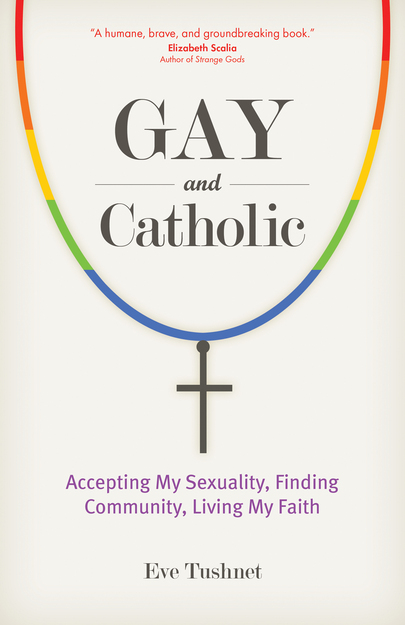
Love (the Gay and Catholic way)
TRENDING AT PATHEOS Catholic

Rejecting Doom: Christian Hope And Human Action
Christianity is a religion of hope. We are to have hope and...

It’s What Comes From Within Which Matters
One of the most difficult things for us to understand is why...

Why I Choose the Eucharist Over the Sermon
Choose the Eucharist, Not the Sermon What are we supposed to get...

5 Design Elements Found in Spiritually Rooted Homes
Putting Spirituality Into Home Decor Our homes are more than our living...

Credo: A Story of God Told with the...
About 10 years ago, I began to imagine a personal "Credo" that...

The Anatomy of Divine Revelation in Catholic Thought
The claim that God has made Himself known to human beings is...
view all Catholic blogs
Ad-Free & Subscriber Log-In Subscription Support
- About Us
- 2026 Calendar
- Videos
- Podcasts
- Library of World Religions
- Faith In Media Tracker
- Advertise With Us
- Write for Us
- Privacy Policy
- Terms of Service
- Do Not Sell My Data
- Contact Us
- Radiant Digital
- Manage Newsletter Subscriptions
- Unsubscribe From Notifications
- Sitemap
Copyright 2008-2026, Patheos. All rights reserved.
Subscription Support Ad-Free & Subscriber Log-In
Follow Patheos