
BuddhistCatholicContemplativeEvangelicalGeneral ChristianHinduJewishLatter-day SaintMuslimNew VisionsProgressive Christian
Beliefs
- Buddhist
- Catholic
- Contemplative
- Evangelical
- General Christian
- Hindu
- Jewish
- Latter-day Saint
- More Voices
- Muslim
- New Visions
- Pagan
- Progressive Christian
Topics
- Religion News
- Food and Religion
- Sports and Religion
- Religious Art
- Religious Music and Entertainment
- Religious Events
- History and Religion
- Style and Religion
- Politics and Religion
- Women in Religion
- Recreation Outdoors and Religion
- Business Finance and Religion
- Careers Workplace and Religion
- Education and Religion
- Family Parenting and Religion
- Health Fitness and Religion
- Home and Religion
- Relationships and Religion
- Technology and Religion
- Travel and Religion
Columnists
- Buddhist Columnists
- Business Finance and Religion Columnists
- Careers Workplace and Religion Columnists
- Catholic Columnists
- Contemplative Columnists
- Education and Religion Columnists
- Evangelists Columnists
- Family Parenting and Religion Columnists
- General Christian Columnists
- Health Fitness and Religion Columnists
- Hindu Columnists
- History and Religion Columnists
- Home and Religion Columnists
- Jewish Columnists
- More Voices Columnists
- Latter Day Columnists
- Muslim Columnists
- New Visions Columnists
- Nonreligious Columnists
- Pagan Columnists
- Politics and Religion Columnists
- Progressive Columnists
- Recreation Outdoors and Religion Columnists
- Relationships and Religion Columnists
- Religion News Columnists
- Religious Art Columnists
- Religious Events Columnists
- Religious Music and Entertainment Columnists
- Sports and Religion Columnists
- Style and Religion Columnists
- Technology and Religion Columnists
- Travel and Religion Columnists
- Women in Religion Columnists
Resource Library
- 2026 Calendar
- Library of World Religions
- The 100 Most Holy Places on Earth
- Patheos Answers
- Podcasts
- Videos
- Faith Leaders Database
- Anglican Episcopalian
- Bahai
- Baptist
- Buddhism
- Christianity
- Confucianism
- Eastern Orthodoxy
- Hinduism
- Holiness and Pentecostal
- ISKCON
- Islam
- Judaism
- Lutheran
- Methodist
- The Church of Jesus Christ of Latter-day Saints
- New Age
- Paganism
- Presbytarian and Reformed
- Protestantism
- Religion Behind the Scenes
- Roman Catholic
- Scientology
- Shia Islam
- Sikhism
- Sufism
- Sunni Islam
- Taoism
- Zen
- See all religions
Research Tools
 Ad-Free & Subscriber Log-In Subscription Support
Ad-Free & Subscriber Log-In Subscription Support
Follow Patheos 

- Trending:
- Forgiveness
- |
- Marriage
- |
- Consciousness
- |
- Death Penalty
- |
- Election
- |
- Halloween
 Barefoot and Pregnant
- Home
- Catholic
- Sentimental Claptrap, Part V: God Has a Plan
Sentimental Claptrap, Part V: God Has a Plan
Last updated on: September 19, 2015 at 2:58 pm by Calah Alexander
Sentimental Claptrap, Part V: God Has a Plan 2015-09-19T14:58:11-04:00 Calah Alexander
Patheos Explore the world's faith through different perspectives on religion and spirituality! Patheos has the views of the prevalent religions and spiritualities of the world.
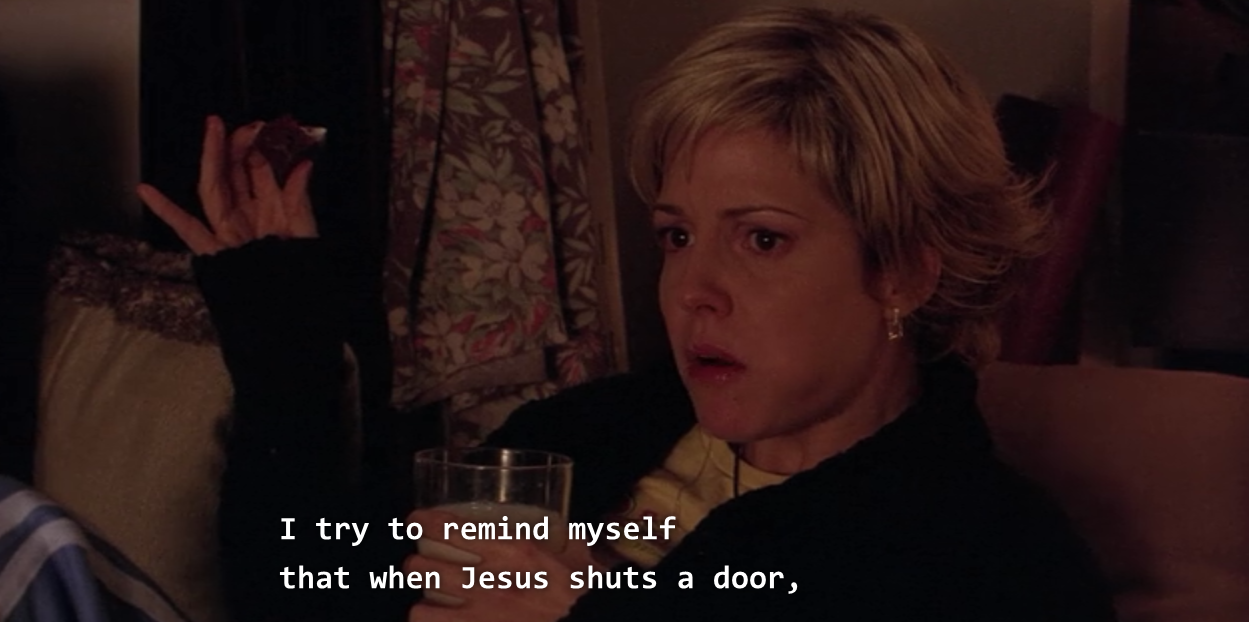

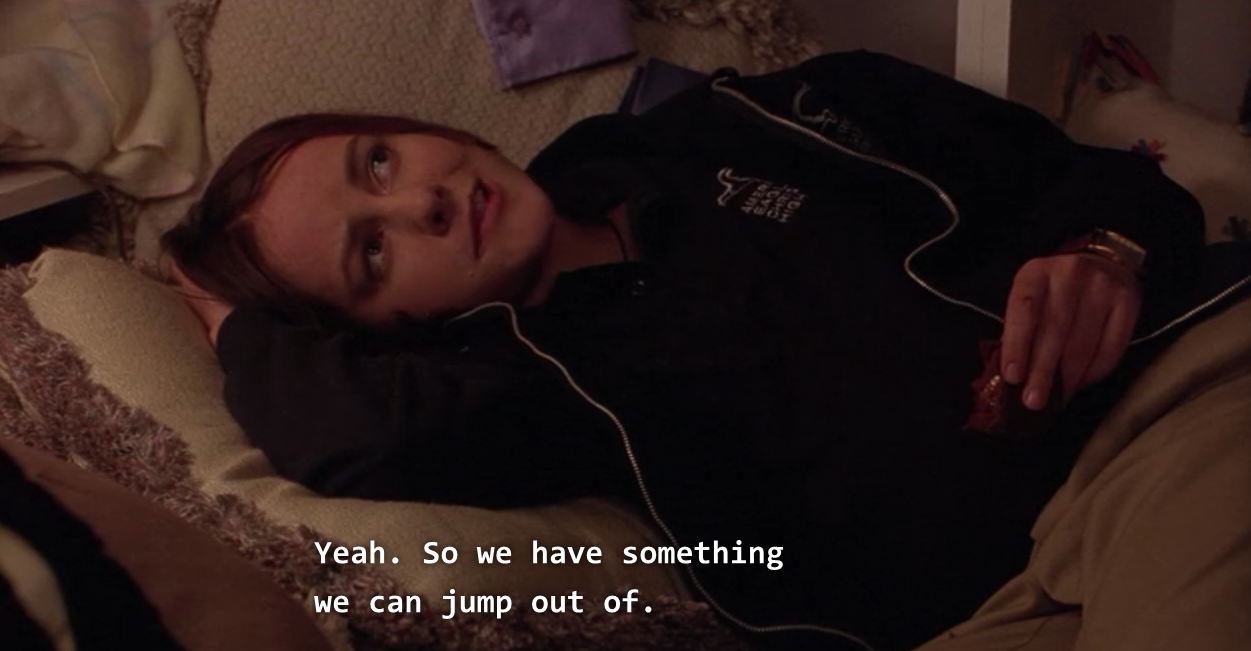
Sentimental Claptrap #5: God Is In Control…God Has a Plan…God Works in Mysterious Ways
This is by far the most complex and problematic statement of the whole series. The omnipotence of an all-good God and the existence of suffering is a paradox that philosophers and theologians have attempted to reconcile for centuries. There’s even a name for attempting to justify God’s goodness despite the existence of evil and suffering: theodicy. As such, dismissing this entire question with a clumsy, clichéd verbal pat on the back is, to my mind, the most egregious manifestation of sentimental claptrap.
My sister had a friend in her youth. “Friend” seems like such an inadequate term to capture all that Jerry was and might have been. He was a part of our family for a time, so much a part that it seems impossible that there had been a time before he was in our kitchen, drinking orange juice out of the carton as my mom hit him on the head with a wooden spoon. He was so much a part of our family that it seems impossible that so many years have passed without him.
But fourteen years have passed since Jerry died in the ATM bonfire collapse. Fourteen years is so long that sometimes it feels like he was never here at all, and so short that it still feels impossible that he’ll never drink another Dr. Pepper in our kitchen. For my sister, I can’t imagine what it’s like. Without a doubt, he was the truest friend she ever had, the one who really loved her, the one who loved her the right way, the one who brought out the best kinds of beauty and goodness in her. For her, the loss of Jerry was and is beyond measure.
As it was for his family, whose grief was so painfully keen to see. As it was for his friends and those who loved him. For me, it’s like the echo of a loss…he was so much older, and belonged to my sister’s world, not mine. But even I can see that life is not what it could have been if he had lived. Things didn’t go the way they should have gone. He should have lived.
I don’t believe that Jerry’s death was part of the plan, some sort of mysterious tragedy God willed into being for the greater good. It was, like all death, the result of evil, sin, and free will. God allows tragedy and suffering because he gave us free will. He can’t always mitigate the consequences of our choices, whatever form those consequences take. He can’t always mitigate the effects of sin in our world. What he can do is bring grace from tragedy, if we allow it.
What grace may have come from Jerry’s death I cannot say. I’m still too stuck on all the rich and beautiful potential that was lost with him. But I’m pretty sure that a bonfire falling on top of him was not God’s plan for Jerry’s life.
As I understand him, God is less the ultimate puppet-master and more the ultimate Time-Lord: he can see all paths at once, “all that is…all that was…all that ever could be.” He knows, in every moment, which choice would be the best one for me to make, how it would shape my character, and what road it would take me on. He can see the choices of others and how they will affect me. He can see the Calah that might have been, had I chosen good in every moment; he can see the Calah that might be if I choose good in every moment from this one until my death; he can see the Calah that might be if I turn my back on good forever. He sees all possibilities, the things that might be done to me and the things that I might do, even while he knows the choice I will make in each moment. He prepares a way for grace to be present in those choices and in those circumstances, so that good might beget good, so that bad might be redeemed by good. or even just so that I know he is with me.
There’s no way to say that God has a plan without directly implying that this suffering, whatever it may be, is caused by God. That he willed it, that he wanted it, that he breathed it into being for some incomprehensible purpose. This is patently false. We’ve covered it already: God doesn’t create evil.
There’s no way to say that God is in control without directly implying that he could have stopped this, but he chose not to. There may be some truth to that, although I’ve never managed to square that with the doctrine of free will. In a very real way God is not in total control, because in giving us free will he relinquished that control. He can’t make us do or not do anything. That is his greatest gift to humanity, the gift to freely choose, and it’s the most dreadful gift of all. It’s the gift by which so many of us seal our fates, and some horrible times, the fates of others.
I believe that God does work in mysterious ways because I’ve experienced it. The worst possible outcome of my increasingly terrible choices became my road back to grace, back to God. That is what I think of when I hear that phrase. But it wasn’t the kind of mystery that belongs in a Hallmark card or embroidered into a pillow…drug addiction, unwed pregnancy? That’s not what people mean when they say “God works in mysterious ways”, and that’s why they shouldn’t say it. A mystery is an unnerving and often terrible thing to be in the middle of. And when I read stories about parents who lost all their children in one fell swoop, I think, God, what mystery could unmake their hell? Surely not all of the incomprehensibly vast sum of human suffering was part of God’s mysterious ways, right?
I don’t know. I don’t understand it. Even the echoes of what we lost when we lost Jerry sometimes feel overwhelming. I cannot imagine facing that reality doubled, tripled, quadrupled, and painted with the faces of my own children. All they are, all they were, all they ever could be.
I believe that God loves them more than even I do, and this is perhaps what assures me that God has no life plan drawn up for each of us, no Utimate Sketchbook of Destiny in the works for everyone, everywhere. He wouldn’t love us if he were just controlling us, or what happened to us. He would just be manipulating us, playing out the grand drama of human life for his own entertainment. And as much as I LOVE Richard Gere, I sincerely doubt that God is made in his image.
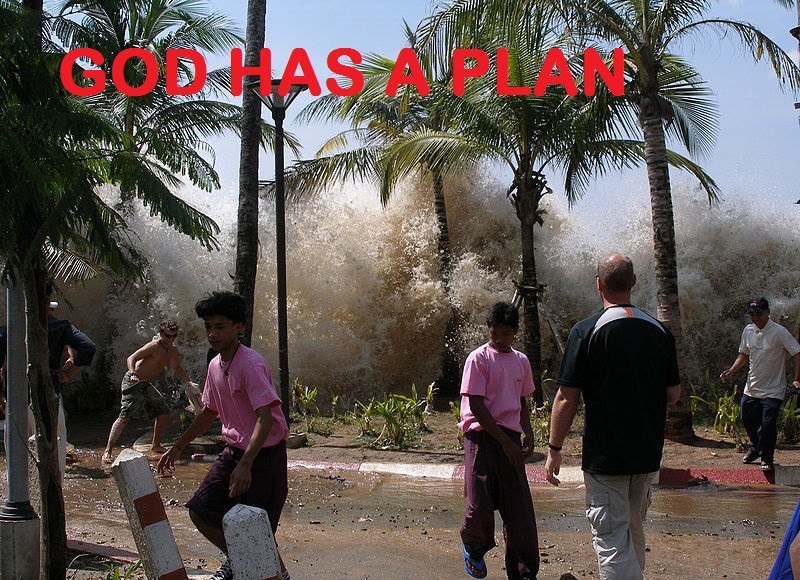
I think God does the best he can with what we give him. I know he suffers with us when we suffer, or he never would have died for the love of us. But sin is real, evil is real, and suffering is inevitable. At no point in our lives is this clearer than when we are in the midst of suffering, which is why these trite attempts to comfort really only damage people. I always assume that people are trying to reassure one another of the existence of God, trying to clumsily exhort the suffering to not lose faith. But there are worse things than someone in the midst of great pain doubting the existence of God. Believing you when you say that this is God’s plan, believing that God planned the collapse of a bonfire that would crush the lives out of 12 college students, believing that God sent an earthquake to kill 4 beloved children, believing that for some reason, he wanted this to happen and made it so…that would be worse.
And yet, perhaps I’m wrong. Perhaps God does have a grand plan and suffering is a vital component. I don’t like that idea. It makes me feel even more distant from God than I already do. In no way can I begin to understand how and why God would plan genocides, and in no way can I reconcile the vision of that God with Christ on the cross.
But that’s what faith is, in the end, right? Belief in something that doesn’t rest on logical proof or empirical evidence. It’s not a warm-and-fuzzy motivational poster, having faith. It’s hard work, and when you’re suffering it can feel like intentional insanity. It cannot and should not be reduced to something as trite as this:

unless you’re willing to have the intellectual honesty to add:
Wondering what you just stumbled into? Here is a link to Addie Zierman’s post that sparked this series:
5 Churchy Phrases that are Scaring Off Millennials
And links to my thoughts on the first four phrases:
Part I: The Bible Clearly Says…
Part II: God Will Never Give You More Than You Can Handle
Part IV: Black and White Quantifiers of Faith
Previous Post

November 18, 2013
Sentimental Claptrap, Part IV: Black and White Quantifiers of Faith
Next Post
November 19, 2013 Stop Selling Jesus - Millennials Aren't Buying
Browse Our Archives
Select a Category Uncategorized
Select a Month September 2016 August 2016 July 2016 June 2016 April 2016 March 2016 January 2016 December 2015 November 2015 October 2015 September 2015 August 2015 July 2015 June 2015 May 2015 April 2015 March 2015 February 2015 January 2015 December 2014 November 2014 October 2014 September 2014 August 2014 July 2014 June 2014 May 2014 April 2014 March 2014 February 2014 January 2014 December 2013 November 2013 October 2013 September 2013 August 2013 July 2013 June 2013 May 2013 April 2013 March 2013 February 2013 January 2013 December 2012 November 2012 October 2012 September 2012 August 2012 July 2012 June 2012 May 2012 April 2012 March 2012 February 2012 January 2012 December 2011 November 2011 October 2011 September 2011 August 2011 July 2011 June 2011 May 2011 April 2011 March 2011 February 2011 January 2011 December 2010 November 2010 October 2010 September 2010 August 2010 July 2010
Follow Us!
TAKE THE
Religious Wisdom Quiz
What was the sign God gave to Noah as a promise to never flood the earth again?
Select your answer to see how you score.
Lightning Dove Fire Rainbow
Related posts from Barefoot and Pregnant

Those Pathetic Millennial Moms

Stop Selling Jesus - Millennials Aren't Buying

Sentimental Claptrap, Part IV: Black and White Quantifiers...

Sentimental Claptrap, Part III: Love On
TRENDING AT PATHEOS Catholic

Creation, Preservation, and Teleology in Catholic Theology
As I write this, it is very early Monday morning. Like millions...

The Parable Of The Sower And The Word...
One of Christ’s most famous parables is that of the sower who...

Rejecting Doom: Christian Hope And Human Action
Christianity is a religion of hope. We are to have hope and...

Why I Choose the Eucharist Over the Sermon
Choose the Eucharist, Not the Sermon What are we supposed to get...

5 Design Elements Found in Spiritually Rooted Homes
Putting Spirituality Into Home Decor Our homes are more than our living...

Credo: A Story of God Told with the...
About 10 years ago, I began to imagine a personal "Credo" that...
view all Catholic blogs
Ad-Free & Subscriber Log-In Subscription Support
- About Us
- 2026 Calendar
- Videos
- Podcasts
- Library of World Religions
- Faith In Media Tracker
- Advertise With Us
- Write for Us
- Privacy Policy
- Terms of Service
- Do Not Sell My Data
- Contact Us
- Radiant Digital
- Manage Newsletter Subscriptions
- Unsubscribe From Notifications
- Sitemap
Copyright 2008-2026, Patheos. All rights reserved.
Subscription Support Ad-Free & Subscriber Log-In
Follow Patheos