
BuddhistCatholicContemplativeEvangelicalGeneral ChristianHinduJewishLatter-day SaintMuslimNew VisionsProgressive Christian
Beliefs
- Buddhist
- Catholic
- Contemplative
- Evangelical
- General Christian
- Hindu
- Jewish
- Latter-day Saint
- More Voices
- Muslim
- New Visions
- Pagan
- Progressive Christian
Topics
- Religion News
- Food and Religion
- Sports and Religion
- Religious Art
- Religious Music and Entertainment
- Religious Events
- History and Religion
- Style and Religion
- Politics and Religion
- Women in Religion
- Recreation Outdoors and Religion
- Business Finance and Religion
- Careers Workplace and Religion
- Education and Religion
- Family Parenting and Religion
- Health Fitness and Religion
- Home and Religion
- Relationships and Religion
- Technology and Religion
- Travel and Religion
Columnists
- Buddhist Columnists
- Business Finance and Religion Columnists
- Careers Workplace and Religion Columnists
- Catholic Columnists
- Contemplative Columnists
- Education and Religion Columnists
- Evangelists Columnists
- Family Parenting and Religion Columnists
- General Christian Columnists
- Health Fitness and Religion Columnists
- Hindu Columnists
- History and Religion Columnists
- Home and Religion Columnists
- Jewish Columnists
- More Voices Columnists
- Latter Day Columnists
- Muslim Columnists
- New Visions Columnists
- Nonreligious Columnists
- Pagan Columnists
- Politics and Religion Columnists
- Progressive Columnists
- Recreation Outdoors and Religion Columnists
- Relationships and Religion Columnists
- Religion News Columnists
- Religious Art Columnists
- Religious Events Columnists
- Religious Music and Entertainment Columnists
- Sports and Religion Columnists
- Style and Religion Columnists
- Technology and Religion Columnists
- Travel and Religion Columnists
- Women in Religion Columnists
Resource Library
- 2026 Calendar
- Library of World Religions
- The 100 Most Holy Places on Earth
- Patheos Answers
- Podcasts
- Videos
- Faith Leaders Database
- Anglican Episcopalian
- Bahai
- Baptist
- Buddhism
- Christianity
- Confucianism
- Eastern Orthodoxy
- Hinduism
- Holiness and Pentecostal
- ISKCON
- Islam
- Judaism
- Lutheran
- Methodist
- The Church of Jesus Christ of Latter-day Saints
- New Age
- Paganism
- Presbytarian and Reformed
- Protestantism
- Religion Behind the Scenes
- Roman Catholic
- Scientology
- Shia Islam
- Sikhism
- Sufism
- Sunni Islam
- Taoism
- Zen
- See all religions
Research Tools
 Ad-Free & Subscriber Log-In Subscription Support
Ad-Free & Subscriber Log-In Subscription Support
Follow Patheos 

- Trending:
- Forgiveness
- |
- Marriage
- |
- Consciousness
- |
- Death Penalty
- |
- Election
- |
- Halloween
 Barefoot and Pregnant
- Home
- Catholic
- Others Like Him
Others Like Him
Last updated on: October 10, 2016 at 11:54 am by Calah Alexander
Others Like Him 2016-10-10T11:54:41-04:00 Calah Alexander
Patheos Explore the world's faith through different perspectives on religion and spirituality! Patheos has the views of the prevalent religions and spiritualities of the world.
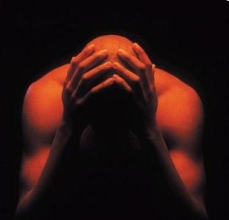 I’m re-reading Brideshead Revisited for the first time. I love re-reading a book for the first time. I think it’s even more enjoyable than the first read, because I can take my time instead of being swept up in the plot or this character or that and racing through to the end, dying to know what happens. When I first read Brideshead Revisited, I was primarily interested in the character of Julia Flyte and the love story between her and Charles Ryder. This time, it was Sebastian Flyte that captured me.
I’m not actually sure why I was so taken with Julia on the first read. I can’t identify with her at all. There’s nothing in her personality or history or physical appearance that even remotely resonates with me. But Sebastian, I understand. In fact, I understand his character and plight better than I understand that of any other character in the book, and perhaps any other character I’ve ever read. And one of the things that so endears the book to me is the way Sebastian’s brothers and sisters talk about him. Sebastian, in case you haven’t read the book, is an absolutely enchanting young man with money, looks, and social graces in abundance whose prefers to be drunk rather than sober. He was raised by a very devout Catholic mother who doesn’t understand her son’s particular concupiscence at all, and whose desperate attempts to save him push him further and further away, eventually driving him out of the country entirely.
Sebastian’s descent into drunkenness is a primary theme in the beginning of the book, but gradually disappears into the background when he leaves the country and the main characters shift their attention to their own problems. Yet throughout the book, when his siblings speak of him, they always mention their belief that “God prefers drunkards to a lot of respectable people.” Charles Ryder, who narrates the story, was Sebastian’s closest friend at Oxford. As an agnostic, he is mystified by the Flyte family’s strange religion, generally responds with a lament that they have to bring God into everything. Charles is convinced that without Catholicism, Sebastian “would have had the chance to be a happy and healthy man.” The Flyte siblings don’t necessarily disagree with Charles about that. But their ultimate concern isn’t the state of his health or happiness.
At the end of the book, Charles learns from the Sebastian’s youngest sister Cordelia that he has settled at a monastery near Carthage, as a sort of grounds-keeper. She says, “I’ve seen others like him, and I believe they are very near and dear to God.” Charles laments his friend’s fate and tries to console himself with the thought that Sebastian doesn’t suffer, but Cordelia says,
“Oh, yes, I think he does. One can have no idea what the suffering may be, to be maimed as he is — no dignity, no power of will. No one is ever holy without suffering. It’s taken that form with him.”
I’ve long been at a loss when it comes to conversations about addiction. It seems like there are two schools of thought on drug addicts and alcoholics. One says that addicts made their miserable beds, so they might as well just go ahead and lie in them and leave everyone else in peace. The other says that addicts suffer from a disease, that they literally can’t choose not to drink or do drugs, and that they need to be treated and healed.
I agree with both and I don’t agree with either. It just isn’t that simple. The way Cordelia puts it in Brideshead Revisited makes the most sense to me. “One can have no idea what the suffering may be, to be maimed as he is…no dignity, no power of will.” Yes, addicts are maimed. It’s one of the reasons addiction seems like such a hopeless situation, why everyone involved feels so helpless, including the addict. No one wants to be an addict, at the mercy of a substance to make their lives worth living. No one who hasn’t been can understand anything wielding that kind of power over a person. But it does. Addicts are, to greater and lesser extents, stripped of their power of will, and with that, their inherent human dignity.
As my own addiction progressed, I can recall being aware that it was growing worse, pushing that knowledge aside, stuffing it away where I wouldn’t have to see it. I remember sometimes it was like a voice would shout out from inside of me, “you’re running out of chances! You have to say no this time!” and I would soothe it, saying, “next time, next time. There’s plenty of time to say no yet.” And then there came a day when I knew that I was lost, that my will to say no was gone, and that if some outside force did not intervene I would die in my addiction. That was a terrible knowledge. I begged God for help, and I can remember saying, and meaning, “no matter what it costs.” Almost immediately, I found myself being restrained and hemmed in by forces outside myself. First the Ogre, then my parents, then my friends, and finally my unborn child. It cost a lot, in the end, but God listened. He restored my dignity and will to me almost by force, by making it nearly impossible to pursue my addiction. I would never have been able to pull myself out of addiction, but in the end I was able to let myself to be pulled out by grace.
Sometimes I wonder why that doesn’t happen for all addicts, or at least more. I never met a single addict who didn’t reference “getting cleaned up” sometime in the future. They’re all looking for a way out, and miserable because they can’t find the will to pursue it. Maybe that’s why Cordelia thinks that “they are very near and dear to God.” Addicts don’t chase money or power, after all. They chase a feeling…happiness. Peace. God, in the end. Only they go about it in such a wrong way that all they find is misery and more misery, as they lose the very gifts that God has given them to seek him. Free will. Human dignity.
I wonder if Cordelia is right, if there can be a kind of holiness come out of suffering from an addiction. It seems seems contrary to faith, since drug and alcohol abuse are mortal sins, and yet it’s undeniable that one’s free will suffers greatly in the grips of an addiction. I wonder what that means about culpability, and what the anguish and remorse that many addicts feel even if they are unable to stop means to God. Sometimes I think addicts live in a type of perpetual penance, always making reparations for the sins they feel helpless to stop committing, living their lives out in an endless purgatory where they can never get free of their sin, no matter how much they suffer from it. At least, I know that’s how I felt when I was living it. And if I had died in that state, I probably wouldn’t have been surprised to end up in hell. But I don’t think I would have been surprised, either, to find myself weeping in God’s arms and hear him say, “this is what the blood of my Son was for. You’ve suffered enough.”
Previous Post

July 1, 2012
A Soldier's Wife
Next Post
July 3, 2012 Rockin' Love Songs
Browse Our Archives
Select a Category Uncategorized
Select a Month September 2016 August 2016 July 2016 June 2016 April 2016 March 2016 January 2016 December 2015 November 2015 October 2015 September 2015 August 2015 July 2015 June 2015 May 2015 April 2015 March 2015 February 2015 January 2015 December 2014 November 2014 October 2014 September 2014 August 2014 July 2014 June 2014 May 2014 April 2014 March 2014 February 2014 January 2014 December 2013 November 2013 October 2013 September 2013 August 2013 July 2013 June 2013 May 2013 April 2013 March 2013 February 2013 January 2013 December 2012 November 2012 October 2012 September 2012 August 2012 July 2012 June 2012 May 2012 April 2012 March 2012 February 2012 January 2012 December 2011 November 2011 October 2011 September 2011 August 2011 July 2011 June 2011 May 2011 April 2011 March 2011 February 2011 January 2011 December 2010 November 2010 October 2010 September 2010 August 2010 July 2010
Follow Us!
TAKE THE
Religious Wisdom Quiz
Which Christian group traditionally avoids military service?
Select your answer to see how you score.
Methodists Evangelicals Quakers Pentecostals
Related posts from Barefoot and Pregnant



What a Woman in Crisis Really Needs
TRENDING AT PATHEOS Catholic

Rejecting Doom: Christian Hope And Human Action
Christianity is a religion of hope. We are to have hope and...

It’s What Comes From Within Which Matters
One of the most difficult things for us to understand is why...

Why I Choose the Eucharist Over the Sermon
Choose the Eucharist, Not the Sermon What are we supposed to get...

5 Design Elements Found in Spiritually Rooted Homes
Putting Spirituality Into Home Decor Our homes are more than our living...

Credo: A Story of God Told with the...
About 10 years ago, I began to imagine a personal "Credo" that...

The Anatomy of Divine Revelation in Catholic Thought
The claim that God has made Himself known to human beings is...
view all Catholic blogs
Ad-Free & Subscriber Log-In Subscription Support
- About Us
- 2026 Calendar
- Videos
- Podcasts
- Library of World Religions
- Faith In Media Tracker
- Advertise With Us
- Write for Us
- Privacy Policy
- Terms of Service
- Do Not Sell My Data
- Contact Us
- Radiant Digital
- Manage Newsletter Subscriptions
- Unsubscribe From Notifications
- Sitemap
Copyright 2008-2026, Patheos. All rights reserved.
Subscription Support Ad-Free & Subscriber Log-In
Follow Patheos