
BuddhistCatholicContemplativeEvangelicalGeneral ChristianHinduJewishLatter-day SaintMuslimNew VisionsProgressive Christian
Beliefs
- Buddhist
- Catholic
- Contemplative
- Evangelical
- General Christian
- Hindu
- Jewish
- Latter-day Saint
- More Voices
- Muslim
- New Visions
- Pagan
- Progressive Christian
Topics
- Religion News
- Food and Religion
- Sports and Religion
- Religious Art
- Religious Music and Entertainment
- Religious Events
- History and Religion
- Style and Religion
- Politics and Religion
- Women in Religion
- Recreation Outdoors and Religion
- Business Finance and Religion
- Careers Workplace and Religion
- Education and Religion
- Family Parenting and Religion
- Health Fitness and Religion
- Home and Religion
- Relationships and Religion
- Technology and Religion
- Travel and Religion
Columnists
- Buddhist Columnists
- Business Finance and Religion Columnists
- Careers Workplace and Religion Columnists
- Catholic Columnists
- Contemplative Columnists
- Education and Religion Columnists
- Evangelists Columnists
- Family Parenting and Religion Columnists
- General Christian Columnists
- Health Fitness and Religion Columnists
- Hindu Columnists
- History and Religion Columnists
- Home and Religion Columnists
- Jewish Columnists
- More Voices Columnists
- Latter Day Columnists
- Muslim Columnists
- New Visions Columnists
- Nonreligious Columnists
- Pagan Columnists
- Politics and Religion Columnists
- Progressive Columnists
- Recreation Outdoors and Religion Columnists
- Relationships and Religion Columnists
- Religion News Columnists
- Religious Art Columnists
- Religious Events Columnists
- Religious Music and Entertainment Columnists
- Sports and Religion Columnists
- Style and Religion Columnists
- Technology and Religion Columnists
- Travel and Religion Columnists
- Women in Religion Columnists
Resource Library
- 2026 Calendar
- Library of World Religions
- The 100 Most Holy Places on Earth
- Patheos Answers
- Podcasts
- Videos
- Faith Leaders Database
- Anglican Episcopalian
- Bahai
- Baptist
- Buddhism
- Christianity
- Confucianism
- Eastern Orthodoxy
- Hinduism
- Holiness and Pentecostal
- ISKCON
- Islam
- Judaism
- Lutheran
- Methodist
- The Church of Jesus Christ of Latter-day Saints
- New Age
- Paganism
- Presbytarian and Reformed
- Protestantism
- Religion Behind the Scenes
- Roman Catholic
- Scientology
- Shia Islam
- Sikhism
- Sufism
- Sunni Islam
- Taoism
- Zen
- See all religions
Research Tools
 Ad-Free & Subscriber Log-In Subscription Support
Ad-Free & Subscriber Log-In Subscription Support
Follow Patheos 

- Trending:
- Forgiveness
- |
- Marriage
- |
- Consciousness
- |
- Death Penalty
- |
- Election
- |
- Halloween
 Barefoot and Pregnant
- Home
- Catholic
- Homeschooling Miscellania
Homeschooling Miscellania
Last updated on: October 10, 2016 at 11:54 am by Calah Alexander
Homeschooling Miscellania 2016-10-10T11:54:41-04:00 Calah Alexander
Patheos Explore the world's faith through different perspectives on religion and spirituality! Patheos has the views of the prevalent religions and spiritualities of the world.

As we’ve been working through the first year of homeschooling, I’ve started to keep mental notes about things I like and dislike about the curricula we’ve been using. I thought I’d post a few of those things here, in case anyone else is considering the materials we’re using or is incredibly bored and wants to read about homeschooling stuff.
We started Sienna last year on How to Teach Your Child to Read in 100 Easy Lessons. We only made it through about the fifteenth or so lesson before we moved, and the book was lost in the move, our lives were upended and in chaos, and homeschooling was shelved until the fall. I wasn’t planning on switching from that book until we lost it and a friend recommended to me the Little Angel Readers as a more thorough introduction to phonics and grammar. I took that advice, since How to Teach Your Child to Read focused solely on phonics and learning to read, with zero instruction on wider linguistic concepts.
 Here they are, in all their colorful glory
I like the Little Angel Readers better, mostly. I love that concepts such as rhyming and left/right discrimination are introduced very early. I also love that grammatical concepts are introduced when children are able to read the corresponding words. That approach makes a lot more sense to me; what’s the point in teaching kids to read if they don’t understand the words they’re reading? For example, right now Sienna has mastered all the consonants but only two vowels, a and i. She’s reading short stories, though, and she can differentiate between an “s” at the end of a word that makes it plural, an “s” at the end of a word that makes it a present-tense action, and an ” ‘s” at the end of a word that indicates possession. Those are important distinctions, and I love that the books teach them when the children happen upon the words instead of ignoring concepts like that until the child is able to read all words.
The lessons are lengthy, though. Each lesson takes us between 45 minutes and an hour, compared to the 15-20 minute lessons in How to Teach Your Child to Read. It’s doable, but Sienna is usually pretty wiped out at the end of the lesson. The other minor issue I’ve had with the books is that the author often includes words or letters in worksheets, stories (and even a test today!) that the student isn’t introduced to until the following lesson. It’s not a big fix, since I can look ahead and just skip that part, but it smacks of sloppy editing.
There is one thing I really, intensely dislike about the Little Angel Readers, though, and that’s the overt Catholicism of them. Yeah, it’s nice for our children to learn that nun starts with “N” and priest starts with “P”, but nearly every single letter is introduced with a religious drawing. The problem is that the drawings are sometimes impossible to decipher, often ridiculously complicated and obscure, and always horrible. Why draw the entire altar, priest, host, etc, when you’re trying to get across “tabernacle?” Wouldn’t “tree” be a lot simpler to draw and for children to grasp? Second, if you’re going to use a picture of a saint to represent a certain letter, make sure it’s a well-known saint with clear identifying marks, not an obscure bearded person in a triangle that even a google search can’t figure out. Third, Jesus was not blond-haired and blue-eyed, and every time I see Aryan Jesus representations it makes me want to punch someone.
 The whole “born of the house of David” thing should be our first clue that Jesus probably didn’t look like the son of Odin, as painted by Botticelli
Trying to center every single lesson and story around a particular Catholic something or other really complicates things that shouldn’t be complicated. It also requires bizarre leaps, like teaching “Jesus” as a sight word before “help”. Plus, it just smacks of indoctrination and annoys the crap out of me.
I dislike indoctrination. It’s one thing to teach religion and keep it present in our homes; it’s another to design curricula that have nothing to do with religion around religion. I think not teaching kids evolution as a scientific concept, whether or not you believe in it, is intellectually dishonest. This book isn’t intellectually dishonest, it’s just a very good curriculum made cumbersome and awkward by the attempt to frame it around Catholicism and Catholic experiences. It also bothers me that if, say, a Protestant or a Jew or an atheist were looking for a phonics curriculum with the criteria that the Little Angel Readers meet, they couldn’t use them without taking a course in Catholic theology and answering daily questions about another religion. I think that people who design curricula should design them with the goal of helping all children learn to read/write/whatever, not just good little Catholics.
All that aside, though, I do think it’s a solid phonics and grammar base and Sienna is learning very well from it. My own annoyances don’t seem to impact her (except for the times when we both sit hunched over a picture and our lesson turns into an extended game of Pictionary) and there have been opportunities to discuss things like guardian angels and obedience after reading certain stories, which I appreciate.
Math has been another story. We started with some basic workbooks and flashcards, but I quickly realized that I despise and loathe flashcards. I went with a friend’s suggestion and started RightStart Math, which I really like but which scares me.
 All this crap comes with the Level A starter kit, which also freaked me out. Most of it is currently still in the box and hidden away under the bed so I don’t have to think about where I’m going to put it when we start using it all. Yikes.
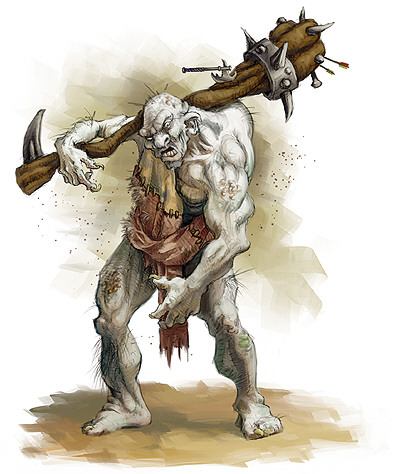
I like it because it teaches math in an entirely different way. No counting; instead, the kids use an abacus and are encouraged to identify groups of objects or numbers as opposed to counting them up individually. This results in kids who can quickly add 9 and 4 in their minds by changing it to 10 and 3, as opposed to kids like me, who would count on their fingers (and still do). When the Ogre and I were discussing the curriculum, he said that this is how he is able to do math quickly in his head, that it’s something he’s instinctively done throughout his life. He’s much, much more proficient at math than I am, and he has the kind of mind that can understand and enjoy reading calculus and physics books. I really want our kids to be like that, instead of both terrified of math and completely bewildered by anything above simple division, like me. (Last year I discovered I had forgotten how to do long division and couldn’t figure it out again even after googling it, for example.)
Basically this curriculum is designed to mimic the way Japanese and Asian children are taught math. I like it. It seems solid. It’s fun to teach because it requires lots of interaction and not much individual worksheet time. But it also frightens me because, as I said, I lack a grasp of math and I can’t understand where the curriculum is going. I’m afraid that as it gets up into the higher levels I won’t even be able to understand it. Or maybe I’ll learn with Sienna and discover that I can understand math in my old age. We’ll see.
The only other thing that really worries me about this curriculum is how incredibly other it is. It is a vastly different way of teaching math that is pretty much irreconcilable with the way math is traditionally taught here in the States. I worry that if we ever decide to put Sienna in school, she will be hopelessly lost in math because she’s been trained to think in such a different way. I don’t know, though. Maybe the program gives such a solid foundation that she’ll be able to pick right up and do the traditional work using the methods she’s learning right now. I hope that’s the case.
Anyway, these two form the basis of her curriculum right now. We were doing science last semester with her co-op but I dropped it as a formal subject this semester. We spend lots of time looking up bugs and concepts like volcanoes online, though, so I figure she’s getting enough science for kindergarten. History I haven’t even touched yet; we’re reading D’Aulaire’s Greek Myths, which is just beyond fabulous, and I like the idea of starting history with the Greek myths. Maybe next year we’ll move on to actual Greek history. For this year, though, I’m satisfied with the reading and math foundation that she’ll have at the end of the summer. (We’re not taking a summer break to make up for lost time during our move and to prepare for the time we’ll lose when the baby is born. That’s one nice thing about homeschooling.)
Speaking of homeschooling, go read this post. It made me laugh, and while I don’t agree with all of her arguments, I do agree that in this day and age, homeschooling is an emergency measure. It didn’t used to be; children used to be taught at home by tutors and sometimes had their educations supplemented by their parents (like Thomas More’s daughters). But that is no longer the cultural norm, and as such, I agree that homeschooling is not the ideal for modern parents who do not have the resources to educate children at home that our predecessors did. As the author of the post says,
But really, let’s be honest: homeschooling, even in the best of circumstances is far from ideal. It’s essentially an emergency situation. It is not a normal state of affairs, and it is not, however much like you might like to believe so right now, the best preparation for surviving in the job market. It may not be the worst, but it’s not the best, and in more cases than people seem willing to acknowledge, it is downright harmful.
I agree with half of that last sentence. I’m not sure about preparation for the job market; it seems to me that if you teach your children to work hard, work first, and play later, if you engage them in conversations and make sure they spend time doing activities with kids their own age, and if you educate them well, they should be more prepared for the job market than the average traditionally-schooled child. I think having a strong work ethic goes a long way, and the so-called “weirdness” of homeschooled kids tends to be dramatically exaggerated. From what I’ve seen, homeschooled kids can indeed be weird when they are younger, because they aren’t generally familiar with the ins and outs of playground social rules, but they tend to grow up to be articulate adults who are much more able to enter into a conversation with people of all ages on a variety of topics, whereas traditionally schooled children sometimes tend to not be comfortable speaking with people outside their immediate age range. But homeschooling can be downright harmful, and it often is, especially when too much of the burden is placed on an already exhausted mother of many other children. This sentence resonated with me more than anything else in the post:
And part of the reason for all of this is that learning at home simply cannot replicate the resources and opportunities of real schooling, although in trying to do so, many parents, in particular mothers, burn themselves out in sometimes decades-long struggles.
This seems to me to be the primary danger of being philosophically committed to homeschooling as the ideal. Ideals are great, as long as they can be be carried out in reality. But for some mothers who really want to homeschool or whose spouses really want them to homeschool, sometimes the reality of many children and a stressful life means that homeschooling is given a backseat, even if only out of necessity. Then the kids are getting shortchanged and their educations are neglected, the parents are wracked with guilt and trying to figure out how to stretch themselves even thinner, and essentially the entire family suffers as the parents try to live up to an ideal that has become impossible in reality. That is the primary reason I refuse to say, “we’re homeschooling all of our kids all the way through school.” I like homeschooling right now. Sienna is learning, I’m learning, we enjoy our time together, and I think it’s strengthening us as a family. If any of those things ceases to be true, though, I owe it to my daughter, my husband, and myself to honestly re-assess the wisdom of homeschooling and to be frank about both mine and Sienna’s limits.
All in all, I think every educational system has merits, obviously, otherwise no one would participate in or defend them. The danger comes when parents hold up one model as The Absolute Ideal and follow that ideal to the ends of the earth, even if it means their kids fall off the edge in the process.
 Unless, of course, your Absolute Ideal is to raise an army of Jedis. It’s acceptable to lose a few in pursuit of the Awesome.
Previous Post

April 28, 2012
7 Quick Takes Saturday
Next Post
May 3, 2012 The Long Road
Browse Our Archives
Select a Category Uncategorized
Select a Month September 2016 August 2016 July 2016 June 2016 April 2016 March 2016 January 2016 December 2015 November 2015 October 2015 September 2015 August 2015 July 2015 June 2015 May 2015 April 2015 March 2015 February 2015 January 2015 December 2014 November 2014 October 2014 September 2014 August 2014 July 2014 June 2014 May 2014 April 2014 March 2014 February 2014 January 2014 December 2013 November 2013 October 2013 September 2013 August 2013 July 2013 June 2013 May 2013 April 2013 March 2013 February 2013 January 2013 December 2012 November 2012 October 2012 September 2012 August 2012 July 2012 June 2012 May 2012 April 2012 March 2012 February 2012 January 2012 December 2011 November 2011 October 2011 September 2011 August 2011 July 2011 June 2011 May 2011 April 2011 March 2011 February 2011 January 2011 December 2010 November 2010 October 2010 September 2010 August 2010 July 2010
Follow Us!
TAKE THE
Religious Wisdom Quiz
Who was the youngest king of Judah?
Select your answer to see how you score.
Hezekiah Asa Josiah Jehoshaphat
Related posts from Barefoot and Pregnant

How Pokemon Go Saved My Summer
TRENDING AT PATHEOS Catholic

Rejecting Doom: Christian Hope And Human Action
Christianity is a religion of hope. We are to have hope and...

It’s What Comes From Within Which Matters
One of the most difficult things for us to understand is why...

Why I Choose the Eucharist Over the Sermon
Choose the Eucharist, Not the Sermon What are we supposed to get...

5 Design Elements Found in Spiritually Rooted Homes
Putting Spirituality Into Home Decor Our homes are more than our living...

Credo: A Story of God Told with the...
About 10 years ago, I began to imagine a personal "Credo" that...

The Anatomy of Divine Revelation in Catholic Thought
The claim that God has made Himself known to human beings is...
view all Catholic blogs
Ad-Free & Subscriber Log-In Subscription Support
- About Us
- 2026 Calendar
- Videos
- Podcasts
- Library of World Religions
- Faith In Media Tracker
- Advertise With Us
- Write for Us
- Privacy Policy
- Terms of Service
- Do Not Sell My Data
- Contact Us
- Radiant Digital
- Manage Newsletter Subscriptions
- Unsubscribe From Notifications
- Sitemap
Copyright 2008-2026, Patheos. All rights reserved.
Subscription Support Ad-Free & Subscriber Log-In
Follow Patheos