
BuddhistCatholicContemplativeEvangelicalGeneral ChristianHinduJewishLatter-day SaintMuslimNew VisionsProgressive Christian
Beliefs
- Buddhist
- Catholic
- Contemplative
- Evangelical
- General Christian
- Hindu
- Jewish
- Latter-day Saint
- More Voices
- Muslim
- New Visions
- Pagan
- Progressive Christian
Topics
- Religion News
- Food and Religion
- Sports and Religion
- Religious Art
- Religious Music and Entertainment
- Religious Events
- History and Religion
- Style and Religion
- Politics and Religion
- Women in Religion
- Recreation Outdoors and Religion
- Business Finance and Religion
- Careers Workplace and Religion
- Education and Religion
- Family Parenting and Religion
- Health Fitness and Religion
- Home and Religion
- Relationships and Religion
- Technology and Religion
- Travel and Religion
Columnists
- Buddhist Columnists
- Business Finance and Religion Columnists
- Careers Workplace and Religion Columnists
- Catholic Columnists
- Contemplative Columnists
- Education and Religion Columnists
- Evangelists Columnists
- Family Parenting and Religion Columnists
- General Christian Columnists
- Health Fitness and Religion Columnists
- Hindu Columnists
- History and Religion Columnists
- Home and Religion Columnists
- Jewish Columnists
- More Voices Columnists
- Latter Day Columnists
- Muslim Columnists
- New Visions Columnists
- Nonreligious Columnists
- Pagan Columnists
- Politics and Religion Columnists
- Progressive Columnists
- Recreation Outdoors and Religion Columnists
- Relationships and Religion Columnists
- Religion News Columnists
- Religious Art Columnists
- Religious Events Columnists
- Religious Music and Entertainment Columnists
- Sports and Religion Columnists
- Style and Religion Columnists
- Technology and Religion Columnists
- Travel and Religion Columnists
- Women in Religion Columnists
Resource Library
- 2026 Calendar
- Library of World Religions
- The 100 Most Holy Places on Earth
- Patheos Answers
- Podcasts
- Videos
- Faith Leaders Database
- Anglican Episcopalian
- Bahai
- Baptist
- Buddhism
- Christianity
- Confucianism
- Eastern Orthodoxy
- Hinduism
- Holiness and Pentecostal
- ISKCON
- Islam
- Judaism
- Lutheran
- Methodist
- The Church of Jesus Christ of Latter-day Saints
- New Age
- Paganism
- Presbytarian and Reformed
- Protestantism
- Religion Behind the Scenes
- Roman Catholic
- Scientology
- Shia Islam
- Sikhism
- Sufism
- Sunni Islam
- Taoism
- Zen
- See all religions
Research Tools
 Ad-Free & Subscriber Log-In Subscription Support
Ad-Free & Subscriber Log-In Subscription Support
Follow Patheos 

- Trending:
- Forgiveness
- |
- Marriage
- |
- Consciousness
- |
- Death Penalty
- |
- Election
- |
- Halloween
 Barefoot and Pregnant
- Home
- Catholic
- Children Need Fairy-Tales…and So Do Adults
Children Need Fairy-Tales…and So Do Adults
Last updated on: January 11, 2015 at 4:23 pm by Calah Alexander
Children Need Fairy-Tales…and So Do Adults 2015-01-11T16:23:50-05:00 Calah Alexander
Patheos Explore the world's faith through different perspectives on religion and spirituality! Patheos has the views of the prevalent religions and spiritualities of the world.
There are some refusals which, though they may be done what is called conscientiously, yet carry so much of their whole horror in the very act of them, that a man must in doing them not only harden but slightly corrupt his heart. One of them was the refusal of milk to young mothers when their husbands were in the field against us. Another is the refusal of fairy-tales to children.
Two years ago, when we first moved to Nevada, I went to a mother’s group that’s held at a local church to try and make some friends. There were lots and lots of women there, and after we sat around some tables, ate some food and chatted for a while a speaker gave a talk about something. I don’t honestly remember what the talk was about, just that it wasn’t particularly interesting. But what I do remember was the conversation afterward. They passed out this sheet of questions based on the speaker’s talk for us to discuss at our respective tables. I guess she must have talked about lying at some point because one of the questions was, “Do you believe it is acceptable to lie to your children about things such as Santa Claus and the Easter Bunny?”
The question itself made my jaw drop. Lie? About Santa Claus?
But their answers made me furious and vaguely nauseous. Without exception, every single woman at the table agreed that to tell children “lies” in an effort to “amuse them” was still “lying.”
I didn’t respond. I actually was so angry and upset that I couldn’t order my thoughts enough to guarantee that I wouldn’t burst out with “you people are destroying your children’s lives! You’re ruining them! Let them have Santa, let them have fairy-tales, let them have the wonder at the world that you have obviously lost!”
Instead, I just sat silently, left at the earliest possible opportunity, and never went back.
Was that the coward’s exit? Absolutely. Did my fear of confrontation and my inability to present a rational argument at a moment’s notice prevent me from using a genuine opportunity to defend the whole host of the unseen world? I believe so. I want to correct that mistake and defend, on behalf of all the children in the world, the world of faery, fancy and fable.
Of course, nothing I say here can ever defend fairy-tales as well as G.K. Chesterton’s “The Dragon’s Grandmother” and “The Red Angel”, present in Tremendous Trifles. If you find my arguments remotely compelling or interesting, please buy a copy of his book and read the real thing. I’m borrowing liberally here from his thinking and will quote him liberally as well (in italics), so you’d be well-served to just stop reading here and go get Tremendous Trifles. But if you don’t want to, I’ll do my best to do him justice.
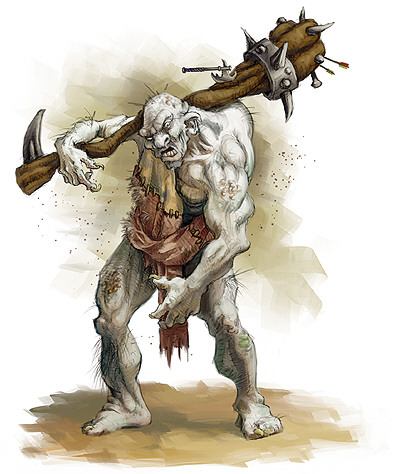
The most important thing to remember about fairy-tales is that they are real. You can all get up in arms and call the Ogre and tell him to call the psychiatrist and have me carted away to a padded room and still I will maintain that fairy-tales are REAL. I hate the argument that fairy-tales were made up to scare children away from the woods or (even worse) as an allegory of a child leaving the safety of childhood to enter the treacherous waters of adulthood. It is easier to believe in Peter Pan and Jack’s beanstalk than it is to believe in the whole modern creation of psychology. I would much prefer that we admit that we have angels on one shoulder and devils on the other than that we have these ugly, incomprehensible things, the ego and the id. As to the argument that one doesn’t see wolves dressed in old women’s clothing in ordinary experiences, well, I do not expect a glass of water to be turned into wine; but neither do I expect a glass of water to be poisoned with prussic acid…What we assume in action is not that the natural order is unalterable, but simply that it is much safer to bet on uncommon incidents that on common ones.
So to refrain from telling your children fairy-tales (or believing in them yourself) because they “couldn’t possibly have happened” is just ridiculous. No one knows all that could or could not possibly have happened; why believe in the Big Bang or the story of creation, and not believe that a boy once pulled a sword out of a stone? Consider the kind of world we have created by disbelieving in fairy-tales. In fairy-tales, people are always solid and sane. There may be evil people, but they’re still just people. It is the world around them that is crazy; dragons and demons, spirits and sprites, wizards and werewolves. But in this world, our world, nothing is extraordinary except us. We are insane; the demons are in our mind while the world around us remains as dull, commonplace and repetitive as ever it was. Chesterton explains this perfectly:
Folk-lore means that the soul is sane, but that the universe is wild and full of marvels. Realism means that the soul is sick and screaming. The problem of the fairy-tale is — what will a healthy man do with a fantastic world? The problem of the modern novel is — what will a madman do with a dull world? In fairy-tales the cosmos goes mad; but the hero does not go mad. In the modern novels the hero is mad before the book begins, and suffers from the harsh steadiness and cruel sanity of the cosmos…It is only sanity that can see even a wild poetry in insanity. Therefore, these wise old tales made the hero ordinary and the tale extraordinary. But you have made the hero extraordinary and the tale ordinary — so ordinary — oh, so very ordinary.
See what we have done by giving up fairy-tales? We have made our world so ordinary that the only way we know how to deal with it is to go mad ourselves. We could save thousands of dollars in therapist’s bills and medication if we would only just go out and fight the dragons in the world instead of creating dragons to fight inside our minds.
The world needs it’s fairy-tales back. We need to bring them back so that we again have evils outside ourselves to fight. But most importantly, children need fairy-tales so they can fight the things in the dark.
Children know what most adults have forgotten; there are, indeed, things that go bump in the night. The house doesn’t just settle and that’s not just a shadow. Assuring them that scary and bad things aren’t real is no assurance at all. Who among us can forget the hours we spent as children, lying awake in the dark and frightening ourselves with half-mad imaginations of demons and dragons and devils?
Many people object to fairy-tales (I mean the true fairy-tales here, like the original Grimm tales, not the saccharine Disney perversions) on the grounds that they are too scary for children. But children are already afraid! You could protect a child from every scary image, every horrible news story, and every thrilling tale and still that child would find a way to scare itself. Fairy tales, then, are not responsible for producing in children fear, or any of the shapes of fear; fairy tales do not give the child the idea of the evil or the ugly; that is in the child already, because it is in the world already. Children intuitively know that this world is a frightening place. There are horrors present at every corner and behind every shadow. When you take away fairy-tales from the child you are not taking away fear; you are taking away the child’s ability to combat fear. Exactly what the fairy-tale does is this: it accustoms him for a series of clear pictures to the idea that these limitless terrors had a limit, that these shapeless enemies have enemies in the knights of God, that there is something in the universe more mystical than darkness, and stronger than strong fear.
Fairy-tales give the child a way to combat the evil that it knows is there, lurking just out of sight. Fairy-tales give a boy a St. George to slay the dragon; they give a girl an Alice to find her way through Wonderland. Those terribly, terribly realistic parents who don’t want to “lie” to their children are doing them a far worse disservice: they are denying their children the comfort of shining swords in the dark, of angles circled round their child’s bed. At the four corners of the child’s bed stand Perseus and Roland, Sigurd and St. George. If you withdraw the guard of heroes you are not making him rational; you are only leaving him to fight the devils alone.
Even if you are one of these frighteningly modern realists who doesn’t believe in Santa Claus and has lost the ability to see faeries among the flowers, let your children have their fairy-tales. No child should have to face the darkness on it’s own; let your child have companions on the journey, protection in the battle.
But if, after reading all this, you still refuse to let fairy-tales back into our world, well…
In the name of God and Democracy and the Dragon’s grandmother — in the name of all good things — I charge you to avaunt and haunt this blog no more!
(To read — and you really should — “The Dragon’s Grandmother” and “The Red Angel”)
Previous Post

October 4, 2010
The Dreaded Jeans + The Inappropriate Comment of the Day!
Next Post
October 8, 2010 7 Quick Takes Friday: Eating Crow Edition
Browse Our Archives
Select a Category Uncategorized
Select a Month September 2016 August 2016 July 2016 June 2016 April 2016 March 2016 January 2016 December 2015 November 2015 October 2015 September 2015 August 2015 July 2015 June 2015 May 2015 April 2015 March 2015 February 2015 January 2015 December 2014 November 2014 October 2014 September 2014 August 2014 July 2014 June 2014 May 2014 April 2014 March 2014 February 2014 January 2014 December 2013 November 2013 October 2013 September 2013 August 2013 July 2013 June 2013 May 2013 April 2013 March 2013 February 2013 January 2013 December 2012 November 2012 October 2012 September 2012 August 2012 July 2012 June 2012 May 2012 April 2012 March 2012 February 2012 January 2012 December 2011 November 2011 October 2011 September 2011 August 2011 July 2011 June 2011 May 2011 April 2011 March 2011 February 2011 January 2011 December 2010 November 2010 October 2010 September 2010 August 2010 July 2010
Follow Us!
TAKE THE
Religious Wisdom Quiz
I built a great temple with cedar and gold, using 70,000 carriers and 80,000 stonecutters. Who am I?
Select your answer to see how you score.
David Hiram Zerubbabel Solomon
Related posts from Barefoot and Pregnant

Why Paris is Such an Utter Plonker -...

TRENDING AT PATHEOS Catholic

Creation, Preservation, and Teleology in Catholic Theology
As I write this, it is very early Monday morning. Like millions...

The Parable Of The Sower And The Word...
One of Christ’s most famous parables is that of the sower who...

Rejecting Doom: Christian Hope And Human Action
Christianity is a religion of hope. We are to have hope and...

Why I Choose the Eucharist Over the Sermon
Choose the Eucharist, Not the Sermon What are we supposed to get...

5 Design Elements Found in Spiritually Rooted Homes
Putting Spirituality Into Home Decor Our homes are more than our living...

Credo: A Story of God Told with the...
About 10 years ago, I began to imagine a personal "Credo" that...
view all Catholic blogs
Ad-Free & Subscriber Log-In Subscription Support
- About Us
- 2026 Calendar
- Videos
- Podcasts
- Library of World Religions
- Faith In Media Tracker
- Advertise With Us
- Write for Us
- Privacy Policy
- Terms of Service
- Do Not Sell My Data
- Contact Us
- Radiant Digital
- Manage Newsletter Subscriptions
- Unsubscribe From Notifications
- Sitemap
Copyright 2008-2026, Patheos. All rights reserved.
Subscription Support Ad-Free & Subscriber Log-In
Follow Patheos