
BuddhistCatholicContemplativeEvangelicalGeneral ChristianHinduJewishLatter-day SaintMuslimNew VisionsProgressive Christian
Beliefs
- Buddhist
- Catholic
- Contemplative
- Evangelical
- General Christian
- Hindu
- Jewish
- Latter-day Saint
- More Voices
- Muslim
- New Visions
- Pagan
- Progressive Christian
Topics
- Religion News
- Food and Religion
- Sports and Religion
- Religious Art
- Religious Music and Entertainment
- Religious Events
- History and Religion
- Style and Religion
- Politics and Religion
- Women in Religion
- Recreation Outdoors and Religion
- Business Finance and Religion
- Careers Workplace and Religion
- Education and Religion
- Family Parenting and Religion
- Health Fitness and Religion
- Home and Religion
- Relationships and Religion
- Technology and Religion
- Travel and Religion
Columnists
- Buddhist Columnists
- Business Finance and Religion Columnists
- Careers Workplace and Religion Columnists
- Catholic Columnists
- Contemplative Columnists
- Education and Religion Columnists
- Evangelists Columnists
- Family Parenting and Religion Columnists
- General Christian Columnists
- Health Fitness and Religion Columnists
- Hindu Columnists
- History and Religion Columnists
- Home and Religion Columnists
- Jewish Columnists
- More Voices Columnists
- Latter Day Columnists
- Muslim Columnists
- New Visions Columnists
- Nonreligious Columnists
- Pagan Columnists
- Politics and Religion Columnists
- Progressive Columnists
- Recreation Outdoors and Religion Columnists
- Relationships and Religion Columnists
- Religion News Columnists
- Religious Art Columnists
- Religious Events Columnists
- Religious Music and Entertainment Columnists
- Sports and Religion Columnists
- Style and Religion Columnists
- Technology and Religion Columnists
- Travel and Religion Columnists
- Women in Religion Columnists
Resource Library
- 2026 Calendar
- Library of World Religions
- The 100 Most Holy Places on Earth
- Patheos Answers
- Podcasts
- Videos
- Faith Leaders Database
- Anglican Episcopalian
- Bahai
- Baptist
- Buddhism
- Christianity
- Confucianism
- Eastern Orthodoxy
- Hinduism
- Holiness and Pentecostal
- ISKCON
- Islam
- Judaism
- Lutheran
- Methodist
- The Church of Jesus Christ of Latter-day Saints
- New Age
- Paganism
- Presbytarian and Reformed
- Protestantism
- Religion Behind the Scenes
- Roman Catholic
- Scientology
- Shia Islam
- Sikhism
- Sufism
- Sunni Islam
- Taoism
- Zen
- See all religions
Research Tools
 Ad-Free & Subscriber Log-In Subscription Support
Ad-Free & Subscriber Log-In Subscription Support
Follow Patheos 

- Trending:
- Forgiveness
- |
- Marriage
- |
- Consciousness
- |
- Death Penalty
- |
- Election
- |
- Halloween
 Bad Catholic
- Home
- Catholic
- Lent in the Age of the Smartphone
Lent in the Age of the Smartphone
Last updated on: February 11, 2016 at 12:43 pm by Marc
Lent in the Age of the Smartphone 2016-02-11T12:43:28-05:00 Marc
Patheos Explore the world's faith through different perspectives on religion and spirituality! Patheos has the views of the prevalent religions and spiritualities of the world.
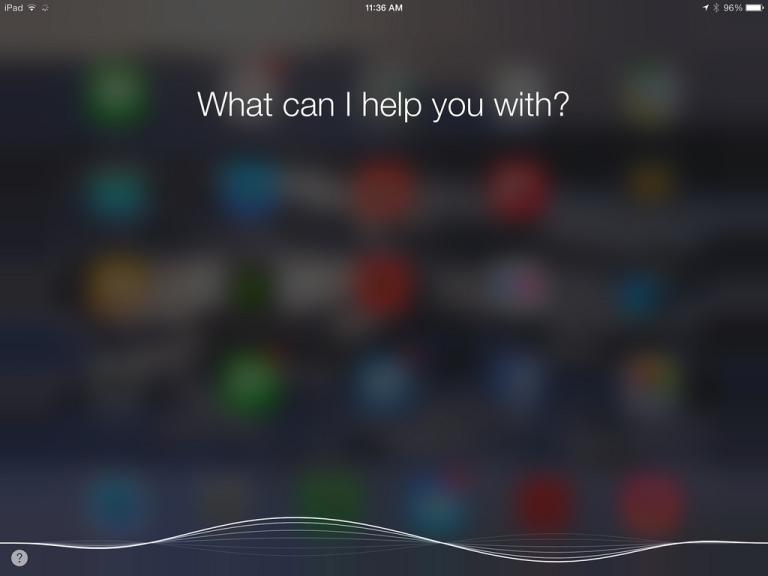
“Siri welcome screen,” Ted Drake, CC
I have been listening to NPR segments on the coming revolution in Smart technology. This usually involves an ecstatic announcer begging me to consider the benefits of texting my coffee-machine from bed, or having eggs delivered by drone when my smart-refrigerator registers a deficit in the egg-tray. If only we could give our mundane lives to machines, the logic goes, we’d have time for really living.
It’s baloney, and of the floppiest sort. Our use of smart-technology is not some neutral side-stage of human activity that we indulge so as to better enjoy The Real Life. We have one life. Every moment of it is as “real” as every other — including the moments spent hammering at our smartphones.
Acts of patience form a habit of patience. Our bullying at work forms the “innermost man” and makes us a bully everywhere else. Our fidelity in marriage builds a disposition of faithfulness that we carry into every other relationship. “Everything is connected,” as Pope Francis is so fond of saying: Every act builds up a habit in the total human person. The act of operating smart-devices is no exception. If this is true — that there is no use that does not form the user — then this is the question we should pose to Siri: “What habit, what disposition of the soul, and what mode of being are you building within me?”
In his article “Is Google Making Us Stupid,” Nicholas Carr recorded the discontent of a generation of Internet-readers who, since “switching modes” from books to articles and papers to Buzzfeed could no longer read. The very technology that promised them unlimited reading simultaneously educated them to skim, skip, and impatiently jump from text to text. The habit it formed negated the benefit it offered.
The same seems true of “time-saving” devices. John Steinbeck has a wonderful phrase in his novel, “East of Eden,” that sums up the problem: “Eventlessness has no posts to drape duration on. From nothing to nothing is no time at all.”
The problem with smart-technology is that it promises to fill our life with time, but it fulfills this promise by the reduction and negation of the events by which we feel the time that we have saved. The daily tasks of life, the mundane work — these are the “posts” we plant into the temporal void. They enable us to feel the time as really having been. The more bodily and spiritually involved we are in our tasks, the more they take on the definite quality of an event. The more a moment takes on the quality of an event, the more it remains in human consciousness as a fixed point, a memory — a creative shaping of the temporal void into this definite thing.
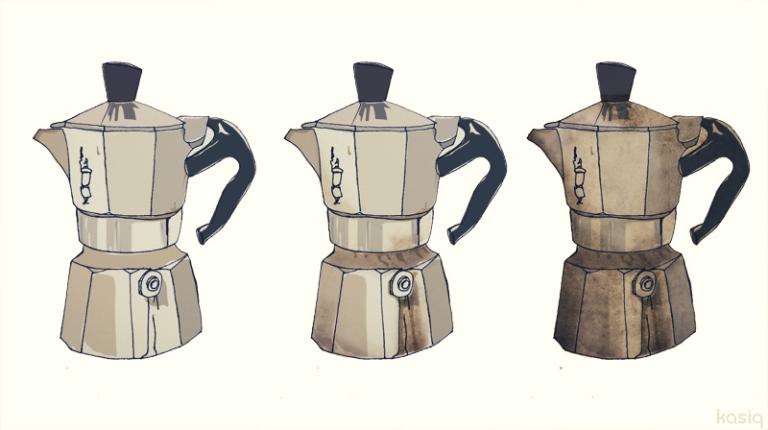
BIALETTI, by kasiQ kmjw, CC
The coffee I grind, weigh out and French-press is a coffee with this definite event-quality. The button I press to start the Keurig machine, less so. I can only imagine that the smart-Keurig that responds to my voice-command (after an initially exciting trial round) will be as close to event-less coffee as I can get. But the French-pressed or moka-potted coffee, for all its inconvenience, has the benefit of shaping time into a definite something rather than a nothingness — as does the handwritten letter, the record, the map, and the homegrown oregano. The more our days are speckled with sturdy, purposeful events, the more the day appears as a day rather than a blur. The more we abdicate our position as the craftsmen of the everyday, exchanging our mundane crown to become the initiators of automated processes — the less our days appear as “well spent.” What good is it if I gain all the time in the world if I do so by losing the very events which shape and order time into a felt, memorable, and enjoyable phenomenon?
Of course, the rebuttal is simple: One does not simply leave the time saved through technology blank. One fills it with precisely those event-posts Steinbeck speaks of — with vacations and travel, with novels and movies, with art-projects and philosophy. But this leads me back to where I began, to the question of whether the manner that we save time develops in us the interior disposition to use that spare time in the perfection of humanity, and in the flourishing of our more noble qualities.
My generation — kings and queens of technology, all — rarely run to the woods or to contemplation with the leisure time we dredge up from the mundane. We watch Netflix, take pictures of our feet and post them to Instagram, feel phantom vibrations on our thighs, and scroll up and down our News Feed with a vague feeling of panic that there may, after all, be nothing to see. If the prophets of the Smart Age were right, we would expect our technologically advanced humanity to blossom into renaissance: Surely now, with so much time saved, we can create great works of art and literature, implement our ideas for community development, and so on. Surely now, with our mundane tasks and jobs delegated to an army of robots, we can flourish in a genuine “really living.” As it turns out, we are bored, anxious, depressed, and under-educated. Our work is mediocre. We do little and text a lot. We can barely read. Our attention-span rivals only that of the hamster.
In truth, time cannot be saved. It can only be spent — inexorably, day after day. The only thing a being plunging toward his death can do is shape the manner in which each day is spent. If we spend our days operating apps to save time, we will arrive at the end of our lives and find that we spent our days operating apps. The quality of our life will not be magically limited to our vacations and rare sparks of creativity and joy. Our life is what it is on the basis of the whole — on the basis of our every act and the habits that result therefrom. So there will be no Renaissance. We will spend our time in the same mode that we save it — as technological consumers.
Not that we will feel any particular shame when we compare ourselves to previous generations: We divert ourselves from our mediocrity by indulging the pleasant dream that, once our food is cooked by machines, our packages delivered by drones, our emails sent to our glasses; once we can call out to the stove-top to clean itself, the book to read itself, and the car to drive itself; once we have our credit cards in our arms and the web in our head — then we will have the time for excellence. We are so convinced that we “just don’t have the time,” we have forgotten that no quantity of time can spew out a great people — only an excellence of intellect and heart that empowers them to seize and shape whatever quantity of time they are allowed.
Lent is a gift of Christianity to a mediocre age, in that it demands that we take 40 days of extreme inconvenience to develop, not our technical proficiency, but the interior disposition that allows us to make good use of the time that is given. Perhaps, amidst our prayer, fasting, and almsgiving, the taking on of a few dumb-activities is in order — a few inconvenient posts to hammer into the temporal void.
Previous Post

February 5, 2016
Faking It in the Age of Identity
Next Post
February 16, 2016 That Good Ol', Life-Affirming, Self-Inflicted Violence
Browse Our Archives
Select a Category Another Look Atheism Bad Catholics Beauty Communio Crookedhart Destupidification Exiting the Culture Wars Gender Theory That Doesn't Suck How To Language Liturgy! Love One Another Marriage Equality Modesty Music Objectification pop culture Poverty Sacraments Sex Technology The Best Religion in the World The Erotic Phenomenon Time Uncategorized Virtue Ethics That Don't Suck Winning the Culture Wars
Select a Month January 2017 December 2016 November 2016 October 2016 July 2016 June 2016 April 2016 March 2016 February 2016 January 2016 December 2015 November 2015 October 2015 September 2015 August 2015 July 2015 June 2015 May 2015 March 2015 February 2015 January 2015 June 2014 May 2014 April 2014 March 2014 February 2014 January 2014 December 2013 November 2013 October 2013 September 2013 August 2013 July 2013 June 2013 May 2013 April 2013 March 2013 February 2013 January 2013 December 2012 November 2012 October 2012 September 2012 August 2012 July 2012 June 2012 May 2012 April 2012 March 2012 February 2012 January 2012 December 2011 November 2011 October 2011 September 2011 August 2011 July 2011 June 2011 May 2011 April 2011 March 2011 February 2011 January 2011 December 2010 November 2010 October 2010 September 2010 August 2010
Follow Us!
TAKE THE
Religious Wisdom Quiz
What does "Pharisee" mean?
Select your answer to see how you score.
Separated one Healer Teacher Holy one
Related posts from Bad Catholic
Towards a New Argument Against Pornography


Why Millennials Want to Change the World

The Communist That Lives With Me Responds: "Your...
TRENDING AT PATHEOS Catholic

The Parable Of The Sower And The Word...
One of Christ’s most famous parables is that of the sower who...

Rejecting Doom: Christian Hope And Human Action
Christianity is a religion of hope. We are to have hope and...

Why I Choose the Eucharist Over the Sermon
Choose the Eucharist, Not the Sermon What are we supposed to get...

5 Design Elements Found in Spiritually Rooted Homes
Putting Spirituality Into Home Decor Our homes are more than our living...

Credo: A Story of God Told with the...
About 10 years ago, I began to imagine a personal "Credo" that...

The Anatomy of Divine Revelation in Catholic Thought
The claim that God has made Himself known to human beings is...
view all Catholic blogs
Ad-Free & Subscriber Log-In Subscription Support
- About Us
- 2026 Calendar
- Videos
- Podcasts
- Library of World Religions
- Faith In Media Tracker
- Advertise With Us
- Write for Us
- Privacy Policy
- Terms of Service
- Do Not Sell My Data
- Contact Us
- Radiant Digital
- Manage Newsletter Subscriptions
- Unsubscribe From Notifications
- Sitemap
Copyright 2008-2026, Patheos. All rights reserved.
Subscription Support Ad-Free & Subscriber Log-In
Follow Patheos