
BuddhistCatholicContemplativeEvangelicalGeneral ChristianHinduJewishLatter-day SaintMuslimNew VisionsProgressive Christian
Beliefs
- Buddhist
- Catholic
- Contemplative
- Evangelical
- General Christian
- Hindu
- Jewish
- Latter-day Saint
- More Voices
- Muslim
- New Visions
- Pagan
- Progressive Christian
Topics
- Religion News
- Food and Religion
- Sports and Religion
- Religious Art
- Religious Music and Entertainment
- Religious Events
- History and Religion
- Style and Religion
- Politics and Religion
- Women in Religion
- Recreation Outdoors and Religion
- Business Finance and Religion
- Careers Workplace and Religion
- Education and Religion
- Family Parenting and Religion
- Health Fitness and Religion
- Home and Religion
- Relationships and Religion
- Technology and Religion
- Travel and Religion
Columnists
- Buddhist Columnists
- Business Finance and Religion Columnists
- Careers Workplace and Religion Columnists
- Catholic Columnists
- Contemplative Columnists
- Education and Religion Columnists
- Evangelists Columnists
- Family Parenting and Religion Columnists
- General Christian Columnists
- Health Fitness and Religion Columnists
- Hindu Columnists
- History and Religion Columnists
- Home and Religion Columnists
- Jewish Columnists
- More Voices Columnists
- Latter Day Columnists
- Muslim Columnists
- New Visions Columnists
- Nonreligious Columnists
- Pagan Columnists
- Politics and Religion Columnists
- Progressive Columnists
- Recreation Outdoors and Religion Columnists
- Relationships and Religion Columnists
- Religion News Columnists
- Religious Art Columnists
- Religious Events Columnists
- Religious Music and Entertainment Columnists
- Sports and Religion Columnists
- Style and Religion Columnists
- Technology and Religion Columnists
- Travel and Religion Columnists
- Women in Religion Columnists
Resource Library
- 2026 Calendar
- Library of World Religions
- The 100 Most Holy Places on Earth
- Patheos Answers
- Podcasts
- Videos
- Faith Leaders Database
- Anglican Episcopalian
- Bahai
- Baptist
- Buddhism
- Christianity
- Confucianism
- Eastern Orthodoxy
- Hinduism
- Holiness and Pentecostal
- ISKCON
- Islam
- Judaism
- Lutheran
- Methodist
- The Church of Jesus Christ of Latter-day Saints
- New Age
- Paganism
- Presbytarian and Reformed
- Protestantism
- Religion Behind the Scenes
- Roman Catholic
- Scientology
- Shia Islam
- Sikhism
- Sufism
- Sunni Islam
- Taoism
- Zen
- See all religions
Research Tools
 Ad-Free & Subscriber Log-In Subscription Support
Ad-Free & Subscriber Log-In Subscription Support
Follow Patheos 

- Trending:
- Forgiveness
- |
- Marriage
- |
- Consciousness
- |
- Death Penalty
- |
- Election
- |
- Halloween
 Bad Catholic
- Home
- Catholic
- Language of Love, Language of Rights
Language of Love, Language of Rights
Last updated on: December 21, 2015 at 1:57 pm by Marc
Language of Love, Language of Rights 2015-12-21T13:57:50-05:00 Marc
Patheos Explore the world's faith through different perspectives on religion and spirituality! Patheos has the views of the prevalent religions and spiritualities of the world.
 For all the warm feelings that squelch up into consciousness whenever we mention human rights (can you feel all 30 of them lodged in you chest?), and despite the festivity with which we annually gift the world with a New Universal Human Right (you just didn’t know you had it yet, morons) — the language of rights tends to make us miserable.
A friendship described in terms of rights is far from friendly. I could only consider myself as having “the right to be respected” and my friend as having the “duty to respect me” if respect is no longer my friend’s natural response to me.
We see this in erotic love all the time: The values of the beloved are only considered in terms of “rights” — a right to kindness, tenderness, equality — when “kindness” and “tenderness” and “equality” are called into question, drying up as responses flowing from the apprehension of the beauty, dignity and freedom of the other and replaced — in a sort of emergency measure — as the obligations due to a being we know (rationally and as a matter of fact) but do not necessarily feel (spontaneously and existentially) to have those same values. Erotic love can only suffer through a momentary lapse into language of rights — it can neither be grounded in, nor strive for this generalized mode of relating to the beloved.
There’s something wrong with rights: Their language is not the language of the person. The move from a value-responses to the “fulfilling of a right” always indicates a move away from the personal and towards the universal — from “this person” to “people in general.” “Respect,” which was previously a real, embodied and unspoken fact within my friendship, becomes the obligation of any person to any other. My friend and I merely enact what is generally required. “Tenderness” which was previously the proper response to the perceived dignity of the beloved, is now considered as the requirement of any person within the same situation. Since both love-relationships and friendships are only ever related to this particular person — who, after all, would want “tenderness” as an instance of a universal ought — neither can tolerate the language of rights.
If this seems doubtful, simply tell your beloved, “I have the right to your love,” and your friends, “I have the right to your friendship,” and gauge their response.
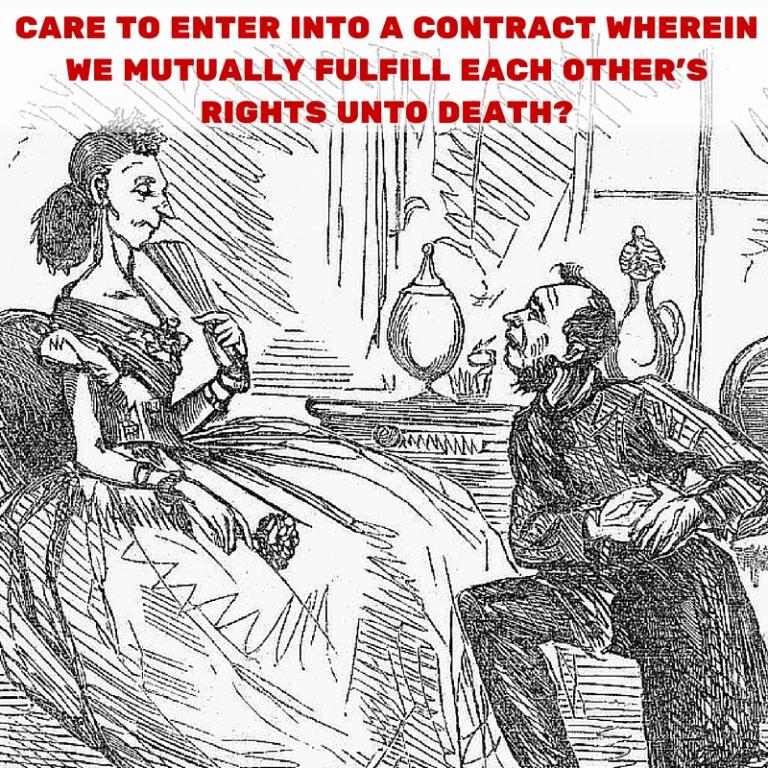
Jacques Maritain, in his work Man and the State, argues that there is no right of man “unless a certain order—which can be violated in fact—is inviolably required by what things are in their intelligible type or their essence, or by what the nature of man is, and is cut out for.” I want to push back a little bit: It is not simply that one ascertains the “rights of man” by a understanding his personal nature. It’s by contemplating a certain threat to or withdrawal from the actual experience of that personal nature that makes his value appear in terms of “rights” rather than — as in a natural friendship or love-relation — in terms of value.
Consider that perennial experience of the other human person: The mother’s experience of her unborn child. The mother does not “fulfill what is owed” to her unborn child. The protection, love, and care she gives do not “pay a debt.” Her love cannot be described in terms of “rights.” It is gratuitous, giving beyond what the other has a “right” to, neither “counting the cost,” nor carrying out an obligation, but loving her child because, well — “how beautiful the child.” The mother’s response to her unborn child is a natural, positive response of love to the value of the new life she carries — not a fulfillment of her new individual’s right to “Life, Liberty, and the Pursuit of Happiness.”
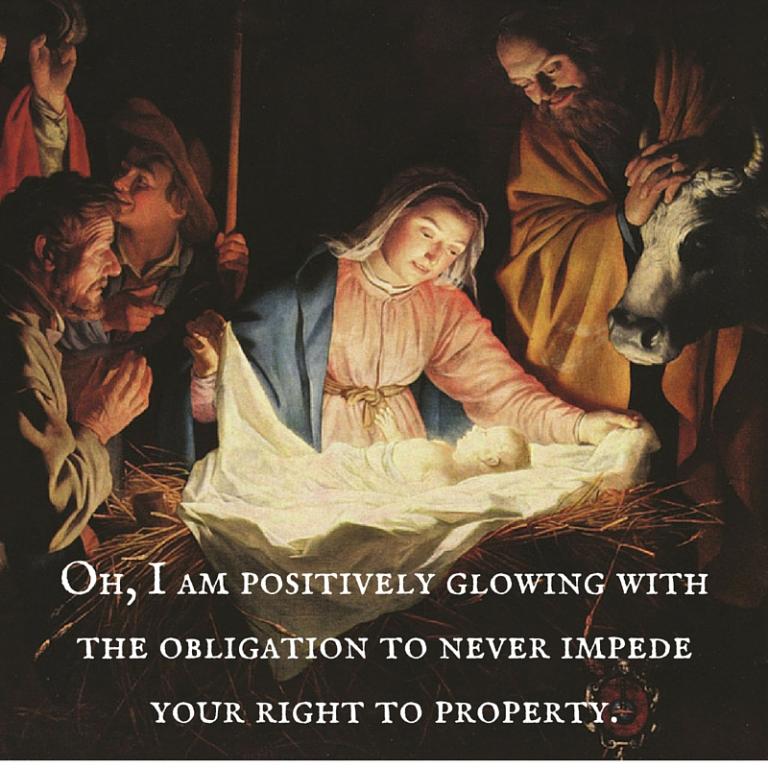
It is precisely when loving relationships break down that we begin to consider the other person in terms of rights. When we speak of the “right to life,” we are not responding to the felt value of a particular fetus with an upswell of protection, rather (and at best) we know the fact that the fetus has a value (a fact we can know without ever feeling the fetus to be valuable) and we fulfill our duty to protect the fetus on this rational basis — begrudgingly or otherwise.
In this new mode, “care” and “protection” are no longer phenomena of relationship — responses to the real, existential presence of a valuable person. “Care” and “protection” are now considered as a universal, ethical obligations. It is not the response of this mother to her child, but the ethical response of any person to any child. That we can enter into this mode is good, but to characterize it as the primary mode of well-ordered human relationships seems silly: For the mother to consider her children in terms of their “rights” already indicates the failure of a personal relationship which is not constructed in terms of rights, formal ethics, and universal norms, but in the real apprehension of value. The move to the language of rights always indicates the loss of a personal relationship based on the apprehension of value, or the move away from the personal to a consideration of “man in general.”
If all this is true, there is something problematic with the thought that our neighbors are to be loved, respected, tolerated, and accepted first and foremost on the basis of rights. It’s not that such a manner of “getting along” is false. It is that it is an emergency measure and a defense mechanism falsely taken as the natural, primary, and ideal manner of being-in-relation.
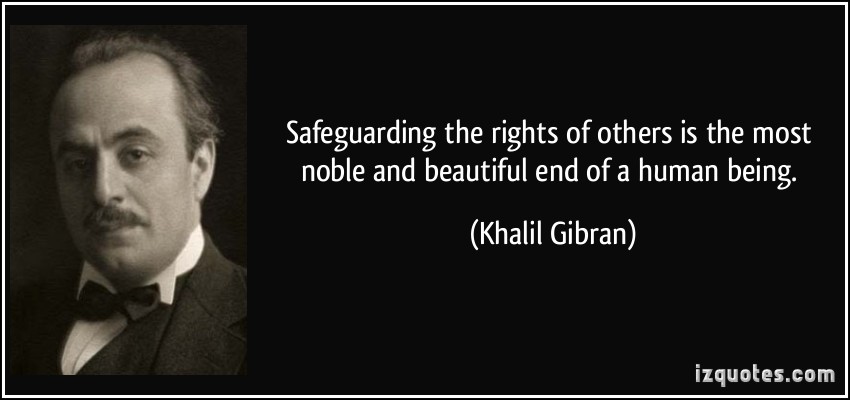
Actually, sharing pizza with them sounds way nobler.
Americans, God bless us, are especially prone to take as primary what is in fact secondhand:
Our country is founded on the philosophies of several “contract theorists,” who hold that man enters into society and/or governance precisely on the basis of threat to and the breakdown of value-apprehending relationships. Hobbes declares life “a condition of Warre of every one against every one” in which “every man has a Right to every thing; even to one anothers body.” Rousseau spins a creation myth in which our natural state is one of radical individualism, in which “even the offspring was nothing to its mother, as soon as it could do without her,” making any subsequent human relations a violence against idyllic self-containment, putting the human person in an ontological state of threat — and thus only understandable in terms of rights. Locke eases up on this, allowing for a “state of nature” in which human relationships can exist, but even he, in accordance with the general, rationalizing movement of the Enlightenment, posits universally and rationally known Rights as the proper basis for human relationships over and above existentially and personally apprehended values.
When our Declaration of Independence, founded on these philosophies, declares men to be “endowed by their Creator with certain unalienable Rights,” I do not disagree — though it is misleading. God did not create man with rights. God created man with values. God did not create man as a being owed a series of fulfilling items or conditions. God created man in his own image, a He calls “very good,” and anyone who really apprehends this “very goodness” responds with love, respect, tolerance, and so forth. We only consider these values as “rights” and the appropriate value-responses as “duties” when we no longer apprehend and respond to the felt “very goodness” of this particular person, but begin to threaten or abuse these values, or to consider them as a quality of “man in general.”
Of course, this world is full of violent, racist and intolerant people — God bless them — who, in that age-old spirit of human viciousness, make no attempt to apprehend the value of their neighbors. (Hell, this world is full of me.) So we need the language of rights, precisely because we need a defense mechanism in a sinful world. But we need to use this language loosely, recognizing it as a provisional vocabulary that is only justified if it indicates a step on the way to a vocabulary of love, a love characterized by a tendency towards the saintly — to apprehending the value in each incarnate person we encounter, not as an instance of a universal, but as this person. A love, respect, tolerance and acceptance without this transcendence rots into a form of violence in which we indulge the illusion of “loving our neighbor” only by isolating ourselves from any real, incarnate apprehension of her particular value. We “get along” only by destroying the possibility of becoming friends. We tolerate each other only by destroying the possibility of falling in love.
This shallow comfort by which I believe “I’m a good person” because I respect the rights of the abstract individual leads to a society much like our own: We add rights upon rights (a new right for every new threat!) and defend our own nominal and legal rights (like the right to bear arms) with all the passion of defending a part of our very being. We preach the rationally ascertainable and universal norms of tolerance, equality, pluralism and the rest, all while ignoring the particular poor, fearing and hating the actually-encountered other-race, other-culture and other-religion, and settling into that apathy, so easy for Christians, of “being good” without practicing the corporal and spiritual works of mercy. It seems like a break with the world — and it’s getting about that time, ain’t it? — should include a re-ordering of our emphasis on rights.
Previous Post

December 18, 2015
Please: Don't Respect My Beliefs
Next Post
December 22, 2015 Who Said It About Sexuality, Slavoj Žižek or Your Catholic Mom
Browse Our Archives
Select a Category Another Look Atheism Bad Catholics Beauty Communio Crookedhart Destupidification Exiting the Culture Wars Gender Theory That Doesn't Suck How To Language Liturgy! Love One Another Marriage Equality Modesty Music Objectification pop culture Poverty Sacraments Sex Technology The Best Religion in the World The Erotic Phenomenon Time Uncategorized Virtue Ethics That Don't Suck Winning the Culture Wars
Select a Month January 2017 December 2016 November 2016 October 2016 July 2016 June 2016 April 2016 March 2016 February 2016 January 2016 December 2015 November 2015 October 2015 September 2015 August 2015 July 2015 June 2015 May 2015 March 2015 February 2015 January 2015 June 2014 May 2014 April 2014 March 2014 February 2014 January 2014 December 2013 November 2013 October 2013 September 2013 August 2013 July 2013 June 2013 May 2013 April 2013 March 2013 February 2013 January 2013 December 2012 November 2012 October 2012 September 2012 August 2012 July 2012 June 2012 May 2012 April 2012 March 2012 February 2012 January 2012 December 2011 November 2011 October 2011 September 2011 August 2011 July 2011 June 2011 May 2011 April 2011 March 2011 February 2011 January 2011 December 2010 November 2010 October 2010 September 2010 August 2010
Follow Us!
TAKE THE
Religious Wisdom Quiz
In Revelation, what is the correct order of the first four seals opened by the Lamb?
Select your answer to see how you score.
White horse, black horse, red horse, pale horse Red horse, white horse, pale horse, black horse White horse, red horse, black horse, pale horse Pale horse, red horse, white horse, black horse
Related posts from Bad Catholic


Identity Politics: Our Appetite For Destruction

Identity Politics: The New Polytheism

How to Ethnically Spice Your Bland Ideology
TRENDING AT PATHEOS Catholic

Creation, Preservation, and Teleology in Catholic Theology
As I write this, it is very early Monday morning. Like millions...

The Parable Of The Sower And The Word...
One of Christ’s most famous parables is that of the sower who...

Rejecting Doom: Christian Hope And Human Action
Christianity is a religion of hope. We are to have hope and...

Why I Choose the Eucharist Over the Sermon
Choose the Eucharist, Not the Sermon What are we supposed to get...

5 Design Elements Found in Spiritually Rooted Homes
Putting Spirituality Into Home Decor Our homes are more than our living...

Credo: A Story of God Told with the...
About 10 years ago, I began to imagine a personal "Credo" that...
view all Catholic blogs
Ad-Free & Subscriber Log-In Subscription Support
- About Us
- 2026 Calendar
- Videos
- Podcasts
- Library of World Religions
- Faith In Media Tracker
- Advertise With Us
- Write for Us
- Privacy Policy
- Terms of Service
- Do Not Sell My Data
- Contact Us
- Radiant Digital
- Manage Newsletter Subscriptions
- Unsubscribe From Notifications
- Sitemap
Copyright 2008-2026, Patheos. All rights reserved.
Subscription Support Ad-Free & Subscriber Log-In
Follow Patheos