
BuddhistCatholicContemplativeEvangelicalGeneral ChristianHinduJewishLatter-day SaintMuslimNew VisionsProgressive Christian
Beliefs
- Buddhist
- Catholic
- Contemplative
- Evangelical
- General Christian
- Hindu
- Jewish
- Latter-day Saint
- More Voices
- Muslim
- New Visions
- Pagan
- Progressive Christian
Topics
- Religion News
- Food and Religion
- Sports and Religion
- Religious Art
- Religious Music and Entertainment
- Religious Events
- History and Religion
- Style and Religion
- Politics and Religion
- Women in Religion
- Recreation Outdoors and Religion
- Business Finance and Religion
- Careers Workplace and Religion
- Education and Religion
- Family Parenting and Religion
- Health Fitness and Religion
- Home and Religion
- Relationships and Religion
- Technology and Religion
- Travel and Religion
Columnists
- Buddhist Columnists
- Business Finance and Religion Columnists
- Careers Workplace and Religion Columnists
- Catholic Columnists
- Contemplative Columnists
- Education and Religion Columnists
- Evangelists Columnists
- Family Parenting and Religion Columnists
- General Christian Columnists
- Health Fitness and Religion Columnists
- Hindu Columnists
- History and Religion Columnists
- Home and Religion Columnists
- Jewish Columnists
- More Voices Columnists
- Latter Day Columnists
- Muslim Columnists
- New Visions Columnists
- Nonreligious Columnists
- Pagan Columnists
- Politics and Religion Columnists
- Progressive Columnists
- Recreation Outdoors and Religion Columnists
- Relationships and Religion Columnists
- Religion News Columnists
- Religious Art Columnists
- Religious Events Columnists
- Religious Music and Entertainment Columnists
- Sports and Religion Columnists
- Style and Religion Columnists
- Technology and Religion Columnists
- Travel and Religion Columnists
- Women in Religion Columnists
Resource Library
- 2026 Calendar
- Library of World Religions
- The 100 Most Holy Places on Earth
- Patheos Answers
- Podcasts
- Videos
- Faith Leaders Database
- Anglican Episcopalian
- Bahai
- Baptist
- Buddhism
- Christianity
- Confucianism
- Eastern Orthodoxy
- Hinduism
- Holiness and Pentecostal
- ISKCON
- Islam
- Judaism
- Lutheran
- Methodist
- The Church of Jesus Christ of Latter-day Saints
- New Age
- Paganism
- Presbytarian and Reformed
- Protestantism
- Religion Behind the Scenes
- Roman Catholic
- Scientology
- Shia Islam
- Sikhism
- Sufism
- Sunni Islam
- Taoism
- Zen
- See all religions
Research Tools
 Ad-Free & Subscriber Log-In Subscription Support
Ad-Free & Subscriber Log-In Subscription Support
Follow Patheos 

- Trending:
- Forgiveness
- |
- Marriage
- |
- Consciousness
- |
- Death Penalty
- |
- Election
- |
- Halloween
 Bad Catholic
- Home
- Catholic
- Stop Moralizing Shame, It’s Ruining Everyone’s Day
Stop Moralizing Shame, It’s Ruining Everyone’s Day
Last updated on: June 1, 2015 at 12:52 pm by Marc
Stop Moralizing Shame, It’s Ruining Everyone’s Day 2015-06-01T12:52:12-04:00 Marc
Patheos Explore the world's faith through different perspectives on religion and spirituality! Patheos has the views of the prevalent religions and spiritualities of the world.
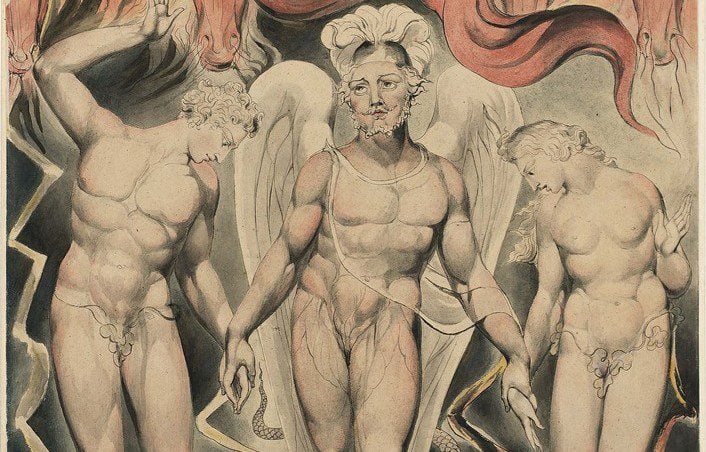
As some criticism on my post on slut-shaming put it, the concept of shame as a protective feeling for the integrity of the entire person is “not even in the ballpark” of what shame really is. Shame is, in fact, “the negative judgment of the conscience directed towards ourselves…[it has] nothing to do with objectification or wholeness of person.”
Now while this seems to make shame something simple, useful, and necessary to the restoration of a moral world, it actually makes shame a senseless emotion, weakens our concept of conscience, and contributes to a culture of emotional subjectivism. Shame absolutely cannot be “the negative judgment of conscience directed towards ourselves,” and I will fight for the fact.
First of all, we do not always feel shame “directed towards ourselves.” We often feel shame for others. (1)
Secondly, we feel shame apart from moral issues. If conscience is “a dictate of the practical reason deciding that any particular action is right or wrong” (2), and if shame is a negative judgment of conscience, then it should be impossible to feel shame except over morally wrong actions. But if my pants fall off at a public event, I will feel ashamed. If forget my words in the middle of a public address, and look up to the blank stare of an expectant audience, I will burn with shame. These are hardly judgments of my conscience accusing me of performing a morally wrong action. They are moments in which I fear and dread being seen as some spectacle, and thus seem to fall under the notion of shame we developed in the previous posts — “a protective feeling for the entirety of the person over and against the gaze or act which treats her as something less.”
Conversely, if shame is a “negative judgment of conscience,” then one could not have a negative judgment of conscience without feeling shame. But we all experience negative judgments of conscience without shame. If I perform the sin I struggle most with, the one I seem to perform every day, the one the priest in the confessional probably knows I’m going to say — it’s extremely likely that I won’t blush, long to hide and cover myself, or feel any typical shame-reactions. My attitude is — “damn, screwed up again.”
Indeed, the problem of habitual sin is precisely this, that it makes a sin so typical of me that I do not see it as a threat to the entirety of my person. I become used to my sin. It becomes a second nature, a tumor that I simply take as a part of my body. I cease feeling shame, which arises, not from wrongdoing plain and simple, but from wrongdoing felt as an attack on who I am — the sin that makes me feel like I’ve acted like a “beast,” the sin that establishes me as a “type” (i.e. a coward, a whore, a tyrant), and the sin I really recognize as undermining my dignity.
Nevertheless, just because I do not experience shame does not mean I do not experience a negative judgment of conscience directed towards myself. Indeed, this is the power of conscience, that it knows the truth of my action even when I don’t feel the truth of my action. I go to the sacrament and confess my sin to God, not because I am ashamed of it, but because I know it to be wrong despite my lack of shame. I even pray for a return of shame, to be able to see this sin as I first saw it — as something I am not, and attack on my entire person, one that tears me apart in my very ontological structure, and not as humdrum, daily, natural part of my person. Conscience, in the words of Doctor Joseph Ratzinger, “signifies the perceptible and demanding presence of truth in the subject himself.” It is a “co-knowing with the truth.” (3)
This is a crucial distinction. Shame is not fundamentally a matter of knowing. Shame is fundamentally a matter of feeling. It is, to use Aquinas’ terms, a passion of the soul, a response of the heart, whereas conscience is an act of the intellect. (4, 5) When we moralize shame we emotionalize conscience. We conflate the head and the heart. We invite the perverse modern notion that human actions are justified by the strength of feeling with which their conscience assents or dissents from practical proposition, a view Ratzinger rebuked with the following: “Firm, subjective conviction and the lack of doubts and scruples that follow from it do not justify man.” (6)
I know that ethical emotionalism is not the end-game of those that wish to describe shame as a fundamentally moral phenomenon, rather than a problem concerning the whole of man, but it is the natural conclusion of making shame-feelings the result of a negative judgment of conscience. If shame is no more than a negative judgment of conscience, it would not be unreasonable to say “I feel no shame, therefore my conscience makes no negative judgment upon my action, therefore my action is morally justified.”
So I disagree vigorously with my critic, when he says: “We tell people ‘you should be ashamed of yourself.’ [We] are saying ‘What you did is wrong and your conscience should be telling you so. If you don’t feel shame your conscience is badly formed.'”
In this view, calling someone to shame makes us the voice of conscience they lack. But we cannot be someone else’s conscience. “His conscience is man’s most secret core and his sanctuary. There he is alone with God whose voice echoes in his depths.” (7) Is it any wonder that those who are called to shame by another are immediately repulsed, as if some inner sanctuary has been violated? Is it any wonder that attempts to bring someone to shame are met with a criticism based on the idea that no man can make moral judgments for another? All someone who hears “your conscience is malformed” needs say is “your conscience is malformed!” to avoid the criticism. And indeed, is this not the state of our dialogue concerning slut-shaming? Those who see acts as shameful shout “shame!” and those who perform those acts say, “perhaps it is a judgment of your conscience that my act is wrong, but it is not a judgment of my conscience — so back off and let me do what I want.” We are arguing about who knows better, because we have made shame a matter of the head, when it is, in reality, a response of the heart.
It is true that every sinful act ought to be a source of shame in the sinner. But this is not at all because every sin should inspire a negative judgment of conscience. It is because every sin is an act of violence against the dignity and integrity of the person who sins. To feel shame for another person is not to condemn them as inadequate or unintelligent or even to accuse them of a malformed conscience. We only feel shame for others, and thus wish they felt shame for themselves, when we recognize in them a value, a worth, a unique, personal dignity, which they are failing to present through their words, dress or actions. To feel shame when someone “makes an ass of themselves” implies that we have a view of the inner worth of the person that is inadequately presented by an “ass.” To wish someone would feel shame for their action is to wish they would present themselves according to their dignity as a person, that they would protect themselves from the gaze or the action which presents them as something less. This is why we more naturally feel shame for those we love. We are intimately aware of their interior life, and we feel when they are presenting themselves as something less than those profound depths, whether in immoral action, an accident of self-presentation, an idiocy — anything.
Something follows from all this that will no doubt ring strange in our ears. To shame someone, if it really follows from a feeling of shame for another, and not from a dry, rational recognition of an immoral act, must be an act of love for the other person. It must be an act of compassion that asks, and really means “have you no shame?” That, is “have you no interior feeling for the unrepeatable value that you embody? Where, my friend, is your natural armor, steeled against the shifting opinions and malicious views of the public? Where is your grasp upon your own beauty, your own ontological constitution, that would warn you away from actions which present you as something less?” If there is a lack of shame in our neighbors, it may very well be because there is a lack of love in our eyes.
(1) Welten, Zeelenberg, Breugelmans, “Vicarious Shame,” Cognition and Emotion, 2012, Volume 26, Issue 5, Pages 836-846. I disagree entirely with the authors’ conclusions, but the paper provides excellent examples of vicarious shame.
(2) Rickaby, J. (1908). Conscience. In The Catholic Encyclopedia. New York: Robert Appleton Company.
(3) On conscience: Two essays. (2007). Philadelphia: National Catholic Bioethics Center.
(4) Summa Theologica, II-II, Q. 144, a. 1
(5) Ibid., I, Q. 72, a. 13
(6) On conscience: Two essays. (2007). Philadelphia: National Catholic Bioethics Center.
(7) Catechism of the Catholic Church, 1776
Gender Theory That Doesn't Suck
Previous Post

May 29, 2015
Rethinking Slut-shaming
Next Post
June 5, 2015 Eucharistic Eyes
Browse Our Archives
Select a Category Another Look Atheism Bad Catholics Beauty Communio Crookedhart Destupidification Exiting the Culture Wars Gender Theory That Doesn't Suck How To Language Liturgy! Love One Another Marriage Equality Modesty Music Objectification pop culture Poverty Sacraments Sex Technology The Best Religion in the World The Erotic Phenomenon Time Uncategorized Virtue Ethics That Don't Suck Winning the Culture Wars
Select a Month January 2017 December 2016 November 2016 October 2016 July 2016 June 2016 April 2016 March 2016 February 2016 January 2016 December 2015 November 2015 October 2015 September 2015 August 2015 July 2015 June 2015 May 2015 March 2015 February 2015 January 2015 June 2014 May 2014 April 2014 March 2014 February 2014 January 2014 December 2013 November 2013 October 2013 September 2013 August 2013 July 2013 June 2013 May 2013 April 2013 March 2013 February 2013 January 2013 December 2012 November 2012 October 2012 September 2012 August 2012 July 2012 June 2012 May 2012 April 2012 March 2012 February 2012 January 2012 December 2011 November 2011 October 2011 September 2011 August 2011 July 2011 June 2011 May 2011 April 2011 March 2011 February 2011 January 2011 December 2010 November 2010 October 2010 September 2010 August 2010
Follow Us!
TAKE THE
Religious Wisdom Quiz
Which Christian group is known for their rejection of military service and voting?
Select your answer to see how you score.
Anglican Amish Pentecostal Catholic
Related posts from Bad Catholic

Gender Identity is for Everyone, Part II

Gender Identity is for Everyone

The Illiberal Bathroom Experience

Who Said It About Sexuality, Slavoj Žižek or...
TRENDING AT PATHEOS Catholic

Rejecting Doom: Christian Hope And Human Action
Christianity is a religion of hope. We are to have hope and...

It’s What Comes From Within Which Matters
One of the most difficult things for us to understand is why...

Why I Choose the Eucharist Over the Sermon
Choose the Eucharist, Not the Sermon What are we supposed to get...

5 Design Elements Found in Spiritually Rooted Homes
Putting Spirituality Into Home Decor Our homes are more than our living...

Credo: A Story of God Told with the...
About 10 years ago, I began to imagine a personal "Credo" that...

The Anatomy of Divine Revelation in Catholic Thought
The claim that God has made Himself known to human beings is...
view all Catholic blogs
Ad-Free & Subscriber Log-In Subscription Support
- About Us
- 2026 Calendar
- Videos
- Podcasts
- Library of World Religions
- Faith In Media Tracker
- Advertise With Us
- Write for Us
- Privacy Policy
- Terms of Service
- Do Not Sell My Data
- Contact Us
- Radiant Digital
- Manage Newsletter Subscriptions
- Unsubscribe From Notifications
- Sitemap
Copyright 2008-2026, Patheos. All rights reserved.
Subscription Support Ad-Free & Subscriber Log-In
Follow Patheos