
BuddhistCatholicContemplativeEvangelicalGeneral ChristianHinduJewishLatter-day SaintMuslimNew VisionsProgressive Christian
Beliefs
- Buddhist
- Catholic
- Contemplative
- Evangelical
- General Christian
- Hindu
- Jewish
- Latter-day Saint
- More Voices
- Muslim
- New Visions
- Pagan
- Progressive Christian
Topics
- Religion News
- Food and Religion
- Sports and Religion
- Religious Art
- Religious Music and Entertainment
- Religious Events
- History and Religion
- Style and Religion
- Politics and Religion
- Women in Religion
- Recreation Outdoors and Religion
- Business Finance and Religion
- Careers Workplace and Religion
- Education and Religion
- Family Parenting and Religion
- Health Fitness and Religion
- Home and Religion
- Relationships and Religion
- Technology and Religion
- Travel and Religion
Columnists
- Buddhist Columnists
- Business Finance and Religion Columnists
- Careers Workplace and Religion Columnists
- Catholic Columnists
- Contemplative Columnists
- Education and Religion Columnists
- Evangelists Columnists
- Family Parenting and Religion Columnists
- General Christian Columnists
- Health Fitness and Religion Columnists
- Hindu Columnists
- History and Religion Columnists
- Home and Religion Columnists
- Jewish Columnists
- More Voices Columnists
- Latter Day Columnists
- Muslim Columnists
- New Visions Columnists
- Nonreligious Columnists
- Pagan Columnists
- Politics and Religion Columnists
- Progressive Columnists
- Recreation Outdoors and Religion Columnists
- Relationships and Religion Columnists
- Religion News Columnists
- Religious Art Columnists
- Religious Events Columnists
- Religious Music and Entertainment Columnists
- Sports and Religion Columnists
- Style and Religion Columnists
- Technology and Religion Columnists
- Travel and Religion Columnists
- Women in Religion Columnists
Resource Library
- 2026 Calendar
- Library of World Religions
- The 100 Most Holy Places on Earth
- Patheos Answers
- Podcasts
- Videos
- Faith Leaders Database
- Anglican Episcopalian
- Bahai
- Baptist
- Buddhism
- Christianity
- Confucianism
- Eastern Orthodoxy
- Hinduism
- Holiness and Pentecostal
- ISKCON
- Islam
- Judaism
- Lutheran
- Methodist
- The Church of Jesus Christ of Latter-day Saints
- New Age
- Paganism
- Presbytarian and Reformed
- Protestantism
- Religion Behind the Scenes
- Roman Catholic
- Scientology
- Shia Islam
- Sikhism
- Sufism
- Sunni Islam
- Taoism
- Zen
- See all religions
Research Tools
 Ad-Free & Subscriber Log-In Subscription Support
Ad-Free & Subscriber Log-In Subscription Support
Follow Patheos 

- Trending:
- Forgiveness
- |
- Marriage
- |
- Consciousness
- |
- Death Penalty
- |
- Election
- |
- Halloween
 Bad Catholic
- Home
- Catholic
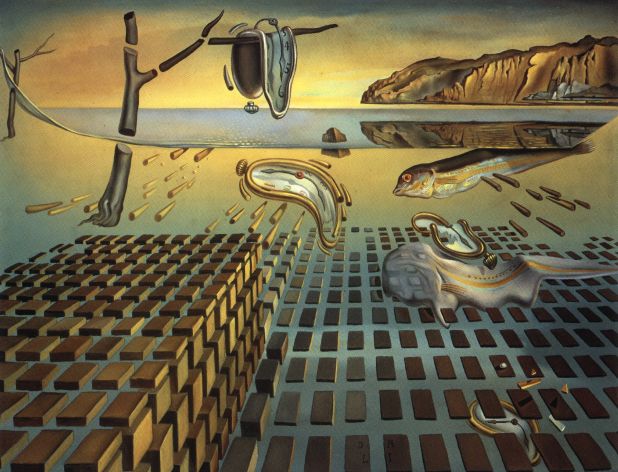
- The Facebook Timeline and the Disintegration of Memory
The Facebook Timeline and the Disintegration of Memory
Last updated on: March 25, 2015 at 12:54 pm by Marc
The Facebook Timeline and the Disintegration of Memory 2015-03-25T12:54:32-04:00 Marc
Patheos Explore the world's faith through different perspectives on religion and spirituality! Patheos has the views of the prevalent religions and spiritualities of the world.
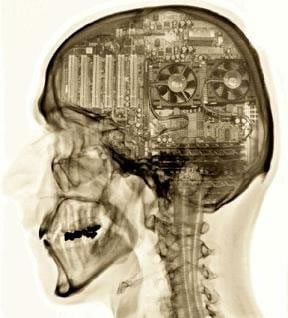
The Jews said that idol-worshipers would become like their idols. Well, God save the Jews — we are becoming our computers. We memorize less — we “access” more. We “open files” on command, use them, and consign them to an oblivion from which they rarely arise.
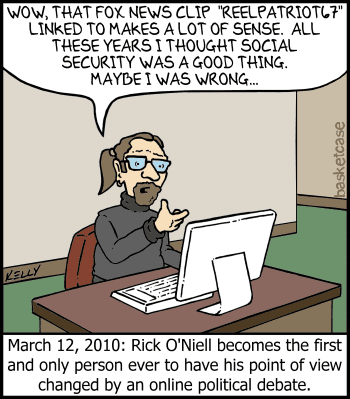
How heartbreakingly obvious this is in Internet “debates,” wherein combox-combatants look up their arguments as they argue, google logical fallacies as they accuse each other of them, gathering evidence as it becomes necessary. It’s not that one cannot reach a position of justified belief through this method. No, I break out in “existential hives” — to quote, if I remember correctly, Pope Francis — because none of what is being said means anything to anyone. Reading Facebook debates is like listening to a schizophrenic Wikipedia mumble out an argument with itself. It is not what dwells within being made manifest — it is what dwells without being referenced without citation. Whoever wins, the Internet wins.
Memory is married to meaning. What stays in us is usually what matters to us — this the joy and the sorrow of the stuff. The countless times I’ve purchased gas or put on socks — scattered in the oblivion of forgetfulness and the smear of generality. The day my friend killed himself — present, roaring into the mind, even when I would it scatter. Our capacity for memory is not naturally disposed to a deluge of information. It does not catch everything. It filters. It distills. It narrows life to what matters, drawing meaning from the meaningless, narrative from history, poetry from “information,” and story from facts following facts. Memory is not the historiographer of existence — she is the bard.
But behold, the Internet mind! We give what is most meaningful to technology for safekeeping, filming and photographing every encounter we deem noteworthy. Whether with an important person, a wonder of nature, a work of art or a testament of human history — we are there, snapshot, grinning desperately. We look everything up — the physicists, the philosophers, the theologians and the poets. We can save every note, upload every quote, and post every experience — and we do, with greater or lesser vigor, giving the task of rescuing and upholding our meaningful past to technology.

Technology is not a neutral alternative to an active, honed memory. It keeps an event, but as a dead thing waiting to be accessed — not as a life within me, not as a psalm leaping to the lips.
A mind that does not “take to heart” and “commit to memory” will not cease to remember — it will lose it’s capacity to distill, to select. Unable to build a narrative out of the deluge of events, it floats in the base, attractive, shiny and distracting. A memory that gives itself to technology does not grab things and hold them there — technology does that. Rather, in this passive mode, it is grabbed. Our minds become the fertile ground for the windblown seeds of the novel, the perverse, and the titillating, no longer the creator of a legend, but the weedy creation of culture, saying with Patrick Stickles of Titus Adronicus: “And half the time I open my mouth to speak / It’s to repeat something I heard on TV.”
When memories cease to be a living presence and become saved files, they tend towards a perverse equality with every other memory. My friends who die show up on my News Feed beneath advertisements for tacos and below the saved and stored photos of the “Beach Week 2014” of white people I don’t know — I pray, but am not confident, that this will not effect my spiritual encounter with the reality of my friends’ newfound absence. The danger of giving our memories to technology is that technology does not discriminate. When I do not work to contain within myself living memories to spring up in response to the joys and sorrows of life, when all my meaningful memories are accessible and referenced “out there” instead of living “in here,” then I have lost my capacity to remember meaningfully — I do not carry a story of my own life within me. Facebook has my “timeline,” and the timeline is trivial.
Without the labor of ritual, the soul-shaping work of carrying words and beautiful images in side of our minds and hearts, the discipline of memorization, and that self-shaping prayer of the heart, we will become unable to distinguish the important from the unimportant — unable to forget what we ought in order to keep what we ought.
Previous Post

June 20, 2014
Oh, for a beautiful memory!
Next Post
June 21, 2014 Popes Should Resign More Often
Browse Our Archives
Select a Category Another Look Atheism Bad Catholics Beauty Communio Crookedhart Destupidification Exiting the Culture Wars Gender Theory That Doesn't Suck How To Language Liturgy! Love One Another Marriage Equality Modesty Music Objectification pop culture Poverty Sacraments Sex Technology The Best Religion in the World The Erotic Phenomenon Time Uncategorized Virtue Ethics That Don't Suck Winning the Culture Wars
Select a Month January 2017 December 2016 November 2016 October 2016 July 2016 June 2016 April 2016 March 2016 February 2016 January 2016 December 2015 November 2015 October 2015 September 2015 August 2015 July 2015 June 2015 May 2015 March 2015 February 2015 January 2015 June 2014 May 2014 April 2014 March 2014 February 2014 January 2014 December 2013 November 2013 October 2013 September 2013 August 2013 July 2013 June 2013 May 2013 April 2013 March 2013 February 2013 January 2013 December 2012 November 2012 October 2012 September 2012 August 2012 July 2012 June 2012 May 2012 April 2012 March 2012 February 2012 January 2012 December 2011 November 2011 October 2011 September 2011 August 2011 July 2011 June 2011 May 2011 April 2011 March 2011 February 2011 January 2011 December 2010 November 2010 October 2010 September 2010 August 2010
Follow Us!
TAKE THE
Religious Wisdom Quiz
What Christian tradition refers to its pastors as "elders"?
Select your answer to see how you score.
Presbyterian Orthodox Anglican Catholic
Related posts from Bad Catholic
Towards a New Argument Against Pornography

TRENDING AT PATHEOS Catholic

Rejecting Doom: Christian Hope And Human Action
Christianity is a religion of hope. We are to have hope and...

It’s What Comes From Within Which Matters
One of the most difficult things for us to understand is why...

Why I Choose the Eucharist Over the Sermon
Choose the Eucharist, Not the Sermon What are we supposed to get...

5 Design Elements Found in Spiritually Rooted Homes
Putting Spirituality Into Home Decor Our homes are more than our living...

Credo: A Story of God Told with the...
About 10 years ago, I began to imagine a personal "Credo" that...

The Anatomy of Divine Revelation in Catholic Thought
The claim that God has made Himself known to human beings is...
view all Catholic blogs
Ad-Free & Subscriber Log-In Subscription Support
- About Us
- 2026 Calendar
- Videos
- Podcasts
- Library of World Religions
- Faith In Media Tracker
- Advertise With Us
- Write for Us
- Privacy Policy
- Terms of Service
- Do Not Sell My Data
- Contact Us
- Radiant Digital
- Manage Newsletter Subscriptions
- Unsubscribe From Notifications
- Sitemap
Copyright 2008-2026, Patheos. All rights reserved.
Subscription Support Ad-Free & Subscriber Log-In
Follow Patheos