
BuddhistCatholicContemplativeEvangelicalGeneral ChristianHinduJewishLatter-day SaintMuslimNew VisionsProgressive Christian
Beliefs
- Buddhist
- Catholic
- Contemplative
- Evangelical
- General Christian
- Hindu
- Jewish
- Latter-day Saint
- More Voices
- Muslim
- New Visions
- Pagan
- Progressive Christian
Topics
- Religion News
- Food and Religion
- Sports and Religion
- Religious Art
- Religious Music and Entertainment
- Religious Events
- History and Religion
- Style and Religion
- Politics and Religion
- Women in Religion
- Recreation Outdoors and Religion
- Business Finance and Religion
- Careers Workplace and Religion
- Education and Religion
- Family Parenting and Religion
- Health Fitness and Religion
- Home and Religion
- Relationships and Religion
- Technology and Religion
- Travel and Religion
Columnists
- Buddhist Columnists
- Business Finance and Religion Columnists
- Careers Workplace and Religion Columnists
- Catholic Columnists
- Contemplative Columnists
- Education and Religion Columnists
- Evangelists Columnists
- Family Parenting and Religion Columnists
- General Christian Columnists
- Health Fitness and Religion Columnists
- Hindu Columnists
- History and Religion Columnists
- Home and Religion Columnists
- Jewish Columnists
- More Voices Columnists
- Latter Day Columnists
- Muslim Columnists
- New Visions Columnists
- Nonreligious Columnists
- Pagan Columnists
- Politics and Religion Columnists
- Progressive Columnists
- Recreation Outdoors and Religion Columnists
- Relationships and Religion Columnists
- Religion News Columnists
- Religious Art Columnists
- Religious Events Columnists
- Religious Music and Entertainment Columnists
- Sports and Religion Columnists
- Style and Religion Columnists
- Technology and Religion Columnists
- Travel and Religion Columnists
- Women in Religion Columnists
Resource Library
- 2026 Calendar
- Library of World Religions
- The 100 Most Holy Places on Earth
- Patheos Answers
- Podcasts
- Videos
- Faith Leaders Database
- Anglican Episcopalian
- Bahai
- Baptist
- Buddhism
- Christianity
- Confucianism
- Eastern Orthodoxy
- Hinduism
- Holiness and Pentecostal
- ISKCON
- Islam
- Judaism
- Lutheran
- Methodist
- The Church of Jesus Christ of Latter-day Saints
- New Age
- Paganism
- Presbytarian and Reformed
- Protestantism
- Religion Behind the Scenes
- Roman Catholic
- Scientology
- Shia Islam
- Sikhism
- Sufism
- Sunni Islam
- Taoism
- Zen
- See all religions
Research Tools
 Ad-Free & Subscriber Log-In Subscription Support
Ad-Free & Subscriber Log-In Subscription Support
Follow Patheos 

- Trending:
- Forgiveness
- |
- Marriage
- |
- Consciousness
- |
- Death Penalty
- |
- Election
- |
- Halloween
 Bad Catholic
- Home
- Catholic
- The Difference Between a Hashtag and a Hail Mary
The Difference Between a Hashtag and a Hail Mary
Last updated on: May 26, 2014 at 10:45 pm by Marc
The Difference Between a Hashtag and a Hail Mary 2014-05-26T22:45:15-04:00 Marc
Patheos Explore the world's faith through different perspectives on religion and spirituality! Patheos has the views of the prevalent religions and spiritualities of the world.

We are more aware of evil than any generation before us. We receive news-stories of illnesses we’ve never heard of breaking out in countries whose names we cannot pronounce. We are updated — between cat-videos — with terrorist bombings, genocides, hurricanes, shootings, and rapes. We are daily informed of suffering we cannot relieve.
Though the mode of the Internet tends to level tragedies into objects of interest — nestling images of the crucifixion of Christians in Syria alongside instagrammed nachos, each with the possibility of being “liked” — nevertheless we know that we cannot perceive these atrocities neutrally. The abduction of Nigerian girls, the child-slavery of Joseph Kony in Uganda — these are injustices. These are unspeakable atrocities. To know about them is to become, in some way, responsible to them.
This is an easy enough principle to apply to, say, Nazi Germany. We condemned the citizens who knew of the concentration camps outside of their towns and did nothing. Here it is clear: Knowledge of injustice comes with the responsibility to administer justice. It is less clear when the “concentration camps” are sex slavery rings in Saudi Arabia, our “town” is in Virginia, and our knowledge comes from NPR. Are we still responsible for the evils we perceive from a distance, and if so, how do we respond to what we cannot immediately, tangibly alter?
Now for the Christian, the answer is obvious: Prayer and fasting. The world is big, the distances are far, but God is one, and we all live in him. Thus there is no suffering we cannot respond to, no personal strife we cannot intercede for, no foreign war we cannot petition for peace. When Syria got bad, Pope Francis called for a day of prayer and fasting. We in America, otherwise estranged from immediate, effective action towards Syrian peace, participated. This was our response, our real engagement in an atrocity we would otherwise only look at from the sideline of communications media.
But in a post-Christian society, and more generally, a post-prayer society, the answer to our increasing awareness of atrocity is becoming, more and more, the Twitter campaign. To overcome our impotence in the face of injustice and suffering, we tweet, share, or more generally, talk about it.
Consider Kony2012. We perceived a moral evil — the actions of Joseph Kony, child-slaver. We felt a responsibility — that he should be stopped. To effect this end, we raised awareness. We talked about him. We made him a celebrity. The idea was simple — if we created enough buzz, someone — maybe the U.N., maybe the U.S., maybe the Ugandan government — would stop him.
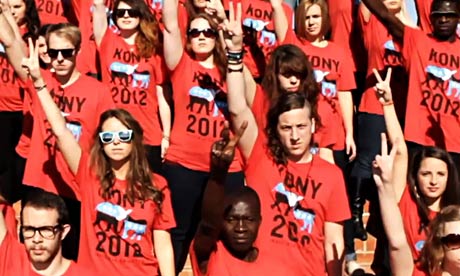
It is 2014, and Kony still does his thing. We have ceased speaking of him and his actions. We have ceased feeling bad about his child-soliders. In between Joseph Kony enslaving children and Joseph Kony continuing to enslave children was a massive, orchestrated, American conversation about Joseph Kony enslaving children.
This, of course, is a good example of the fundamental myth involved in raising awareness. Awareness is not action. No matter how much “awareness” exists, it does not become magically mutate into action by virtue of being present in the minds a million. Awareness may inspire action, sure, but this is no guarantee — especially not in an age increasingly comfortable with being merely “aware.”
What are we to make of these “campaigns”? What are we to call it when those who cannot or will not act directly and immediately against a perceived moral evil nevertheless create a “movement” against it with t-shirts, bumpers stickers, memes, and millions of dollars? Of course it is not all bad — these movements raise money and donate it to other people who can act. These movements may touch the heart of someone who is willing to sacrifice more than his Facebook status. But it is not all good, either. “Awareness” can sidetrack the energy and passion which serves as necessary propellant for action. “Talking about” Joseph Kony with fervor and righteousness can feel a whole lot like doing something — and thus be the very mode by which we do nothing at all. Or, as in the case of the #BringBackOurGirls campaign, a well-intentioned outcry against a moral evil can bring “free publicity” to criminals who want just that — to be talked about without being acted upon.
But considered outside of its total effects, considered instead as a personal act, what is the essence of hashtag activism, this social-media campaigning that does not involve getting up from the laptop?
It is a post-Christian replacement for prayer.
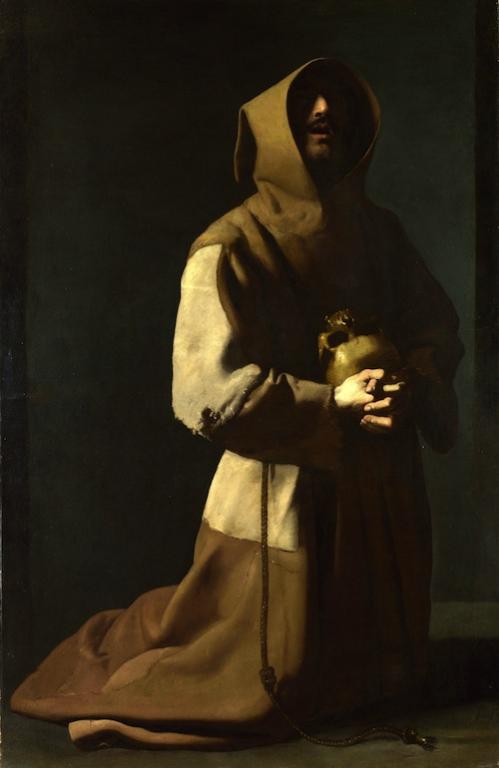
Prayer is a fundamentally human reality. There is no culture on earth that does not participate in some form of prayer, petition, worship, praise or sacrifice, seeing the events of the world and of their lives as interwoven in the life of a deity. The removal of prayer from a human life is not akin to dropping a particular eating habit. Prayer is integral, primordial — it will have to be replaced.
This is the modus operandi of American secularism, and perhaps of secularism in general. We introduce new forms of the religious rituals we discard. Holy days become holidays, Valentine’s Day persists without St. Valentine, churches become museums, fasting becomes dieting, almsgiving becomes philanthropy, and the sacrament of confession is replaced by the “tell-all insincerity” of pseudo-therapy.
St. Therese of Liseux says “prayer is a surge of the heart; it is a simple look turned toward heaven.” The “activist” hashtag is certainly a surge of the heart. It is an articulated, emotional response to a perceived evil. And it is, beyond doubt, “turned towards heaven” — a lesser heaven populated by lesser gods.
Sharing and spreading Kony2012, #BringBackOurGirls and movements of similiar ilk cries out to a general “higher power.” There is no specific plan of action. Michelle Obama, married to the most powerful man on earth, could hold up the hashtag without irony for precisely this reason — the tweet calls on “someone, somewhere” to take action, not a particular person.
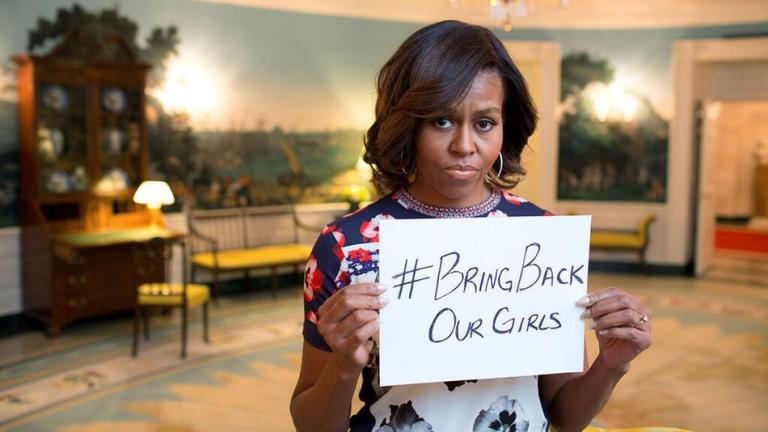
(I do not for a moment doubt her sincerity in joining the campaign. But I believe in it as I believe in the sincerity of a prayer cried to a God — we do not know precisely who we are crying to, nor do we articulate precisely how we wish to be answered.)
Prayer does not demand a response from God. We ask, but we also know that “we do not know how to ask,” that our motives are usually impure (if not downright despicable), and that the ultimate purpose of prayer is not to barter with God, but to open ourselves to His plan — to say, “thy will be done.” Often I have found that my petition seemed necessary, that a result had to be obtained — until I began praying for it. It is a paradox: We may sincerely ask that God do this or that thing, but we find, even in our asking, that what we really want is something far deeper — to know God, to know that He loves us.
The Twitter campaign mirrors this fact somewhat perversely. We do not demand a result. Kony2012 did not achieve the result of stopping Kony — but we are quite finished with Kony2012. The t-shirts we bought have sunk to the bottom of our dresser drawers. Yes, it is true that these movements often lead to some perfunctory gestures from various governments, but the vast majority of people don’t follow the movement long enough to even see such “results,” indicating that results weren’t quite the goal of the average hashtag activist.
I understand that from the outset of these campaigns, a decisive action — a “victory” — is spoken of. So too with prayers of petition. But it is soon revealed that the real purpose was not the result but the campaign itself. We needed to say something. Our own impotence was bubbling inside us. We were being made responsible. We had to do something, but we could not, so we said something, and said it a lot. Through Kony2012 we were all absolved of our own impotence — even though we did not act, and those higher powers who did act did not achieve the goal of the campaign.
The Christian resolves his own impotence in the power of God, who is strong when we are weak. The campaigner resolves his own inadequacy in the mass, in the power of “awareness” spread amongst so many millions — in the crowd that is loud when he is quiet. This similarity is crucial. Both modes of petition create a community. Hashtag activism groups individuals into common purpose by way of common media — a shared tagline, shared logos, the “brand” of the movement. Prayer creates community in that we are united by our relationship to God, in our mutual dependence on him, in a communion that is not a crowd but a Church.
That our activism is therapeutic is obvious in that it is not based on a rational principle. We do not respond equally to perceived injustices — we usually do not respond at all. We do not follow up Kony2012 with a call to end child-slavery in India, nor will we follow up #BringBackOurGirls with a celebrity twitter storm against sex slavery in the United States. We have exhausted our outraged glands. We have been made clean. We are engaged in a liturgical cycle of outrage — if the time is not right for being offended at injustice, we will not be offended. Whereas prayer is to be “prayer without ceasing.”
So there are differences. Prayer is difficult. Tweeting is easy. Prayer sacrifices time. A status update takes a click. Prayer is necessarily a contemplation of the horror of the injustice we are faced with, of our utter need for God in the face of evil. We can hashtag a slogan without thinking about the event, much less responding to it in any existentially meaningful manner. In fact, the general “feel” of an outraged campaign is, well, jovial. Remember?
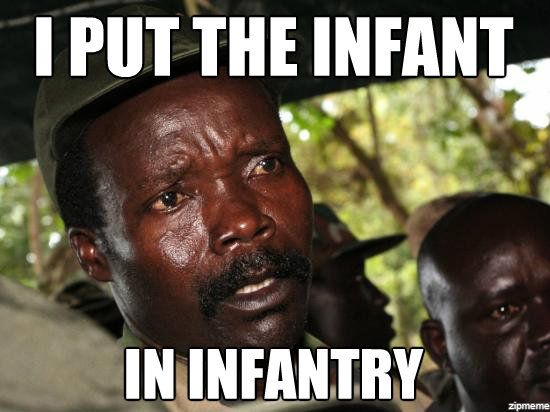
Prayer is an action, a doing, one that does not negate our ability to act in other ways, but rather encourages and inspires it. If percieving the suffering of our neighbor makes us responsible to him, how much more does praying for him, that act of petition to a God who commands I love my neighbor, a God who hates hypocrisy, a God in whom I and my suffering neighbor are one? Hashtag activism, on the other hand, is an expression, not a doing, and while it does not rule out action, it can quite easily stifle it, both in its passing along of responsibility to “higher powers” and by serving as an illusion of action, as a feeling of having done something.
The need to lift our heads to a higher power, in a community of petition, regardless of result, is ingrained in our very bones as a response to tragedy. My fear is that what looks like social activism is a really a ritual purification of this need for prayer, and that as a result, social activism will cease to act, will cease to be practically orientated to decisive responses and results, and that tragedies will become opportunities for us to achieve a kind of ethical catharsis — occasions to exercise our weakened petitionary muscles. It is of course possible that nothing of this sort is happening, and that our modern Facebook movements are a new height of human charity — but I don’t think so.
Previous Post

May 24, 2014
Why Christians Say "Encounter"
Next Post
May 27, 2014 The (Usually Ignored) Difference Between Sexual Identity and Sexual Event
Browse Our Archives
Select a Category Another Look Atheism Bad Catholics Beauty Communio Crookedhart Destupidification Exiting the Culture Wars Gender Theory That Doesn't Suck How To Language Liturgy! Love One Another Marriage Equality Modesty Music Objectification pop culture Poverty Sacraments Sex Technology The Best Religion in the World The Erotic Phenomenon Time Uncategorized Virtue Ethics That Don't Suck Winning the Culture Wars
Select a Month January 2017 December 2016 November 2016 October 2016 July 2016 June 2016 April 2016 March 2016 February 2016 January 2016 December 2015 November 2015 October 2015 September 2015 August 2015 July 2015 June 2015 May 2015 March 2015 February 2015 January 2015 June 2014 May 2014 April 2014 March 2014 February 2014 January 2014 December 2013 November 2013 October 2013 September 2013 August 2013 July 2013 June 2013 May 2013 April 2013 March 2013 February 2013 January 2013 December 2012 November 2012 October 2012 September 2012 August 2012 July 2012 June 2012 May 2012 April 2012 March 2012 February 2012 January 2012 December 2011 November 2011 October 2011 September 2011 August 2011 July 2011 June 2011 May 2011 April 2011 March 2011 February 2011 January 2011 December 2010 November 2010 October 2010 September 2010 August 2010
Follow Us!
TAKE THE
Religious Wisdom Quiz
What river did the Israelites cross to enter the Promised Land?
Select your answer to see how you score.
Nile River Euphrates River Red Sea Jordan River
Related posts from Bad Catholic
Towards a New Argument Against Pornography


Why Millennials Want to Change the World

The Communist That Lives With Me Responds: "Your...
TRENDING AT PATHEOS Catholic

Rejecting Doom: Christian Hope And Human Action
Christianity is a religion of hope. We are to have hope and...

It’s What Comes From Within Which Matters
One of the most difficult things for us to understand is why...

Why I Choose the Eucharist Over the Sermon
Choose the Eucharist, Not the Sermon What are we supposed to get...

5 Design Elements Found in Spiritually Rooted Homes
Putting Spirituality Into Home Decor Our homes are more than our living...

Credo: A Story of God Told with the...
About 10 years ago, I began to imagine a personal "Credo" that...

The Anatomy of Divine Revelation in Catholic Thought
The claim that God has made Himself known to human beings is...
view all Catholic blogs
Ad-Free & Subscriber Log-In Subscription Support
- About Us
- 2026 Calendar
- Videos
- Podcasts
- Library of World Religions
- Faith In Media Tracker
- Advertise With Us
- Write for Us
- Privacy Policy
- Terms of Service
- Do Not Sell My Data
- Contact Us
- Radiant Digital
- Manage Newsletter Subscriptions
- Unsubscribe From Notifications
- Sitemap
Copyright 2008-2026, Patheos. All rights reserved.
Subscription Support Ad-Free & Subscriber Log-In
Follow Patheos