
BuddhistCatholicContemplativeEvangelicalGeneral ChristianHinduJewishLatter-day SaintMuslimNew VisionsProgressive Christian
Beliefs
- Buddhist
- Catholic
- Contemplative
- Evangelical
- General Christian
- Hindu
- Jewish
- Latter-day Saint
- More Voices
- Muslim
- New Visions
- Pagan
- Progressive Christian
Topics
- Religion News
- Food and Religion
- Sports and Religion
- Religious Art
- Religious Music and Entertainment
- Religious Events
- History and Religion
- Style and Religion
- Politics and Religion
- Women in Religion
- Recreation Outdoors and Religion
- Business Finance and Religion
- Careers Workplace and Religion
- Education and Religion
- Family Parenting and Religion
- Health Fitness and Religion
- Home and Religion
- Relationships and Religion
- Technology and Religion
- Travel and Religion
Columnists
- Buddhist Columnists
- Business Finance and Religion Columnists
- Careers Workplace and Religion Columnists
- Catholic Columnists
- Contemplative Columnists
- Education and Religion Columnists
- Evangelists Columnists
- Family Parenting and Religion Columnists
- General Christian Columnists
- Health Fitness and Religion Columnists
- Hindu Columnists
- History and Religion Columnists
- Home and Religion Columnists
- Jewish Columnists
- More Voices Columnists
- Latter Day Columnists
- Muslim Columnists
- New Visions Columnists
- Nonreligious Columnists
- Pagan Columnists
- Politics and Religion Columnists
- Progressive Columnists
- Recreation Outdoors and Religion Columnists
- Relationships and Religion Columnists
- Religion News Columnists
- Religious Art Columnists
- Religious Events Columnists
- Religious Music and Entertainment Columnists
- Sports and Religion Columnists
- Style and Religion Columnists
- Technology and Religion Columnists
- Travel and Religion Columnists
- Women in Religion Columnists
Resource Library
- 2026 Calendar
- Library of World Religions
- The 100 Most Holy Places on Earth
- Patheos Answers
- Podcasts
- Videos
- Faith Leaders Database
- Anglican Episcopalian
- Bahai
- Baptist
- Buddhism
- Christianity
- Confucianism
- Eastern Orthodoxy
- Hinduism
- Holiness and Pentecostal
- ISKCON
- Islam
- Judaism
- Lutheran
- Methodist
- The Church of Jesus Christ of Latter-day Saints
- New Age
- Paganism
- Presbytarian and Reformed
- Protestantism
- Religion Behind the Scenes
- Roman Catholic
- Scientology
- Shia Islam
- Sikhism
- Sufism
- Sunni Islam
- Taoism
- Zen
- See all religions
Research Tools
 Ad-Free & Subscriber Log-In Subscription Support
Follow Patheos 

- Trending:
- Advent
- |
- Forgiveness
- |
- Thanksgiving
- |
- Election
- |
- Seasonal Holidays
- |
- Marriage
 Bad Catholic
- Home
- Catholic
- The Mode in Which We Go To Mass
The Mode in Which We Go To Mass
Last updated on: March 14, 2014 at 6:41 am by Marc
The Mode in Which We Go To Mass 2014-03-14T06:41:46-04:00 Marc
Patheos Explore the world's faith through different perspectives on religion and spirituality! Patheos has the views of the prevalent religions and spiritualities of the world.
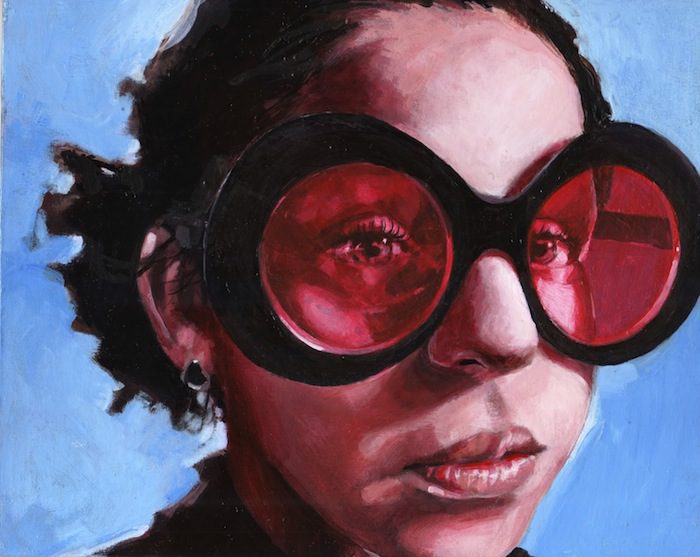
The mode in which a message is delivered has the power to negate the content of the message. I may express my undying fidelity for a particular woman with words true and well-phrased, but as long as I send these words in a text-message, I obscure my own meaning. I might post a beautiful image of God with a powerful excerpt from Holy Scripture on Facebook. My intent is zealous, my faith is real, the translation from the Hebrew is accurate — and it is all rendered meaningless by being viewed in the mode of the News Feed, namely, as an “item of interest,” selected from similar items by an algorithm, offering itself as a momentary distraction to be “liked” or ignored, surrounded by the possibility of moving past it to other, more interesting distractions.
 What good is it if 10,000 people view God in this manner, if the very mode by which they view him reduces God and his Word to an item of interest? What good is it if people “view” the truth, “like” the truth, and “comment” on the truth if the mode they are engaged in actively works against their believing the truth? The mode in which a message is received may undo the message. If we think the Internet has made evangelization easier, we are fools. The very mode by which we exist on the Internet — as impersonal spectators — works against Christianity — which is not a spectacle, but an encounter with a person. The first goal of any one who wishes to evangelize on the Internet must be to overcome the Internet.
This possibility of undoing the message by the mode in which you yodel gains special importance with respect to the Divine Liturgy. Catholics have, for the past 60 years or so, tended towards presenting the Divine Liturgy in a mode of similarity. We want to “get people to come,” and so we strive to make our liturgies similar to other experiences, to provide that condition by which some one may enter comfortably into its presence, as I am comfortable to be in the presence of someone I already know, comfortable to engage a conversation with people who have similar interests, similar views.
The music of the Mass is made similar to the music of our culture. The demeanor of the Mass is made similar to the “Christian services” of our culture. The clothing we wear to Mass is made similar to our everyday clothing. The posture, structure, language, architecture, the position of priest to people — all this, and nearly anything that can be presented in a mode of similarity is thus presented. And, in a sense, it works. People come. But what does the mode of similarity do to the way in which people encounter the Mass? What does the mode do to the message?
To understand this, we need a deeper understanding of similarity and dissimilarity. Similarity may be a condition for comfort, but dissimilarity is the necessary condition for love. Because a boy and a girl have “something in common” they can meet, comfortably enter into each other’s presence, and strike up a conversation, but only because of the fact that they are not “in common” can they fall in love, can she — utterly dissimilar to him — and he — dissimilar to her — strive for personal communion — that difficult, wonderful embrace of two entirely unique and dissimilar lives.
Because I am used to something, I am not afraid to participate in it, and in this sense, a liturgy of similarity succeeds. But because I am not used to something, because it is utterly other, I am pulled into the heart of a mystery. Similarity may provide the occasion for a meeting and a grouping, but dissimilarity provides the occasion for a binding. Because I do not know her, I strive to understand. Because I cannot fathom her, I gaze all the longer. As velcro clings to what it is not, as opposite charges attract and as the opposition of dissimilar colors make wondrous relations in a far more obvious way than mixtures of, say, a pale yellow and a similar greenish-yellow — so dissimilarity is the binding force of relation.
What good is it if the mode of similarity brings every man in the world to the Divine Liturgy, if by the very mode that it brings them there, it undoes the entire point, which is not simply being there, but being in love? Similarity engenders comfort because it requires nothing of us. If a person is just like me in every respect, then there is no effort required of me to get to know them, to strive after them. There is no ecstasy, that is, no getting beyond myself. The fact that something is similar may just as well be an occasion for boredom as for unity — and hasn’t millennial boredom with the liturgy been an equally observable outcome of the mode of similarity as millennial presence at the liturgy?
To say something is similar is to say it is already known, but the point of the Divine Liturgy is that it is the Pascal Mystery, the Pascal Unknown, and precisely because it remains unknown, it remains something worth applying the passion of our entire lives towards, to strive towards knowing.
If the point of the Church is to make her children comfortable with God, a liturgy of similarity that “meets people where they are” make sense. If the point of the Church is to call her children to love God, to strive after him and to seek intimate communion with him, then a liturgy that opposes us makes sense, a liturgy drenched in a dissimilarity that accentuates the mysteries that we cannot understand — and thus must strive for, bow before, and commit our lives to surge towards. In short, what is needed is a liturgy that requires ecstasy of us. This reconciles itself in a series of paradoxes, that the unrelatable is the most relatable, the irrelevant is the most relevant, and the unfamiliar the greatest source of our desire for familiarity, for intimacy, and for union.
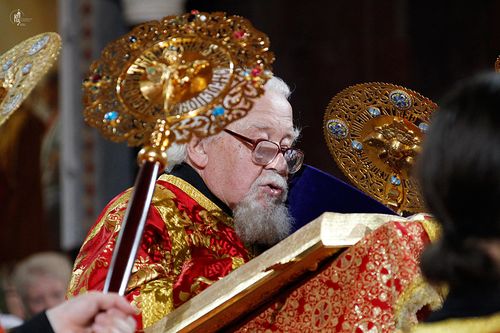
All this being said, similarity is not bad. Similarity provides the occasion for dissimilarity to bind. Consider Jesus Christ. We draw close with the little children because he is a man — our friend and our brother, something similar. But in this similarity we recognize the undeniable dissimilarity — that he is God, infinite, almighty, all-powerful, all-knowing — and thus we strive after him with all our heart, mind, soul and strength. Should this not be the case with the Divine Liturgy? Should we not have the similar — the music, perhaps, the homily, the clothes, and the modern architecture — become the occasion for an encounter with the dissimilar — the Eucharist?
In a word, no, for then the Divine Liturgy becomes two things, when it is in reality one thing. No part of the Mass should be an advertisement for the Mass. No “type” of Mass — a “contemporary Mass” or a “youth Mass” — should be reduced to a stepping stone to a more “mature Mass.” I take this as self-evident, that the Mass is either a re-presentation of Christ’s Sacrifice, or it is not, and if it is, then it is one thing, complete in itself, sufficient, final, eternally this — and that our participation in this one thing should reflect its unity instead of pulling against it.
The good news is that we are not caught between the choice of attracting people to Mass and letting the Mass be precisely what it is, in all its incens-y, ringing, silent, dark, unbearably bright and grotesque mystery, its complex simplicity and its simple complexity. For precisely by letting the Mass be what it is, and indeed, working hard to reveal the Mass as the Paschal Mystery in accordance with the rubrics and teachings of the Church, we attract, for dissimilarity is always a more attractive and binding force than similarity. An intentionally dissimilar liturgy may be more uncomfortable, but we were not made for comfort. We were made for love, that wonderful, uncomfortable ecstasy towards that which we are not.
Here then, have my unauthoritative, probably-hyperbolic, unspecific but nevertheless believed and possible answer to the question of how to attract young people to the Mass: Stop trying. Stop using the Mass as an advertisement for itself. Do not let the mode by which you bring people undo the very reason you are bringing them. Let our lives bring people to the Liturgy, let our lives contain that similarity, that natural and virtuous relatability that provides the necessary condition of comfort for drawing people near to a mystery — but let the mystery remain a mystery! In short, let us be honest, not altering the Mass in order to get people to come to it, or hushing up the traditions and the mysterious flourishes of the Mass out of fear that it won’t be “relatable.” The truth about people is strange, that we most want what we cannot have, that we are most intrigued by what we cannot understand, and that we are most fulfilled by an encounter with that which is utterly beyond us than with that which fits neatly and known into the fabric of our lives. Accentuate the mystery with that accentuation present in the very rubrics of the liturgy, do it for no reason other for love of the mystery, and love your neighbor, that you might give him a reason, a provocation and a courage to plunge into the very source of your love — the Divine Liturgy.
Previous Post

February 27, 2014
7 Totally Epic Rules For Writing on the Internet
Next Post
March 17, 2014 The Spirit of Rebellion
Browse Our Archives
Select a Category Another Look Atheism Bad Catholics Beauty Communio Crookedhart Destupidification Exiting the Culture Wars Gender Theory That Doesn't Suck How To Language Liturgy! Love One Another Marriage Equality Modesty Music Objectification pop culture Poverty Sacraments Sex Technology The Best Religion in the World The Erotic Phenomenon Time Uncategorized Virtue Ethics That Don't Suck Winning the Culture Wars
Select a Month January 2017 December 2016 November 2016 October 2016 July 2016 June 2016 April 2016 March 2016 February 2016 January 2016 December 2015 November 2015 October 2015 September 2015 August 2015 July 2015 June 2015 May 2015 March 2015 February 2015 January 2015 June 2014 May 2014 April 2014 March 2014 February 2014 January 2014 December 2013 November 2013 October 2013 September 2013 August 2013 July 2013 June 2013 May 2013 April 2013 March 2013 February 2013 January 2013 December 2012 November 2012 October 2012 September 2012 August 2012 July 2012 June 2012 May 2012 April 2012 March 2012 February 2012 January 2012 December 2011 November 2011 October 2011 September 2011 August 2011 July 2011 June 2011 May 2011 April 2011 March 2011 February 2011 January 2011 December 2010 November 2010 October 2010 September 2010 August 2010
Follow Us!
TAKE THE
Religious Wisdom Quiz
Ecclesiastes 3:1 says, "To everything there is a ______."
Select your answer to see how you score.
Season Blessing Time limit Purpose
Related posts from Bad Catholic

Towards a New Argument Against Pornography
How to Know That You Are Beautiful

Death, Split Selves, and Demons: The Dopest Album...
TRENDING AT PATHEOS Catholic

If Baptism Washes Away Sin, Why Do Catholics...
The seven sacraments stand as the foundation of Catholic ecclesial life. The...

Far from promoting indifference, inaction, or quietism, Paul consistently tells us to...

The Power of Setting a Good Example
Remember last August when the Chicago White Sox hosted a "Pope Hat...

Theology As A Way of Life, Not Mere...
I enjoy the study of dogmatic and systematic theology. I like studying...

A Catholic Critique of Biblical Unitarianism
If the statistics are to be believed, Unitarianism is rising worldwide. Although...

How Grandma Tourism Helps Grandparents Live Their Vocation
Grandma, The New Travel Influencer What started as a nostalgia-inspired social media...
view all Catholic blogs
Ad-Free & Subscriber Log-In Subscription Support
- About Us
- 2026 Calendar
- Videos
- Podcasts
- Library of World Religions
- Faith In Media Tracker
- Advertise With Us
- Write for Us
- Privacy Policy
- Terms of Service
- Do Not Sell My Data
- Contact Us
- Radiant Digital
- Manage Newsletter Subscriptions
- Unsubscribe From Notifications
- Sitemap
Copyright 2008-2026, Patheos. All rights reserved.
Subscription Support Ad-Free & Subscriber Log-In
Follow Patheos