
BuddhistCatholicContemplativeEvangelicalGeneral ChristianHinduJewishLatter-day SaintMuslimNew VisionsProgressive Christian
Beliefs
- Buddhist
- Catholic
- Contemplative
- Evangelical
- General Christian
- Hindu
- Jewish
- Latter-day Saint
- More Voices
- Muslim
- New Visions
- Pagan
- Progressive Christian
Topics
- Religion News
- Food and Religion
- Sports and Religion
- Religious Art
- Religious Music and Entertainment
- Religious Events
- History and Religion
- Style and Religion
- Politics and Religion
- Women in Religion
- Recreation Outdoors and Religion
- Business Finance and Religion
- Careers Workplace and Religion
- Education and Religion
- Family Parenting and Religion
- Health Fitness and Religion
- Home and Religion
- Relationships and Religion
- Technology and Religion
- Travel and Religion
Columnists
- Buddhist Columnists
- Business Finance and Religion Columnists
- Careers Workplace and Religion Columnists
- Catholic Columnists
- Contemplative Columnists
- Education and Religion Columnists
- Evangelists Columnists
- Family Parenting and Religion Columnists
- General Christian Columnists
- Health Fitness and Religion Columnists
- Hindu Columnists
- History and Religion Columnists
- Home and Religion Columnists
- Jewish Columnists
- More Voices Columnists
- Latter Day Columnists
- Muslim Columnists
- New Visions Columnists
- Nonreligious Columnists
- Pagan Columnists
- Politics and Religion Columnists
- Progressive Columnists
- Recreation Outdoors and Religion Columnists
- Relationships and Religion Columnists
- Religion News Columnists
- Religious Art Columnists
- Religious Events Columnists
- Religious Music and Entertainment Columnists
- Sports and Religion Columnists
- Style and Religion Columnists
- Technology and Religion Columnists
- Travel and Religion Columnists
- Women in Religion Columnists
Resource Library
- 2026 Calendar
- Library of World Religions
- The 100 Most Holy Places on Earth
- Patheos Answers
- Podcasts
- Videos
- Faith Leaders Database
- Anglican Episcopalian
- Bahai
- Baptist
- Buddhism
- Christianity
- Confucianism
- Eastern Orthodoxy
- Hinduism
- Holiness and Pentecostal
- ISKCON
- Islam
- Judaism
- Lutheran
- Methodist
- The Church of Jesus Christ of Latter-day Saints
- New Age
- Paganism
- Presbytarian and Reformed
- Protestantism
- Religion Behind the Scenes
- Roman Catholic
- Scientology
- Shia Islam
- Sikhism
- Sufism
- Sunni Islam
- Taoism
- Zen
- See all religions
Research Tools
 Ad-Free & Subscriber Log-In Subscription Support
Ad-Free & Subscriber Log-In Subscription Support
Follow Patheos 

- Trending:
- Forgiveness
- |
- Marriage
- |
- Consciousness
- |
- Death Penalty
- |
- Election
- |
- Halloween
 Bad Catholic
- Home
- Catholic
- Lent is for Everyone
Lent is for Everyone
Last updated on: February 12, 2016 at 4:46 pm by Marc
Lent is for Everyone 2016-02-12T16:46:04-05:00 Marc
Patheos Explore the world's faith through different perspectives on religion and spirituality! Patheos has the views of the prevalent religions and spiritualities of the world.

You — assuming you are a person, not a corporation or a spam-bot — are a source of action. You do not merely react to stimulus, respond to other events, or receive the motion of some prior reality into yourself and express its power out of mechanical necessity — you also do. Your actions originate in you. In this sense, you are an uncaused cause — an unmoved mover.
This is evident in the experience of responsibility. To be responsible for something is an existential acknowledgment of your own power as an authentic source of action in the Cosmos. To be responsible is to cease pretending that your actions are merely reactions, responses, and moments of being-acted upon by some prior force (say your society, your upbringing, or your situation) on which you can pin the “reason” for your action. No, in the raw and terrifying experience of responsibility, we implicitly feel that we are that locus of freedom, that keep of decision out of which which emanates Something Done.
It easy to forget this. We occupy the material world — the world of cause and effect. Within this world, all motion can be explained by some prior motion, and every so-called action can be reduced to a mere reaction. Even animal “action” may be described as a response determined by some outside stimulus. For those who have taken as their assumption that the material world is all that is — action is an illusion. The idea that we can cause something as its sole and irreducible source — when all we are is matter receiving its motion from prior motion — is ludicrous.
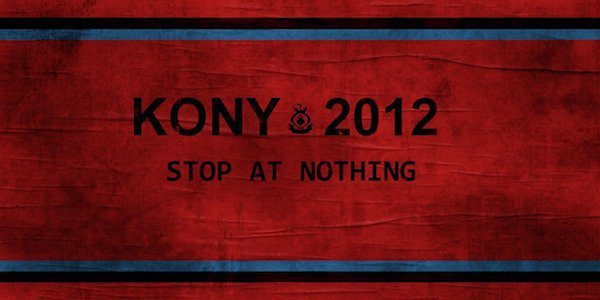
But the disbelief in ourselves as un-caused causes rarely stems from a dogmatic materialism (oh, were we so clever). Usually it is expressed in our vast willingness to “go with the flow.” We have a remarkable propensity to drench ourselves in the material world, to willfully become something that always receives its motion from some outside force. We may passively receive our likes and dislikes from the outside force of advertising — our buying and selling becomes the mere expression of that prior impulse. We may be entirely passive sexual beings, our sexual “actions” mere reactions to the fact of being turned on, never chosen in fullness, always done out of a feeling of being determined by stimulus. We may passively receive our ethical “convictions” from the fashions and fads of our day, claiming to care about child soldiers because of a beautifully heart-wrenching video, one that acted upon us as the true source of our conviction — a conviction which fades with the memory of the video, in a fading that reveals we never were convicted.
If I were not Catholic, I would still practice Lent, because Lent has the purely human value of reminding me that I am free. Lent is an existential meditation on my remarkable position of being thrown in to the universe as a cause. Its method is simple. Lent emphasizes our remarkable capacity to not respond to stimulus. It highlights our power to act by reminding us of our power not to act.
Lent requires fasting. Fasting can be roughly described as the decision not to eat. It is the decision to be hungry, and to remain in the state of hunger. This is an utter absurdity from the angle of every other thing in the Cosmos — everything which does not act in freedom, but by the compulsion of prior force.
Hunger acts upon us as a stimulus. Normally, we respond by eating. Indeed, within the stimulus of hunger we feel all that is material within us “crying out” for response — our stomachs growl, our mouths water, our bodies weaken, and our heads grow light. If there is no reminder that we are free, we may be lured into the easy idea that all our eating and drinking is in no way different than that of the dog snapping up the piece of meat thrown to him. We may believe, with all the ease of drifting down a river, that we are merely responding to a stimulus, that our eating is a determined reaction to our situation — not a freely-chosen, self-determined action emanating from a moment of interior decision.
Lent is a complex reminding of our own power. By fasting, we allow ourselves to feel the mighty stimulus of hunger — and ignore it. By fasting, we feel within ourselves the urge to react — and then we don’t. This denial is a powerful approval of the person, for if we can say “no” to stimulus, standing outside of the observable mechanics of nature, surely we have a unique place in the universe, a certain transcendence of the material world? Furthermore, the reminder that we can say “no” to a stimulus infuses our “yes” with freedom. Because we know that we don’t have to eat, choosing to eat is protected from ever becoming a merely determined response to stimulus — it is rather our freely chosen action.
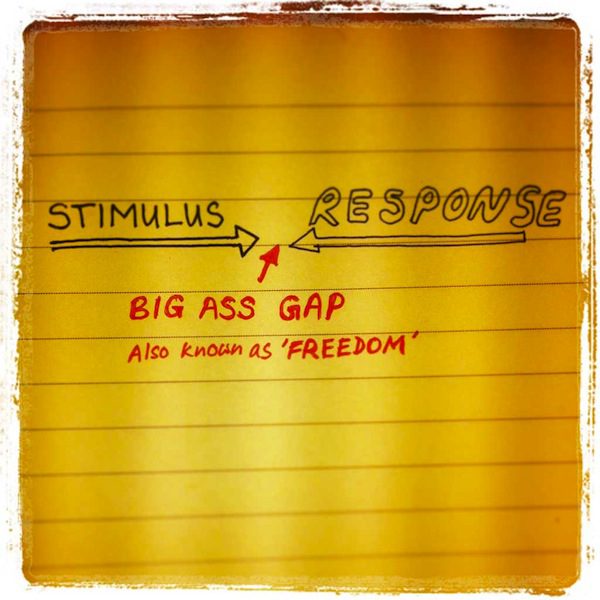 Or consider saying no to sexual activity. The sexual act, considered materially, consist of the stimulus of sexual desire and the response of sexual activity. Because this stimulus is so powerful, our sexual lives runs the risk of living an illusion, of humming along to that song which advises we “do it like they do on the Discovery Channel,” believing that our sexual acts be reduced to merely determined responses to the fact of our being aroused — responses to stimulus and reactions to outside forces outside of our ability to do otherwise — outside of our freedom.
It is immensely evident that our sexually free age has nothing whatsoever to do with an actual concept of freedom, simply because we have slipped from a sense of responsibility for our sexual actions. To “be responsible” is to be tied to your action as its sole originator. To “be responsible” is to feel within your gut the fantastic fact of freedom, that you are a source of real decision, and thus all your actions can be traced back to you, to a singular moment where you decided — you and no one else. If there is no responsibility, than there is no sense of our own freedom, and a sexual liberation which devalues our sense of freedom cannot be a liberation.
But by feeling sexual desire and saying no, we our reminded of our own power, and this reminding infuses each and every time we say “yes” with the joy of freedom — because we don’t have to do it, because we aren’t compelled by stimulus to respond, because we are not merely reacting to the force of sexual arousal, our sexual acts can be gifts. For it is no gift to not be able to do otherwise. If I am forced by the “laws of nature” to buy you a Ferrari, though you may enjoy the car, you could hardly call my purchase a gift. So too with the sexual act. To act out of the compulsion of the Discovery Channel is to kill the possibility of the gift, which is given in freedom.
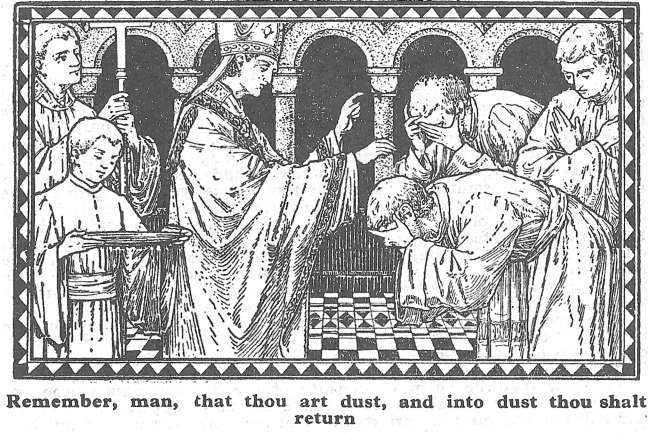
So Lent, that strange time of year Catholics mark out with ashes on the forehead, the priestly reminder that “you are dust, and to dust you shall return,” and the giving-up of precisely the things we most want to do — smoking, drinking, eating meat, and cursing under our breath being popular options — this season is possibly the most preeminently human practice alive in the world today. It is an education in freedom.
Previous Post

March 17, 2014
The Spirit of Rebellion
Browse Our Archives
Select a Category Another Look Atheism Bad Catholics Beauty Communio Crookedhart Destupidification Exiting the Culture Wars Gender Theory That Doesn't Suck How To Language Liturgy! Love One Another Marriage Equality Modesty Music Objectification pop culture Poverty Sacraments Sex Technology The Best Religion in the World The Erotic Phenomenon Time Uncategorized Virtue Ethics That Don't Suck Winning the Culture Wars
Select a Month January 2017 December 2016 November 2016 October 2016 July 2016 June 2016 April 2016 March 2016 February 2016 January 2016 December 2015 November 2015 October 2015 September 2015 August 2015 July 2015 June 2015 May 2015 March 2015 February 2015 January 2015 June 2014 May 2014 April 2014 March 2014 February 2014 January 2014 December 2013 November 2013 October 2013 September 2013 August 2013 July 2013 June 2013 May 2013 April 2013 March 2013 February 2013 January 2013 December 2012 November 2012 October 2012 September 2012 August 2012 July 2012 June 2012 May 2012 April 2012 March 2012 February 2012 January 2012 December 2011 November 2011 October 2011 September 2011 August 2011 July 2011 June 2011 May 2011 April 2011 March 2011 February 2011 January 2011 December 2010 November 2010 October 2010 September 2010 August 2010
Follow Us!
TAKE THE
Religious Wisdom Quiz
Who did Paul send to check on the Thessalonians when he could not come himself?
Select your answer to see how you score.
Luke Silas Titus Timothy
Related posts from Bad Catholic
Towards a New Argument Against Pornography


Why Millennials Want to Change the World

The Communist That Lives With Me Responds: "Your...
TRENDING AT PATHEOS Catholic

Rejecting Doom: Christian Hope And Human Action
Christianity is a religion of hope. We are to have hope and...

It’s What Comes From Within Which Matters
One of the most difficult things for us to understand is why...

Why I Choose the Eucharist Over the Sermon
Choose the Eucharist, Not the Sermon What are we supposed to get...

5 Design Elements Found in Spiritually Rooted Homes
Putting Spirituality Into Home Decor Our homes are more than our living...

Credo: A Story of God Told with the...
About 10 years ago, I began to imagine a personal "Credo" that...

The Anatomy of Divine Revelation in Catholic Thought
The claim that God has made Himself known to human beings is...
view all Catholic blogs
Ad-Free & Subscriber Log-In Subscription Support
- About Us
- 2026 Calendar
- Videos
- Podcasts
- Library of World Religions
- Faith In Media Tracker
- Advertise With Us
- Write for Us
- Privacy Policy
- Terms of Service
- Do Not Sell My Data
- Contact Us
- Radiant Digital
- Manage Newsletter Subscriptions
- Unsubscribe From Notifications
- Sitemap
Copyright 2008-2026, Patheos. All rights reserved.
Subscription Support Ad-Free & Subscriber Log-In
Follow Patheos