
BuddhistCatholicContemplativeEvangelicalGeneral ChristianHinduJewishLatter-day SaintMuslimNew VisionsProgressive Christian
Beliefs
- Buddhist
- Catholic
- Contemplative
- Evangelical
- General Christian
- Hindu
- Jewish
- Latter-day Saint
- More Voices
- Muslim
- New Visions
- Pagan
- Progressive Christian
Topics
- Religion News
- Food and Religion
- Sports and Religion
- Religious Art
- Religious Music and Entertainment
- Religious Events
- History and Religion
- Style and Religion
- Politics and Religion
- Women in Religion
- Recreation Outdoors and Religion
- Business Finance and Religion
- Careers Workplace and Religion
- Education and Religion
- Family Parenting and Religion
- Health Fitness and Religion
- Home and Religion
- Relationships and Religion
- Technology and Religion
- Travel and Religion
Columnists
- Buddhist Columnists
- Business Finance and Religion Columnists
- Careers Workplace and Religion Columnists
- Catholic Columnists
- Contemplative Columnists
- Education and Religion Columnists
- Evangelists Columnists
- Family Parenting and Religion Columnists
- General Christian Columnists
- Health Fitness and Religion Columnists
- Hindu Columnists
- History and Religion Columnists
- Home and Religion Columnists
- Jewish Columnists
- More Voices Columnists
- Latter Day Columnists
- Muslim Columnists
- New Visions Columnists
- Nonreligious Columnists
- Pagan Columnists
- Politics and Religion Columnists
- Progressive Columnists
- Recreation Outdoors and Religion Columnists
- Relationships and Religion Columnists
- Religion News Columnists
- Religious Art Columnists
- Religious Events Columnists
- Religious Music and Entertainment Columnists
- Sports and Religion Columnists
- Style and Religion Columnists
- Technology and Religion Columnists
- Travel and Religion Columnists
- Women in Religion Columnists
Resource Library
- 2026 Calendar
- Library of World Religions
- The 100 Most Holy Places on Earth
- Patheos Answers
- Podcasts
- Videos
- Faith Leaders Database
- Anglican Episcopalian
- Bahai
- Baptist
- Buddhism
- Christianity
- Confucianism
- Eastern Orthodoxy
- Hinduism
- Holiness and Pentecostal
- ISKCON
- Islam
- Judaism
- Lutheran
- Methodist
- The Church of Jesus Christ of Latter-day Saints
- New Age
- Paganism
- Presbytarian and Reformed
- Protestantism
- Religion Behind the Scenes
- Roman Catholic
- Scientology
- Shia Islam
- Sikhism
- Sufism
- Sunni Islam
- Taoism
- Zen
- See all religions
Research Tools
 Ad-Free & Subscriber Log-In Subscription Support
Ad-Free & Subscriber Log-In Subscription Support
Follow Patheos 

- Trending:
- Forgiveness
- |
- Marriage
- |
- Consciousness
- |
- Death Penalty
- |
- Election
- |
- Halloween
 Bad Catholic
- Home
- Catholic
- Is Man No More Than An Ape?
Is Man No More Than An Ape?
Last updated on: January 17, 2013 at 5:59 pm by Marc
Is Man No More Than An Ape? 2013-01-17T17:59:04-05:00 Marc
Patheos Explore the world's faith through different perspectives on religion and spirituality! Patheos has the views of the prevalent religions and spiritualities of the world.

Man is a self-glorified ape. He occupies no special place in the Cosmos — a bigoted, specieist idea — and the differences between him and his hairier, happier relatives are merely quantitative. Man has more intelligence as he has less hair than the gorilla, and this alone is the reason for his apparent apartness from the animal kingdom and his puffed-up sense of dominion over the earth.
The ape uses rudimentary tools to feed itself. The human uses complex tools to feed himself. The ape lives in a basic society, 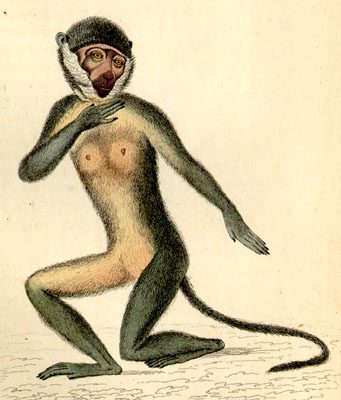 complete with leaders, followers, mates, family members, and even friends. The society of man is a more intricate version of the same. An ape can solve simple puzzles. A man can solve complex puzzles. The difference between the two is the same as that between a Model T and a Lamborghini, a sapling and an oak. The human represents a quantitative improvement over the capacities of the orangoutang. He does not dwell in a entirely separate and elevated sphere of existence.
This belief has half a billion benefits, chief among them this: If we are not unique from beasts, then our complicated practice of morality is merely a social and evolutionary construct, as are the varied practices of the animal kingdom. Though the moral construct may be complex and even useful, ultimately it — with its mandate to monogamy, charity and all the rest — may be disregarded with the same ease of mind as one casts aside any other social and/or evolutionary construct, like eating three meals a day instead of whenever we’d like to eat.
As someone who loves to sin as much as eat whenever I want, I’d snap up this belief like pike does a mackerel if not for those damn cave-paintings in those stupid caves.
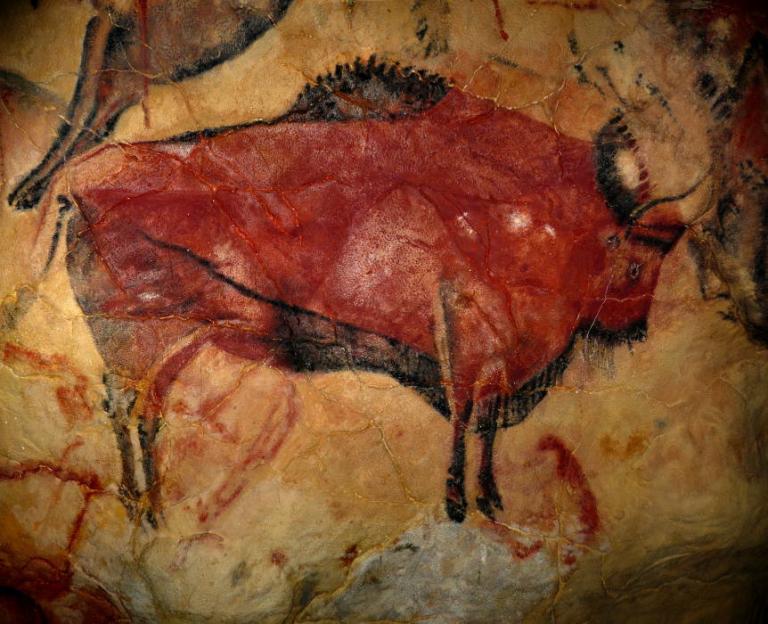
By them, man exhibits a characteristic that can only be described as a quantum leap, a qualitative difference between himself and the beasts, a “1” where the animal is set at “0”, not a “2” where the animal is set at “1”. Art. That man from our earliest knowledge of him is an artist is evidence of an infinite, insurmountable gap between him and his naked relatives. It is not, as was the case with tool-using, that the ape is a rudimentary artist and man a better one. No animal draws pictures. There is no art in the animal world, while it shines forth in mankind like a lighthouse in an otherwise murky sea, to the point that it is quite literally the first thing we know about prehistoric man. As the journalist G.K. Chesterton pointed out, “All we can say of this notion of reproducing things in shadow or representative shape is that it exists nowhere in nature except in man; and that we cannot even talk about it without treating man as something separate from nature.”
The fundamental reality of art is depiction. Modern art depicts something, even if that something is an intangible abstraction, and existential angst, or an otherwise frightfully modern emotion. But we’ll leave aside the moderns for the moment and focus on the majority of human depiction, which has been of objects, objects lit up with the glorious light of subjectivity — as in the Impressionists — or pushed towards an attempted objectivity — as with the Realists.
Here’s the crux: Depiction requires the ability to view the thing depicted as useless. This is a difficult concept to nail to a board, so allow me say the same thing in several ways, in the hope that one will ring: Art requires us to view an object outside of the normal realm of that object’s usefulness, to view a cornfield in the fact of its being, not just in the fact that it’s useful for growing food.
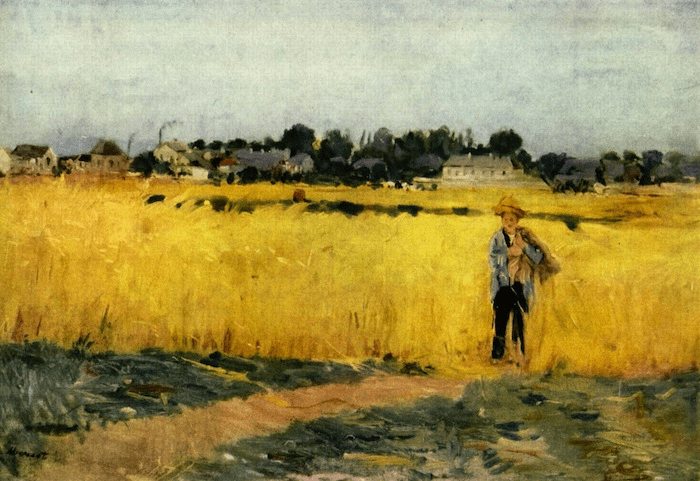
Art requires that we are able to experience and “speak” of something outside of its useful context, of the water outside of our thirst, the mate outside of our sexual need, and the cow outside of our hunger.
A peach, to us, is for eating, as it is for the ape. But only the human will depict that peach on the wall of his cave, as if it had value not simply in being eaten, but in the fact of being a peach.
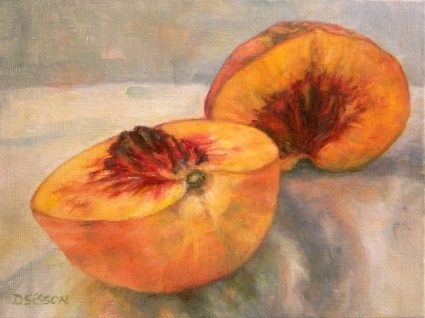 If reality is viewed in terms of need-fulfillment, then art, which fulfills no need besides itself, cannot exist. If use is the method by which a subject views the universe, that same subject cannot take a step back and draw the universe, for art is useless. He cannot view the buffalo as being, just being, available to observation, disinterested admiration, love, or simple depiction, if the buffalo is merely useful for man.
This ability to interact with objects outside of their usefulness to us is evidenced by the fact that we interact with everything, while animals have a limited environment. I know about the Milky Way, the periodic table, and the country of Uruguay, things I have no use for. If the environment is given its scientific definition, “the air, water, minerals, organisms, and all other external factors surrounding and affecting a given organism at any time”, then humans have the remarkable ability to transcend their environment, while the ape continues to interact with its environment, and its environment alone, unless trained to do otherwise (i.e. unless something becomes incorporated into its environment through a system of rewards).
The advent of artistic creation is man, it blossoms in the Cosmos from that one, singular source. The human being stands alone, a being that can interact with the world outside of his environment. Thus the human being does indeed stand in a position at once apart from and elevated over that of the beasts. He has dominion over the world, because he is the only being within the cosmos that has a world, a whole world, while all other conscious life has an environment (by its nature limited).
It’s almost as if the world, in some strange and marvelous capacity, exists for him. But bottle the thought, its implications are drastic.
Previous Post

January 15, 2013
6 Reasons Why Men Can Speak on Abortion
Next Post
January 23, 2013 Happy 40th Anniversary, Baby
Browse Our Archives
Select a Category Another Look Atheism Bad Catholics Beauty Communio Crookedhart Destupidification Exiting the Culture Wars Gender Theory That Doesn't Suck How To Language Liturgy! Love One Another Marriage Equality Modesty Music Objectification pop culture Poverty Sacraments Sex Technology The Best Religion in the World The Erotic Phenomenon Time Uncategorized Virtue Ethics That Don't Suck Winning the Culture Wars
Select a Month January 2017 December 2016 November 2016 October 2016 July 2016 June 2016 April 2016 March 2016 February 2016 January 2016 December 2015 November 2015 October 2015 September 2015 August 2015 July 2015 June 2015 May 2015 March 2015 February 2015 January 2015 June 2014 May 2014 April 2014 March 2014 February 2014 January 2014 December 2013 November 2013 October 2013 September 2013 August 2013 July 2013 June 2013 May 2013 April 2013 March 2013 February 2013 January 2013 December 2012 November 2012 October 2012 September 2012 August 2012 July 2012 June 2012 May 2012 April 2012 March 2012 February 2012 January 2012 December 2011 November 2011 October 2011 September 2011 August 2011 July 2011 June 2011 May 2011 April 2011 March 2011 February 2011 January 2011 December 2010 November 2010 October 2010 September 2010 August 2010
Follow Us!
TAKE THE
Religious Wisdom Quiz
Where was Jesus praying the night before He was crucified?
Select your answer to see how you score.
Galilee Tarsus The Garden of Gethsemane Antioch
Related posts from Bad Catholic
Towards a New Argument Against Pornography


Why Millennials Want to Change the World

What Photography Does to Unborn Children
TRENDING AT PATHEOS Catholic

Rejecting Doom: Christian Hope And Human Action
Christianity is a religion of hope. We are to have hope and...

It’s What Comes From Within Which Matters
One of the most difficult things for us to understand is why...

Why I Choose the Eucharist Over the Sermon
Choose the Eucharist, Not the Sermon What are we supposed to get...

5 Design Elements Found in Spiritually Rooted Homes
Putting Spirituality Into Home Decor Our homes are more than our living...

Credo: A Story of God Told with the...
About 10 years ago, I began to imagine a personal "Credo" that...

The Anatomy of Divine Revelation in Catholic Thought
The claim that God has made Himself known to human beings is...
view all Catholic blogs
Ad-Free & Subscriber Log-In Subscription Support
- About Us
- 2026 Calendar
- Videos
- Podcasts
- Library of World Religions
- Faith In Media Tracker
- Advertise With Us
- Write for Us
- Privacy Policy
- Terms of Service
- Do Not Sell My Data
- Contact Us
- Radiant Digital
- Manage Newsletter Subscriptions
- Unsubscribe From Notifications
- Sitemap
Copyright 2008-2026, Patheos. All rights reserved.
Subscription Support Ad-Free & Subscriber Log-In
Follow Patheos