
BuddhistCatholicContemplativeEvangelicalGeneral ChristianHinduJewishLatter-day SaintMuslimNew VisionsProgressive Christian
Beliefs
- Buddhist
- Catholic
- Contemplative
- Evangelical
- General Christian
- Hindu
- Jewish
- Latter-day Saint
- More Voices
- Muslim
- New Visions
- Pagan
- Progressive Christian
Topics
- Religion News
- Food and Religion
- Sports and Religion
- Religious Art
- Religious Music and Entertainment
- Religious Events
- History and Religion
- Style and Religion
- Politics and Religion
- Women in Religion
- Recreation Outdoors and Religion
- Business Finance and Religion
- Careers Workplace and Religion
- Education and Religion
- Family Parenting and Religion
- Health Fitness and Religion
- Home and Religion
- Relationships and Religion
- Technology and Religion
- Travel and Religion
Columnists
- Buddhist Columnists
- Business Finance and Religion Columnists
- Careers Workplace and Religion Columnists
- Catholic Columnists
- Contemplative Columnists
- Education and Religion Columnists
- Evangelists Columnists
- Family Parenting and Religion Columnists
- General Christian Columnists
- Health Fitness and Religion Columnists
- Hindu Columnists
- History and Religion Columnists
- Home and Religion Columnists
- Jewish Columnists
- More Voices Columnists
- Latter Day Columnists
- Muslim Columnists
- New Visions Columnists
- Nonreligious Columnists
- Pagan Columnists
- Politics and Religion Columnists
- Progressive Columnists
- Recreation Outdoors and Religion Columnists
- Relationships and Religion Columnists
- Religion News Columnists
- Religious Art Columnists
- Religious Events Columnists
- Religious Music and Entertainment Columnists
- Sports and Religion Columnists
- Style and Religion Columnists
- Technology and Religion Columnists
- Travel and Religion Columnists
- Women in Religion Columnists
Resource Library
- 2026 Calendar
- Library of World Religions
- The 100 Most Holy Places on Earth
- Patheos Answers
- Podcasts
- Videos
- Faith Leaders Database
- Anglican Episcopalian
- Bahai
- Baptist
- Buddhism
- Christianity
- Confucianism
- Eastern Orthodoxy
- Hinduism
- Holiness and Pentecostal
- ISKCON
- Islam
- Judaism
- Lutheran
- Methodist
- The Church of Jesus Christ of Latter-day Saints
- New Age
- Paganism
- Presbytarian and Reformed
- Protestantism
- Religion Behind the Scenes
- Roman Catholic
- Scientology
- Shia Islam
- Sikhism
- Sufism
- Sunni Islam
- Taoism
- Zen
- See all religions
Research Tools
 Ad-Free & Subscriber Log-In Subscription Support
Ad-Free & Subscriber Log-In Subscription Support
Follow Patheos 

- Trending:
- Forgiveness
- |
- Marriage
- |
- Consciousness
- |
- Death Penalty
- |
- Election
- |
- Halloween
 Bad Catholic
- Home
- Catholic
- A Similarity Between Atheists and Christians
A Similarity Between Atheists and Christians
Last updated on: August 3, 2017 at 9:31 pm by Marc
A Similarity Between Atheists and Christians 2017-08-03T21:31:45-04:00 Marc
Patheos Explore the world's faith through different perspectives on religion and spirituality! Patheos has the views of the prevalent religions and spiritualities of the world.
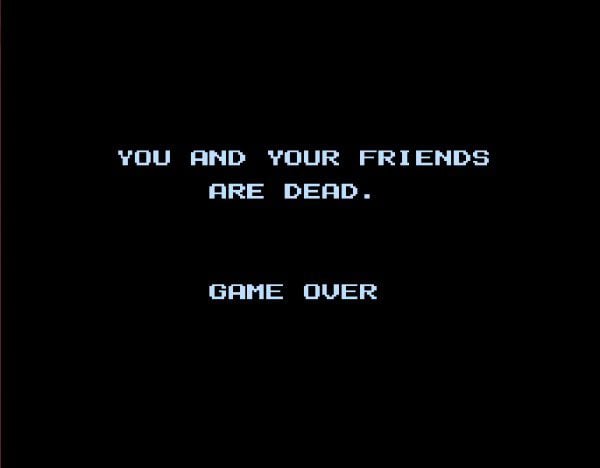
Let us grant the atheistic assumption that all humans are destined for non-being. There is nothing after death, only the absence of existence. Is it possible for man to conceive of this — non-being and pure absence? Is it possible for man to grasp what it means to be a corpse? Try. Conceive of Nothingness. Think on non-being.
Did you think of a large expanse of black? Try again, for you’ve thought of a large expanse of black, which is something. Of white? Nope, still something. Did you think of the word Nothing? That’s a thing. Did you think of a gap, an abyss or a hole? Perhaps that comes closer, but answer me this — did you think of the sides of the imagined gap? Those are things. Is it possible to think of a hole without its sides? No. Is it possible to conceive of pure absence?
Allow me take a left on red, cross the bridge, and get to the point.
1. Every thought we think is based on experience. (We cannot, for instance, conceive of a horse the color of which we have not experienced. (UPDATE: By which I mean, we cannot conceive of a color we have not experienced.))
2. Every experience we have is an experience of Something — of white, black, this girl, or that boy.
3. If we were to experience Nothing, it would not be an experience. (Nothing, inserted into any sentence, negates action. “I said nothing” means the action of speaking was not performed. “I felt nothing” means the action of feeling was not performed. It follows that the words “I had an experience of Nothing” means there was no action of experiencing.)
4. If there was no action of experiencing, then there can be no thought of the thing experienced, for all thought comes from experience.
5. It is therefore impossible to conceive of Nothingness, or non-being, or the ceasing of existence.
This makes sense, for we are beings. It is within our nature to be. To not be is a mystery, and an impossible thought, directly contrary to our nature. Words designated to indicate non-being, whether “Nothingness”, “Absence”, “Zero”, or “Non-being” itself are simply metaphorical labelings, similar — but not identical — to the way in which scientists label “dark matter”, giving a name to something they do not yet know.
This is why we are terrified by the corpse. The corpse is always a mystery, for it suggests (and only ever suggests,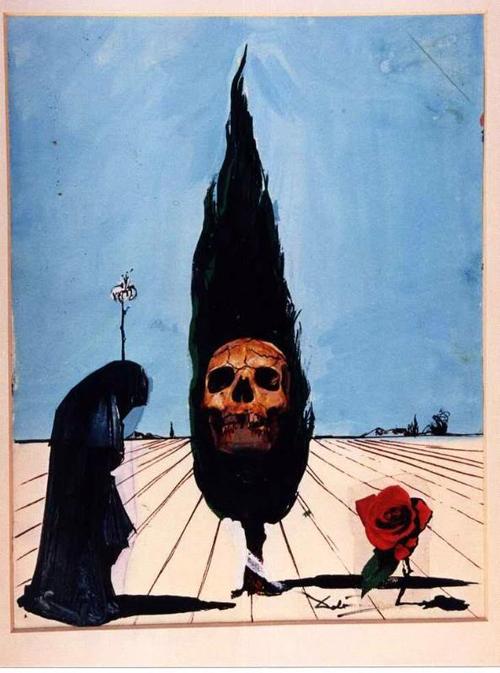 given that can never know precisely what the dead man experiences) a thought which we cannot think: The non-being of a human person. Thus we are the only animals in existence to react in fear to the sight of our own corpse. The corpse is a contradiction and a shock to the way we perceive the world. This is why we wander around in a confused state of numbness after a death, mumbling that we “can’t believe it happened.”
Really? We can’t believe it happened? We know that people becomes corpses, we know how they become corpses, we know how many become corpses each day, and we know we are on our merry way to becoming corpses ourselves — yet we cannot believe the death we truly experience (i.e. not the death we read about happening to some one we didn’t know existed in the first place.)
Why such disbelief? It’s simple. If we truly cannot conceive of non-being within ourselves, it only makes sense that the apparent non-being (death) of those we treat as ourselves (those we love) is inconceivable.
Thus, when the atheist says, as he is wont to, that after he dies he will “simply cease to be”, he is putting a metaphorical label on a mystery that he cannot — by his very nature — comprehend. He could equally say, with philosophical accuracy, that after he dies he does not know, nor can think of what will happen. For he can neither know nor think of Nothingness.
This is remarkably similar — if qualitatively different — to the Christian’s view of death. To simplify, the Christian says that after he dies he will experience Heaven. Heaven — disregarding supposed earthly experiences of it in beauty, goodness, truth, and love — is a mystery to him.
Both the Christian and the Atheist stand before death and make an act of faith — the atheist that he knows the unknowable, and the Christian that he expects the unexpected.
The Christian, in that he cannot truly conceive of his own Nothingness, has an innate conception of his own eternal Somethingness — of always being. The atheist, in that he cannot truly conceive of Nothingness, has the same. The Christian says that this innate conception is true, and that the corpse is but a mask of the actual experience of the human person after death — eternal life. The atheist says that this innate sense of always being, which comes from the universal inability to conceive of non-being, and has us scream at the sudden sight of the skull — that this is a lie, and that life ends in Nothing.
It seems to me something both could have beer over.
Previous Post

November 27, 2012
An Imperfect God
Next Post
December 4, 2012 Selfing Others Right in the Face
Browse Our Archives
Select a Category Another Look Atheism Bad Catholics Beauty Communio Crookedhart Destupidification Exiting the Culture Wars Gender Theory That Doesn't Suck How To Language Liturgy! Love One Another Marriage Equality Modesty Music Objectification pop culture Poverty Sacraments Sex Technology The Best Religion in the World The Erotic Phenomenon Time Uncategorized Virtue Ethics That Don't Suck Winning the Culture Wars
Select a Month January 2017 December 2016 November 2016 October 2016 July 2016 June 2016 April 2016 March 2016 February 2016 January 2016 December 2015 November 2015 October 2015 September 2015 August 2015 July 2015 June 2015 May 2015 March 2015 February 2015 January 2015 June 2014 May 2014 April 2014 March 2014 February 2014 January 2014 December 2013 November 2013 October 2013 September 2013 August 2013 July 2013 June 2013 May 2013 April 2013 March 2013 February 2013 January 2013 December 2012 November 2012 October 2012 September 2012 August 2012 July 2012 June 2012 May 2012 April 2012 March 2012 February 2012 January 2012 December 2011 November 2011 October 2011 September 2011 August 2011 July 2011 June 2011 May 2011 April 2011 March 2011 February 2011 January 2011 December 2010 November 2010 October 2010 September 2010 August 2010
Follow Us!
TAKE THE
Religious Wisdom Quiz
Who killed Goliath?
Select your answer to see how you score.
Samson David Jonathan Saul
Related posts from Bad Catholic

On theism without religion and atheism with it

The Supreme Validity of the Church Lady


Creationism Is Materialism's Creation
TRENDING AT PATHEOS Catholic

Creation, Preservation, and Teleology in Catholic Theology
As I write this, it is very early Monday morning. Like millions...

The Parable Of The Sower And The Word...
One of Christ’s most famous parables is that of the sower who...

Rejecting Doom: Christian Hope And Human Action
Christianity is a religion of hope. We are to have hope and...

Why I Choose the Eucharist Over the Sermon
Choose the Eucharist, Not the Sermon What are we supposed to get...

5 Design Elements Found in Spiritually Rooted Homes
Putting Spirituality Into Home Decor Our homes are more than our living...

Credo: A Story of God Told with the...
About 10 years ago, I began to imagine a personal "Credo" that...
view all Catholic blogs
Ad-Free & Subscriber Log-In Subscription Support
- About Us
- 2026 Calendar
- Videos
- Podcasts
- Library of World Religions
- Faith In Media Tracker
- Advertise With Us
- Write for Us
- Privacy Policy
- Terms of Service
- Do Not Sell My Data
- Contact Us
- Radiant Digital
- Manage Newsletter Subscriptions
- Unsubscribe From Notifications
- Sitemap
Copyright 2008-2026, Patheos. All rights reserved.
Subscription Support Ad-Free & Subscriber Log-In
Follow Patheos