
BuddhistCatholicContemplativeEvangelicalGeneral ChristianHinduJewishLatter-day SaintMuslimNew VisionsProgressive Christian
Beliefs
- Buddhist
- Catholic
- Contemplative
- Evangelical
- General Christian
- Hindu
- Jewish
- Latter-day Saint
- More Voices
- Muslim
- New Visions
- Pagan
- Progressive Christian
Topics
- Religion News
- Food and Religion
- Sports and Religion
- Religious Art
- Religious Music and Entertainment
- Religious Events
- History and Religion
- Style and Religion
- Politics and Religion
- Women in Religion
- Recreation Outdoors and Religion
- Business Finance and Religion
- Careers Workplace and Religion
- Education and Religion
- Family Parenting and Religion
- Health Fitness and Religion
- Home and Religion
- Relationships and Religion
- Technology and Religion
- Travel and Religion
Columnists
- Buddhist Columnists
- Business Finance and Religion Columnists
- Careers Workplace and Religion Columnists
- Catholic Columnists
- Contemplative Columnists
- Education and Religion Columnists
- Evangelists Columnists
- Family Parenting and Religion Columnists
- General Christian Columnists
- Health Fitness and Religion Columnists
- Hindu Columnists
- History and Religion Columnists
- Home and Religion Columnists
- Jewish Columnists
- More Voices Columnists
- Latter Day Columnists
- Muslim Columnists
- New Visions Columnists
- Nonreligious Columnists
- Pagan Columnists
- Politics and Religion Columnists
- Progressive Columnists
- Recreation Outdoors and Religion Columnists
- Relationships and Religion Columnists
- Religion News Columnists
- Religious Art Columnists
- Religious Events Columnists
- Religious Music and Entertainment Columnists
- Sports and Religion Columnists
- Style and Religion Columnists
- Technology and Religion Columnists
- Travel and Religion Columnists
- Women in Religion Columnists
Resource Library
- 2026 Calendar
- Library of World Religions
- The 100 Most Holy Places on Earth
- Patheos Answers
- Podcasts
- Videos
- Faith Leaders Database
- Anglican Episcopalian
- Bahai
- Baptist
- Buddhism
- Christianity
- Confucianism
- Eastern Orthodoxy
- Hinduism
- Holiness and Pentecostal
- ISKCON
- Islam
- Judaism
- Lutheran
- Methodist
- The Church of Jesus Christ of Latter-day Saints
- New Age
- Paganism
- Presbytarian and Reformed
- Protestantism
- Religion Behind the Scenes
- Roman Catholic
- Scientology
- Shia Islam
- Sikhism
- Sufism
- Sunni Islam
- Taoism
- Zen
- See all religions
Research Tools
 Ad-Free & Subscriber Log-In Subscription Support
Follow Patheos 

- Trending:
- Advent
- |
- Forgiveness
- |
- Thanksgiving
- |
- Election
- |
- Seasonal Holidays
- |
- Marriage
 Bad Catholic
- Home
- Catholic
- Why It’s Okay To Speak Religiously in the Face of Tragedy
Why It’s Okay To Speak Religiously in the Face of Tragedy
Last updated on: September 2, 2012 at 4:49 pm by Marc
Why It’s Okay To Speak Religiously in the Face of Tragedy 2012-09-02T16:49:54-04:00 Marc
Patheos Explore the world's faith through different perspectives on religion and spirituality! Patheos has the views of the prevalent religions and spiritualities of the world.
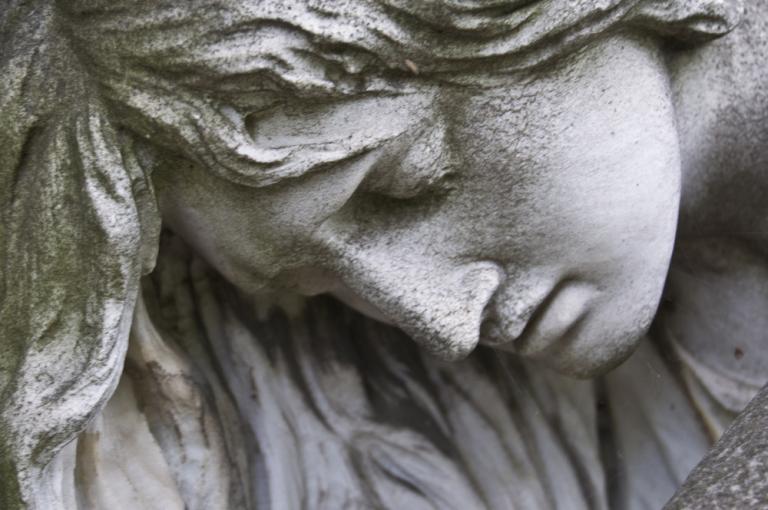
True suffering — whether in death, disaster, or disease — is united by the fact that we hate it. Our beings reject it, our minds refuse to comprehend it, our bodies are sickened by it, and it’s all a simple matter of definition: To suffer is to experience that which we do not want to experience.
Now it’s impossible — from a purely secular standpoint — to answer the question of why we suffer. For if there were a good reason for our suffering, then that suffering would become tolerable to us — and then it wouldn’t be suffering at all.
I’ll try to be clear: If we could say with precision why we suffer, and to what end, then we wouldn’t be suffering. We would be athletes with sore muscles. The athlete knows why he is experiencing pain, and he knows to what end (becoming stronger, improving at his sport, etc.). He will not be swept up in fear and confusion after each workout, nor will his very being rebel against the pain in his triceps. He is not suffering in the strict sense, and we’d be fools to treat him as if he were.
Or take burning our hand on a stove. Again, this pain is something we want to experience. Pain, after all, is the message rammed into our brain to remove our hand, lest we burn ourselves through to our muscle and bone. Pain of this sort is useful and answerable — it is not suffering, and no one treats it as such.
It seems that for suffering to be suffering — for it to truly be that which do not want to experience — it cannot have a satisfactory answer. To put it another way: The existence of a clear, natural purpose to “suffering” indicates that the experience in question is not “suffering” at all. Thus there exist no support groups and therapy sessions for stove-pokers and athletes, and quite a few for cancer patients and the survivors of massacres. The difference is simple: The former can point to some greater purpose to their pain — an un-destroyed hand or bigger, stronger muscles. The latter cannot. All we can give those truly experiencing suffering are expressions of support or comfort. We can give no purpose.
This is no failure on our part, our inability to give a rational, secular purpose to suffering. It simply speaks to the fact that if there existed for us a perfect, satisfactory answer to the problem of suffering, then we would not really be suffering. Suffering, to be suffering, seems to require its awful purposelessness.
This, of course, is a terrible paradox and an immediate problem. It is our natural response to the experience of suffering to ask “why?!” and “why me?!” Few would deny this. Yet it is inherent to the nature of suffering that there be no answer to these questions. This is a tension begging to be released, a conflict in desperate need of resolution.
You cannot blame the atheist then, for speaking in religious tones after a great tragedy. You cannot blame the agnostic for going to a Christian memorial service, nor the materialist for finding comfort in the words “Rest in Peace,” even if he believes that the only peace after death is that of oblivion. Since we are necessarily denied a natural solution to suffering, we turn our minds to the supernatural.
This is no sign of weakness, but a sign of common sense. If I were to sit in a classroom and find that there were no answers I could give using the English language, it would be no weakness to conclude that my answers must be given on a different plane, in French or Mandarin, depending on the class. So too, if we find in this life a question that necessarily has no answer on the secular plane — in this case, “to what end do we suffer?” — then it is no weakness to begin operating on the religious frame. In fact, it’s entirely natural.
Whether this religious plane is true, and whether it has anything to offer us is precisely what I’ll discuss next.
Actually, wait, ain’t nobody got time for that. I already did. Read it.
Previous Post

August 17, 2012
Dappled Things, My Dear Readers
Next Post
September 6, 2012 Why This Catholic Girl Is Praying for a Schism Part 1
Browse Our Archives
Select a Category Another Look Atheism Bad Catholics Beauty Communio Crookedhart Destupidification Exiting the Culture Wars Gender Theory That Doesn't Suck How To Language Liturgy! Love One Another Marriage Equality Modesty Music Objectification pop culture Poverty Sacraments Sex Technology The Best Religion in the World The Erotic Phenomenon Time Uncategorized Virtue Ethics That Don't Suck Winning the Culture Wars
Select a Month January 2017 December 2016 November 2016 October 2016 July 2016 June 2016 April 2016 March 2016 February 2016 January 2016 December 2015 November 2015 October 2015 September 2015 August 2015 July 2015 June 2015 May 2015 March 2015 February 2015 January 2015 June 2014 May 2014 April 2014 March 2014 February 2014 January 2014 December 2013 November 2013 October 2013 September 2013 August 2013 July 2013 June 2013 May 2013 April 2013 March 2013 February 2013 January 2013 December 2012 November 2012 October 2012 September 2012 August 2012 July 2012 June 2012 May 2012 April 2012 March 2012 February 2012 January 2012 December 2011 November 2011 October 2011 September 2011 August 2011 July 2011 June 2011 May 2011 April 2011 March 2011 February 2011 January 2011 December 2010 November 2010 October 2010 September 2010 August 2010
Follow Us!
TAKE THE
Religious Wisdom Quiz
What was the portable place of worship called that God commanded Israel to build?
Select your answer to see how you score.
The Temple The Synagogue The Ark The Tabernacle
Related posts from Bad Catholic
Towards a New Argument Against Pornography


Why Millennials Want to Change the World

The Communist That Lives With Me Responds: "Your...
TRENDING AT PATHEOS Catholic

The Kingdom Of God In Ordinary Life And...
The kingdom of God is all around us; it is in us...

How Discretion Guides Us Away From Extremes
Prudence is an important virtue for all of us. While we should...

If Baptism Washes Away Sin, Why Do Catholics...
The seven sacraments stand as the foundation of Catholic ecclesial life. The...

The Power of Setting a Good Example
Remember last August when the Chicago White Sox hosted a "Pope Hat...

A Catholic Critique of Biblical Unitarianism
If the statistics are to be believed, Unitarianism is rising worldwide. Although...

How Grandma Tourism Helps Grandparents Live Their Vocation
Grandma, The New Travel Influencer What started as a nostalgia-inspired social media...
view all Catholic blogs
Ad-Free & Subscriber Log-In Subscription Support
- About Us
- 2026 Calendar
- Videos
- Podcasts
- Library of World Religions
- Faith In Media Tracker
- Advertise With Us
- Write for Us
- Privacy Policy
- Terms of Service
- Do Not Sell My Data
- Contact Us
- Radiant Digital
- Manage Newsletter Subscriptions
- Unsubscribe From Notifications
- Sitemap
Copyright 2008-2026, Patheos, part of the Radiant Digital network of media brands. All rights reserved.
Subscription Support Ad-Free & Subscriber Log-In
Follow Patheos